



- Key Takeaways
- First, Understand the Two Core Categories of Wig Security
- Silicone vs. Velvet: Which Anti-Slip Material is Better?
- The Professional Audit: 5 Ways to Judge Anti-Slip Quality
- 1. The Transparency Test
- 2. The “Infant-Skin” Tactile Test
- 3. The Odor Check
- 4. The Vertical Resistance Test
- 5. The Real-life Comfort Test
- Choosing the Perfect Anti-Slip Solution for Your Clients
- Common Mistakes Professionals Make When JuWdging Anti-Slip Wigs
- A Simple Checklist Before You Stock or Recommend One
- Final Thoughts
- FAQs
How to Judge the Quality of an Anti-Slip Wig
- Key Takeaways
- First, Understand the Two Core Categories of Wig Security
- Silicone vs. Velvet: Which Anti-Slip Material is Better?
- The Professional Audit: 5 Ways to Judge Anti-Slip Quality
- 1. The Transparency Test
- 2. The “Infant-Skin” Tactile Test
- 3. The Odor Check
- 4. The Vertical Resistance Test
- 5. The Real-life Comfort Test
- Choosing the Perfect Anti-Slip Solution for Your Clients
- Common Mistakes Professionals Make When JuWdging Anti-Slip Wigs
- A Simple Checklist Before You Stock or Recommend One
- Final Thoughts
- FAQs
For salon owners and hair replacement professionals, wig security is not some minor detail. It is the detail.
Because once a client starts worrying that their wig might shift, slide, or lift, the rest of the conversation is basically over. It does not matter how nice the hair looks. It does not matter how natural the density is. If the wig does not feel secure, the client does not feel secure.
And that is the real product you are selling here. Not just hair. Confidence.
The problem is that the market is full of wigs labeled “glueless,” “anti-slip wig,” or “secure fit,” and a lot of them are not nearly as impressive as the label suggests.
Here, we’ll go through the main types of anti-slip security, what to check before you buy or stock a wig, and what separates a solid piece from one that is likely to cause problems later.
Key Takeaways
- Anti-slip quality is not just about grip. If a wig feels hot, stiff, or uncomfortable, clients will feel that pretty quickly.
- Silicone, PU, velvet, and elastic all behave differently. The label matters less than the material quality.
- Suction-style designs usually make more sense for total hair loss. Soft-grip designs often work better for clients with partial hair.
- For active clients, balance matters. Too much heat is a problem. Too little grip is also a problem.
- A quick physical check tells you more than a polished product description ever will.
- The best anti-slip wig is the one the client can wear comfortably without thinking about it all day.
First, Understand the Two Core Categories of Wig Security
Most anti-slip wigs rely on one of two things: surface grip or physical hold.
That is the first distinction worth understanding, because not every client needs the same kind of security.
A. Material Adsorption: the Vacuum-Style Grip
This method uses materials such as silicone or PU to create more direct contact with the scalp. When done well, it can create a light suction-like hold that feels stable without glue.
This type of anti-slip system is often the better fit for clients with little to no biological hair, especially those dealing with alopecia or chemotherapy-related hair loss.
Why? Because there is less natural hair to anchor to, the base itself needs to do more of the work.
In general, the anti-slip materials you will see most often are:
- medical-grade silicone
- standard silicone
- anti-slip PU or skin-style materials
They do not all perform the same way.
Better silicone usually gives you better grip, better comfort, and better wear over time. Cheaper materials may look fine at first, but they often feel stiffer and less comfortable once the wig is on.
- Best for: clients with total hair loss, including alopecia or chemotherapy-related hair loss.
Top Pick in This Category
The MD01 Medical Wig is one of the clearest examples of this type of design. It uses a full-surface suction base for high security without relying on glue, which makes it a strong option for clients who care most about hold and scalp stability.
The Melody Glueless Wig also belongs in this conversation, although it takes a more hybrid approach. It combines integrated velvet grip bands, anti-slip silicone strips, and anti-slip silicone-coated elastic netting, giving it a softer, more breathable feel while still delivering real grip.
So if the client wants a strong hold but does not want the wig to feel like a helmet, that kind of mixed construction starts making a lot of sense.
B. Physical Friction: the Soft-Grip Approach
Instead of trying to create a seal against the scalp, it uses materials like velvet or tighter elastic bands to help the wig stay put. In a lot of cases, these wigs also come with clips or combs inside the cap, which can be attached to an anti-slip headband for extra hold.
Best for: daily wearers with partial hair.
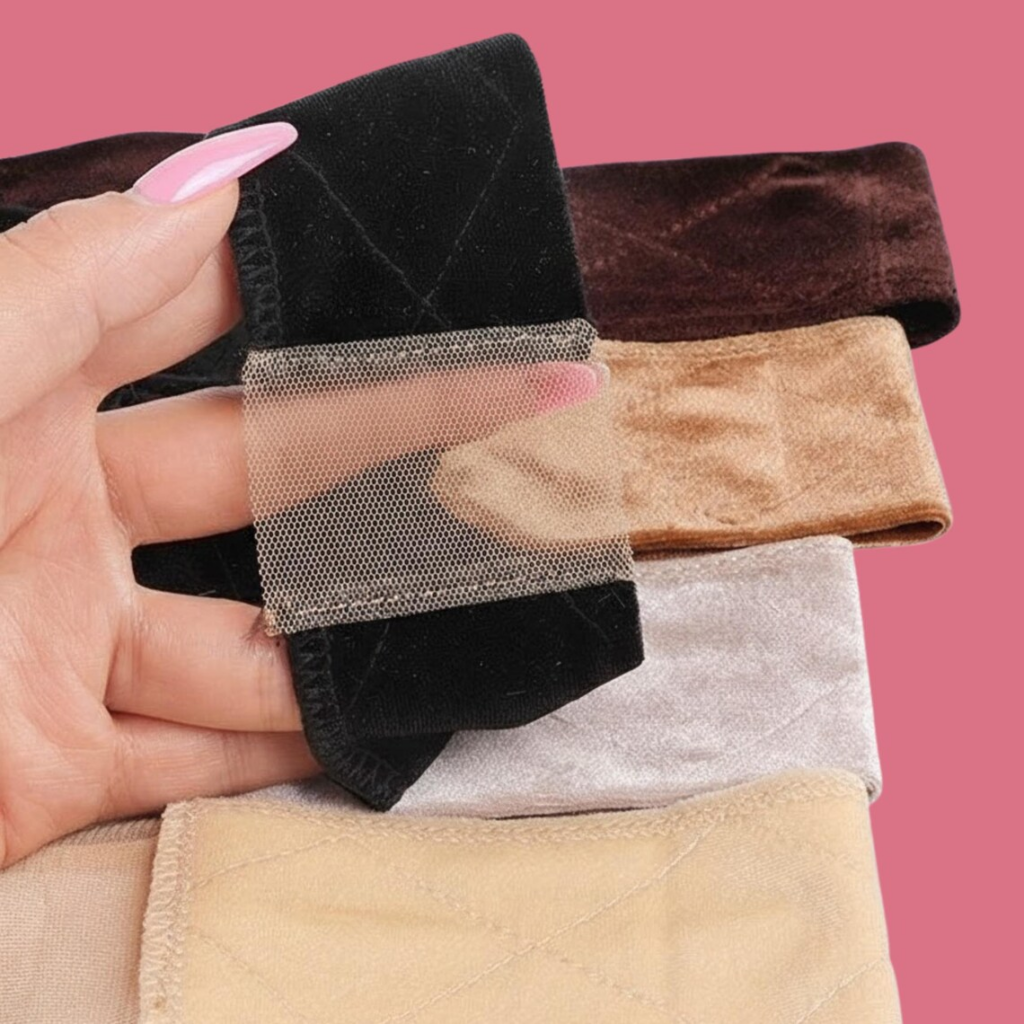
If the client is active, both silicone and velvet grips have something going for them.
Medical-grade silicone gives stronger suction, stays hidden inside the base, and is easy to clean because it does not absorb sweat. The downside is that it is usually less breathable than velvet, so it can start to feel warm during longer workouts or in hot weather.
Velvet grips are softer and usually breathe better. That is why they often feel more comfortable over a full day. The tradeoff is that velvet holds onto sweat more easily, so it usually needs more regular washing.
For active clients, a mix of both often works better than choosing one or the other.
The Melody Glueless Wig is a good example. It combines velvet grip bands, anti-slip silicone strips, and silicone-coated elastic netting, so the hold feels more secure without making the cap feel too closed off.
Silicone vs. Velvet: Which Anti-Slip Material is Better?
This is the wrong question if you ask it too broadly.
It is like asking whether sneakers are better than boots. Better for what? Better for whom? Better under which conditions?
Silicone-Based Anti-Slip Grip
Silicone is often chosen because it provides stronger contact against the scalp, is easy to wipe clean, and does not absorb sweat the way fabric does.
Its main advantages usually include:
- stronger grip
- easy maintenance
- low odor retention
- less visible bulk when integrated well
Its drawbacks can include:
- less breathability
- a warmer feel during long wear
- discomfort if the silicone quality is poor or the finishing is rough
Velvet or Fabric-Based Anti-Slip grip
Velvet and similar fabric-based grip systems rely on friction rather than suction. They are often more breathable and can feel gentler in all-day wear.
Their main advantages usually include:
- softer feel
- better airflow
- more balanced pressure
- strong day-to-day comfort
Their drawbacks can include:
- more sweat absorption
- more frequent washing
- odor or hygiene issues if poorly maintained
So no, one is not automatically better than the other.
Usually, the better answer is this: the right material depends on the client’s scalp condition, lifestyle, and tolerance for heat, pressure, and maintenance.
And in many cases, the best designs combine more than one anti-slip feature instead of relying on a single one.
The Professional Audit: 5 Ways to Judge Anti-Slip Quality
Now we get to the part that actually saves you money.
If you are sourcing from a wholesale supplier or reviewing stock for your salon, do not stop at the phrase anti-slip on the product page. That is the pitch. You still have to inspect the actual build.
A simple audit can save you from stocking wigs that look good online and become a headache once clients start wearing them.
1. The Transparency Test
If the anti-slip zone includes silicone, stretch it lightly and look at the material.
Better-quality silicone usually stays visually cleaner and more consistent. Lower-grade material may turn cloudy, look chalky, or show signs of filler-heavy composition.
That matters because cheap material usually shows up later in the places you actually care about: grip, softness, durability, and scalp comfort.
What you want to see:
- a clean, consistent surface
- no patchy discoloration
- no brittle-looking texture
- no obviously cheap, filler-heavy appearance
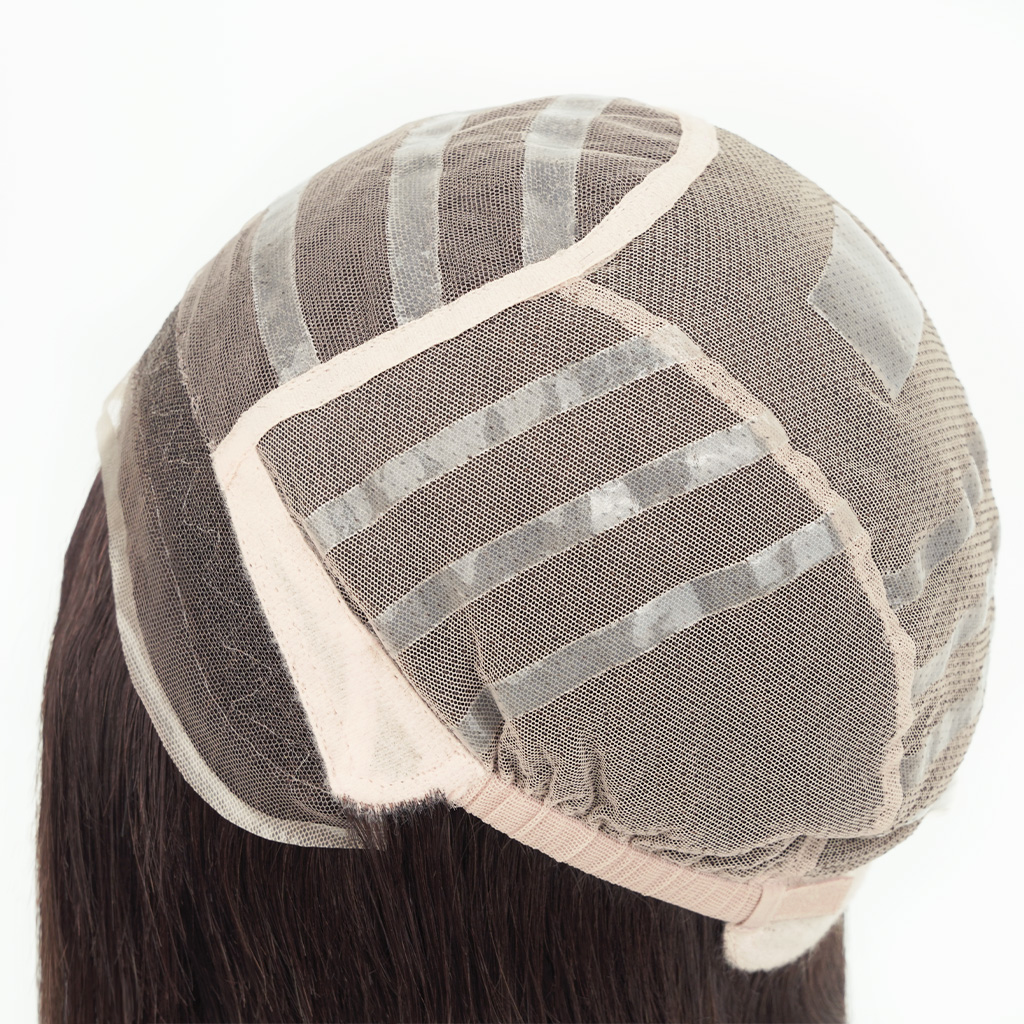
HEATHER Luxury Medical-Grade Hand-Tied Wig
2. The “Infant-Skin” Tactile Test
Run your finger along the edges of the anti-slip strips and the transition points where the grip material meets the base.
This tells you a lot, fast.
A professional-grade finish feels smooth, soft, and neatly integrated. A cheaper one often feels stiff, sharp, plasticky, or awkward around the edges.
And those little details stop being little details once a client has been wearing the wig for six or eight hours.
What you want to feel:
- rounded edges
- smooth transitions
- no sharpness
- no hard plastic feel
3. The Odor Check
This one is simple and brutally honest.
A quality anti-slip wig should not smell harsh, acidic, rubbery, or weirdly chemical-heavy out of the box.
A strong odor is usually a warning sign. It can point to lower-grade processing, lower-grade materials, or finishing choices that are not ideal for long wear, especially for sensitive scalps.
What you want:
- Little to no chemical smell
- no vinegar-like odor
- no harsh residue scent around silicone or PU areas
4. The Vertical Resistance Test
Press the grip area gently against a smooth surface, like the back of your hand, then lift.
You are not testing whether the wig can defy gravity like some kind of superhero product demo. You are checking whether the grip feels real.
A good anti-slip surface should create noticeable resistance. A poor one often feels slippery, waxy, or decorative rather than functional.
What you want to notice:
- controlled resistance
- stable grip feel
- no greasy or slick texture
5. The Real-life Comfort Test
This is the test a lot of sellers conveniently ignore.
A wig can feel fine in a two-minute inspection and still become annoying fast in real wear. Heat builds up. Pressure points show up. Sweat changes the feel. Edges that seemed harmless at first start bothering the client two hours later.
This is why sample testing matters.
Before you commit to a style seriously, ask the obvious questions:
- Will this still feel comfortable after several hours?
- Will it stay secure during movement?
- Will it feel too warm for active clients?
- Will the grip still feel pleasant after repeated cleaning and re-wear?
If you do not know the answer, then you do not really know the product yet.
Choosing the Perfect Anti-Slip Solution for Your Clients
This is where actual professional judgment matters more than product labels.
A good anti-slip wig for one client can be completely wrong for another.
For Clients with Sensitive Scalps
Prioritize soft finishing, breathable construction, and materials that feel clean and gentle against the skin.
This is where product build matters a lot. Rough edges, stiff silicone, strong odor, or aggressive pressure are not minor flaws for these clients. They are dealbreakers.
Models such as Heather, Melody, and Natalie are designed as medical-style wigs with a fully lace, hand-knotted base. This construction helps keep the wig secure while staying lightweight and breathable, which can make it a strong option for clients experiencing hair loss due to chemotherapy, alopecia totalis, or scalp sensitivity.
For Clients with Total Hair Loss and Wanting the Most Realistic Crown
Look for cap designs that sit securely against the scalp and distribute pressure comfortably.
This is where vacuum-style grip systems can be especially useful. Wigs like the MD01 and HW-1 Medical Wigs are better suited to this kind of need because the design is built around scalp contact and secure hold rather than relying on clips or natural hair support.
The goal is not just to keep the wig on. The goal is to make it wearable.
For Clients with Partial Hair
Friction-based systems, adjustable bands, and softer anti-slip constructions can work very well here, especially if the client wants convenience and easy daily wear.
For Active Clients
They need balance, not extremes.
Too little grip and the wig feels unreliable. Too much heat and the wig becomes uncomfortable. This is where hybrid constructions can be a better answer than a pure silicone or pure fabric approach.
The Melody Glueless Wig fits this space well because it mixes silicone grip support with softer, more breathable structural elements. For clients who move a lot, exercise, or just hate anything that feels heavy on the scalp, that balance matters.
Common Mistakes Professionals Make When JuWdging Anti-Slip Wigs
A lot of bad buying decisions come from the same few mistakes:
- assuming all glueless wigs perform the same
- judging quality by grip strength alone
- ignoring edge finishing
- overlooking the chemical odor
- recommending the same anti-slip design to every client
- trusting the product description more than the physical construction
This is how salons end up with stock that sounds great in theory and causes problems in practice.
A Simple Checklist Before You Stock or Recommend One
Before you commit to an anti-slip wig, ask:
- Does the grip system actually feel functional?
- Are the materials soft, clean, and well finished?
- Is there any strong odor?
- Is the design right for total hair loss, partial hair, or both?
- Will it stay comfortable over several hours of wear?
- Is it realistic for the lifestyle of the client to wear it?
If too many of those answers are vague, that is usually your answer.
Final Thoughts
A good anti-slip wig is not just about stopping movement.
It is about giving the client one less thing to worry about.
That is the difference between a wig that gets returned and a wig that gets reordered. Between a client who keeps adjusting it and a client who forgets they are even wearing it.
So yes, anti-slip quality matters.
Not because it sounds impressive in a product description, but because it changes the actual wearing experience. And in this business, that is the whole game.