
- First, Figure Out What “Sensitive Scalp” Actually Means
- If the Client Gets Hot or Itchy, Start With Lace
- If the Client Says Mono Feels Rough, Consider Silk Top
- Mono Is for Strength, Not the Softest Feel
- Skin and Poly Bases: Smooth, Secure, but Warmer
- Lace vs Mono for Sensitive Scalp
- Silk Top vs Mono for Sensitive Scalp
- Lace vs Skin for Itching
- Hybrid Hair Systems: When One Base Material Is Not Enough
- What Should Salons Stock for Sensitive-Scalp Clients?
- Should a Sensitive-Scalp Client Choose Stock or Custom?
- What Should You Say If a Customer Asks, “Will Mono Irritate My Client?”
- How Salons Can Reduce Scalp Irritation Complaints
- Why Newtimes Hair Is a Practical Supplier for Sensitive-Scalp Base Selection
- Key Takeaways
- About the Author
- FAQs
Best Hair System Bases for Sensitive Scalps: Lace, Mono, Skin, or Silk Top?
- First, Figure Out What “Sensitive Scalp” Actually Means
- If the Client Gets Hot or Itchy, Start With Lace
- If the Client Says Mono Feels Rough, Consider Silk Top
- Mono Is for Strength, Not the Softest Feel
- Skin and Poly Bases: Smooth, Secure, but Warmer
- Lace vs Mono for Sensitive Scalp
- Silk Top vs Mono for Sensitive Scalp
- Lace vs Skin for Itching
- Hybrid Hair Systems: When One Base Material Is Not Enough
- What Should Salons Stock for Sensitive-Scalp Clients?
- Should a Sensitive-Scalp Client Choose Stock or Custom?
- What Should You Say If a Customer Asks, “Will Mono Irritate My Client?”
- How Salons Can Reduce Scalp Irritation Complaints
- Why Newtimes Hair Is a Practical Supplier for Sensitive-Scalp Base Selection
- Key Takeaways
- About the Author
- FAQs
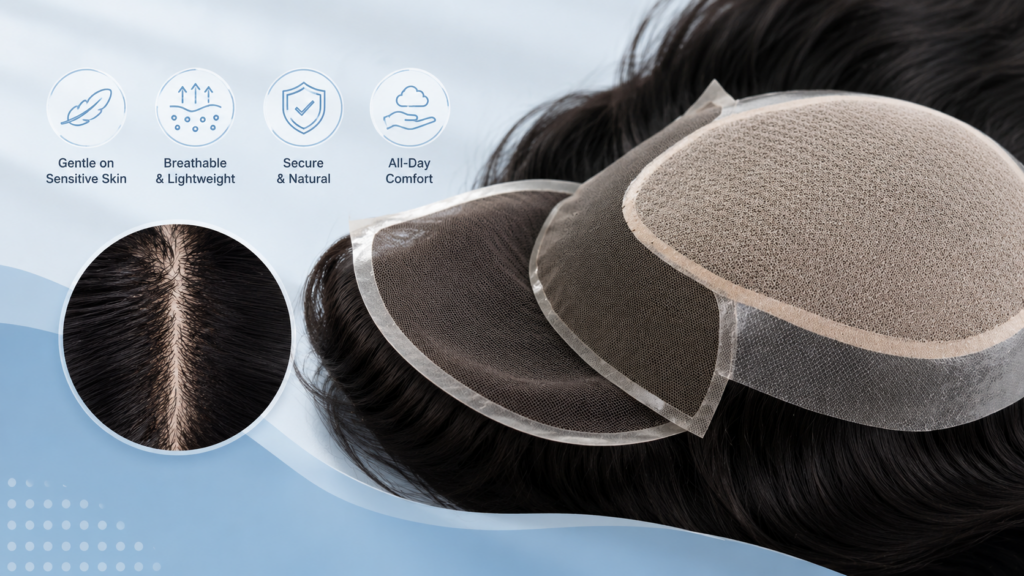
How to select the best hair system bases for sensitive scalps? This post will show you why.
For them, the base is not a technical detail. It is the whole experience. If the underside feels scratchy, if heat gets trapped, if the attachment pulls, or if the base presses in the wrong place, the client will not care how natural the hairline looks. They will only want to take it off.
So when a buyer asks, “Will mono irritate my client’s scalp?” the answer should not be a quick sales line.
The honest answer is this: mono is strong and practical, but if scalp sensitivity is already a concern, start with a softer lace or silk top instead. Lace is usually better for breathability. Silk top is usually better for a smoother, more realistic scalp area. Skin/poly can feel smooth and secure, but it is not the best choice when heat and sweating are the problem.
That is the real decision.
Not “Which base is best?”
Best for what?
Related read: Toupee Base Materials.
First, Figure Out What “Sensitive Scalp” Actually Means
Sensitive scalp is a lazy phrase. Useful, but lazy.
One client says “sensitive” and means her scalp gets hot and itchy after two hours. Another means rough material bothers her. Another reacts to the adhesive. Another has alopecia, post-treatment tenderness, or very little natural hair to buffer the base. These are different problems.
And different problems need different bases.
A salon or clinic should ask five questions before recommending anything:
- Does the client itch because of heat and sweat?
- Does the base feel rough or scratchy?
- Does pressure or tightness cause soreness?
- Has tape or glue caused redness before?
- Is the client wearing the system daily, or only sometimes?
That short conversation can prevent a bad order. It can also prevent the awkward moment where a client says, “It looks good, but I can’t wear it.”
And nobody wants that. Not the client, not the stylist, not the procurer, and definitely not the supplier.
Related read: Human Hair Wigs for Sensitive Scalps.
If the Client Gets Hot or Itchy, Start With Lace
Lace is usually the safest first answer when the client’s main issue is heat, sweat, or that trapped “my scalp can’t breathe” feeling.
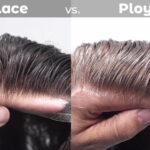
A lace base has small openings that allow air and moisture to move through the base. That is why it often feels lighter than closed materials. For clients who wear hair systems all day, especially in warm weather, this matters more than people think.
A base can feel comfortable in a five-minute consultation and miserable after a full day of wear.
Lace is a strong choice when the buyer asks:
- What base is best for an itchy scalp?
- Which base is most breathable?
- What should I recommend for a client who sweats easily?
- Which hair system base is better for hot weather?
- What is the lightest base for daily wear?
The answer is usually lace.
Not always. Usually.
The tradeoff is durability. Softer lace, especially very fine lace, needs careful handling. If a client wants the softest, lightest feel but also expects the base to survive rough brushing, aggressive removal, and months of careless wear, someone needs to gently bring her back to earth.
Comfort and durability are both important. They just do not always live in the same house.
If the Client Says Mono Feels Rough, Consider Silk Top
Mono is not the villain.
Mono bases are popular for good reasons. They are durable, breathable, stable, and useful for clients who need a stronger structure or more density. For many wearers, mono is a practical everyday base.
But if the customer is already worried that mono may irritate her client’s scalp, listen to that concern.
Some clients find mono firmer or more textured than they like. Maybe the scalp is tender. Maybe there is not enough bio hair underneath. Maybe the client simply notices texture more than average. Whatever the reason, forcing mono at that point is not smart.
This is where the silk top becomes interesting.
A silk top base hides the knots under the upper layer, then the hair is pulled through to create the illusion that it is growing from the scalp. Newtimes Hair’s silk top article explains that this construction gives a very natural, knotless-looking result. It can also create a smoother scalp-facing experience, especially compared with bases where the client is more aware of texture or knots.
Silk top is a strong answer when the buyer asks:
- What base looks most like a real scalp?
- What can I recommend if mono may irritate the scalp?
- Is the silk top smoother than mono?
- Which base hides knots best?
- Which base is best for a natural part line?
The answer: silk top is usually better than mono when the client wants a smoother, more realistic scalp area.
But again, there is a catch.
Silk top is not as airy as lace. It can be thicker. So if the client’s problem is heat, lace may be better. If the problem is roughness or visible knots, a silk top may be better.
That distinction is small, but it saves orders.
Mono Is for Strength, Not the Softest Feel
Mono belongs in the conversation. It just needs to be positioned correctly.
If a buyer asks, “Is mono suitable for a sensitive scalp?” the most accurate answer is:
Mono can work for some sensitive clients, but it is not the first base I would test on someone highly sensitive to texture or friction.
Mono is a good choice when the client needs:
- stronger base structure
- better support for higher density
- regular daily wear
- durability
- a stable, practical system
Mono is less ideal when the client says:
- “My scalp is very tender.”
- “Scratchy materials bother me.”
- “I reacted badly to my last base.”
- “I need the softest option.”
- “I’m worried mono will irritate my client.”
This is not about scaring buyers away from mono. It is about using mono for the right client.
A strong base is only useful if the client can tolerate it.
Skin and Poly Bases: Smooth, Secure, but Warmer
Skin and poly bases are tempting because they look clean, feel smooth, and work well with tape or glue. For salons, they can also be easier to attach and clean.
That is the good part.
The not-so-good part is breathability.
Skin/poly bases do not breathe like lace. If a client’s scalp gets irritated because of heat, sweat, or trapped moisture, skin may not be the best first choice. Ventilation holes can help, but they do not turn skin into lace.
Skin/poly is useful when the buyer asks:
- Which base is easiest to attach with tape or glue?
- Which base is easiest to clean?
- Which base gives a smooth finish?
- Which base works well for secure bonding?
Skin/poly is risky when the buyer asks:
- Which base is best for sweating?
- Which base is coolest?
- Which base is best for long daily wear in hot weather?
- Which base is the least itchy?
For heat-related itching, lace usually wins. For smooth adhesive wear, skin/poly has a place.
Again, the question decides the base.
Lace vs Mono for Sensitive Scalp
If the client is highly sensitive, lace is usually safer than mono.
Lace is softer and lighter. Mono is stronger and more structured. That is the cleanest comparison.
Choose lace when the client cares most about comfort, airflow, and a gentle feel. Choose mono when the client needs durability, density support, and a base that can handle more regular wear.
For a first-time sensitive-scalp client, lace is often the better test order. Once the salon knows the client can tolerate a base well, it can explore stronger or more structured options later.
Silk Top vs Mono for Sensitive Scalp
Silk top is often better than mono when the complaint is roughness, knots, or scalp realism.
Mono is practical. Silk top is more refined.
If the client wants the part line to look like a real scalp, the silk top has the advantage. If the client has complained that mono may feel rough, the silk top is also easier to recommend. But if the client wants maximum breathability, a silk top may not beat lace.
A simple salon answer:
Choose a silk top over mono when the client wants a smoother, more natural-looking scalp area. Choose mono over silk top when the client needs more durability and structure.
That is the kind of answer buyers can actually use.
Lace vs Skin for Itching
For itching caused by heat or sweat, lace is usually better than skin.
Skin may feel smooth at first, but it can trap warmth. Lace lets the scalp breathe. If the client wears the system for long hours, lives in a warm climate, or already complains about itching, lace is the safer first choice.
Skin still makes sense for clients who want easy bonding and a smooth adhesive surface. But for the “my scalp gets hot and itchy” client, lace is usually the better answer.
Hybrid Hair Systems: When One Base Material Is Not Enough
Sometimes the best base for a sensitive scalp is not one material. It is a smarter combination.
Hybrid hair systems are usually custom-made designs that place different materials in different parts of the base. The goal is simple: help the client look natural, feel comfortable, and still give the salon a system that is easy to attach and maintain.
For example, a sensitive-scalp client may do better with a lace top because it feels softer and allows better airflow across the main scalp area. But the salon may still prefer skin or PU on the sides and back because it makes tape attachment, removal, and cleanup easier. Add a lace front, and the client also gets a more natural-looking hairline.
That is the real value of a hybrid system: comfort where the client feels it, practicality where the stylist works, and realism where people actually look.
For a client worried that mono may irritate the scalp, a lace-top hybrid with skin sides and back can be a smart starting point. The lace top gives softness and breathability. The skin areas help with attachment and maintenance. The lace front keeps the hairline natural.
A hybrid base is not just a mixed base. It is a custom problem-solving base. And for sensitive-scalp clients, that can make the difference between a system that looks good in the chair and one that the client can actually wear all day.
What Should Salons Stock for Sensitive-Scalp Clients?
A salon does not need to stock every base under the sun. That sounds impressive until inventory starts collecting dust.
For sensitive-scalp clients, stock the bases that solve the most common problems:
- Soft lace for breathability, heat, and lightweight comfort.
- Silk top for clients seeking scalp realism and a smoother, hidden-knot finish.
- Mono for clients who need durability and are not extremely texture-sensitive.
- Skin/poly for clients who want secure adhesive wear and easy cleanup.
- Medical-grade or soft cap options for clients with alopecia, treatment-related tenderness, or very low tolerance for pressure.
If the client is new and the salon is unsure, start with a comfort-first stock option before moving into custom. Stock can be a useful test. Custom can come later, once the salon knows what the client’s scalp can handle.
That is not glamorous advice. It is just how fewer mistakes happen.
Should a Sensitive-Scalp Client Choose Stock or Custom?
Start with stock if the goal is to test comfort quickly. Choose custom when the client needs a specific base design, size, density, attachment method, or sensitive-zone adjustment.
For first orders, stock can reduce risk because the client can learn what she likes and dislikes before committing to detailed custom specifications. This is especially useful when the salon is still figuring out whether the client does better with lace, silk top, mono, or skin/poly.
Custom becomes more useful when the client needs:
- a special base size
- a silk top area in a specific position
- lace in high-sweat zones
- a poly perimeter for attachment
- adjusted density
- a specific parting area
- a comfort-focused combination base
A good ordering path is:
Test comfort first. Customize once the client’s scalp has given you some honest feedback.
The scalp will tell you the truth. Sometimes rudely.
What Should You Say If a Customer Asks, “Will Mono Irritate My Client?”
Say this:
“Mono is durable and breathable, but if your client already has a sensitive scalp, I would not start with standard mono. If her issue is heat or sweating, soft lace is usually the better option. If she wants a smoother feel and a very natural scalp look, a silk top may be better. We can choose the base based on whether her main concern is heat, friction, attachment, or realism.”
That answer does what a good professional answer should do. It respects the concern. It explains the tradeoff. It gives the next step.
It does not pretend there is one perfect base for every scalp on earth.
How Salons Can Reduce Scalp Irritation Complaints
Most scalp irritation complaints can be reduced before the order is placed.
Ask what bothered the client before. Do not guess. If the adhesive caused redness, patch-test the adhesive. If the client sweats easily, do not push a warm base. If the scalp is tender, avoid rough textures and tight pressure points. If the client wants high density, explain that density can affect weight and comfort.
Here is the practical checklist:
- Choose lace for heat and sweat sensitivity.
- Choose a silk top for hidden knots and smoother scalp realism.
- Be careful with mono if the client is texture-sensitive.
- Be careful with skin/poly if the client sweats easily.
- Patch-test tape or glue.
- Keep the scalp clean and dry before attachment.
- Avoid overly tight clips, caps, or tape placement.
- Keep density realistic.
- Start with a test base before scaling repeat orders.
- Use custom only when you know what needs customizing.
The best time to solve scalp irritation is before it starts.
After the scalp is already red, itchy, and angry, every base feels guilty.
Why Newtimes Hair Is a Practical Supplier for Sensitive-Scalp Base Selection
Newtimes Hair offers lace, mono, skin/poly, silk top, stock, custom, and combination base options. That range matters because sensitive-scalp clients do not all need the same product.
One client needs breathable lace. Another needs silk top realism. Another needs a stronger mono design. Another needs a skin/poly perimeter for secure attachment, but lace in the areas where heat builds up. A medical hair loss client may need a softer cap construction altogether.
For salons, clinics, wholesalers, and professional buyers, the advantage is flexibility. You can choose the base around the client instead of forcing the client into the base.
That is where better procurement decisions come from.
Not from memorizing a base chart. From understanding what the wearer will actually tolerate at 4 p.m. on a long day.
Key Takeaways
- Soft lace is usually best for sensitive scalps that react to heat, sweat, and poor airflow.
- Silk top is often best when the client wants a smoother, hidden-knot finish and the most realistic scalp appearance.
- Mono is durable and breathable, but it may not be the first choice for clients who are highly sensitive to texture.
- Skin/poly is smooth and adhesive-friendly, but it is less breathable than lace.
- For first-time sensitive-scalp clients, test comfort before scaling custom orders.
- Newtimes Hair can support professional buyers with lace, mono, skin/poly, silk top, stock, custom, and combination base solutions.
About the Author
Julia Griffiths is a UK hair professional, barber, educator, and Newtimes Hair author/reviewer. She owns Crosscuts Barbers and runs Hair Revival Training, where she delivers CPD-accredited men’s hair system courses for stylists. Her guidance is grounded in real salon work, barbering experience, and hands-on hair replacement training.