


Zendaya-Inspired Undone Fishtail Braid: How to Recreate the Goddess Look With Hair Extensions
Cover: Zendaya-byPhilipRomano2” by PhilipRomano, via is licensed under CC BY-SA 4.0. Cropped and adapted by NEWTIMES HAIR.
(This article draws styling inspiration from Zendaya’s undone fishtail braid at a public red-carpet event in New York in 2026. The following content is an independent breakdown and recreation focusing only on general hairstyle structure, texturing, and hair extension application. Here, “inspired” refers solely to styling inspiration and does not indicate any partnership, sponsorship, authorization, or endorsement between NEWTIMES HAIR and Zendaya, her styling team, the event, or any third party.)
At the New York premiere of The Odyssey on July 14, 2026, Zendaya wore an Undone Fishtail Braid. For stylists following Zendaya hair trends, the look is also a useful example of how hair extensions for braids can support added length and fullness. Hairstylist Coree Moreno added length and fullness with hair extensions, then combined irregular texture, a low braid, and loose face-framing pieces to create a lived-in, romantic, goddess-inspired effect.
Instead of uniform, structured curls, this hairstyle uses small, irregular bends and waves to create an airy, lived-in natural texture. Loose strands are intentionally left around the face, ears, and back of the head, giving the overall look a soft, lightweight, slightly windswept effect. For stylists studying Zendaya hairstyles, the contrast between irregular texture and deliberately loose strands is one of the key visual cues.
Next, NEWTIMES HAIR will break down this Zendaya hairstyle from several angles: the top structure, texture treatment, braiding method, and key considerations for recreating the Undone Fishtail Braid with straight hair extensions.
Key Takeaways
- Zendaya’s undone fishtail braid combines irregular texture, a low deconstructed braid, and loose face-framing pieces for a soft, goddess-inspired finish.
- Hair extensions for braids can help add the extra length and fullness needed to create a longer, fuller fishtail braid.
- Pre-texturing straight hair extensions with light, irregular bends can help them blend more naturally into an undone hairstyle.
- Tape-In hair extensions are one option salons can evaluate when creating long braids that need added density through the mid-lengths and ends.
- For a softer fishtail braid with extensions, use relaxed tension, keep some face-framing pieces loose, and gently pull apart the finished braid for added width and dimension.
Top Structure
The top of this Undone Fishtail Braid does not use the sleek, close-to-the-scalp finish or high crown volume commonly seen in traditional red-carpet styling. Instead, it is intentionally kept loose, soft, and slightly undone. According to Zendaya’s hairstylist Moreno, the key idea behind the style was to avoid looking “overly polished” and make the hair look as though it had naturally settled into a lived-in texture after some movement. The hair was also gently gathered low at the nape rather than tightly securing the entire top section first.
Texture Treatment
Moreno explicitly explained that, to make the extensions less noticeable, he pre-textures the extension hair before installation. Specifically, he uses mousse and a curling iron to create varied textures instead of installing extension hair that is uniformly straight. This pre-texturing step is especially useful when professional hair extensions need to blend into a deliberately irregular finish.
The hair itself is treated with a similar approach: a medium-barrel curling iron is used to create loose bends, with the curl direction alternated from section to section. After the hair cools, it is brushed out and then separated with the fingers. Texture spray is then applied through the mid-lengths and ends to give the hair grip, airy texture, and hold while maintaining movement.
Braiding Method
Allure described the process behind the Zendaya-inspired Undone Fishtail Braid as follows: the hair was first gently gathered at the nape and then styled into a deconstructed fishtail braid. The front sections were not all incorporated into the braid; some hair was left out to form easy waves. After the braid was finished, sections of it were gently pulled apart to add fullness and dimension while allowing some strands to naturally slip out. For stylists researching Zendaya red carpet hair, this deconstructed structure is a defining part of the look.
The finished braid extended down to around the mid-hip/hip area. Vogue also specifically described it as a thick, textured braid with wispy edges and escaping tendrils.
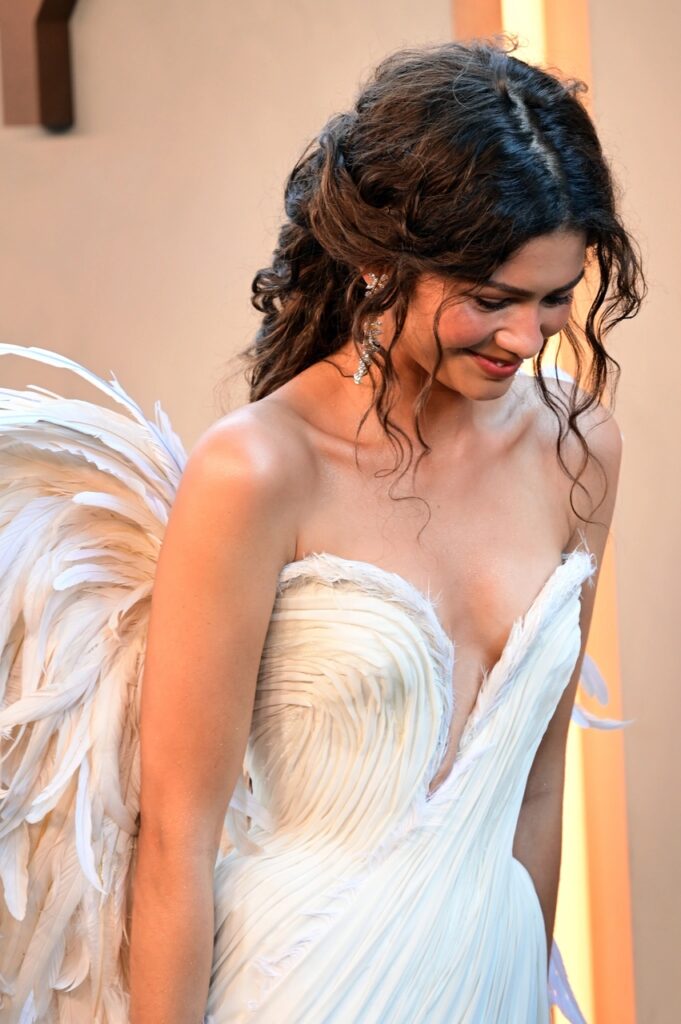
“Zendaya-byPhilipRomano9” by PhilipRomano is licensed under CC BY-SA 4.0.
Key Considerations for Recreating the Look With Straight Hair Extensions
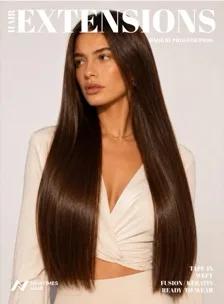
For salons looking to recreate this extra-long, loose, red-carpet-inspired fishtail braid with straight hair extensions, Tape-In hair extensions can be one way to add the length and fullness needed for the braid. This makes Tape-In extensions a practical option to evaluate when choosing hair extensions for long braids. The following outlines one workable recreation approach and key considerations in three steps: texture, fullness, and braiding.
Add Irregular Texture Before Installation
To create a similar effect, you can add slight, irregular bends and waves to the extensions before installation. Specifically, you can use a medium-barrel curling iron with mousse or another lightweight styling product, alternating the curl direction and tightness of each section to avoid creating curls that look too uniform or structured. When working with salon quality hair extensions in this approach, keep the added texture light and irregular rather than overly uniform.
It is worth noting that the goal here is not to “turn straight hair into curly hair,” but to first create an underlying texture with movement, grip, and a slightly undone feel. This way, after installation, the extensions will not blend into the natural hair as one overly straight, uniform sheet. Instead, they can integrate more naturally with the overall texture while also providing better movement and grip for the braiding that follows.
Add Length and Fullness, Then Unify the Overall Texture
This type of extra-long braid requires not only length but also enough density. As the hair is repeatedly crossed and gathered during the braiding process, its visual length and volume are compressed. If the starting hair density is insufficient, the braid can quickly begin to taper from the mid-lengths and may even look sparse by the ends.
Therefore, the purpose of using Tape-Ins is not simply to make the hair longer; more importantly, it is to add enough hair that can actually be incorporated into the braid. When using hair extensions for braids, placement matters as much as added length. During installation, the number and placement of extensions can be adjusted based on the client’s natural hair density and the desired braid width, allowing the added hair to blend naturally into the overall length and maintain enough fullness from the mid-lengths through the ends, rather than adding length only and leaving the lower half looking thin.
After installation, you can use a curling iron as needed to make small adjustments throughout the hair so that the bend directions, curl tightness, and textures of the natural hair and extensions interweave with one another. Once the hair cools, gently separate some of the bends with your fingers and apply an appropriate amount of texture spray through the mid-lengths and ends to add grip and further blur the distinction between the natural hair and extensions.
Braid Low, Then Loosen It for a Goddess Look
After the texture has been prepared, gently gather the hair at the nape and braid it into a loose fishtail braid, allowing the added length and fullness to become a natural part of the braid. To keep a fishtail braid with extensions soft rather than tightly constructed, maintain relaxed tension as you work. When recreating this fishtail braid with hair extensions, the added hair should follow the same loose, deconstructed direction as the natural hair.
In addition, the hair around the face and ears, along with some of the surface layers, does not need to be pulled back too cleanly. A few strands with loose bends can be left out to preserve a soft, deconstructed silhouette. The braid itself also does not need to be perfectly symmetrical or neat. Compared with a sharply defined fishtail, this style is more about looseness and natural irregularity.
Once finished, use your fingers to gently pull the braid outward from the midsection, working a little at a time and repeating as needed so the silhouette gradually becomes wider and develops more dimension and airiness. You can also let out some loose strands around the face, ears, and back of the head so the waves created earlier can show naturally.
(Editorial Disclaimer: This article is independent hairstyle education and styling-inspiration content. There is no partnership, sponsorship, authorization, affiliation, or endorsement relationship between Zendaya and NEWTIMES HAIR as implied by this article. The hair extension products and recreation methods mentioned are provided solely as part of NEWTIMES HAIR’s independent salon recreation approach and should not be understood to mean that Zendaya or her styling team uses, recommends, or endorses NEWTIMES HAIR products.)
Create More Styling Possibilities With Professional Hair Extensions
From extra-long braids to fuller salon transformations, the right hair extensions give stylists more freedom to build length, density, and dimension into their work. Explore NEWTIMES HAIR professional hair extensions, including Tape-In options designed for salon professionals looking for versatile solutions for creative styling and client services.