


Hair Extension Color Consistency: How Do Suppliers Maintain It Across Batches?
Many salon clients are highly concerned about color differences between hair extension batches. Hair extension color consistency is also a common challenge across the human hair extension industry, and salons may ask why the same shade hair extensions look different between restocks. Because the natural base color, strand structure, and bleaching and coloring response of human hair can vary from one batch to another, slight color differences may still occur even when the same bleaching and toning processes are used.
As a hair extension supplier, NEWTIMES HAIR understands that noticeable batch-to-batch color variation can create challenges for salon owners and hair extension professionals, including problems with the final hair extension color match, restocking complications, and additional rework. For this reason, we use approved color standards and multiple color inspections throughout the production process to improve shade consistency and make repeat orders more predictable.
Key Takeaways
- Slight color variation between hair extension batches is normal. Natural base color, strand structure, porosity, and coloring response can differ between batches.
- Hair extension color consistency means reducing noticeable differences, but zero color difference between batches cannot be guaranteed. Human hair is a natural material, so minor variations may remain.
- Color inspections evaluate color depth, overall tone, and color distribution. Blended shades are also checked for the proportion, placement, and transition of different colors.
- NEWTIMES HAIR uses a four-stage hair extension color quality control process. Reviews are conducted after coloring, after drying, after production, and before shipment.
- Approved color standards, hair extension color-ring comparisons, and batch traceability help make repeat orders more predictable. These measures also provide clearer references when investigating color concerns.
Why Hair Extension Colors Vary Between Batches
Natural Base Color
Even when two batches of raw hair both appear to be “natural black” or “dark brown” to the naked eye, their underlying pigments and base tones may differ. These differences can affect the level of lift achieved during bleaching and the amount of warm pigment that remains afterward.
Hair Strand Structure
Hair from different batches may also vary in strand thickness, cuticle condition, internal structure, and porosity.
In general, thicker strands with more tightly closed cuticles may allow bleaching and coloring agents to penetrate more slowly. Hair with higher porosity, or hair that has undergone more processing, may absorb color faster and develop a deeper result.
Bleaching and Coloring Response
Because the natural base color and strand structure can vary, each batch of hair may respond differently to lightener and hair color.
Under the same processing time and formula, one batch may reach the target level of lightness while another may retain a deeper, warmer undertone. During the toning stage, differences in porosity may also affect how much color the hair absorbs, resulting in slight variations in depth or tone. This helps explain human hair extension color variation from one batch to another.
What Does Hair Extension Color Consistency Mean for Human Hair Extensions?
As discussed above, color consistency in human hair extensions does not mean that every production batch will look completely identical under all lighting and use conditions.
Human hair is a natural material, and slight differences may exist between batches in terms of natural base color, strand structure, and response to bleaching and coloring. Professional suppliers therefore focus on using approved color standards and standardized inspection procedures to minimize noticeable color differences that could affect hair extension color matching, installation results, or repeat orders.
Color inspections generally evaluate the following factors:
Color Depth
The overall product color is compared with the approved color standard to determine whether it is reasonably close and whether any areas appear noticeably too dark, too light, or uneven in depth.
Overall Tone
The overall cool or warm direction and dominant tone are evaluated to identify any noticeable yellow, orange, red, gray, or other undertones that do not match the intended shade.
Color Distribution
For rooted, balayage, piano, highlighted, and other blended-color products, the inspection covers more than the overall shade.
The proportion, placement, and transition of the different colors are also reviewed to confirm that they remain coordinated with the approved standard.
Because lighting, background color, bundle thickness, and the way the hair is arranged can all affect how hair color appears, inspections are generally performed using approved color samples, with a hair extension color chart serving as a shared reference under relatively consistent viewing conditions.
Our Four-Stage Hair Extension Color Quality Control Process
After Coloring: Sample Inspection of Wet Hair
At the hair extension factory, once the coloring process is complete, representative wet-hair samples are selected from the batch for an initial review.
The team checks how the color has developed and looks for noticeable shifts in tone, localized coloring irregularities, or uneven color distribution.
Because wet hair can appear different from fully dried hair, this stage is primarily intended to identify significant coloring issues early and reduce the risk of unsuitable hair continuing into subsequent production stages.
After Drying: Color Review of the Dyed Hair
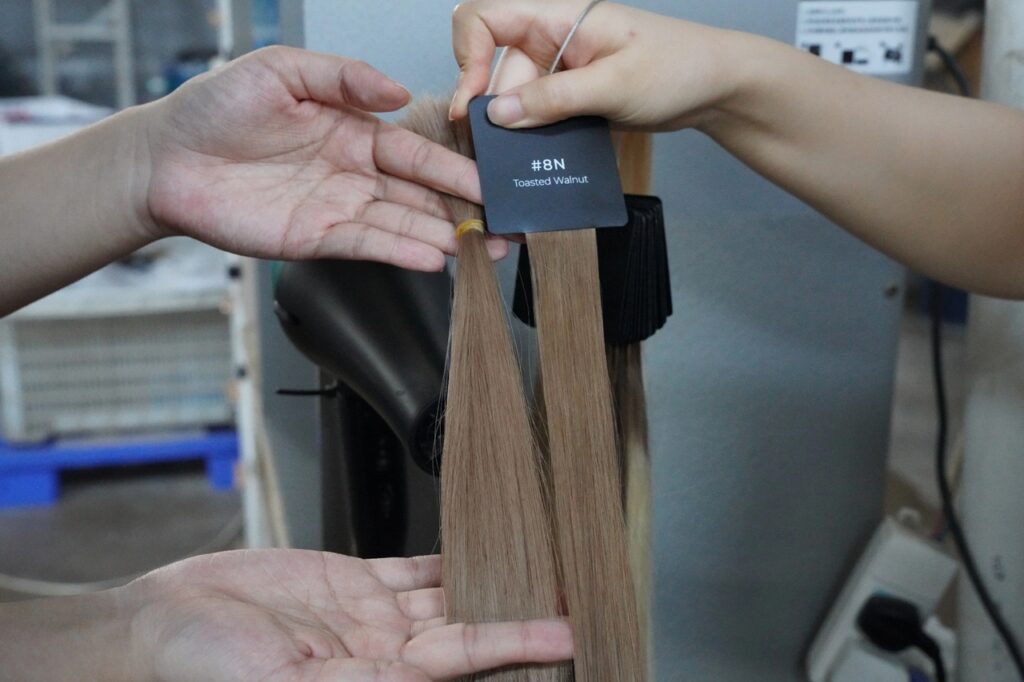
Once the hair is fully dried, it is compared with the company’s approved color standards.
Dry hair more closely reflects the product’s final appearance, so the team focuses on the overall tone, color depth, and the appearance of blended or gradient colors.
Before the hair is made into finished extension products, the bundles are also sorted according to production requirements. Some short hairs, flyaways, and strands that do not meet the required standard are removed.
After sorting, the overall color of the bundles is reviewed again to confirm that it remains coordinated with the approved color standard.
After Production: Finished Product Shade Inspection Before Leaving the Factory
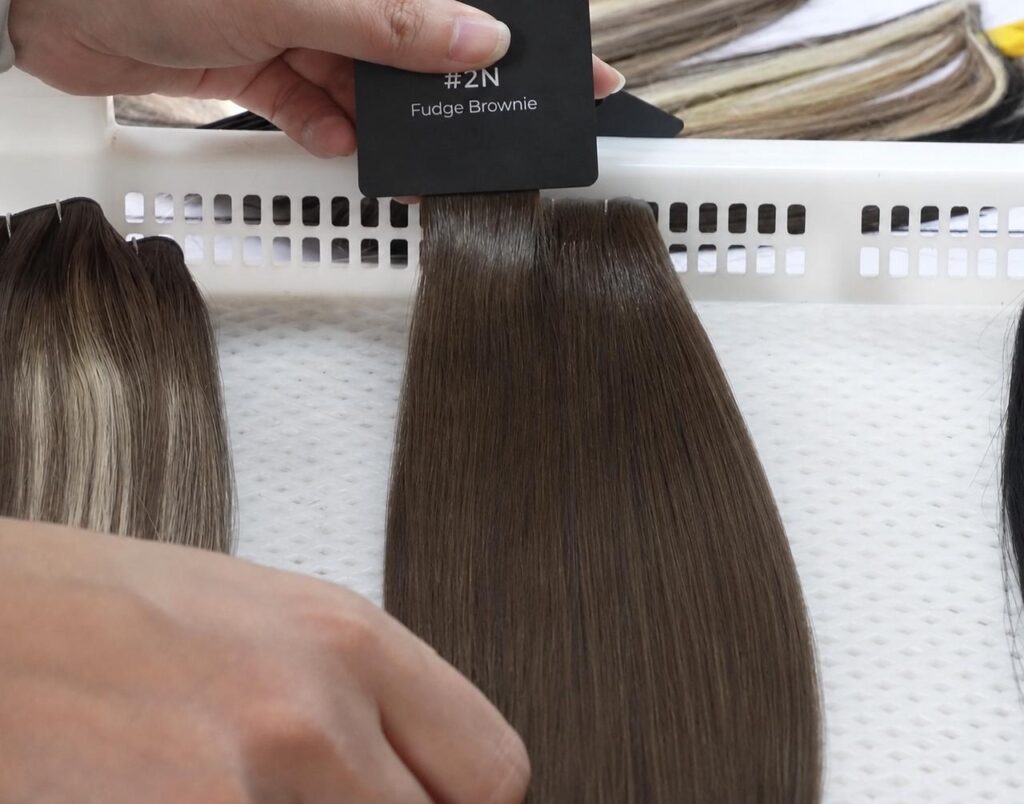
Once production is complete, factory quality control personnel conduct sample inspections of selected finished products before they leave the factory and compare them with the company’s approved color standards.
This stage focuses on the product’s overall appearance after manufacturing, including whether the color remains coordinated, whether the distribution appears natural, and whether there are any noticeable color blocks or batch differences.
Only after the finished products have been confirmed as meeting the requirements for the applicable shade do they proceed to packaging and warehouse intake.
Before Shipment: Product Shade Inspection Before Leaving the Warehouse
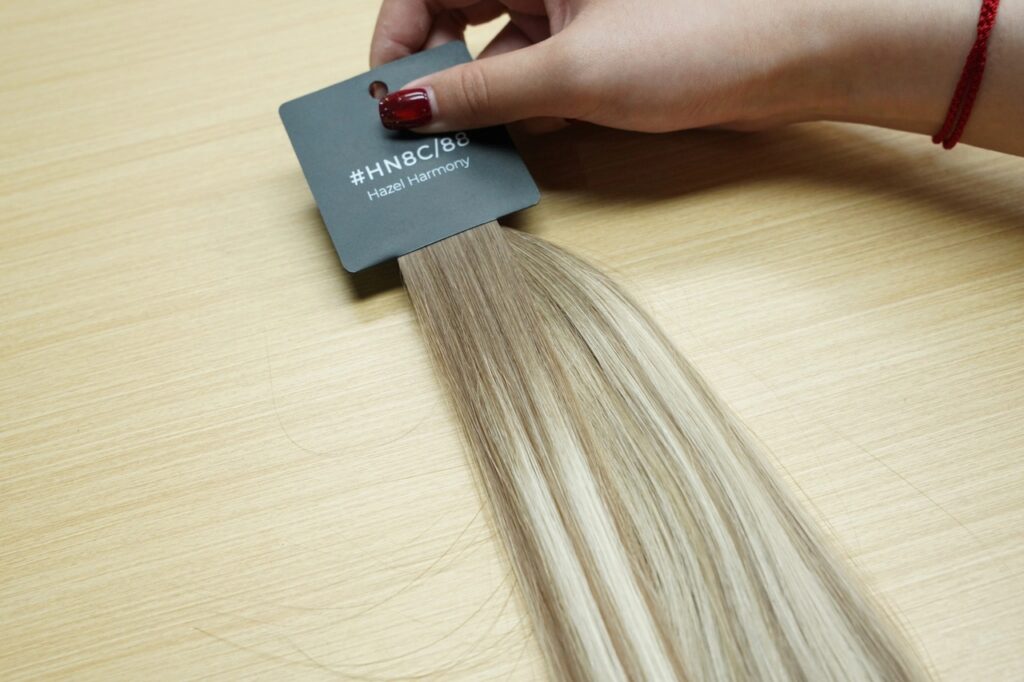
Before a customer’s order leaves the warehouse, NEWTIMES HAIR’s sales and quality control teams conduct a final sample review based on the order information.
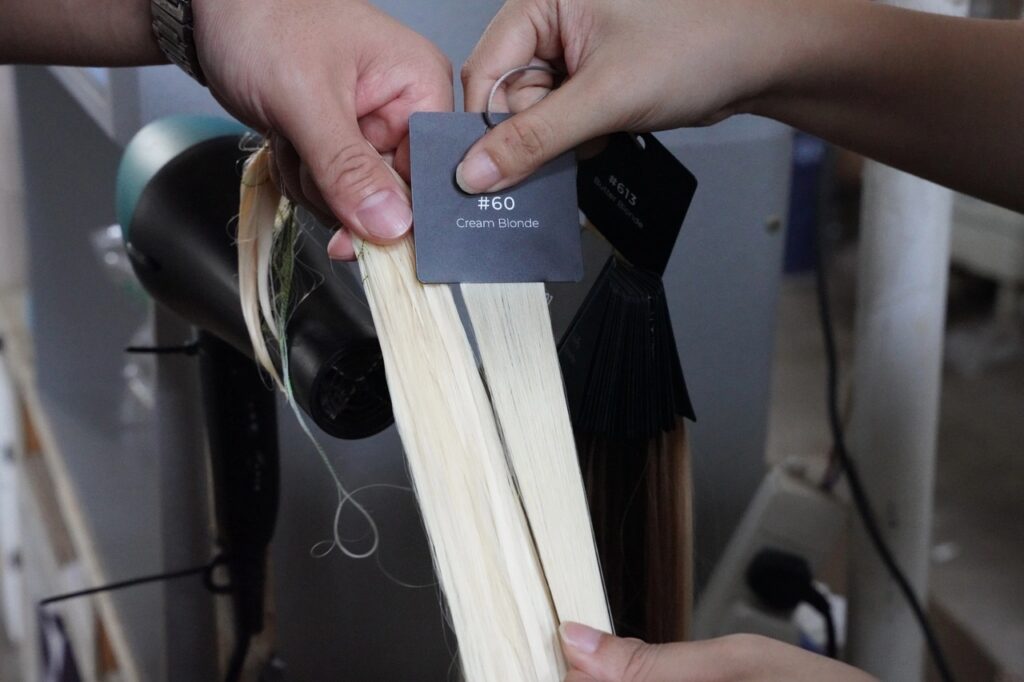
The team checks the product shades, labels, and overall color appearance and compares the products with the corresponding hair extension color ring.
For orders containing multiple products, the team also pays particular attention to color coordination between the individual items. This helps reduce the likelihood of noticeable color differences within the same order.
Only after the product information and color appearance have been confirmed as matching the order requirements does the order proceed to final packaging and shipment.
Each production batch is also assigned an individual factory batch number. This number is associated with a group of products manufactured during a specific production period and can be used to identify the approximate production date and batch.
When a customer raises a color-related concern, the sales and quality control teams can review the order information, product labels, and factory batch number. This provides a clearer basis for further verification, communication, and investigation.
How Does Hair Extension Color Quality Control Help Reduce Restocking Risks?
Reducing the Risk of Last-Minute Toning, Exchanges, and Appointment Delays
NEWTIMES HAIR understands that when reordered hair extensions look different from a salon’s expected color, the stylist may need to perform last-minute toning, revise the color-matching plan, or request an exchange.
This can require additional technical and communication time and may also affect the client’s confidence in the scheduled service.
By comparing products with company-approved color standards and reviewing the color at multiple stages of production, we aim to identify a potential hair extension color mismatch or other noticeable differences that could affect professional color matching before delivery.
This helps reduce the pressure on salons to resolve unexpected color issues and makes installation schedules and client appointments more manageable.
Providing Clearer References for Order Reviews and Color-Related Communication
Each NEWTIMES HAIR production batch has a corresponding factory batch number that can be used to identify the product’s approximate manufacturing period and production batch.
By reviewing the customer’s order, product shade, label, factory batch number, and relevant photographs together, the sales and quality control teams can obtain more complete information for verification.
This provides a clearer basis for discussing color concerns and reduces the difficulty of relying only on subjective visual judgments or requiring the customer to explain the same issue repeatedly.
This traceability process does not mean that batch-to-batch color variation can be completely eliminated. However, it provides clearer reference information for subsequent investigation, communication, and resolution.
Helping Reduce Color Differences Between Hair Extensions in the Same Order
To help minimize color differences between hair extension products from the same batch, NEWTIMES HAIR’s sales and quality control teams conduct sample reviews before shipment based on the specific order.
Selected products are checked for shade, labeling, and overall color appearance.
For orders containing multiple items, sample comparisons are also used to review color coordination between the products. This helps reduce the risk of customers discovering noticeable differences in color depth, tone, or blended-color distribution after opening the individual packages.
Restock with Greater Confidence
Color consistency starts long before your order reaches the salon. With approved color standards, a corresponding hair extension color ring, four-stage inspections, and batch traceability, NEWTIMES HAIR helps make repeat ordering more predictable and professional color matching easier.
Reduce last-minute adjustments, protect your appointment schedule, and restock with greater peace of mind.