

- What Should Pro Buyers Consider When Choosing a Hair-System Base?
- Quick Comparison: Skin vs. Lace vs. Mono vs. Hybrid
- What Is a Hair System Base?
- Skin Hair Systems: Best for Scalp Effect and Easier Cleanup
- Lace Hair Systems: Best for Airflow and Exposed Hairlines
- Mono Hair Systems: Best for Structure and Higher Density
- Hybrid Hair Systems: Best for a Balanced Professional Solution
- Which Base Should You Choose for Each Client?
- How Should Professional Buyers Compare Hair-System Samples Before a Bulk Order?
- How Base Construction Affects Attachment and Maintenance
- How Long Does Each Hair System Base Typically Last?
- A Five-Question Salon Consultation
- Extra Tip for Multi-Location Hair Restoration Studios: How Do They Keep Repeat Orders Consistent?
- Key Takeaways
- Choose the Right Men’s Hair System Base With Newtimes Hair
How to Choose Between Skin, Lace, Mono, and Hybrid Hair-System Bases
- What Should Pro Buyers Consider When Choosing a Hair-System Base?
- Quick Comparison: Skin vs. Lace vs. Mono vs. Hybrid
- What Is a Hair System Base?
- Skin Hair Systems: Best for Scalp Effect and Easier Cleanup
- Lace Hair Systems: Best for Airflow and Exposed Hairlines
- Mono Hair Systems: Best for Structure and Higher Density
- Hybrid Hair Systems: Best for a Balanced Professional Solution
- Which Base Should You Choose for Each Client?
- How Should Professional Buyers Compare Hair-System Samples Before a Bulk Order?
- How Base Construction Affects Attachment and Maintenance
- How Long Does Each Hair System Base Typically Last?
- A Five-Question Salon Consultation
- Extra Tip for Multi-Location Hair Restoration Studios: How Do They Keep Repeat Orders Consistent?
- Key Takeaways
- Choose the Right Men’s Hair System Base With Newtimes Hair
The best hair system base is not always the thinnest, strongest, or most breathable one. It is the base whose strengths match the client’s priorities and whose weaknesses fit their maintenance routine.
That distinction matters.
A client who wants an exposed hairline may need lace or ultra-thin skin. Someone who sweats heavily may care more about airflow. A salon serving clients who want fuller density and longer-term wear may lean toward mono. And when no single material solves the whole problem, a hybrid base usually makes more sense.
For professional buyers, the four main men’s hair system base types are:
- Skin: Best for a close-to-scalp appearance, secure bonding, and easier adhesive cleanup.
- Lace: Best for breathability, lightness, and a natural exposed hairline.
- Mono: Best for structure, higher density, and resistance to daily handling.
- Hybrid: Best for balancing hairline realism, airflow, attachment, and practical maintenance.
There is no universal winner. There is only the right tradeoff for the client sitting in front of you.
What Should Pro Buyers Consider When Choosing a Hair-System Base?
For professional buyers, choose the base that best matches the client’s hairline style, how active he is, his hair density, how he prefers the system to be attached (using tape or glue), and his maintenance routine. Skin suits a close scalp effect and easier cleanup; lace suits airflow and exposed hairlines; mono is for fuller density and longer durability; hybrid systems balance two or more of these benefits.
Quick Comparison: Skin vs. Lace vs. Mono vs. Hybrid
| Factor | Skin | Lace | Mono | Hybrid |
| Scalp appearance | Very natural, especially with thin skin | Natural, particularly at the front | Good, often improved with a lace front | Depends on the materials used in each area |
| Hairline realism | Excellent with thin edges and suitable ventilation | Excellent with fine lace and bleached knots | Moderate on full mono; better with a lace front | Excellent when lace or thin skin is used at the front |
| Breathability | Low to moderate | Very high | Moderate | Moderate to high |
| Durability | Varies greatly by thickness and ventilation | Varies by lace type and handling | Generally high | Usually balanced or reinforced |
| Density support | Usually light to medium, depending on construction | Usually light to medium | Suitable for medium and higher densities | Flexible, depending on the main material |
| Attachment | Full adhesive or tape | Tape or liquid adhesive | Usually tape, often with a PU perimeter | Attachment can be matched to different base zones |
| Cleanup | Relatively easy on solid PU areas | More delicate and time-consuming | Easier when a PU perimeter is present | Often salon-friendly when designed with PU bonding areas |
| Best suited to | Clients prioritizing scalp effect and easy cleanup | Active clients, warm climates, exposed hairlines | Clients wanting fuller density and a stronger base | Clients who need several benefits in one system |
These are practical tendencies, not guarantees. Base thickness, knotting method, ventilation, density, hair quality, attachment products, scalp oil, and maintenance habits can all change how a system performs.
What Is a Hair System Base?
A hair system base is the foundation that holds the hair and sits against the wearer’s scalp. Its material affects how the unit looks, breathes, attaches, moves, and handles regular removal and cleaning.
The base is only one part of the final result. A technically excellent base can still look wrong if the density is too heavy, the color does not blend, the hair direction fights the style, or the cut-in leaves a visible line around the perimeter.
In other words, choosing a base is not about finding the “best material.” It is about building the right system.
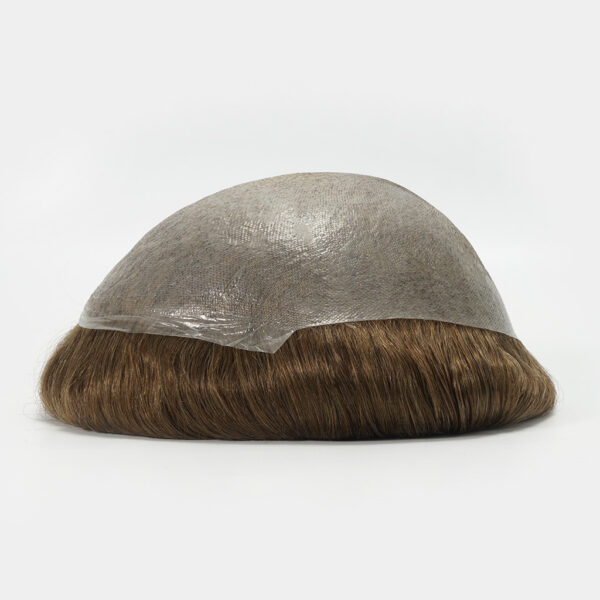
Skin Hair Systems: Best for Scalp Effect and Easier Cleanup
A skin hair system uses a polyurethane, or PU, base designed to sit closely against the scalp. The smooth surface makes it suitable for adhesive bonding and usually easier to clean than an open-mesh lace base.
Thin skin can create an especially convincing scalp effect because the base becomes difficult to see once it is correctly fitted and bonded. V-looped or injected hair can also eliminate visible knots, making the hair appear to emerge directly from the scalp.
But thickness changes everything. For a practical thickness-by-thickness comparison, see how 0.03, 0.06, and 0.08 mm skin hair systems differ in appearance, durability, and handling.
An ultra-thin skin base prioritizes invisibility and softness. A thicker skin construction gives the technician more material to handle and may support more demanding maintenance, but its edge can be less forgiving when exposed.
Choose skin when the client:
- Wants a close-to-scalp appearance
- Prefers a bonded system with a smooth attachment surface
- Values faster adhesive cleanup
- Does not sweat heavily or require maximum ventilation
- Is comfortable following a regular rebonding routine
For available base options, browse our thin skin hair systems for men.
Be more cautious when the client lives in a very hot climate, exercises heavily, or expects an ultra-thin base to tolerate rough handling. Thin does not mean indestructible. Quite the opposite.
Representative Newtimes Hair options include the VELLUM (HS25V) 0.03 mm ultra-thin skin system for clients prioritizing realism and the 0.08 mm VADON (HS1) for clients who want a more manageable skin construction.
For a deeper technical comparison, see our article: 0.03, 0.06, and 0.08 mm skin hair systems.
Lace Hair Systems: Best for Airflow and Exposed Hairlines
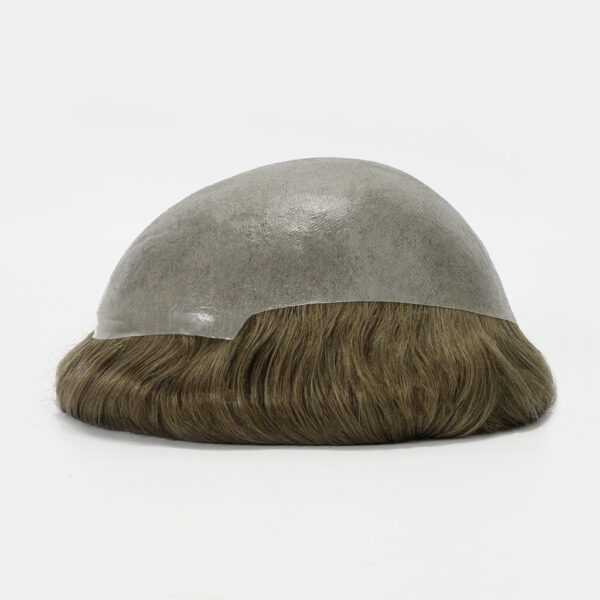
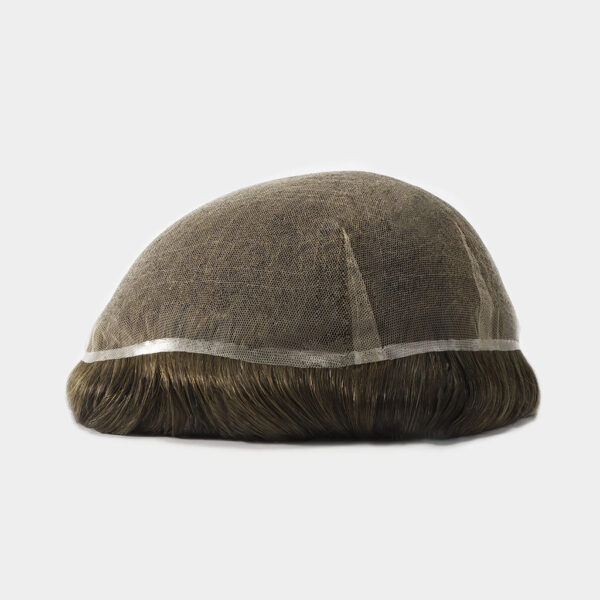
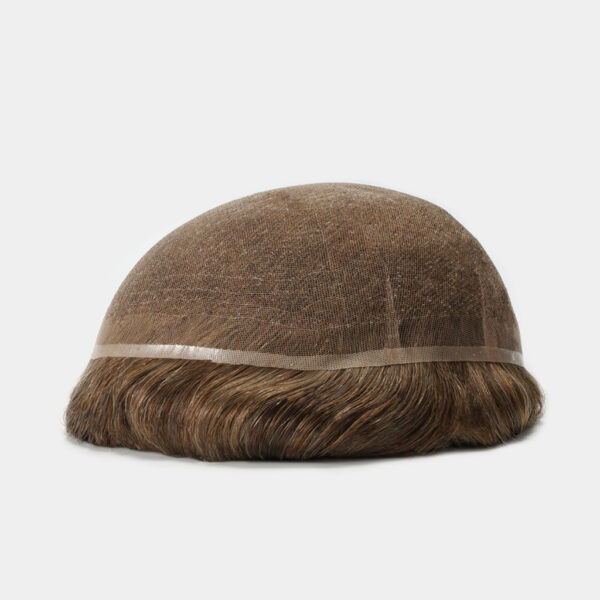
Lace hair systems use a fine open mesh that allows air and moisture to pass through the base. This makes lace a strong choice for active clients, warm climates, and wearers who find solid bases too warm.
A well-fitted lace front can also produce an excellent exposed hairline. Fine lace blends into the scalp, while properly sized and bleached knots reduce the dark dots that can give away a hair system.
Lace is breathable, but it asks more from the wearer or technician. Adhesive residue can enter the mesh, and careless removal can stretch the lace or loosen hair around the bonded area.
Choose lace when the client:
- Exposes or brushes back the front hairline
- Sweats heavily or exercises frequently
- Lives in a warm or humid climate
- Prioritizes lightness and airflow
- Accepts more careful removal and cleanup
Swiss Lace vs. French Lace vs. Flex Lace
Swiss lace is fine, soft, and well suited to clients who prioritize an inconspicuous edge and lighter density. That finesse also means it requires careful handling.
French lace has a slightly more substantial structure. It remains breathable and natural-looking, but it is often easier for salons and regular wearers to handle than very fine Swiss lace.
Flex lace is used in several current Newtimes Hair systems as a soft, breathable alternative that can work as a full base or as part of a hybrid construction. It is frequently combined with PU areas to make attachment and servicing more practical.
Material names alone do not tell the whole story. Salons should also examine the mesh, front construction, knot size, bleaching, intended density, and PU reinforcement before choosing.
Representative options include the AERO (HS7) full French lace system and SUNNY full Swiss lace system. The current Newtimes Hair lace hair system collection also includes lace-front and PU-perimeter constructions for clients who want lace realism without full-lace maintenance everywhere.
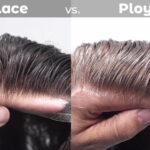
When the decision is specifically between skin and lace, our lace vs. poly hair-system comparison explains the trade-offs in ventilation, realism, attachment, and cleanup.
Mono Hair Systems: Best for Structure and Higher Density
A mono, or monofilament, base uses a stronger woven material that provides more structure than fine lace. It is a practical choice for clients who want fuller density or who are harder on their systems during everyday wear.
Mono is breathable, but its mesh is generally less open than lace. It can also appear more substantial at an exposed front. That is why many professional mono systems use a lace front for realism and a PU perimeter for attachment.
This is not a compromise in the negative sense. It is smart construction. The mono carries the density, the lace handles the hairline, and the PU gives the technician a cleaner bonding area.
Choose mono when the client:
- Wants medium or fuller density
- Prioritizes a stronger, more structured base
- Has been rough on delicate lace or ultra-thin skin systems
- Receives regular professional maintenance
- Does not require the lightest possible system
Representative Newtimes Hair mono hair systems include APEX (HS27), which uses a fine mono construction at 120% density, and NCON, which uses a super-fine welded mono base at 100% density.
Do not recommend heavier density simply because the base can support it. The client’s age, side hair, face shape, preferred style, and existing density still decide what looks believable.
For systems designed around added structure and density, explore our monofilament hair systems.
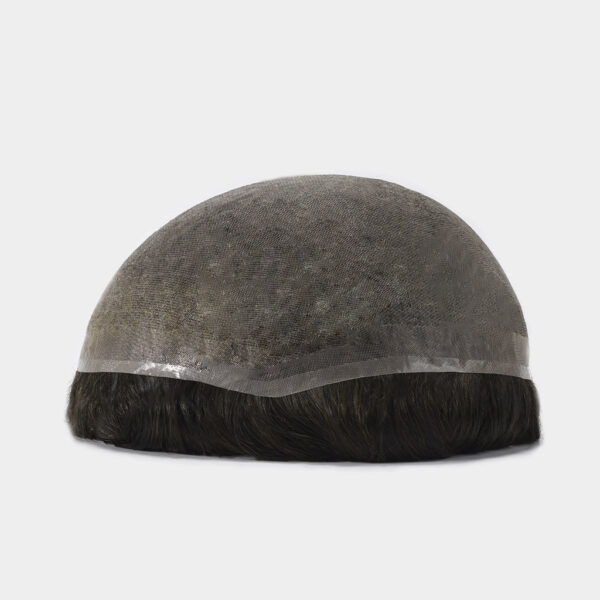
Hybrid Hair Systems: Best for a Balanced Professional Solution
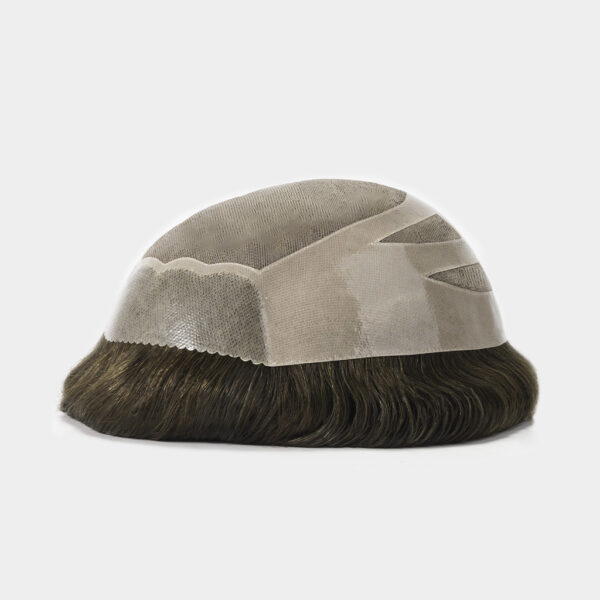
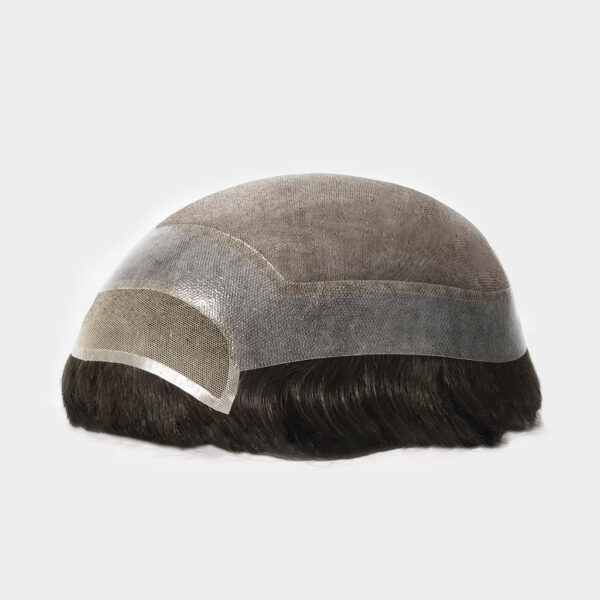
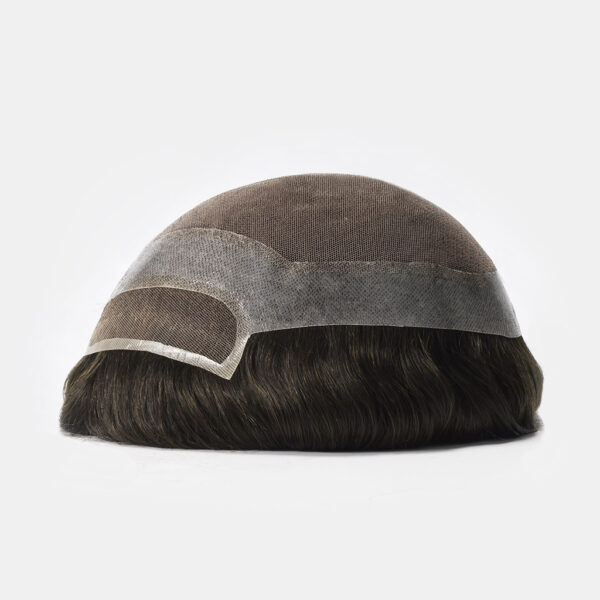
A hybrid hair system combines two or more base materials so that different parts of the system can perform different jobs.
For example, a hybrid design may use lace at the front for a natural hairline, PU around the sides and back for attachment, and mono through the center for structure. Another may use a mostly lace base with a thin PU perimeter to reduce cleanup time.
This flexibility makes hybrid systems especially useful for salons. Most clients do not have one isolated priority. They want the front to look natural, the system to stay secure, the scalp to breathe, and maintenance to remain manageable.
Choose a hybrid when the client:
- Wants an exposed hairline but easier perimeter cleanup
- Needs breathability without choosing full lace
- Wants more structure than a lace-dominant system provides
- Is trying a professionally maintained system for the first time
- Has several competing requirements that one material cannot satisfy
Representative options include HOLLYWOOD, which combines lace with a thin PU perimeter, and CONQUER (HOLLYWOOD-MONO), which combines mono, a clear PU perimeter, and a Flex lace front. The Newtimes Hair hybrid collection covers lace, skin, mono, and PU combinations for different client profiles.
Hybrid does not automatically mean better. A poorly chosen hybrid can simply combine disadvantages. Each material needs a reason for being where it is.
For examples of hybrid constructions and the client profiles they suit, see our hybrid hair systems for salon buyers guide.
Which Base Should You Choose for Each Client?
| Client requirement | Recommended starting point | Why |
| Exposed or brushed-back hairline | Lace front, fine lace, or thin skin | These constructions reduce the visibility of the front edge |
| Heavy sweating or regular exercise | Lace or lace-dominant hybrid | Open mesh improves airflow |
| Fuller or heavier density | Mono or mono-based hybrid | The stronger structure supports more hair |
| First-time professional wearer | Skin or salon-friendly hybrid | Attachment and cleanup are usually easier to explain and manage |
| Client maintaining the unit at home | Skin or PU-perimeter hybrid | Solid bonding zones simplify residue removal |
| Long-term salon maintenance | Hybrid or mono with PU perimeter | Different zones support attachment, structure, and repeated servicing |
| Delicate scalp or adhesive concerns | Case-by-case consultation | Breathability does not guarantee adhesive compatibility; patch testing still matters |
| Client who wants everything at once | Hybrid | The design can assign different jobs to different materials |
The consultation should begin with the client’s routine, not a sample book.
Ask how they style the front. Ask how much they sweat. Find out who will remove and clean the system. Look at the density of the remaining side hair. Then discuss how much maintenance they are genuinely willing to do.
People routinely overestimate their patience for maintenance. Build the recommendation around what they will actually do on a busy Tuesday night, not what they promise during the consultation.
How Should Professional Buyers Compare Hair-System Samples Before a Bulk Order?
Before placing a bulk order, test your sample. Check it against a written specification. Compare the complete build—not only the hair color or style, but also the base, because realism, attachment, and maintenance all depend largely on how and how well the base is crafted, which, in turn, affects repeat-order consistency.
Check the base material and thickness, lace or PU construction, density and distribution, hair direction and ventilation, attachment zones, and hair details such as color, grey percentage, length, curl, and texture. Keep the approved sample, photos, and written specification as the benchmark for future orders.
How Base Construction Affects Attachment and Maintenance
The attachment method should match the base construction. Glue and tape are used to secure the hair system, while features such as a PU perimeter determine where those products can be applied and how easy the system will be to clean.
Base choice should also reflect the wearer’s cleaning and rebonding routine; see our hair-system maintenance routine for the practical steps involved.
Glue or Liquid Adhesive
Glue, also called liquid adhesive, is commonly used with skin hair systems because the solid PU surface provides a smooth, continuous bonding area. It can create a close and secure fit, but removal must be slow and controlled, particularly with ultra-thin skin.
Glue can also be used on lace or mono bases. The drawback is cleanup. Liquid adhesive may seep into the mesh, where it can collect around the hair roots and make removal more difficult. Rough cleaning can stretch the base, loosen knots, or pull hair through the mesh.
Tape
Tape can be used with skin, lace, mono, and hybrid hair systems. It is often a practical choice around lace or mono perimeters because technicians can control exactly where it is placed. Compared with liquid adhesive applied directly to open mesh, tape can also make residue easier to manage during maintenance.
The right tape depends on more than the base material. Scalp oil, sweating, climate, intended wear time, skin sensitivity, and the client’s maintenance schedule all affect which product and application method will work best.
Why PU Perimeters Make Attachment Easier
A PU perimeter is not a separate attachment method. It is a solid bonding zone added around part or all of a lace or mono base.
Tape or glue can be applied directly to the PU area, helping keep most adhesive residue away from the open mesh. This gives the technician a clearly defined attachment zone and generally makes positioning, removal, and cleanup more manageable.
The client still benefits from airflow through the lace or mono center. The salon gets a smoother surface to service around the edge. That combination is one of the main reasons PU-perimeter hybrids are popular for clients who want both breathability and practical maintenance.
Who Will Maintain the Hair System?
The person responsible for removal, cleaning, and rebonding should influence the base choice.
Clients who perform maintenance at home often benefit from a skin base or a hybrid with clearly defined PU bonding areas. Adhesive residue is easier to see and remove from a solid surface. A full-lace system can also be maintained at home, but cleaning residue from the mesh requires more patience, experience, and careful handling.
Clients who return to a salon for scheduled maintenance have greater flexibility. A trained technician can work with delicate lace, multiple attachment zones, or more complex hybrid constructions while inspecting the base, hairline, shedding, and scalp condition during each service.
Whatever the base or attachment method, follow the adhesive or tape’s instructions and patch-test unfamiliar products before completing a full installation. A breathable base may improve airflow, but it cannot prevent irritation caused by an unsuitable attachment product.
How Long Does Each Hair System Base Typically Last?
The lifespan of a men’s hair system depends largely on the base material, construction, maintenance routine, and wearing conditions. As a general reference, different base types tend to have different durability ranges.
| Hair system base | Typical lifespan range | Main characteristics |
| Ultra-thin skin (0.02–0.03 mm) | Around 3–6 weeks | Designed for maximum invisibility and a natural scalp effect. The thinner material requires more careful handling. |
| Thin skin (0.04–0.06 mm) | Around 2–3 months | A balance between natural appearance and improved durability compared with ultra-thin skin. |
| Thicker skin (0.08 mm and above) | Around 3–6 months | Provides more strength and easier handling while maintaining a skin-like appearance. |
| Swiss lace | Around 2–3 months | Extremely natural and breathable, but the fine mesh requires careful maintenance. |
| French lace / Flex lace | Around 3–6 months | Offers a balance of natural appearance, breathability, and durability. |
| Mono | Around 6–12 months | Stronger construction that supports higher density and longer-term wear. |
| Hybrid | Around 3–12 months | Lifespan depends on the materials combined and which areas receive the most stress. |
These ranges are general industry and product guidelines, not fixed replacement schedules.
The same base type can perform differently depending on:
- Attachment method (tape, liquid adhesive, or combination)
- Frequency of removal and cleaning
- Client’s scalp oil and sweating level
- Sleeping habits
- Styling heat and chemical processing
- Hair density and ventilation method
- Daily handling habits
A thinner base usually provides better realism but requires more careful maintenance. A stronger base generally offers better durability but may involve tradeoffs in flexibility or invisibility.
The key is choosing the right balance:
- Skin systems prioritize a scalp-like appearance and clean attachment surface.
- Lace systems prioritize airflow and natural hairlines.
- Mono systems prioritize strength and density support.
- Hybrid systems combine different materials to balance multiple performance needs.
For a more detailed explanation of the factors that influence hair system lifespan and how to extend replacement cycles, see our guide: How Long Do Hair Systems Last?
A Five-Question Salon Consultation
Before recommending a base, ask:
- Will the client expose the front hairline?
- How much does the client sweat during a normal week?
- What density will blend with the client’s remaining hair?
- Will maintenance happen at home or in the salon?
- Does the client value invisibility, airflow, durability, or easier cleanup most?
The fifth question usually settles the decision. Most clients want all four benefits, but one of them matters more when tradeoffs become real.
Extra Tip for Multi-Location Hair Restoration Studios: How Do They Keep Repeat Orders Consistent?
For single-client orders, the best base is the one that suits the wearer’s routine and maintenance preferences. For salons or hair-restoration clinics serving repeat clients across multiple locations, documenting that chosen base is equally important.
The approved specification should record:
- Base type, material, thickness, size, and front contour
- Lace type, PU perimeter or patch placement, and reinforcement
- Density, colour, grey percentage, length, curl, texture, and hair direction
- Parting, crown pattern, and ventilation details
- The approved physical sample, labelled photos, and order reference
- Any variation that requires approval before production
Consistency does not come from ordering the same product twice. It comes from recording the details that determine how the system looks, attaches, and performs—and approving any change before it is supplied to another location.
Key Takeaways
- Skin hair systems prioritize a close scalp effect, secure bonding, and easier cleanup.
- Lace hair systems prioritize airflow, lightness, and natural exposed hairlines.
- Mono hair systems provide stronger structure and support fuller density.
- Hybrid systems combine materials to balance realism, breathability, attachment, and maintenance.
- Swiss, French, and Flex lace serve different handling and density needs; the material name alone is not enough to choose.
- Hair system lifespan depends on the complete product and the wearer’s routine, so avoid promising one fixed number based only on base type.
- The right base is the one the client can wear, maintain, and style successfully in real life.
Choose the Right Men’s Hair System Base With Newtimes Hair
Newtimes Hair supplies skin, lace, mono, and hybrid men’s hair systems for salons, barbers, hair replacement studios, clinics, wholesalers, and professional distributors.
Explore the four base collections to compare current stock options, or contact the Newtimes Hair team when a client needs a custom base size, front construction, density, color, grey blend, hair direction, or attachment design.
The goal is not to sell every client the same base.
It is to give each client a system that still feels like the right decision after the first installation, the first workout, and the first maintenance appointment.