

Choosing Hair Systems for Nordic Clients: A Country-by-Country Guide for HRCs
When a client asks, “Is this hair system right for me?” there may be a whole lifestyle behind the question: biking to work, spending weekends outdoors, using a sauna regularly, or going to the pool every day.
For hair replacement centers (HRCs) serving Nordic clients, these details can help narrow down the options. Some clients may need to compare full-lace and thin-skin bases; others may care more about the hairline or fullness; and some will need to discuss care after exercise, sauna use, or swimming before choosing a system. Recording these needs also gives your team a sound basis for future restocking.
The Nordic region is not one uniform market. Sweden has significant climate differences between the north and south, while Norway’s outdoor lifestyle, Denmark’s cycling culture, Finland’s sauna tradition, and Iceland’s pool culture each bring different priorities to client consultations.
The country-by-country guide below explores these scenarios and draws on Newtimes Hair’s base, density, hair-length, and hairline specifications to identify models worth comparing—helping your HRC build a product shortlist that better reflects real client needs.
(Note: Country-specific trends and lifestyle scenarios are based on information from local organizations; They are not statistics on nationwide preferences. Product suggestions are based on features published by Newtimes Hair. Suitability for exercise, helmets, sauna use, and swimming should be assessed by the HRC in light of the specific hair system, adhesive instructions, and the individual client’s needs.)
Key Takeaways
1. Use country context to guide questions, then select by individual needs. A client’s activities, styling preferences, base requirements, and care routine should guide the shortlist. The country examples do not represent nationwide product preferences.
2. For Swedish clients, assess winter headwear and the target hairstyle together. Confirm the required hair length, density, and front-hairline appearance. AERO HS7 offers density and length options, while AERO LUX HS7EU provides a European hair option.
3. For Norwegian clients, clarify the main product priority before choosing a model. AERO HS7, APEX LACE HS27P, and STRYKE HS1V offer different features for comparing breathability, structural support, and a knot-free appearance. Helmet fit, attachment, and trip maintenance require separate assessment.
4. For Danish cycling commuters, include daily restyling in the consultation. Compare STRYKE HS1V and VELLUM HS25V for their thin-skin appearance and base thickness, or consider AERO HS7 when all-lace breathability is a priority.
5. Discuss sauna use before installation for Finnish clients. Confirm the requirements of the specific hair system, adhesive, and care products, then include the agreed care plan in the handoff instructions.
6. For Icelandic clients, establish swimming and pool-care requirements early. Ask about swimming, warm pools, full hair submersion, and steam facilities, then verify attachment, aftercare, and follow-up inspections.
7. Build stock orders around confirmed client specifications. Record the selected model, color, density, haircut reference, and care plan. Confirm exact specifications, availability, and shipping arrangements before scheduling installation.
Sweden: From winter hats to middle-part styles, balancing everyday wear and a natural blend
Sweden has notable climate differences between the north and south. Visit Sweden explains that seasonal conditions vary across the country, and its winter activity resources cover activities such as skiing and skating. For an HRC, it is more useful to know where a client lives and whether they often wear a hat or sports helmet in winter than simply to know that they live in Sweden. [1][2]
If a client often wears a hat, discuss how they want to restyle their hair after taking it off. Do they want the hair to fall forward or to comb it back into a middle part? Will the front hairline be visible? How much time are they willing to spend restoring the style each day? If they wear a sports helmet, practical fit and wearing requirements should also be assessed separately.
Local hairstyle references can make these questions more concrete. Lyko’s 2026 Swedish trend article features the forward-styled Modern Caesar, middle-part Curtain Hair, and softly layered Bro Flow. Each calls for different lengths, top volume, and forehead coverage, so the same specifications will not suit all three. [3]

How can NT products meet these needs?
For comparing different densities and styling lengths: AERO HS7
The currentAERO HS7specifications on the website list a French lace base, densities of 90%, 100%, and 110%, and two hair lengths: 5 in. / 12.7 cm and 20 in. / 50.8 cm. [12]
These options allow HRCs to match specifications to the density of the client’s natural hair on the sides, the area that needs coverage, and the reference hairstyle. For a longer middle-part or Flow style, for example, confirm the required finished length first, then verify the available hair-length, density, and color combinations. For longer Curtain Hair or Bro Flow styles, confirm whether the listed 5 in. / 12.7 cm hair length is sufficient or whether the separate 20 in. / 50.8 cm option provides a more suitable starting length.
For clients who specifically request European hair: AERO LUX HS7EU
AERO LUX HS7EUSpecifications include Prime European Hair, French lace, 100% density, a 5 in. / 12.7 cm hair length, and 1.25 in. of bleached knots at the front. If a client wants to compare European hair and plans to wear the forehead exposed, these features can be included in the assessment. For longer styles, first confirm that the available length will be sufficient. [13]
When selecting a system, record seasonal hat-wearing habits alongside the target hairstyle, then determine the required length, density, and front-hairline specifications. These two products offer options in those specifications; how the system performs under a hat or helmet still needs to be assessed separately.
Norway: Making product trade-offs for hiking, sports, and time outdoors

The Norwegian Environment Agency describes outdoor recreation as an important part of the country’s cultural heritage. DNT also notes that conditions for hiking and skiing trips vary by terrain and weather. For an HRC, it is worth understanding the specific activities a client takes part in and how those activities fit into their everyday routine. [4][5]
Walking, sports that require a helmet, and multi-day trips can each lead to different consultation priorities:
| Client scenario | What the HRC should confirm |
| Sweats easily during activity or is concerned about scalp heat and stuffiness | Whether to prioritize a breathable base, and how the system will be cleaned after activity |
| Frequently wears a sports helmet | Practical fit, putting it on and taking it off, and attachment requirements |
| Multi-day trips with limited access to maintenance | Which care steps the client can realistically perform, and when to check the system or return for maintenance |
| Wants to keep the forehead exposed while out and about | Front hairline appearance, hair direction, and everyday styling routine |
Coastal and inland areas also have different climates, so HRCs should consider the client’s actual home location and activity destinations. [6]
How can NT products meet these needs?
For clients prioritizing a breathable base: AERO HS7.
The AERO HS7website describes its all-French-lace base as lightweight and breathable, making it an option to compare for clients who prioritize base breathability. Secure attachment and cleaning after exercise need to be planned separately. [12]
For structural support and fuller hair: APEX LACE HS27P.
APEX LACE HS27P features fine mono, a gauze-and-PU perimeter, and a French lace front, with 120% density. The website highlights the structure’s durability and its role in helping the base retain its shape. APEX LACE HS27P may be worth comparing when a client needs its specific base construction and 120% density. Outdoor activity alone does not establish that this model is the best choice; the HRC should also consider the desired appearance, attachment method, and maintenance requirements. [16] Because this model has 120% density, match its fullness to the client’s natural side and back hair, particularly when a softer, lower-density appearance is preferred.
Another option for clients who prioritize a knot-free, thin-skin appearance: STRYKE HS1V.
STRYKE HS1V‘s published specifications are a 0.06 mm V-loop thin-skin base, 100% density, a 5 in. / 12.7 cm hair length, and freestyle hair direction. For clients who value a scalp-like appearance and want flexibility in styling the hair on top, it can be compared with lace or mono bases. [14]
Norwegian HRCs can start by clarifying the client’s top priority: breathability, base construction, or a knot-free appearance. They can then shortlist the corresponding models. Attachment methods, helmet use, and care during multi-day trips should be checked once candidate products have been selected. Base durability and attachment strength need to be evaluated separately.
Denmark: How do clients want to style their hair after biking to work?
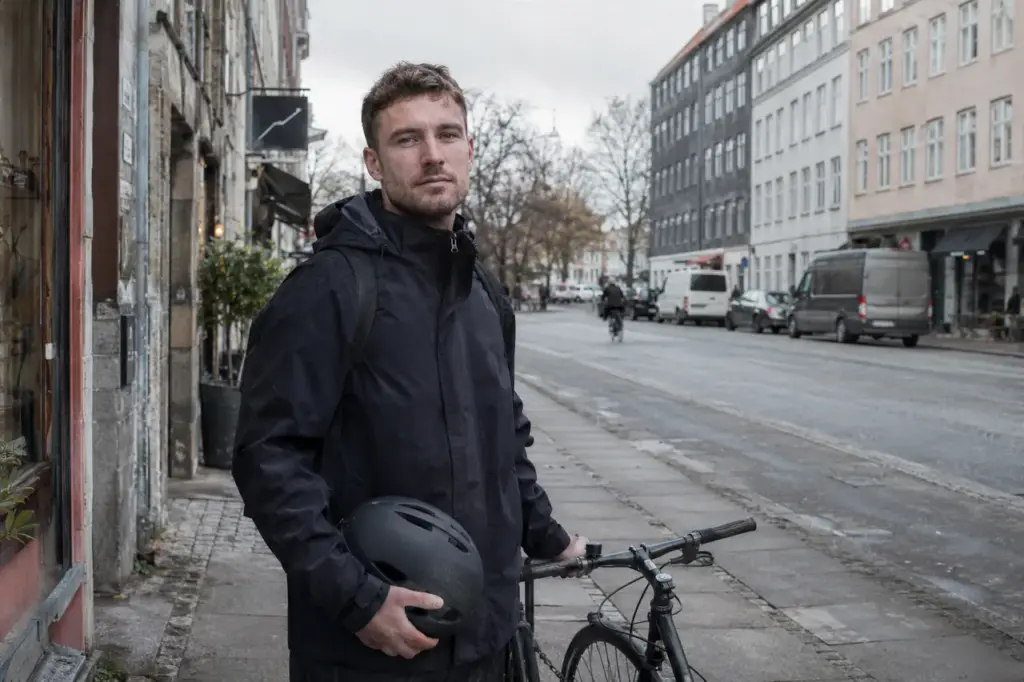
Official Danish resources describe cycling as part of everyday life, not just a recreational activity. For clients who bike to work, wearing considerations may span the entire day—from leaving home to arriving at the office and heading back after work. [7]
During consultations, HRCs can ask how often the client cycles, whether they wear a helmet, and how much time they are willing to spend styling their hair after arriving. Understand these details first, then discuss whether the desired style is easy for the client to maintain independently.
Local hairstyle references can also help guide the conversation. A Copenhagen barbershop’s 2026 trend article features soft fades, textured short styles, and shaped medium-length hair, emphasizing that a hairstyle should fit the time a person has for daily styling. [8]
Which NT products may address these needs?
Cycling habits should be part of the wearing assessment. The specific model should be selected based on the client’s desired hairline appearance, base preference, and daily styling routine. The base construction can help narrow the product shortlist, but cycling and helmet compatibility must be assessed separately for the individual client.
If a client plans to expose part of the forehead and wants to compare a knot-free thin-skin appearance, evaluate STRYKE HS1V and VELLUM HS25V side by side.
For comparing a knot-free thin-skin appearance: STRYKE HS1V
STRYKE HS1V uses a 0.06 mm V-loop thin-skin base and can serve as an option for comparison when a knot-free thin-skin appearance is desired. [14]
For a very thin-skin base appearance: VELLUM HS25V
VELLUM HS25V uses a 0.03 mm V-loop ultra-thin skin base. Its website specifications also include 100% density, a 5 in. / 12.7 cm hair length, and freestyle hair direction. The product description emphasizes its ultra-thin base and knot-free appearance. [15] Compared with the 0.06 mm STRYKE HS1V, this 0.03 mm base prioritizes an ultra-thin appearance but generally requires more careful handling and may need more frequent replacement. For clients who wear cycling helmets frequently, discuss potential friction, maintenance needs, and replacement expectations.
For clients prioritizing the breathability of an all-lace base: AERO HS7
If base breathability matters more to the client, compare AERO HS7, which uses an all-French-lace base. [12]
The key comparison between the two thin-skin products is base thickness and the desired appearance. Whether cycling or helmet use calls for adjustments to the wearing plan should be assessed separately.
At handoff, have the client practice styling their target look. Confirm that they can manage the necessary steps in everyday life, then provide the care instructions for them to take home.
Finland: Discuss sauna habits before installation

UNESCO describes sauna culture as an important part of life for most people in Finland. For clients who regularly use a sauna, whether they can continue doing so may directly affect how willing they are to adopt a hair-system solution. [9]
HRCs should proactively ask whether the client uses a sauna and how they would like to manage wearing and care. Clarify their actual habits first, then verify the use requirements for the specific hair system, adhesive product, and care products.
Styling preferences should not be overlooked, either. GROOM’s 2026 Finnish guide includes classic cuts, Taper Flow, Burst Fade, and Surfer Flow, showing that local hairstyle references are varied as well. [10]
Which NT products are worth comparing?
Sauna use should be discussed separately from base selection. Before recommending a hair system to a client who regularly uses a sauna, confirm the requirements of the specific system, adhesive, and care products. AERO HS7 and AERO LUX HS7EU may be compared when an all-French-lace construction is preferred, but their base construction alone does not establish sauna suitability.
If the client also values the airy feel of an all-lace construction, compare AERO HS7 and AERO LUX HS7EU. The website describes both French lace bases as breathable. [12][13]
For comparing density and hair-length options: AERO HS7
AERO HS7 allows HRCs to compare different density and hair-length options based on the client’s target hairstyle. [12]
For comparing European hair: AERO LUX HS7EU
AERO LUX HS7EU offers a European hair option. Its specifications list Prime European Hair and 100% density.[13]
For clients who use a sauna, HRCs should clarify the specific use requirements before installation and include the care plan in the handoff instructions.
Iceland: Pool culture makes swimming and aftercare important considerations
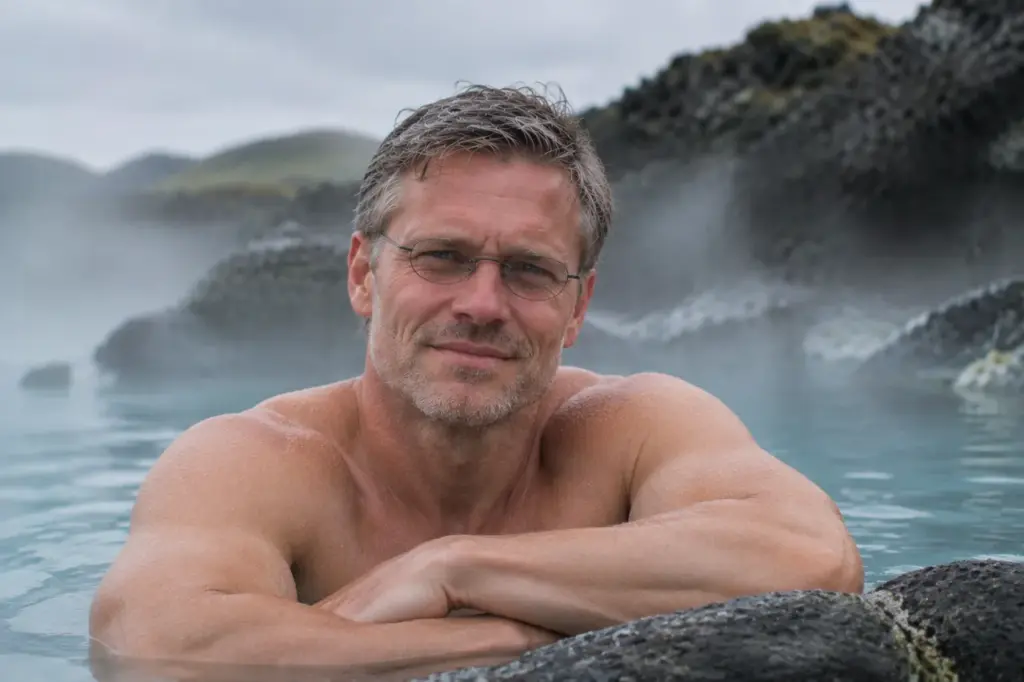
Visit Iceland explains that swimming and bathing in geothermal pools are weekly or even daily activities for many Icelanders, and that pools also serve as community gathering places. [11]
For clients in Iceland, HRCs should clarify these details during the initial consultation: Do they swim, soak in warm pools, or do both? Will their hair be fully submerged? Do they also use steam facilities?
Clients need clear guidance on wearing and care. HRCs should verify the attachment method, care routine, and follow-up inspection schedule based on the specific activities involved.
Which NT products can serve as a starting point for evaluation?
Swimming and geothermal pool use require a separate assessment of attachment, water exposure, and aftercare. AERO HS7 and APEX LACE HS27P can be compared for their base constructions and appearance, but neither breathability nor structural support alone establishes suitability for swimming. Confirm the requirements of the specific hair system and adhesive before advising the client. Pool chemicals, prolonged immersion, and high water temperatures may affect adhesive performance and hair condition. Confirm the specific adhesive instructions and recommend appropriate aftercare.
For clients prioritizing a breathable all-lace construction: AERO HS7
If a client prioritizes a breathable all-lace construction, consider AERO HS7, which uses an all-French-lace base. [12]
For comparing base support and fuller hair: APEX LACE HS27P
If the client wants to compare base support and fuller hair, consider APEX LACE HS27P, which combines a mono base with a lace front. [16]
HRCs should explain base selection and water-use requirements separately, so clients do not interpret breathability or durability claims as a promise of swimming performance.
If choosing a V-loop product, also explain the relevant care requirements for wet hair. For example, the VELLUM HS25V page specifically warns that combing or pulling the hair while it is wet may cause shedding. [15]
Save the confirmed model, color, density, haircut reference, and care plan in the client’s record to guide future orders and maintenance.
Build your stock list around real client needs
Country-specific context helps your team ask the right questions; the client record determines what to order.
| Priority confirmed by the client | NT products to compare | Published specifications |
| All-lace construction, with different density and hair-length options | AERO HS7 | French lace; 90%, 100%, and 110% density; listed hair lengths of 5 in. and 20 in. |
| European hair with an all-lace construction | AERO LUX HS7EU | Prime European Hair; French lace; 100% density |
| Knot-free, scalp-like thin-skin appearance | STRYKE HS1V | 0.06 mm V-loop thin-skin base; 100% density |
| Prioritizes an ultra-thin skin-base appearance | VELLUM HS25V | 0.03 mm V-loop thin-skin base; 100% density |
| Fuller density and structural support from the base | APEX LACE HS27P | Fine mono, gauze-and-PU perimeter, French lace front; 120% density |
The specifications below are taken from the corresponding product pages. Confirm the exact combinations of color, size, density, and hair length before ordering.
Once the client’s requirements have been translated into clear specifications, the HRC can check the availability of candidate models and exact specifications with Newtimes Hair before proceeding with the purchase.
Newtimes Hair lists Sweden, Norway, Denmark, Finland, and Iceland among its shipping destinations. HRCs should schedule the client’s installation only after confirming the exact specifications, availability, and shipping arrangements. [17]
Ready to find a better-fitting hair-system solution for your Nordic clients?
Fill out the form below and tell us which country you serve, the needs you commonly see among your clients, and the product-selection challenges you are facing. Your dedicated customer service representative can help narrow down suitable models and verify available specifications and supply.
FAQ
Sources and Product Specification Links
The links below correspond to the numbered references in the article and can be used to review local background information and verify product specifications.
[1] Visit Sweden: Weather and Climate
[2] Visit Sweden: Outdoor Activities
[3] Lyko: Swedish Men’s Hairstyle Trends
[4] Norwegian Environment Agency: Outdoor Culture
[5] DNT: Norwegian Outdoor Life
[6] Visit Norway: Seasons and Climate
[8] Copenhagen Men’s Hairstyle Trends
[9] UNESCO: Sauna Culture in Finland
[10] GROOM: Finnish Men’s Hairstyle Trends
[11] Visit Iceland: Pool Culture
[13] AERO LUX HS7EU Product Page
[15] VELLUM HS25V Product Page