

Custom Hair System Pre-Production Approval: Specs, Photos, and QC Checkpoints Before Shipping
Custom hair system pre-production approval confirms what the factory will make: the base, hair specifications, physical references, and finishing instructions. Before shipping, a separate review checks the completed system against that agreement. Hair replacement centers should connect both decisions to the same dated order record.
A client wants a softer front. The stylist updates the consultation notes, but the order still says to copy the previous system. The factory now has two instructions. A finished-product photo may reveal the difference, but the best time to resolve it was before anyone started making the piece.
For professional salons and hair replacement centers (HRCs), approval is also part of the process to make sure the appointment with the client will run smoothly. The following workflow is designed to help professional buyers organize a custom order with Newtimes Hair. It will help identify useful photo evidence and address unresolved product details before dispatch. Agree on any requested photos and shipment hold with your sales representative when placing the order.
What Should Be Approved Before Production of Custom Items Begins?
Approve one complete specification record, with clear references for any detail that words alone cannot define. Everyone involved should be able to identify which version the factory is being asked to follow.
Three points in the order deserve different checks:
| Timing | What the buyer reviews | What the decision establishes |
| Before production | Final specifications, template or measurements, labeled samples, and reference images | What the factory is authorized to make |
| During production, if arranged | A specified detail at an agreed stage, such as the unfinished base | Whether that detail matches the approved design before the next operation |
| Before shipping | The completed unit, relevant QC findings, and any agreed photographs | Whether unresolved questions need attention before dispatch |
An unfinished-base photo can help review construction. It cannot approve hair color or the finished hairline. Likewise, a photograph of a previous system is a design reference, not evidence that the new unit has been checked.
Newtimes Hair’s order-change guidance states that custom orders can be changed before production begins, but cannot be changed once production has started. Treat pre-production confirmation as the point to settle client preferences. A later inspection is there to check conformity with that agreement.
Which Specifications Belong in the Approval Record?
The record should describe the complete system and identify the reference used for each critical feature. Start with the Newtimes Hair custom order form and attach clearly labeled notes or drawings where needed.
Newtimes Hair’s published specification form provides separate areas for base design, front contour, hair direction, and regional hair details. This is useful when a client’s requirements vary across the coverage area.
Use the following checklist to complete the approval record:
| Specification | What to confirm in writing |
| Order identity | Order number, client reference, quantity, revision date, and the person authorized to approve |
| Base and fit | Materials by area, dimensions and units, template reference, front contour, perimeter design, and applicable thickness |
| Hairline and ventilation | Hairline design, ventilation method, and any agreed knot-bleaching area |
| Hair type | Agreed hair category and the material used for any gray blend |
| Color and gray | Named color ring and code or labeled physical samples; any regional blend instructions |
| Density | The supplier’s density reference, requested level, and any differences between the front, top, or other covered areas |
| Length and curl | Length by area where needed, curl or wave reference, and how length will be checked |
| Direction and crown | Parting, crown position, and direction shown on an oriented drawing when necessary |
| Finishing | Base trimming, haircutting, styling, labels, and packaging requested for this order |
Density deserves a shared reference. Newtimes Hair’s custom-ordering guide explains that density labels and percentages can differ between suppliers. Copying “medium” from another brand’s order does not establish the same result.
Check technical combinations before approval, too. Newtimes Hair’s bleached-knot guidance explains that suitability depends on construction and hair color; V-looped or injected skin areas do not have traditional knots to bleach. Specify the intended area and ask the team to confirm feasibility for the actual design.
Resolve Conflicting References Before Signing Off
Give every reference a purpose. A template can define shape, a labeled hair sample can define color, and a written instruction can define a density change. They should tell one consistent story.
For example, a salon might send an old unit to show the base construction while requesting a softer front in the replacement. The approval note should say that the old unit is the construction reference and that the new front-density instruction takes precedence.
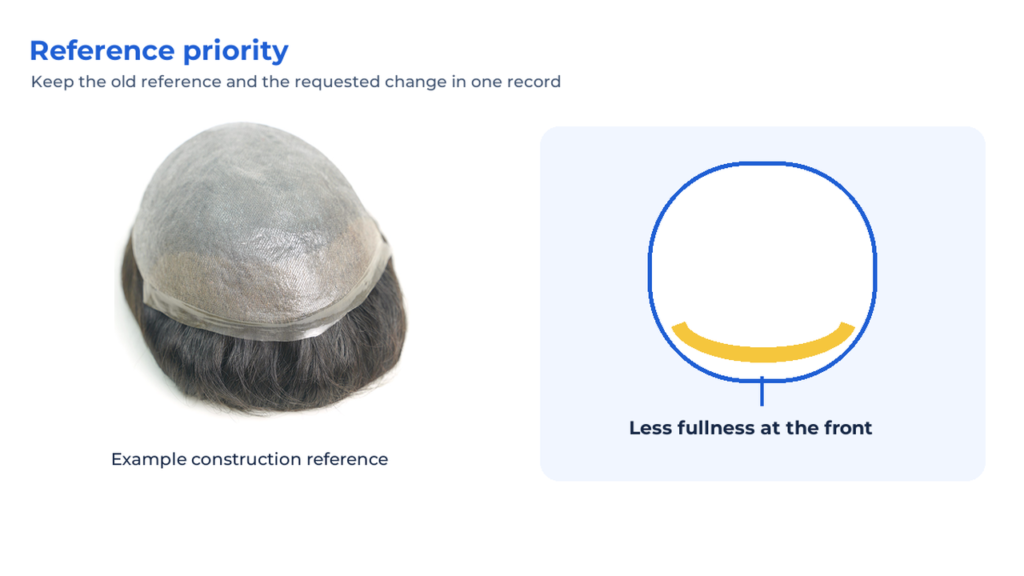
If a template and written dimensions disagree, ask for clarification before approval. Mark the front and identify left and right from the wearer’s perspective on drawings. For any critical dimension, agree on the measurement method and acceptable variation; do not assume a universal tolerance.
Which Photos Help With a Custom Hair System Review?
Useful approval photos show a specific feature of the actual order clearly enough to answer a question. Request the views that matter to the client’s design, and agree on when they can be supplied.
For a finished-system review, the following views serve different purposes:
| Photo or video view | What it helps the HRC review | What still needs separate confirmation |
| Full underside, with the front identified | Base layout, perimeter construction, and orientation | Material specifications and fit against the template |
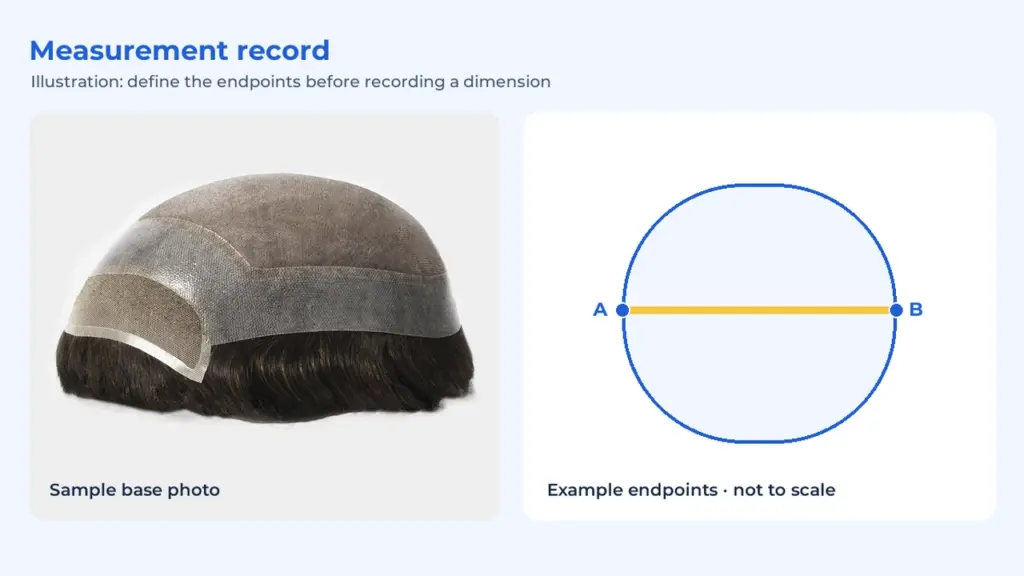
| Base measurement with the measuring tool visible | Recorded width or length and the points being measured | The agreed measuring method and whether excess lace is included |
| Front close-up with hair lifted away | Visible edge, hairline graduation, and relevant knot detail | Construction-specific workmanship checks |
| Top, crown, and side views in a consistent condition | Direction, crown placement, and visible density distribution | Density comparison against the agreed physical reference |
| Hair beside the labeled color reference | Visible relationship between the unit and its reference | Physical color matching by the factory |
| Length check or short movement video | Length at the identified area, curl appearance, and movement | Hair category, long-term performance, and durability |
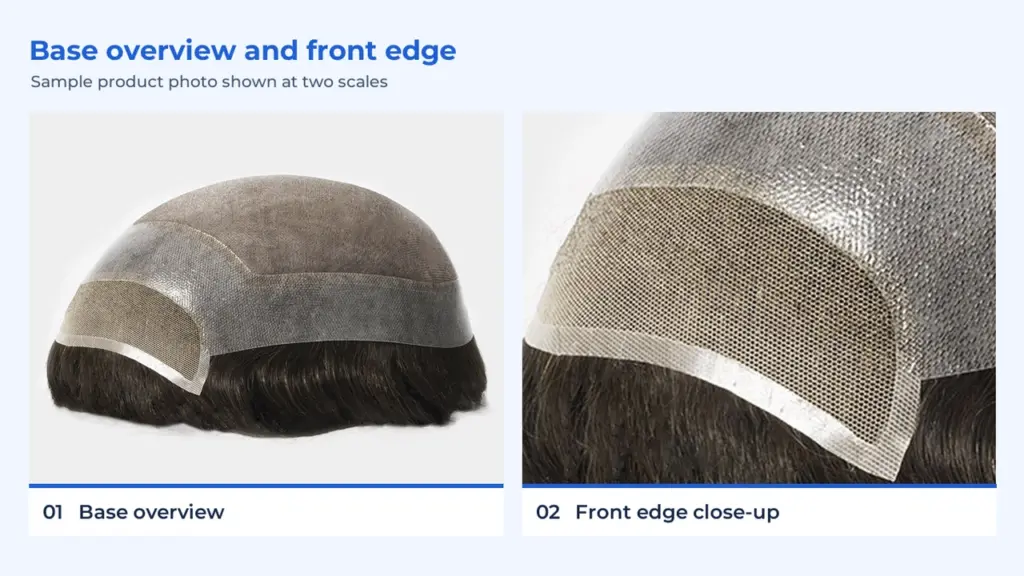
Ask for the order or unit reference to accompany the images. If several different pieces are in the same purchase, the reviewer needs to know which piece each image shows.
Keep the hair condition and lighting consistent between comparison images. A combed-back front and a forward-styled front show different details; ask for the view that exposes the feature under review. Avoid filters and retouching in inspection images.
Can Photos Confirm an Exact Color Match?
Photos can support a color discussion, but they cannot establish an exact physical match. Newtimes Hair’s color-matching guidance recommends physical color rings or hair samples because screen display can differ from the actual hair.
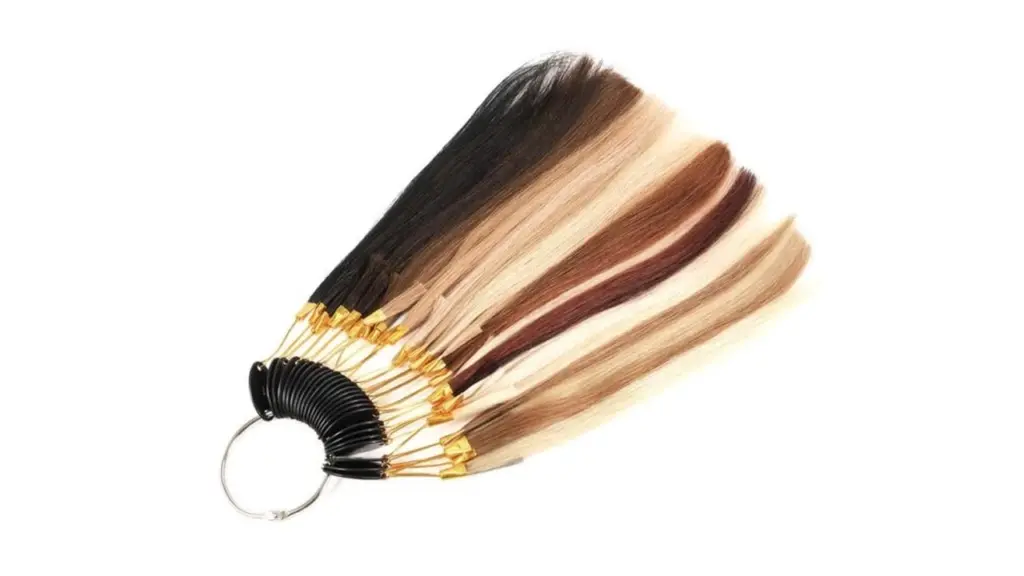
If a unit looks warmer in a photograph, ask the factory to compare it physically with the approved reference before requesting a color change. A second picture beside that reference can help explain the result. Changing a correct specification to compensate for a misleading photograph could create a new problem.
Photos also cannot verify the declared hair origin or predict how the system will perform over months of wear. Those questions require other evidence. For assessing a new supplier through actual use, refer to the separate hair-system sample and pilot testing guide.
Which QC Checkpoints Matter Before Shipping?
Before shipping, connect the inspection to the approved order: confirm the specification used, review the relevant measurements and workmanship, and establish whether any discrepancy remains unresolved.
Newtimes Hair’s published factory inspection walkthrough describes checking systems against order forms with color, curl, density, and front-contour references. It also describes workmanship checks against production guidelines, including knots and stitching. These are concrete reasons to make the order record precise.
For the buyer’s review, organize the questions around the following checkpoints.
Confirm the Unit Was Checked Against the Correct Order
Ask which specification version and physical references were used. A system may match an earlier instruction perfectly while missing a later approved change.
Check the quantity as well. If an order includes several custom units, clarify which units the supplied photos and inspection findings cover.
Confirm Measurements and Workmanship
Ask for the result of any measurement that matters to fit or finishing. “Size checked” is less useful than the measured dimensions and a clear explanation of how they were taken.
For the base, clarify whether the stated dimensions refer to the finished coverage area or include material intended for later trimming. For a hybrid design, review the position and width of the agreed perimeter sections. For hair length, identify the area measured and the condition used for the check.
Where an image suggests a damaged edge, loose seam, or irregular area, ask the QC team to inspect it directly. A blurred photograph leaves a question open; it does not by itself establish a defect.
Confirm the Finishing and Delivery Instructions
Before dispatch, confirm whether the unit should arrive uncut or with the agreed base trimming and haircutting completed. Verify the order reference, quantity, delivery address, and shipping method.
Also confirm the expected dispatch date separately from the estimated arrival date. Allow time for the salon’s receiving inspection before the fitting appointment. If a question remains open, ask how resolving it affects dispatch rather than assuming the original schedule still applies.
When Should an HRC Approve, Clarify, or Hold the Order?
Approve when the agreed evidence supports the specification and the relevant questions are closed. Request clarification when evidence is incomplete. Ask for a hold when a suspected mismatch needs technical review before the next agreed step.
These decisions should be specific:
- Approve: Identify the order, specification version, and the stage being approved. Approval to begin production is different from approval to dispatch.
- Clarify: Name the missing evidence, such as an underside view, an identifiable sample reference, or a measurement. Request confirmation that dispatch will wait if that is part of your agreed arrangement.
- Hold for review: Point to the exact approved requirement and the observed concern. Ask the sales representative and QC team to confirm the finding and proposed next action.
Separate a suspected manufacturing mismatch from a new client preference. If the finished unit differs from the approved order, explain the discrepancy. If the client now wants a different color or density, identify that as a new request and ask what options are available.
Avoid authorizing shipment with “Looks good, but please check the crown.” That message leaves the unresolved point and the shipping decision unclear. State what must be checked and wait for the response before approving that stage.
A Short Approval Note Your Team Can Reuse
A useful approval note links the decision to the exact order and evidence. Adapt this buyer-side template to the arrangement agreed with your supplier:
Order and unit reference: [Order number/client reference/quantity]
Stage: [Pre-production approval / pre-shipment review]
Specification: [Filename or reference, revision, and date]
Physical references: [Template, color sample, density reference, or reference unit]
Evidence reviewed: [Photo filenames, measurements, and QC clarification]
Decision: [Approved for the named stage/clarification needed/hold requested]
Open point and requested action: [Specific issue, or none]
Approved by and date: [Name/date]
For a small studio, the owner and stylist may be the same person. In a larger center, nominate one person to collect the technical review and send the final decision. That keeps separate messages from becoming conflicting production instructions.
Retain the approved record after delivery. Newtimes Hair’s custom hair systems page states that custom specifications and template samples are stored for repeat orders. Keeping the matching record at the salon makes the next conversation easier, especially when a client requests a change.
Prepare Your Next Custom Order With Newtimes Hair
Send Newtimes Hair your client’s template or measurements, color reference, and the details that matter most to the fitting. Include the required arrival date and any photos or inspection information you would like to review before dispatch.
Start with the custom order form and ask your sales representative to confirm feasibility, price, timing, and the review arrangements for that order. A clear approval record gives the factory usable instructions and gives the salon a practical basis for checking the finished piece.
About the Author

Alf Hou is a Hair Replacement Specialist and Technical Consultant at Newtimes Hair, with industry experience since 2018. He works with salons, hair replacement centers, and distributors worldwide, specializing in men’s and women’s hair systems, custom base design, and technical solutions. Currently pursuing the IAT Hair Practitioner’s Certificate, Alf shares practical insights to help hair professionals make informed decisions.