



- Why Custom Wigs Matter for Professional Hair Businesses
- The Color Anchor: Defining the Primary Hue for a Seamless Blend
- Sun-Kissed Precision: Mimicking Natural Light with Spot Coloring
- Choose the Right Spot Highlight Style
- Confirm the Spot Size, Length, and Spacing
- Place Highlights Where They Matter Most
- The Multi-Dimensional Grid: Achieving Organic Scalp Realism
- Choose the Right Checkerboard Color Effect
- Match the Texture and Density
- Pick Natural Color Pairings
- Use Newtimes Hair Product Options as Custom References
- Confirm Specifications Before Production
- Custom Wig Specification Template
- Common Mistakes to Avoid
- Best Custom Wig Formula for Salons and Wig Stores
- Empowering Your Vision: The Newtimes Hair Custom Advantage
- Final Thoughts
- FAQ
Spot Color for Wigs: How to Achieve Flawless Realism in Custom Design
- Why Custom Wigs Matter for Professional Hair Businesses
- The Color Anchor: Defining the Primary Hue for a Seamless Blend
- Sun-Kissed Precision: Mimicking Natural Light with Spot Coloring
- Choose the Right Spot Highlight Style
- Confirm the Spot Size, Length, and Spacing
- Place Highlights Where They Matter Most
- The Multi-Dimensional Grid: Achieving Organic Scalp Realism
- Choose the Right Checkerboard Color Effect
- Match the Texture and Density
- Pick Natural Color Pairings
- Use Newtimes Hair Product Options as Custom References
- Confirm Specifications Before Production
- Custom Wig Specification Template
- Common Mistakes to Avoid
- Best Custom Wig Formula for Salons and Wig Stores
- Empowering Your Vision: The Newtimes Hair Custom Advantage
- Final Thoughts
- FAQ
For professional salons and stylists, using spot color is the secret to transforming a standard hairpiece into a high-end, realistic masterpiece.
Today’s wig clients want more than a basic color and cap size. They want soft dimension, realistic parting, breathable bases, and salon-level color effects. This is why custom wigs are becoming a stronger choice for professional hair businesses.
At Newtimes Hair, we work with hair professionals who need custom human hair wigs, lace front wigs, full lace wigs, medical wigs, hair toppers, and hair systems. For clients who want a natural yet fashionable result, details like spot highlights and checkerboard color ventilation can make a big difference.
This guide explains how to customize a natural and stylish wig step by step. It also shows how to choose color, highlight placement, checkerboard color effects, density, texture, and factory specifications.
Why Custom Wigs Matter for Professional Hair Businesses
A ready-to-wear wig can solve a basic need. A custom wig can solve a personal need. That difference matters in the salon and retail market.
A well-customized wig can match the client’s face shape, skin tone, hair loss area, lifestyle, and fashion preference. It can also help wig stores and boutiques create more premium product lines. For high-end clients, the small details are often what make the wig feel real.
Newtimes Hair offers a wide range of women’s human hair wigs, lace wigs, medical wigs, toppers, and customized hairpieces. These options allow salons and wig businesses to select different base designs, hair colors, densities, lengths, textures, and lace constructions for different clients.
If your client wants a natural daily look, the goal is soft and wearable. If your boutique wants a fashion collection, the goal may be more visible color contrast. Either way, customization should be planned clearly before production.
The Color Anchor: Defining the Primary Hue for a Seamless Blend
The base color is the foundation of the wig. Do not start with highlights first. A natural custom wig should always begin with the main hair color.
For dark-haired clients, natural black, off black, dark brown, and black tea brown are safe choices. For softer looks, chestnut brown, mocha brown, and medium brown work well. For more fashionable styles, ash brown, milk tea brown, caramel brown, or rooted blonde shades can create a more modern finish.
The base color should match three things: the client’s skin tone, the intended daily style, and the final highlight effect. If the base color is too dark, light highlights may look harsh. If the base color is too light, the whole wig may lose depth.
Newtimes Hair provides professional color options and color chart references. For accurate matching, salons can use a color ring or send a client’s hair sample before confirming the final custom order.
Sun-Kissed Precision: Mimicking Natural Light with Spot Coloring
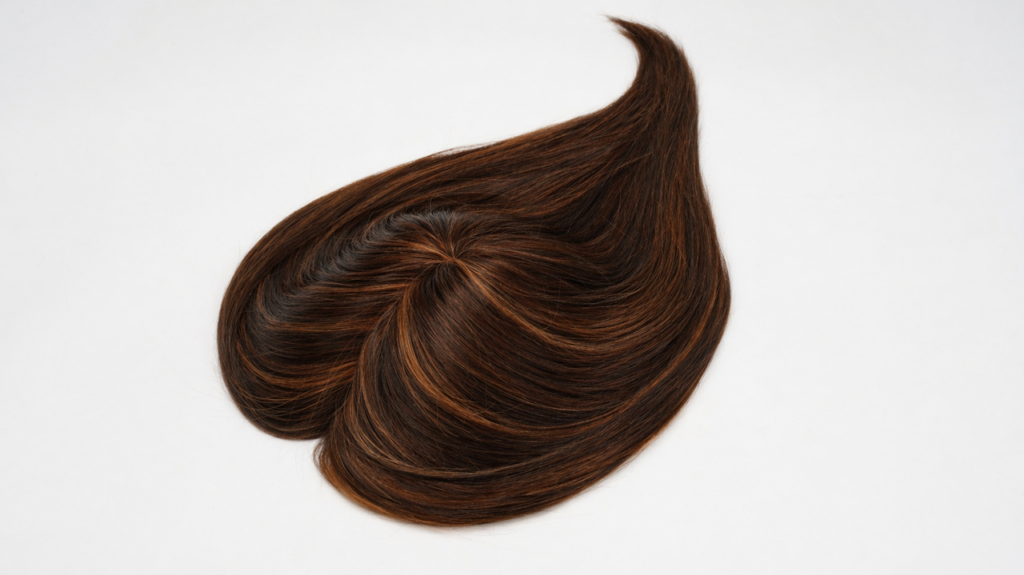
Spot highlights are small highlighted sections placed across the wig. They are different from full-panel bleaching or heavy streak highlights. Instead of coloring a whole section, the factory adds small points or soft bundles of lighter color into the hair.
This technique creates depth, movement, and a more natural hair effect. It is especially useful for women’s wigs, lace front wigs, medical wigs, and premium salon custom orders.
Spot highlights can make a solid-color wig look less flat. They can also soften dark colors, brighten the face, and create a more realistic “grown-out” effect. For clients who do not want bold fashion color, fine spot highlights are often the safest choice.
At Newtimes Hair, this type of mixed-tone customization can be used for clients who want highlights, T-colors, rooted effects, soft face-framing brightness, or more dimensional wig color.
Choose the Right Spot Highlight Style
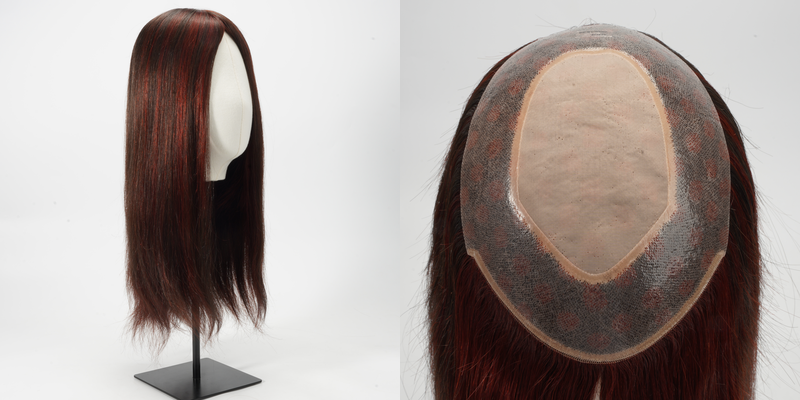
Different spot highlight styles create different looks. For most salons and wig stores, the safest option is fine scattered spots. These are small, even highlights across the wig, with slightly more detail around the front hairline and face-framing area.
Fine scattered spots look natural and wearable. They are ideal for daily salon clients and premium retail wigs. Medium spot highlights are more visible and create a stronger layered effect. Larger spot highlights look closer to small streaks and are better for fashion-forward collections.
Face-framing spot highlights are also popular. These focus on the bangs, temples, and sides of the face. They help soften the facial outline and make the wig look more styled. Root point highlights are placed near the roots, usually within the first 3cm to 5cm. This creates a realistic regrowth effect.
For a higher-end salon look, balayage-style spot highlights can also be used. The color gradually changes from denser to softer placement, without a hard line.
Confirm the Spot Size, Length, and Spacing
Clear measurements help the factory make the correct sample. Vague instructions such as “make some highlights” can easily lead to mistakes.
For most natural custom wigs, fine spots of 1.0mm to 2.0mm are suitable. This creates a soft and refined effect. Medium spots of 2.5mm to 4.0mm are better when the client wants more visible dimension. Larger spots of 5.0mm to 8.0mm create a bolder fashion look.
The highlight length also matters. Root highlights are usually 2cm to 5cm long. Mid-length highlights are around 10cm to 15cm. Half-head highlights can be 20cm to 35cm. Full-length highlights run from the root to the ends.
Spacing controls the density. A natural spacing is usually 1.0cm to 2.0cm. A softer and more minimal look may use 2.0cm to 3.0cm spacing. A stronger fashion look may use 0.5cm to 1.0cm spacing.
For dark wigs, avoid making light spots too dense. The result may look artificial. For light brown or blonde wigs, medium spacing often looks softer and more premium.
Place Highlights Where They Matter Most
Highlight placement should follow how the client wears the wig. The most important areas are the front hairline, temples, bangs, and parting line.
For lace front wigs, the face-framing area should look soft and natural. A few brighter points near the front can make the wig look more expensive. For middle-part wigs, the parting line should have subtle color movement. For side-part wigs, the visible parting side should receive more attention.
For full lace wigs, the color placement should work from different angles. Since the client may change the part, the highlights should not only look good in one fixed direction.
For curly wigs, spot highlights should be slightly wider and more spaced out. Curls can hide fine highlights. For straight wigs, fine and dense spot highlights can look very polished.
The Multi-Dimensional Grid: Achieving Organic Scalp Realism
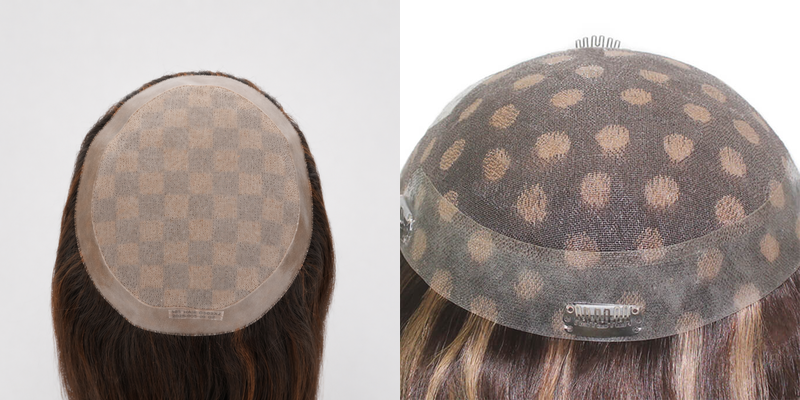
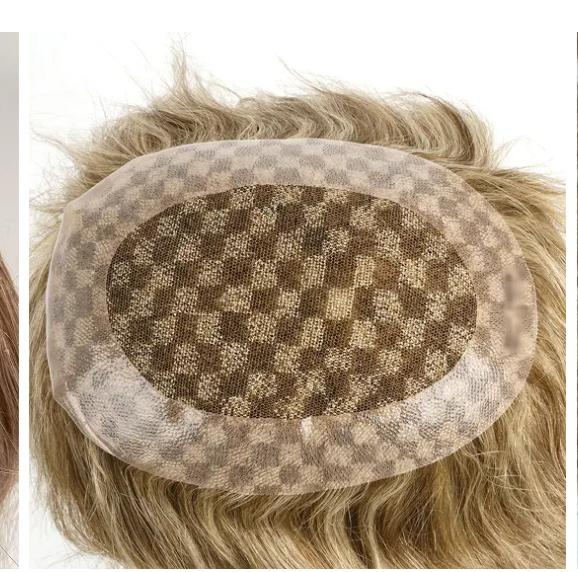
Checkerboard color ventilation is a mixed-color hair ventilation method. It does not mean coloring the lace base. Instead, different hair colors are ventilated in a checkerboard-style layout across selected areas.
This technique places darker and lighter hair tones in a balanced grid-like pattern. The result appears on the hair color, not on the lace material. When done well, the color looks more dimensional, softer, and less flat.
For example, a dark brown wig may use dark brown and caramel brown hair in a checkerboard color layout. A black tea brown wig may use cool brown and ash brown tones. A light brown wig may use milk tea brown and beige brown shades.
The goal is not to show a visible checkerboard pattern. The goal is to create natural color movement. It helps the wig look closer to real growing hair, especially under daylight and salon lighting.
This option is useful for lace front wigs, full lace wigs, hand-tied wigs, and high-end custom wigs that need a premium color finish.
Choose the Right Checkerboard Color Effect
The checkerboard color effect should match the base color, texture, density, and target client.
For dark wigs, use subtle contrast. Black, off black, dark brown, coffee brown, and caramel brown can work well together. Avoid very pale tones unless the client wants a bold fashion look.
For light brown or blonde wigs, use softer warm or cool tones. Milk tea brown, beige brown, ash brown, and soft blonde shades can create a more natural finish. The color difference should be gentle, not sharp.
For high-density wigs or long wigs, checkerboard color ventilation can reduce the heavy solid-color effect. It gives the hair more movement and visual airiness. For short wigs, a softer and smaller color distribution usually looks more refined.
For curly wigs, the mixed-color sections can be slightly wider. Curls blend colors more strongly. For straight wigs, finer checkerboard color placement looks cleaner and more polished.
Newtimes Hair can support different mixed-color methods across wigs, toppers, and hair systems. This makes it easier to match the right color design to each client’s wearing habits.
Match the Texture and Density
Texture changes how the color appears. A straight wig shows highlights more clearly. A body wave wig softens the color effect. A curly wig can hide small details, so wider spot highlights are usually better.
Density is also important. Many natural wigs use 120% to 130% density, depending on the style and product type. For clients who want a fuller look, higher density may be selected. For medical wigs or lightweight daily wigs, comfort may be more important than volume.
The best density is not always the thickest option. A natural wig should move well and sit flat on the head. Too much density can make the hairline look bulky. Too little density may not offer enough coverage.
For salons, the best approach is to ask how the client will wear the wig. Daily wear, medical hair loss, fashion styling, and stage use all need different density choices.
Pick Natural Color Pairings
A good custom wig should look intentional. The color should not feel random.
For a natural daily look, choose a dark brown base with ash brown or caramel spot highlights. This gives soft movement without looking too bold. For a warmer look, use a chestnut brown base with milk tea brown highlights. This is ideal for clients who want a soft and feminine style.
For a cool European look, use black tea brown with ash beige or cool brown points. This creates a clean, modern finish. For a very low-key look, use natural black with dark coffee fine spots. This gives dimension without obvious contrast.
For high-end boutiques, rooted colors, soft balayage effects, checkerboard color ventilation, and face-framing spot highlights can make the wig feel more fashion-led. For salon clients, softer contrast is usually easier to wear.
Use Newtimes Hair Product Options as Custom References
When explaining customization to clients, it helps to use product categories they can understand.
For clients who want a premium daily wig, human hair wigs are a strong starting point. They can be customized by color, density, length, texture, lace type, hairline, and cap construction. For clients who want a realistic front hairline, lace front wigs or full lace wigs are suitable options.
For clients experiencing alopecia, chemotherapy hair loss, or sensitive scalp concerns, medical-grade human hair wigs can be positioned as a more comfort-focused solution. These wigs should focus on soft bases, secure fit, breathable construction, and natural color effects.
For clients with partial hair loss, hair toppers may be more suitable than full wigs. Spot highlights and checkerboard color ventilation can also be added to toppers, especially when the goal is to blend with the client’s natural hair.
For wig stores and boutiques, Newtimes Hair can support wholesale human hair wigs, custom wig orders, private label packaging, and repeatable specifications. This is important for businesses that need stable product quality across future reorders.
Confirm Specifications Before Production
A successful custom wig depends on clear factory instructions. The more specific the order, the easier it is to repeat.
Before production, confirm the base color, highlight color, spot width, spot length, spot spacing, and highlight placement. Then confirm the checkerboard color combination, color distribution area, cap size, density, length, texture, hair direction, hairline design, and knot treatment.
For lace front or full lace wigs, also confirm the parting style. Middle part, side part, free part, and fixed parting all require different ventilation planning.
For high-end salon orders, take photos or videos of the client’s desired result. If possible, send a hair color sample. For repeat orders, keep the same spec sheet to reduce communication errors.
Newtimes Hair stores custom specs and template samples for repeat orders, which can help reduce back-and-forth communication and improve reorder consistency.
Custom Wig Specification Template
Here is a clear template salons and wig stores can use when placing a custom order.
Product Type: Human hair wig / lace front wig / full lace wig / medical wig Base Color: Dark brown / natural black / chestnut brown / ash brown Highlight Type: Fine spot highlights Spot Width: 1.0mm to 2.0mm Spot Length: Root point / mid-length / half-head / full-length Spot Spacing: 1.0cm to 2.0cm Highlight Placement: Face-framing area slightly denser Parting Area: Add soft color movement near the parting line Checkerboard Color: Dark tone + light tone mixed ventilation Checkerboard Area: Full top / parting area / face-framing area / full head Color Contrast: Soft / medium / bold Hair Length: 14 inches / 16 inches / custom length Density: 120% / 130% / custom density Texture: Straight / body wave / curly Final Effect: Natural, soft, dimensional, and wearable
Common Mistakes to Avoid
Do not choose the highlight color before confirming the base color. The base color controls the final harmony of the wig.
Do not use very dense light spots on a dark base. This may look too harsh, especially under daylight. Do not treat checkerboard color as lace base coloring. It is a mixed-color hair ventilation method.
Do not create strong checkerboard contrast unless the client wants a bold look. The color should blend naturally from normal viewing distance.
Do not use tiny spot highlights on curly wigs. The curl pattern may hide the color. For curly styles, use slightly wider spots and wider spacing.
Do not send vague instructions to the factory. Terms like “natural highlights” or “mixed color” are not enough. Always include exact size, length, spacing, placement, color ratio, and ventilation area.
Do not use one formula for every client. A salon client, a medical wig client, and a fashion boutique client may need very different custom solutions.
Best Custom Wig Formula for Salons and Wig Stores
For most professional clients, the best formula is simple: a natural brown base, fine spot highlights, soft face-framing placement, and checkerboard color ventilation that matches the hair color.
For dark wigs, use fine spot highlights with standard spacing and a soft dark-brown mixed checkerboard effect. For light brown wigs, use medium spot highlights with slightly wider spacing and low-contrast beige-brown mixed ventilation. For curly wigs, use wider spots and a more blended checkerboard color layout. For lightweight premium wigs, use fine spots with subtle mixed tones near the parting area.
This formula creates a wig that is natural, stylish, and easy to sell. It works well for salons, wig stores, boutiques, and professional hair replacement businesses.
Empowering Your Vision: The Newtimes Hair Custom Advantage
Newtimes Hair supports professional hair businesses with human hair wigs, lace wigs, medical wigs, hair toppers, hair systems, and custom hairpieces. For businesses that need natural and fashionable wigs, we can help customize color, highlights, density, length, texture, base design, hairline, curl type, and packaging.
For salons and stylists, this means more personalized client solutions. For wig stores and boutiques, it means more premium product options. For distributors, it means repeatable specifications and scalable supply.
Whether your client wants a soft daily wig, a realistic medical wig, or a fashionable lace front wig, the right customization plan can make the final piece look more natural and valuable.
Final Thoughts
A natural and fashionable wig is built through detail. The color must have depth. The cap should feel comfortable. The density must match the client. The texture must support the style.
Spot highlights add movement and brightness. Checkerboard color ventilation adds soft mixed-tone dimension. Together, they help create a wig that feels more realistic, modern, and premium.
For salons, stylists, wig stores, and boutiques, custom wigs are not only a product. They are a way to offer better client results and build a stronger professional business.
With the right specifications and the right supplier, every custom wig can look natural, stylish, and ready for the client’s real life.