



- Key Takeaways
- How We Evaluated Hair System Companies for HRCs
- Why B2C Access Is Not a Disqualifier
- Which Companies Made the List—and Why
- 1. Newtimes Hair: Providing Hair Systems Engineered for Professional Growth
- 2. Bono Hair: A B2B Manufacturer for Wholesalers and Salons
- 3. OnRite: Professional-First Hair Replacement Support
- 4. Superhairpieces: Retail Scale With a Real Pro Program
- Companies That Combine Consumer Sales With Studio Support
- Which Hair System Company Is Best for Your HRC?
- Types of Hair Systems HRCs Should Assess When Comparing Suppliers
- Hair Services That Build Total Confidence
- The Final Call for HRCs
- About the Author
- FAQs
10 Best Hair System Companies for Hair Replacement Centers and Studios 2026
- Key Takeaways
- How We Evaluated Hair System Companies for HRCs
- Why B2C Access Is Not a Disqualifier
- Which Companies Made the List—and Why
- 1. Newtimes Hair: Providing Hair Systems Engineered for Professional Growth
- 2. Bono Hair: A B2B Manufacturer for Wholesalers and Salons
- 3. OnRite: Professional-First Hair Replacement Support
- 4. Superhairpieces: Retail Scale With a Real Pro Program
- Companies That Combine Consumer Sales With Studio Support
- Which Hair System Company Is Best for Your HRC?
- Types of Hair Systems HRCs Should Assess When Comparing Suppliers
- Hair Services That Build Total Confidence
- The Final Call for HRCs
- About the Author
- FAQs
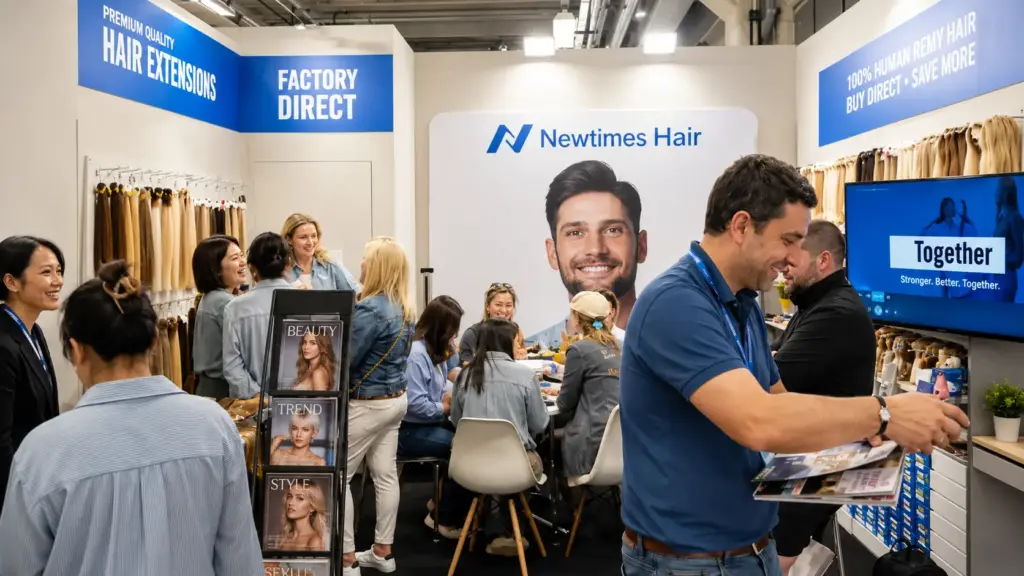
The best hair system companies for Hair Replacement Centers (HRCs) are the suppliers that can reliably support each studio’s client mix, service model, and repeat-order workflow—not simply the companies with the largest consumer catalogs.
This 2026 comparison evaluates ten companies that publicly serve hair replacement centers, stylists, or professional hair replacement studios. We compare professional access, stock and custom-order capability, operational support, and business-model fit.
Newtimes Hair is our top pick for professional buyers because it supplies hair professionals only, rather than selling directly to individual consumers. Its offer combines stock and custom hair systems with professional wholesale support. Learn what Newtimes Hair does.
Key Takeaways
- The best hair system company for an HRC is the one that fits its client mix, repeat-order needs, and service workflow—not simply the largest consumer brand.
- Professional-only, hybrid, and consumer-facing suppliers can all work; compare the actual account, stock, custom-order, support, and after-sales terms.
- Match base construction to the client: lace and thin skin favour a natural finish, while mono and hybrids can favour durability or a balance of priorities.
- Do not make a supplier decision from reviews alone. Confirm product specifications, reorder process, support, and policy details before committing.
How We Evaluated Hair System Companies for HRCs
This is a Newtimes Hair editorial comparison for professional buyers, not an independent laboratory test. The ranking measures HRC suitability based on publicly available information as of August 2026; it does not claim that one company’s product quality is universally better than another’s.
We evaluated:
- Whether the company publicly serves salons, stylists, studios, or wholesale buyers
- Whether it offers stock systems, custom ordering, or both
- The practical support available for professional ordering, fitting, maintenance, and repeat client cases
- Whether its commercial model is professional-only, consumer-facing, or hybrid
- Whether its offer suits a Hair Replacement Center’s ongoing service workflow
A higher position reflects HRC suitability under this framework. It does not claim that one company’s product quality is universally better than another’s.
Why B2C Access Is Not a Disqualifier
A company can sell to consumers and still serve HRCs well. The key question is not whether it has a consumer shop. The better question is whether it has a real professional offer for studios: wholesale pricing, salon accounts, professional education, stock access, custom ordering, salon leads, or partner support.
Which Companies Made the List—and Why
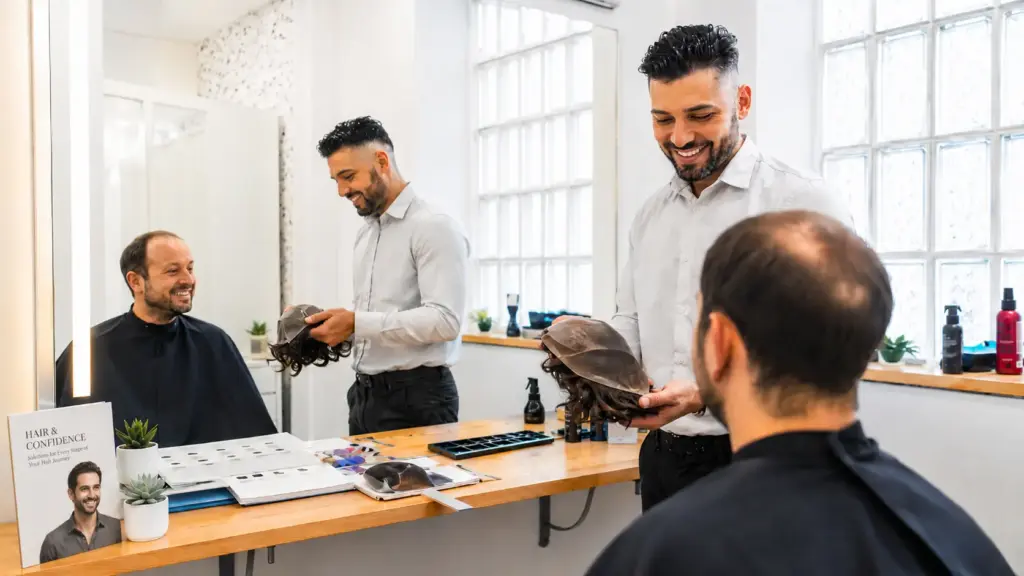
Each company on this list has public evidence of serving salons, studios, stylists, professional partners, or wholesale buyers. Rankings favour the suppliers whose public model most clearly supports the recurring operational needs of an HRC—not a one-time consumer purchase.
- Consistent products that protect service quality.
- Stock and custom options for different client needs.
- Clear professional support for ordering, fitting, and maintenance.
- Training, supply, or growth tools that help a studio operate.
- A business model that works beyond one consumer purchase.
| Company / Professional Model | Evidence it serves HRCs / studios | Public commercial model |
| Newtimes Hair | Supplies salons, stylists, studios, and wholesale distributors | Professional-only B2B |
| Bono Hair | Serves wholesalers, distributors, salon owners, and new businesses | B2B manufacturer/wholesale |
| OnRite | For professionals delivering systems to clients; training and custom orders | Professional-first |
| Superhairpieces | Pro accounts, wholesale access, salon supplies, and training | B2C plus professional supply |
| HairBro | Dedicated wholesale and salon-cooperation paths | B2C plus professional supply |
| Advent Hair | Supplies individual wearers and salon resellers; offers salon pricing | B2C plus salon reseller |
| Lordhair | Salon partners provide fitting, cutting, and maintenance to wearers | B2C plus salon partner network |
| LaVivid | Partner-salon network, custom orders, professional tools, and training | B2C plus salon network |
| Hairskeen | Professional network of hairstylists and barbers trained in its systems | B2C plus branded professional network |
| UniWigs | Salon program, professional education, and partner salons | B2C plus salon program |
Source note: Link every company name to the specific public page supporting its professional-program, wholesale, salon-partner, or training claim. Remove or revise any claim that the linked source does not support at publication. This comparison assesses public business-model fit, not universal product superiority.
1. Newtimes Hair: Providing Hair Systems Engineered for Professional Growth
Newtimes Hair ranks first in this editorial framework because its public model is built exclusively for professional buyers rather than direct consumer checkout.
Why Newtimes Hair Fits HRCs Specifically
Newtimes Hair is structured for professional buyers, including salons, stylists, studios, and wholesale distributors; individual consumers cannot purchase directly. That makes the company’s positioning especially relevant for businesses that need to protect their own client relationship and service model. See Newtimes Hair’s professional-buyer model.
HRCs can use ready-to-ship stock systems for common client needs and specify custom units when a case requires a particular base design, size, density, colour, wave, hair direction, grey percentage, or front contour. Explore custom hair systems.
Quality-Control Evidence
Newtimes Hair’s manufacturing operates under ISO 9001 quality-management standards and uses manual and automated inspection at multiple production stages. Read the Quality & Compliance overview.
For a practical view of the process, embed or link one relevant Newtimes Hair factory video here—for example, a video covering hair testing, bleach-knot work, or quality inspection—rather than adding a generic promotional video.
Important buying note: Confirm stock availability, custom specifications, fulfilment options, and order-specific timing with the sales team before promising a client appointment or replenishment date.
2. Bono Hair: A B2B Manufacturer for Wholesalers and Salons
Bono Hair is positioned as a factory and supplier for wholesalers, distributors, salon owners, and new hair businesses. Its catalog includes stock and custom systems, lace, skin, mono, accessories, color tools, and templates.
Where Bono Hair Fits
Bono Hair is a practical option for an HRC that wants a broad factory-led catalog and direct custom possibilities. As with any supplier, request current samples and clarify quality-issue and custom-order processes before scaling.
3. OnRite: Professional-First Hair Replacement Support
OnRite is for professionals delivering premium hair systems to their clients. Its offer includes stock units, custom orders, professional-grade adhesives, accessories, and a training academy.
Why OnRite Belongs on This List
Its public language is directly aimed at professionals serving clients. That makes it relevant to HRCs looking for a professional-first option with stock, custom work, accessories, and education.
4. Superhairpieces: Retail Scale With a Real Pro Program
Superhairpieces serves both consumers and professionals. Its Professional Account program gives salons and stylists access to wholesale pricing, custom orders, salon supplies, training, and inventory tools.
Where Superhairpieces Helps HRCs
It can be useful for a studio needing a broad shop for stock units, tapes, adhesives, solvents, and maintenance products. Confirm account support, stock visibility, custom workflow, and issue handling before relying on it for high-volume work.
Companies That Combine Consumer Sales With Studio Support
The following companies have public evidence of serving salons, studios, stylists, or professional partners. But they are not all supplier-first B2B businesses. Several also sell directly to individual wearers. That is not automatically a problem. An HRC simply needs to understand what the professional program actually includes before making it part of its supply plan.
5. HairBro: Wholesale and Salon Cooperation
HairBro operates a consumer-facing online store while also offering wholesale and salon-cooperation options. That makes it a hybrid business: it can serve individual wearers directly and work with salons that need hair systems for their own clients.
For a smaller or newer HRC, this can be convenient. The business can explore stock units, custom work, and a professional relationship without dealing with a supplier built only for large distributors. The trade-off is that an HRC should confirm the details that matter in daily operations: professional pricing, account approval, stock visibility, custom-order process, after-sales support, and whether the same products remain available for repeat client cases.
Best fit: smaller studios that want a direct online ordering path plus access to wholesale or salon cooperation.
6. Advent Hair: Consumer Sales and Salon Resellers
Advent Hair states that it manufactures hair systems for both individual wearers and salon resellers. Its offer includes hair systems, custom options, and related supplies, so a studio can potentially source products and maintenance items from one company.
Its mixed model is the main point. Advent Hair is not positioned only as a behind-the-scenes manufacturer for HRCs. It also serves the end wearer. For some salons, that is useful because the supplier understands consumer-facing product presentation. For others, a professional-only supplier may be easier to align with their own client relationship and pricing model.
Before relying on Advent Hair for recurring client work, a studio should verify its salon pricing, custom specifications, replenishment process, and how product or fitting issues are handled.
Best fit: HRCs that want a supplier serving both direct consumers and salon-reseller accounts.
7. Lordhair: Consumer Brand With a Salon Partner Network
Lordhair sells hair systems directly to wearers but also runs a salon partner program. Its public model connects wearers with local professionals for fitting, cutting, bonding, and maintenance. That makes Lordhair different from a traditional wholesale-only supplier.
The potential value for an HRC is not only product access. A salon partner may also benefit from being visible to Lordhair customers who need local service. That can help an HRC whose bigger problem is finding qualified leads, rather than simply finding a unit to install.
Still, lead-generation potential should not replace supplier due diligence. Studios should ask how referrals work in their area, whether any partner standards apply, what support is available after an installation, and whether professional ordering terms suit their volume.
Best fit: studios that value a potential client-referral pathway alongside access to hair systems.
8. LaVivid: Consumer Store With Partner Salons
LaVivid is a consumer-facing hair-system brand with a partner-salon network. It publicly presents salon support, custom hair-system options, and tools that can support fitting and maintenance work.
This can appeal to an HRC that wants product choice while also being discoverable to people already shopping for hair systems online. The salon-network angle matters because many new wearers buy a unit before they understand that a good result also depends on consultation, cut-in, attachment, and maintenance.
The limitation is similar to other hybrid brands: the studio should not assume that a consumer store automatically provides a wholesale-level operating model. Confirm the professional account terms, custom-order support, inventory consistency, training resources, and local salon-listing expectations first.
Best fit: developing studios that want a consumer-facing brand with a salon-partner route.
9. Hairskeen: A Branded Professional Network
Hairskeen takes a more service-led approach. Its U.S. business presents a network of trained professional stylists and barbers who work with its hair systems. The emphasis is less on a generic online catalog and more on a branded professional experience delivered through local service providers.
For an HRC, this can be attractive when the goal is to join a more structured system. A branded network may provide clearer service positioning and a more consistent client journey. It may also be less flexible than buying from a supplier whose systems can be freely specified, branded, packaged, and sold under the studio’s own model.
An HRC considering Hairskeen should clarify the commercial structure: training requirements, geographic availability, product range, branding expectations, ordering process, and whether the program fits the studio’s existing identity.
Best fit: studios that prefer a structured, branded professional-network model.
10. UniWigs: Consumer Products With a Salon Program
UniWigs sells directly to consumers and also offers a salon program with professional education and partner support. Its broader range includes wigs and toppers as well as hair-loss-related solutions, which makes it relevant beyond a men’s hair-system-only business.
That broader category coverage can be useful for studios serving women, topper clients, wig clients, and men seeking non-surgical hair replacement. A business that handles several hair-loss categories may value a supplier that supports more than one client type.
At the same time, a specialist men’s HRC should check whether the hair-system range, professional support, and custom options are deep enough for its core work. Broad selection is useful only when it does not make replenishment, training, or client matching harder.
Best fit: salons and studios with a broader wig, topper, and hair-loss-service offering.
Which Hair System Company Is Best for Your HRC?
| If your priority is… | Prioritize a supplier that can demonstrate… |
|---|---|
| A professional-only supply relationship | B2B account access and no direct consumer checkout |
| Faster resolution of common client cases | Relevant stock availability and a clear reorder process |
| Difficult or highly individual client cases | Custom base, size, density, colour, wave, direction, grey, and contour options |
| Natural front-hairline work | Suitable lace or hybrid construction options |
| Durable, higher-density client requirements | Mono or durability-led hybrid options |
| A smoother maintenance workflow | Professional access to tapes, adhesives, removers, and care supplies |
| Building a studio brand | Private-label, packaging, or business-support options—where verified |
Types of Hair Systems HRCs Should Assess When Comparing Suppliers
HRCs should select a base construction according to the client’s priorities and the studio’s service process. The relevant trade-offs are hairline realism, breathability, attachment method, density support, maintenance routine, and expected service life—not a single “best” base for every client.
Lace Hair Systems for Natural Front Hairlines
Lace systems are often chosen when a client prioritizes breathability and a natural-looking hairline. Newtimes Hair offers full-lace, lace-front, and lace-hybrid options in both stock and custom builds. Explore lace hair systems from Newtimes Hair.
Skin, Thin Skin, and Poly Bases
Skin (poly) systems provide a smooth surface for tape or glue. They can suit studios that want a practical attachment and cleanup workflow, especially for regular maintenance clients. See skin hair systems.
Mono and Hybrid Hair Systems
Mono systems are often chosen when a case needs stronger density support and durability. A hybrid base can combine materials—for example, lace at the front and a sturdier attachment area—so the studio can balance natural appearance, secure attachment, breathability, and service life. Explore mono systems and hybrid systems.
Stock vs. Custom: What an HRC Should Expect From a Supplier
Stock systems help an HRC solve common cases quickly and keep replenishment simple. Custom work becomes more valuable when a client needs a specific base design, size, density, color blend, wave, hair direction, gray percentage, or front contour. The point is not that custom is always better. It is whether a standard unit would create a compromise that returns later as a fitting or service problem. See Newtimes Hair custom systems.
Attachment Supplies and the Ongoing Service Plan
A hair system is only one part of the outcome. Tape, glue, prep products, cleanup supplies, fitting skill, maintenance education, and a clear refit plan all shape the client experience. HRCs should assess whether a supplier can support that ongoing workflow, not only sell the unit. Browse professional hair-system supplies.
Confirm the Important Details First
Before approving a custom order, confirm the base, size, density, colour, grey percentage, wave, direction, and front contour with the client. Custom units are not eligible for standard return or exchange; where a problem is attributable to Newtimes Hair, the published policy describes assessment for repair, remake, or refund within the applicable claim period. Read the return policy.
Hair Services That Build Total Confidence
A good hair system is only part of the service. Consultation, fitting, cutting, attachment, maintenance education, and the refit plan turn a product into a result clients can live with.
Plan for the Next Appointment
Set expectations at the first appointment. Explain maintenance, what can affect wear, and the refit plan. Teach your team how to separate a product concern from an attachment concern.
The Final Call for HRCs
For HRCs comparing suppliers, start with the operational questions: Can the supplier support your common cases, difficult custom cases, repeat-order needs, maintenance workflow, and professional client relationship?
Newtimes Hair is a professional-only supplier of stock and custom hair systems for salons, stylists, studios, and wholesale distributors. Apply for a Newtimes Hair Pro Account to discuss your studio’s requirements.
About the Author
Alf Hou is a Hair Replacement Consultant at Newtimes Hair with experience in hair systems, wigs, and hair extensions since 2018. He supports salons, distributors, and hair replacement professionals with product specifications, hair system construction, installation, aftercare, and troubleshooting. His work focuses on translating technical product knowledge into practical guidance for professional hair replacement applications.
Connect with Alf Hou on LinkedIn.