

The Best Human Hair Topper Base in 2026 Is Usually a Hybrid
The biggest human hair topper base trend for 2026 is not one magic material. It is smarter base construction.
Clients still want coverage, but coverage alone is not enough anymore. A topper can still fail if the parting looks fake, the front edge feels obvious, the base traps heat, or the attachment pulls on weak bio hair.
That is why more salons are moving toward hybrid topper bases.
A silk top can create a realistic scalp effect. Mono can add strength and daily-wear practicality. Lace can soften the hairline. PU can support tape, glue, or easier cleanup. PE line mesh can let the client’s own hair pull through the base for a lighter integration result.
For salons, stylists, hair loss studios, wig boutiques, and wholesale topper buyers, the job is to match the right human hair topper base to the client’s hair loss area, styling expectations, and attachment plan.
Why Topper Base Design Matters
A topper base decides how natural the result looks after the client leaves the chair.
The hair gets the compliments. The base does the quiet work.
It affects the parting, front hairline, all-day comfort, and attachment method.
For professional buyers, base design also affects inventory strategy. A client with early crown thinning does not need the same base as someone with a receding front hairline. A client with enough bio hair may do better with a PE line integration base.
This is why topper buying in 2026 is becoming more specific. Not necessarily more complicated. Just more precise.
Top Human Hair Topper Base Types Trending in 2026
| Topper Base Type | Best For | Main Benefit | Newtimes Hair Product Direction |
| Silk top base | Realistic scalp and clean parting | Hides knots and mimics natural scalp | ORPHA, ST-2, ST6x7 |
| Monofilament base | Daily wear and flexible parting | Breathable, durable, salon-friendly | JULIE, ELOISE, MT5x6.5 |
| Lace front / HD lace base | Receding hairline or front thinning | Creates a softer front edge | VALERIE, KAILANI |
| Lace with poly strips | Lightweight wear with optional adhesive | Breathable lace plus tape/glue support | KAILANI |
| Mono with PU perimeter | Clip-in or adhesive wear | Easy attachment and cleanup | MT5x6.5, Clara |
| Wefted hybrid base | Volume with airflow | Lightweight, practical, cost-friendly | JULIE |
| PE line mesh integration base | Blending with bio hair | Pull-through design with high breathability | TEENA, PES-2 |
| Skin / PU base | Bonded wear and stronger hold | Scalp-like look and easy cleanup | INSEUW, HS1W |
| Silk + mesh hybrid | Realistic parting with breathable integration | Premium part plus open-air comfort | TEENA |
| Custom hybrid base | Special salon or client needs | Built around size, density, color, and attachment | Newtimes Hair Custom Service |
1. Silk Top Base: Best for a Realistic Scalp Effect
A silk top hair topper is still one of the strongest choices when the client cares most about the parting area.
The knots are hidden under the silk layer, so the hair appears to come through the scalp instead of sitting on a visible net. For clients who inspect the part closely, this matters.
Silk top bases are especially useful for thinning around the part line or crown, especially when the client wants the topper to look polished up close.
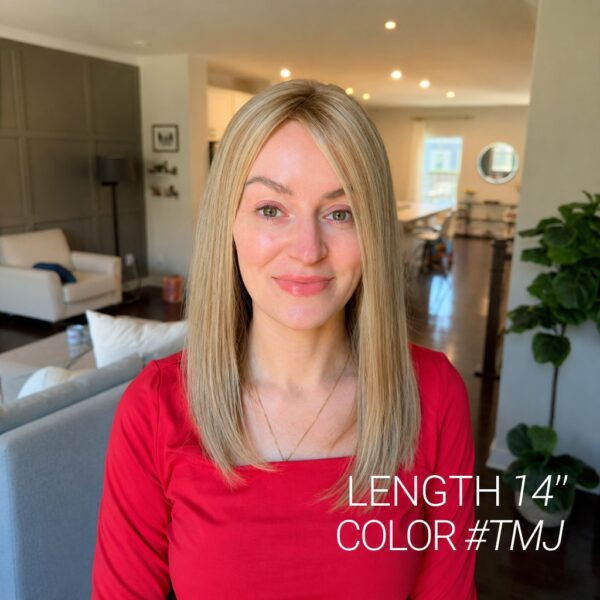
Recommended Newtimes Hair option: ORPHA uses a silk top for a realistic scalp effect, a diamond lace bottom layer for comfort, and a fine monofilament perimeter for durability.
2. Monofilament Base: The Everyday Salon Essential
Monofilament is the practical workhorse of human hair topper bases.
It is breathable, durable, and flexible enough for daily wear. It also gives the client more natural parting than many basic constructions. That makes mono toppers useful for salon inventory because they can serve a wide range of everyday clients.
Mono works especially well for crown thinning, top thinning, and general volume loss. It is not always the most luxurious base, but it is dependable.
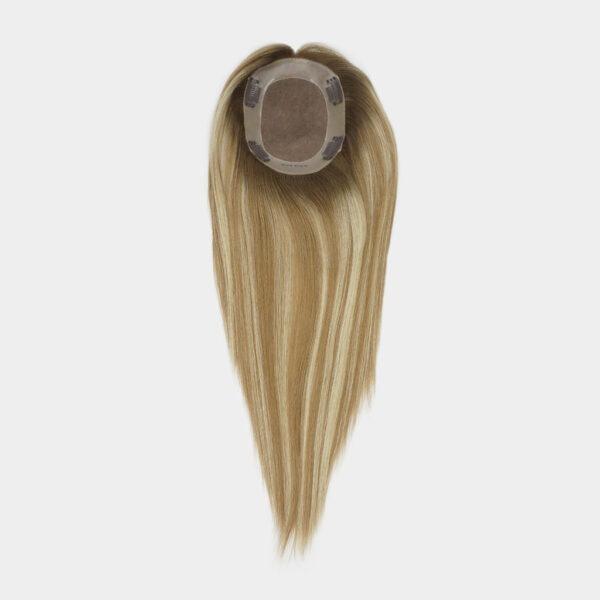
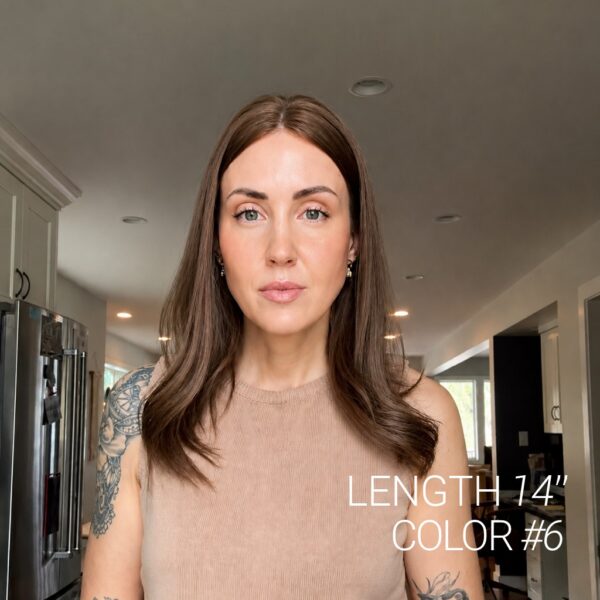
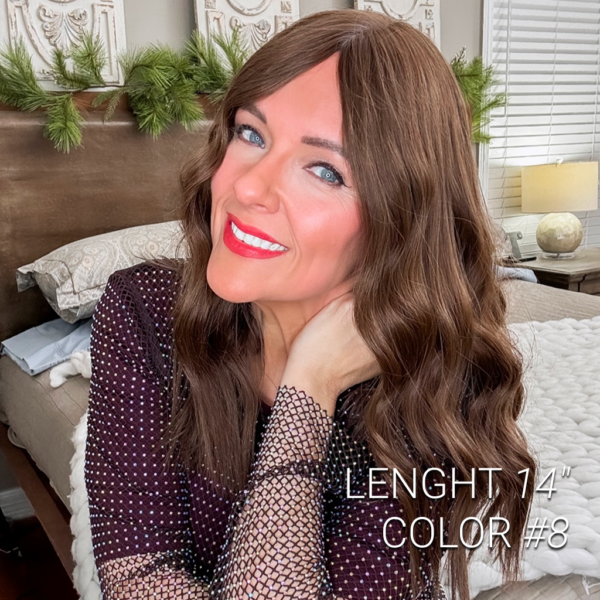
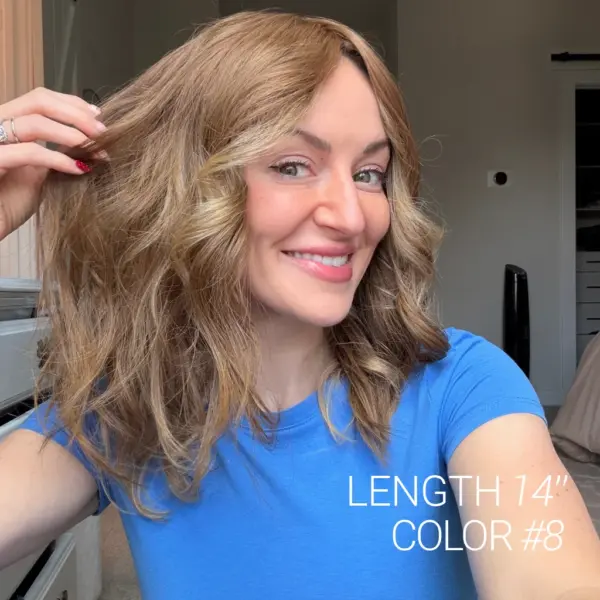
Recommended Newtimes Hair options: JULIE is a deluxe mono top topper made with Prime Mongolian Remy Hair. It has a 6″ x 7″ base, 120% density, open sides and back with wefts for breathability, and a 1 cm NPU front area for tape application.
ELOISE is a fine welded mono human hair topper with cuticle-aligned Mongolian hair. It is a lighter daily-wear direction for clients who want a refined topper that does not feel overly dense.
MT5x6.5 is a practical mono topper direction for clients who need crown coverage with PU support around the perimeter.
3. Lace Front and HD Lace Base: Best for a Softer Hairline
Hairline realism is one of the easiest places for a topper to win or lose.
If the client has front thinning or a receding hairline, a beautiful crown base will not solve the real problem. The front edge needs to look soft and blend naturally.
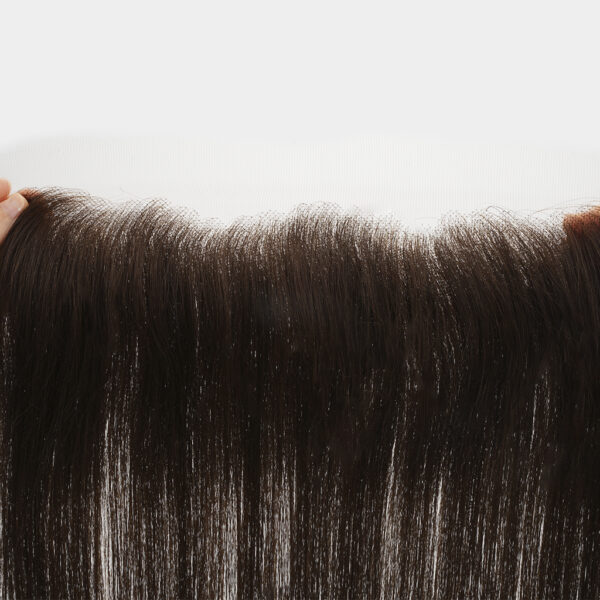
Lace front and HD lace topper bases are designed for that job. They create a softer transition where the topper meets the skin or natural hairline. They are especially useful for clients who want to style hair away from the face.
Recommended Newtimes Hair option: VALERIE is designed for women experiencing a receding hairline. Its HD lace hairline base direction helps cover the front hairline area and create a more natural front-edge result.
For clients who need a lace-based topper with more attachment support, KAILANI can also fit this direction.
4. Lace with Poly Strips: Breathability with Better Security
Some clients like lace because it feels light and soft. Then they realize they also need hold.
Lace with poly strips solves that problem. The lace keeps the topper breathable, while the poly strips support tape or adhesive when extra security is needed. For a stylist, this gives more control during fitting without moving all the way to a heavier full skin base.
Recommended Newtimes Hair option: KAILANI uses soft Swiss lace with poly strips. The lace gives comfort and breathability, while the poly strips can support adhesive application or trimming.
5. Mono with PU Perimeter: Flexible Attachment for Daily Wear
Mono with a PU perimeter is popular because it solves a practical salon problem.
The mono center keeps the topper breathable and wearable. The PU perimeter gives the stylist a cleaner area for tape, glue, clips, or easier adhesive cleanup. It also adds structure around the edge of the base.
This is useful for clients who may switch between clip-in wear and adhesive support.
Recommended Newtimes Hair option: MT5x6.5 is a strong direction for this category. It combines a mono base with PU perimeter support, making it useful for crown coverage, clip-in wear, or adhesive assistance.
6. Wefted Hybrid Base: Volume, Airflow, and Better Value
Wefted bases are not usually the most invisible option. That is the honest answer.
But they still have a place.
A wefted hybrid topper can add volume, airflow, and value without making the topper unnecessarily heavy. In 2026, the better trend is not “fully wefted everything.” It is a more balanced hybrid: a natural-looking top with wefted sides or back.
Recommended Newtimes Hair option: JULIE fits this hybrid direction well. It has a mono top for a more natural finish, plus open sides and a wefted back for breathability, density, and everyday wear.
7. PE Line Mesh Integration Base: The Breathable Pull-Through Trend
PE line mesh integration is one of the most interesting topper base trends for salons.
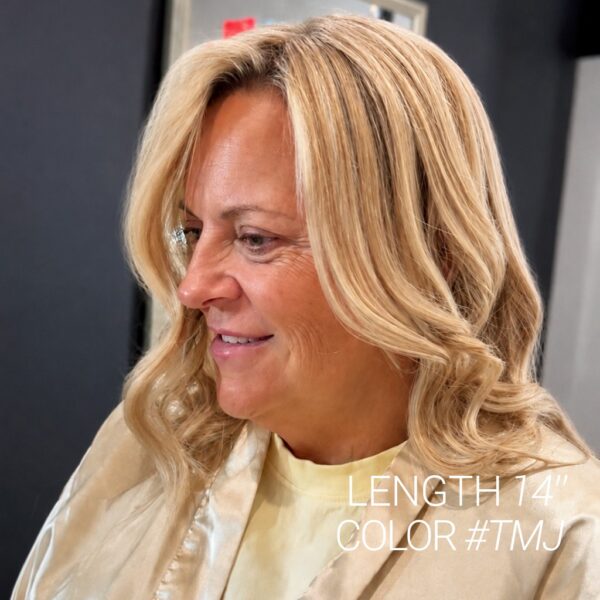
This base is made for clients who still have enough bio hair to work with. Instead of covering everything, the open mesh lets the client’s natural hair pull through the base. The result is fuller volume that blends with the wearer’s own hair rather than sitting as a separate cap on top.
That distinction matters emotionally. Many women want their own hair to still be part of the result.
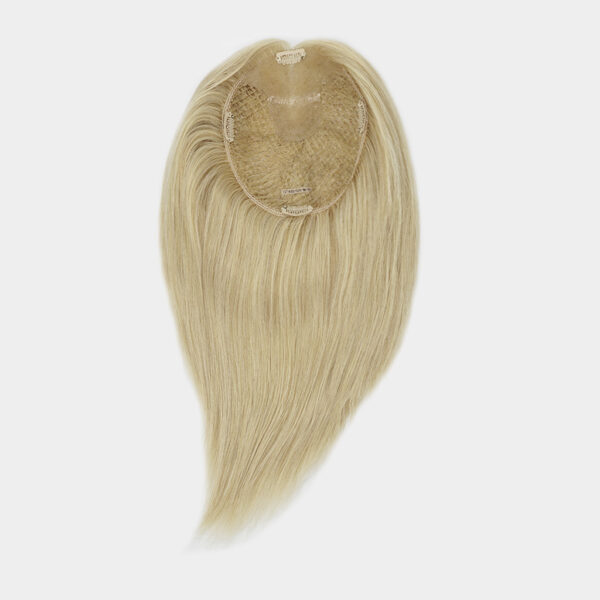
Recommended Newtimes Hair options: TEENA combines a T-shape silk top with PE line mesh. It is useful for clients who want realistic parting plus breathable integration. Newtimes Hair lists TEENA with a 6″ x 6.5″ base, Prime Mongolian Remy Hair, and 110-130% gradient density.
PES-2 uses a PE line pull-through base that allows the client’s natural hair to pass through the base holes. It also includes a PU front and T-part for a scalp-like appearance, plus front underhair to soften the hairline effect.
8. Skin and PU Base: Best for Bonded Wear and Easy Cleanup
Skin and PU bases remain important in professional hair replacement because they support stronger bonded wear.
They can create a scalp-like look and make adhesive cleanup easier than some lace or mesh constructions. For some clients, especially those who want a secure bonded solution, that is the right tradeoff.
But for women’s toppers, full PU is not always the first recommendation. Many clients want the topper to feel light and breathable. That is why PU is often most useful as a perimeter or strip, not necessarily as the entire base.
Recommended Newtimes Hair direction: For clients who need stronger bonded wear, INSEUW and HS1W can be considered as women’s hair system options. For lighter topper needs, MT5x6.5 and KAILANI offer PU support without moving into a full skin base.
How to Choose the Right Topper Base by Hair Loss Area
Start with the thinning area. Not the product name. Not the prettiest photo. Not the base your last client loved.
| Client Hair Loss Area or Need | Better Base Direction | Suggested Newtimes Hair Direction |
| Parting thinning | Silk top or mono | ORPHA, ELOISE |
| Crown thinning | Mono or silk top | JULIE, MT5x6.5, ORPHA |
| Wider crown coverage | Larger mono base with PU support | MT5x6.5, Clara |
| Receding hairline | HD lace or lace front | VALERIE |
| Diffuse thinning with enough bio hair | PE line mesh integration | TEENA, PES-2 |
| Stronger hold needed | PU perimeter or skin base | MT5x6.5, INSEUW |
| Daily clip-in wear | Mono or lightweight lace | ELOISE, JULIE, KAILANI |
| Premium scalp realism | Silk top or silk hybrid | ORPHA, TEENA |
Common Mistakes Salons Should Avoid
The first mistake is choosing only by base size. Size matters, but it is not the whole decision. A client with crown thinning may need mono or silk. A client with front hairline loss may need lace.
The second mistake is over-recommending heavy bases. Many modern clients want lightness first. If the base is too hot, too thick, or too bulky, they may stop wearing it even if it covers the thinning area.
The third mistake is ignoring attachment. Clip-in, tape, glue, sew-in, and micro ring wear all need different base support.
How Newtimes Hair Supports Salon Topper Programs
Newtimes Hair supplies human hair toppers, wigs, women’s hair systems, and hair integration systems for salons, stylists, wig stores, hair loss studios, and hair professionals worldwide.
For human hair toppers, Newtimes Hair offers both stock and custom-made options, including silk top, mono, lace, PU perimeter, lace with poly strips, wefted hybrid, and PE line mesh integration constructions.
For B2B buyers, this matters because a strong topper program is not built around one hero product. It is built around choice.
A salon may need premium silk toppers for close-up scalp realism, mono toppers for daily wear, lace options for front hairline cases, and PE line mesh systems for clients who want a lighter blend with bio hair.
Newtimes Hair also supports custom needs. Salons can adjust base size, hair length, density, color, curl, and attachment details based on client demand.
Key Takeaways
- The main 2026 human hair topper base trend is hybrid construction, not one single base material.
- Silk top bases are best when the client wants the most realistic scalp and parting effect.
- Monofilament bases remain a practical daily-wear choice for salons.
- Lace front and HD lace bases are strongest for clients with front thinning or receding hairlines.
- PU perimeters and poly strips help with tape, glue, structure, and easier adhesive cleanup.
- PE line mesh integration bases are ideal when the client still has enough bio hair and wants a breathable pull-through blend.
- Salons should choose topper bases by hair loss area, attachment method, comfort needs, and styling goals.
Final Thoughts
The best human hair topper base in 2026 is not one base.
It is the base that solves the client’s real problem.
Silk top helps when the part has to look like scalp. Mono helps when the client needs a dependable daily-wear topper. Lace helps when the front hairline is the giveaway. PU helps when attachment needs to be secure and clean. PE line mesh helps when the client wants breathable integration with her own hair.
For salons and hair professionals, the more precisely you understand topper base design, the easier it becomes to recommend the right piece, reduce returns, and build trust.
A well-chosen base does more than cover thinning hair. It lets the client stop thinking about the topper and start feeling like herself again.