



- Quick Answer: Surgery or Hair System Results
- How the Two Hair Options Work
- Hair Transplant vs Hair System Cost Over Time
- Hair Density Donor Supply and How Much 3000 Grafts Cover
- What Happens 10 Years After a Hair Transplant?
- Can People Tell If You Wear a Hair System?
- Hair System Maintenance Comfort and Daily Life
- Which Option Fits You
- What Hair Replacement Centers Should Ask Before Recommending a Solution?
- About the Author
- FAQs
Hair Transplant vs Hair System: The Honest Guide to Hair Replacement for Men
- Quick Answer: Surgery or Hair System Results
- How the Two Hair Options Work
- Hair Transplant vs Hair System Cost Over Time
- Hair Density Donor Supply and How Much 3000 Grafts Cover
- What Happens 10 Years After a Hair Transplant?
- Can People Tell If You Wear a Hair System?
- Hair System Maintenance Comfort and Daily Life
- Which Option Fits You
- What Hair Replacement Centers Should Ask Before Recommending a Solution?
- About the Author
- FAQs
If you are comparing a hair transplant vs hair system, here is the short answer. A transplant moves your own follicles from a donor area to a thinning area. A hair system adds hair over the area that needs coverage. One is surgery. The other is a removable, non-surgical solution.
Neither choice is automatically better. The better choice depends on your hair loss pattern, donor supply, target fullness, budget, patience, and tolerance for upkeep. A good transplant can grow for years. A good non-surgical unit can create full, natural-looking coverage now. Both can also disappoint when the plan is wrong.
This guide explains the trade-offs without pretending there is one perfect answer for every man. It is educational, not medical advice. A dermatologist or qualified hair restoration surgeon should diagnose sudden, patchy, scarring, or unexplained loss before you choose a cosmetic solution.
Quick Answer: Surgery or Hair System Results
Choose a hair transplant when you have stable pattern loss, enough healthy donor hair, realistic coverage goals, and the patience to wait six to twelve months for results. You must also accept surgery, healing, scarring, and the possibility that untreated native hair will keep thinning.
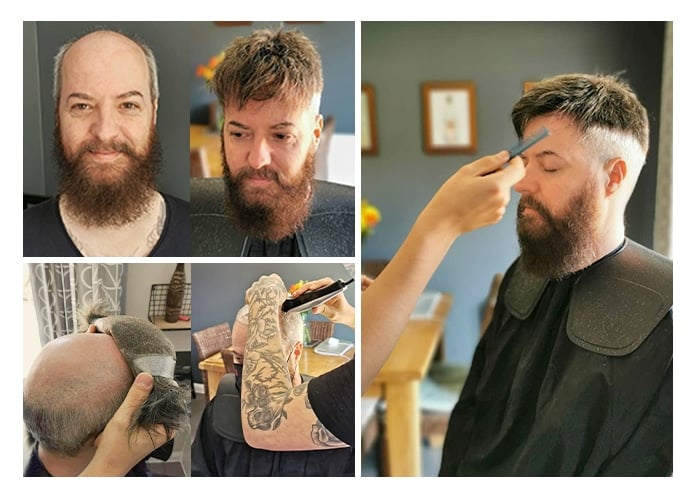
Choose a hair system when you want instant results, need more coverage than your donor area can provide, want control over color and fullness, or do not want a surgical procedure. You must accept cleaning, reattachment, periodic renewal, and recurring costs.
The blunt truth is simple. A transplant gives you growing hair, but it cannot create an unlimited donor supply. A non-surgical option gives you renewable coverage, but it is not a one-time purchase.
How the Two Hair Options Work
Here, let’s look at hair transplant and hair system in detail:
Surgery Moves Donor Follicles
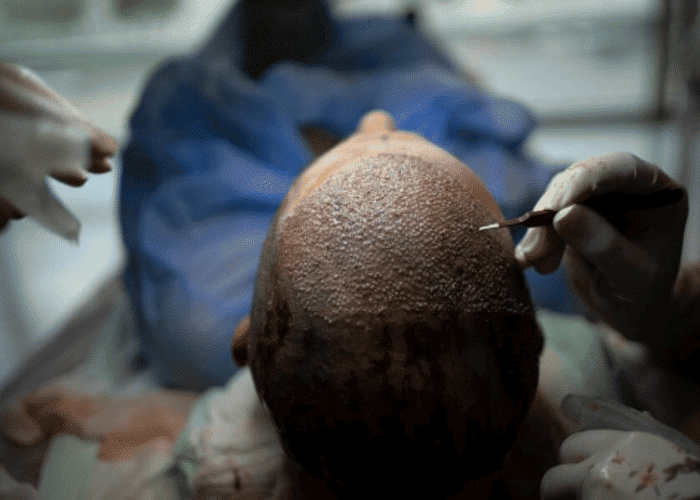
A hair transplant removes healthy follicular units from a donor area, usually the back or sides of the scalp. The surgeon places those grafts into small recipient sites in the front, mid-scalp, crown, or another thinning zone. The two common transplant procedures are FUE, which removes units one by one, and FUT, which removes a strip from the harvest zone.
Modern hair transplants redistribute existing hair. They do not manufacture new follicles. That matters because the source area is a finite biological resource. The American Academy of Dermatology says candidates need enough healthy hair to move and the ability to grow it in the recipient area. The same source notes that a full head of hair may be unrealistic even when a fuller result is possible. Read the AAD guidance.
Most people see visible results in six to nine months. Some need twelve months. The transplanted shafts often shed two to eight weeks after surgery before new growth begins. That early shedding can look alarming, but it is expected.
A Hair System Gives Instant Coverage
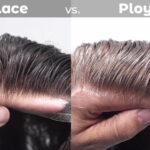
A hair system uses human or synthetic hair attached to a thin base. Common bases include poly skin, mono, and lace. A professional trims the base, matches the color and volume, cuts in the style, and secures the unit with tape, adhesive, clips, or another suitable method.
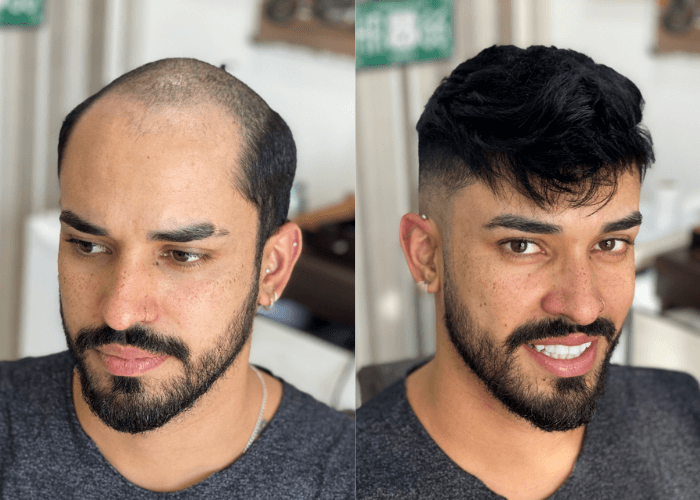
The result is immediate because no follicle has to grow. A custom hair unit can be built around head shape, coverage, color, gray percentage, curl, direction, and volume. Stock hair systems are faster and usually cost less. The best option depends on how closely the available specifications match the wearer.
The unit does not stop medical hair loss. It covers it. That makes it useful for early recession, advanced baldness, diffuse thinning, alopecia, a weak source area, or anyone who wants a reversible solution. Proper scalp care and a safe attachment plan still matter.
Hair Transplant vs Hair System Comparison
| Decision factor | Hair transplant | Hair systems |
| Basic method | Moves your own donor follicles | Adds hair on a fitted base |
| Time to visible result | Usually 6-12 months | Same day after fitting and cut-in |
| Fullness | Limited by available follicles and scalp area | Chosen to match age, sides, style, and goals |
| Coverage | Best when the source and recipient conditions support the plan | Can cover small, large, or total-loss areas |
| Upfront cost | Usually high | Usually lower |
| Ongoing costs | Routine care, possible medication, and possible later procedures | Maintenance, supplies, and replacement systems |
| Surgery and recovery | Yes | No surgery and no surgical downtime |
| Scarring | FUE can leave small dot scars; FUT can leave a linear scar | No surgical scar; adhesive may irritate sensitive skin |
| Flexibility | Hairline and graft placement are difficult to reverse | Color, style, base, and fullness can change |
| Main risk | Poor candidacy, weak growth, overharvesting, scarring, or future native loss | Bad match, visible edge, lifting, shedding, or inconsistent upkeep |
The table makes the choice look tidy. Real life is messier. Your age, diagnosis, side volume, climate, job, exercise habits, and willingness to do maintenance can change the answer.
Hair Transplant vs Hair System Cost Over Time
The cost comparison gets distorted by bad math. People compare one surgery quote with one unit price. That ignores repeat procedures on one side and upkeep on the other.
Public U.S. industry estimates vary widely. Hair systems also range from basic stock units to full salon programs. The figures below are examples, not quotes from Newtimes Hair or a promise of what any clinic will charge. HairClub’s current industry illustration lists a surgical transplant at $4,000-$15,000+, stock pieces at $300-$700, custom units at $800-$2,000+, and programs with service at $1,500-$4,000+. It estimates yearly spending from about $1,200 to $5,000, depending on the product and service level. See the published pricing illustration.
| Cost item | Typical public example | What can change the dollar amount |
| Hair transplant | $4,000-$15,000+ per procedure | Graft count, surgeon, method, city, travel, medication, and later sessions |
| Stock unit | $300-$700 per unit | Base, hair type, length, volume, color work, and cut-in |
| Custom hair system | $800-$2,000+ per unit | Measurements, base design, hair specifications, and special processing |
| Full-service program | $1,500-$4,000+ | Fitting, application, cut-in, maintenance, and package terms |
| Estimated yearly spending | $1,200-$5,000 | Renewal frequency, salon visits, DIY skill, supplies, and care |
Hair Transplant Cost and One-Time Fees
The procedure price is driven mainly by the graft plan and clinic. The initial figure may include the surgery, but it may not include travel, bloodwork, medication, aftercare, or a later touch-up. Ask what the quote covers. Then ask what happens if native hair continues to recede.
A transplant can become cheaper over a long period if one procedure gives a stable result and requires little extra work. It can also become more expensive if coverage is weak, loss progresses, or a second surgery is needed. Cheap surgery is not a bargain when the harvest is poor. Those follicles do not grow back in the source site.
Monthly Maintenance and Ongoing Costs
The starting cost is lower, but it repeats. The real budget includes the unit, fitting, cut-in, adhesive or tape, remover, shampoo, conditioning, color refresh, routine upkeep, and replacement systems.
Newtimes Hair’s guide says many wearers use roughly four to six hair systems a year, though actual life varies greatly by base and care. Reattachment often happens every three to four weeks. Professional maintenance can cost more than DIY care, but it may reduce mistakes for a new wearer. See the detailed Newtimes Hair annual cost guide.
Do not chase the lowest unit price alone. A base that is too delicate for the wearer’s lifestyle may fail early. Too much volume may require extra correction. The cheapest unit can waste every dollar saved if the match is wrong.
Hair Density Donor Supply and How Much 3000 Grafts Cover
Graft numbers sound precise, which is why they are easy to misuse. They are only useful when tied to the size of the thinning area, the planned density, the quality of the donor zone, and the person’s long-term loss pattern.
How Much Do 3000 Grafts Cover?
There is no honest one-size answer. Coverage equals recipient area multiplied by the planned placement rate. A peer-reviewed review notes that cosmetic density is often around 35-40 follicular units per square centimeter. At that rate, 3,000 grafts cover roughly 75-86 cm². A lighter plan spreads farther. A denser hairline covers less area. Review the density discussion.
In practical terms, 3,000 grafts may provide strong frontal and mid-scalp coverage for some patients around Norwood stage IV. It may not densely rebuild the front, mid-scalp, and crown at the same time. Hair caliber, curl, color contrast, existing hair, head size, and graft survival all change the visual result.
Think of grafts as a coverage budget. Spend more in the front, and the hairline can look stronger, but less remains for the crown. Spread the grafts widely, and the scalp may still show under bright light. The ISHRS FUE guidelines say donor and recipient density, caliber, curl, direction, and safe donor limits should be assessed before the plan is set. Read the clinical practice guidelines.
A non-surgical unit does not face that biological ceiling. It can provide high coverage even with a limited donor area. Still, more volume is not always better. The right fullness should match the side and back hair, age, face, and style. Too much hair is one of the fastest ways to make the result look obvious.
What Happens 10 Years After a Hair Transplant?
Ten years later, many transplanted follicles may still be growing. But the whole head may not look the same as it did at year one. Native, non-transplanted hair can continue to thin. Aging can reduce caliber and fullness. A once-connected hairline may begin to look isolated if the area behind it recedes.
A 2023 retrospective study followed 70 patients who had transplantation at least a decade earlier. Most reported high satisfaction, especially among patients who followed medical treatment. The study also found a statistically significant density decrease of about 4%-6% over five years. That is a useful reality check: potentially permanent does not mean frozen in time. Read the study summary in Hair Transplant Forum International.
Long-term planning should protect future donor supply. It should also account for possible medical therapy, changes in the natural hair around the grafts, and the chance of another procedure. Medication is a decision for a licensed clinician because benefits, risks, and suitability differ by patient.
Can People Tell If You Wear a Hair System?
Usually, people cannot tell when the hair system is matched, fitted, cut, and maintained well. They notice problems, not the category. The usual giveaways are excess volume, the wrong color, a harsh front, a visible lace edge, poor blending, shine, or lifting adhesive.
The front gets most of the attention, but the sides matter just as much. Thick top hair over thin side hair can look wrong even when the base is excellent. Good results come from matching the whole head, not buying the thinnest base and hoping for magic.
For a deeper breakdown, see Can People Tell If You Wear a Hair System? and How to Create a Natural Front Hairline. Those guides explain why color, contour, fullness, attachment, ventilation, and the cut-in must work together.
Hair System Maintenance Comfort and Daily Life
The daily question is not “Can I wear it?” It is “Can I care for it well enough to keep the result looking natural?” Comfort, bond time, and how often a client needs support should shape the base and attachment choice from day one.
Hair Systems for Men Work Best With a Service Plan
These units can handle normal work, social life, and exercise when the base and attachment match the wearer. But sweat, oil, climate, scalp sensitivity, and activity level affect bond time. A professional should set the first maintenance cycle based on the person’s scalp and lifestyle, not from a generic calendar.
Regular care includes gentle washing, detangling, scalp cleaning, adhesive removal, rebonding, and checking the front edge. Some wearers learn to do most of this at home. Others prefer a hair center every few weeks. Neither route is wrong. The right route is the one the wearer will follow.
A Non Surgical Hair Replacement System for Men Needs the Right Match
This type of unit is not medically invasive, but it still touches skin for long periods. Sensitive wearers may react to tape, adhesive, solvent, or trapped moisture. Patch testing, clean tools, a healthy scalp, and clear stop rules are sensible. Pain, open skin, infection, or severe irritation needs medical attention.
Comfort also comes from base choice. Lace can improve airflow. Thin skin can create a smooth front and simplify some attachment methods. Mono and hybrid hair systems can add structure or balance durability with realism. The best base is the one that fits the client, service routine, and expected renewal cycle.
Hair Transplant vs Hair System Reddit Advice Has Limits
Search hair transplant vs hair system Reddit, and you will find strong opinions fast. Wearers talk honestly about bonding, salon prices, fullness, medications, shedding, scars, and confidence. That lived experience is useful. It shows the daily friction that polished sales pages often skip.
It also creates bias. A wearer group sees more non-surgical success stories. A transplant group sees more surgical success stories. One person’s cost, donor, scalp, technician, or maintenance routine may have little to do with your case.
Use Reddit to build questions. Do not use it to diagnose your hair loss or approve surgery. Photos cannot measure donor miniaturization, safe extraction limits, or scalp disease. A comment also cannot promise how your skin will handle adhesive.
Which Option Fits You
This decision is less about picking a winner and more about matching the plan to the person. The best option should work with the biology, the desired density, the available time, and the real five-year budget.
Men With Stable Hair Loss and Strong Donor Supply
A transplant may fit people who have a clear diagnosis, stable loss, healthy donor hair, realistic coverage goals, and enough time for recovery and growth. It also fits those who strongly prefer growing their own hair and want low routine upkeep after healing.
Be careful if you are very young, losing hair quickly, have widespread thinning, or expect teenage fullness across a large bald area. The transplant pros only matter when the candidacy is good, and the long-term design is conservative.
Men Who Need Density Without Surgery
This option may fit people who want same-day coverage, predictable style, or a reversible plan. It also works when donor supply is weak, surgery is unwanted, or the wearer wants to change fullness and color later.
- Before deciding, compare these seven points:
- diagnosis and pace of hair loss
- donor quality and likely future loss
- desired fullness and coverage area
- tolerance for surgery and recovery time
- comfort with routine maintenance
- first-year and five-year cost
- need for reversibility and style changes
A third option is to use the two paths at different times. Some people wear a unit before surgery, after a poor transplant result, or over areas that available follicles cannot cover. Never attach anything over a healing surgical area until the surgeon says the scalp is ready.
What Hair Replacement Centers Should Ask Before Recommending a Solution?
For an HRC, studio, or salon, the job is bigger than naming a product. The client needs a realistic service plan. Your intake should record:
- the diagnosis or need for medical referral
- present coverage area and likely future loss
- side and back volume, color, gray, texture, and curl
- exposed or covered hairline preference
- work, exercise, climate, and scalp sensitivity
- budget for the first year and ongoing renewals
- who will handle fitting, cleaning, reattachment, and follow-up
Something to Consider Before Getting a Supplier
That intake turns a vague promise into a repeatable client pathway. It also protects the hair center from avoidable remakes, rushed appointments, and mismatched expectations.
Stock Hair for Fast Client Appointments
Newtimes Hair supplies HRCs, studios, salons, and distributors through professional accounts. Ready-to-ship hair systems help professionals handle urgent appointments and common specifications. U.S. warehouse orders can support two-day nationwide delivery, with faster options in some cases. See U.S. warehouse details.
Custom Hair for Hard-to-Match Cases
For unusual head shapes, color blends, gray percentages, directions, or base designs, a tailored build can reduce compromise. Newtimes Hair’s custom production normally uses 40 checkpoints across a six-stage inspection process, followed by a 90-day warranty. Review customization options.
Professionals can compare stock and custom options in the systems collection for professionals or apply for a professional account. The goal is not to push every client into the same product. It is to build a stable match, a clear service cycle, and a renewal plan the client can actually maintain.
About the Author
About the author: Alf Hou is a hair-industry specialist who works closely with Newtimes Hair. He writes about professional hair systems, custom options, and the service needs of HRCs, studios, and salons.
FAQs
The final choice should survive three tests: Does it fit the biology? Does it fit the lifestyle? Can the person maintain the cost and care over time? If any answer is no, the plan needs work.
Please send some information to my email
January 15, 2026 11:35 amThank you for your message, Edward. Feel free to send all your queries to our mailbox: info@newtimeshair.com. One of our friendly staff members will be with you shortly.
March 4, 2026 2:28 pmPlease send some information to my email
January 15, 2026 11:35 amThank you for messaging us, Edward! Would you like to know more about our hair systems? Do you wear hair systems or are you a salon owner?
March 4, 2026 2:27 pm