

- Key Takeaways
- Haircuts for Receding Hairlines: the Fast Answer
- Receding Hairlines and the Rule That Matters Most
- Short Haircuts for Receding Hairlines that Always Stay in the Game
- Crew Cut: Hairstyles for Receding Hairlines, Still a Beast
- Quiff for Receding Hairlines: Great Receding Hairline Haircut When the Top Can Still Play
- Textured Crop for Receding Hairlines: the Smart Modern Cheat Code
- Taper, Bald Fade, and Short Sides for Receding Hairlines
- Receding Hairline Haircuts Male Readers Keep Choosing When There's Hair That'll Still Do
- Best Haircut for Receding Hairline and Big Forehead
- Best Haircut for Receding Hairline Black Male
- Long Haircuts for Receding Hairlines: Yes, But be Realistic
- Longer Medium Styles if You Still Have Enough Hair to Play With
- Volume Styles that Can Still Save the Day
- Slicked Back, Business Cut, and Regulation Cut for Classic Guys
- Haircuts to Avoid with Receding Hairlines
- When Newtimes Hair Matters More than Another Haircut
- Things to Consider Dealing With Receding Hairlines
- Final Thoughts on Receding Hairline Haircuts
- About the Author
- FAQs
40 Haircuts for Receding Hairlines, 2026: Pick a Receding Hairline Haircut that Works
- Key Takeaways
- Haircuts for Receding Hairlines: the Fast Answer
- Receding Hairlines and the Rule That Matters Most
- Short Haircuts for Receding Hairlines that Always Stay in the Game
- Crew Cut: Hairstyles for Receding Hairlines, Still a Beast
- Quiff for Receding Hairlines: Great Receding Hairline Haircut When the Top Can Still Play
- Textured Crop for Receding Hairlines: the Smart Modern Cheat Code
- Taper, Bald Fade, and Short Sides for Receding Hairlines
- Receding Hairline Haircuts Male Readers Keep Choosing When There's Hair That'll Still Do
- Best Haircut for Receding Hairline and Big Forehead
- Best Haircut for Receding Hairline Black Male
- Long Haircuts for Receding Hairlines: Yes, But be Realistic
- Longer Medium Styles if You Still Have Enough Hair to Play With
- Volume Styles that Can Still Save the Day
- Slicked Back, Business Cut, and Regulation Cut for Classic Guys
- Haircuts to Avoid with Receding Hairlines
- When Newtimes Hair Matters More than Another Haircut
- Things to Consider Dealing With Receding Hairlines
- Final Thoughts on Receding Hairline Haircuts
- About the Author
- FAQs
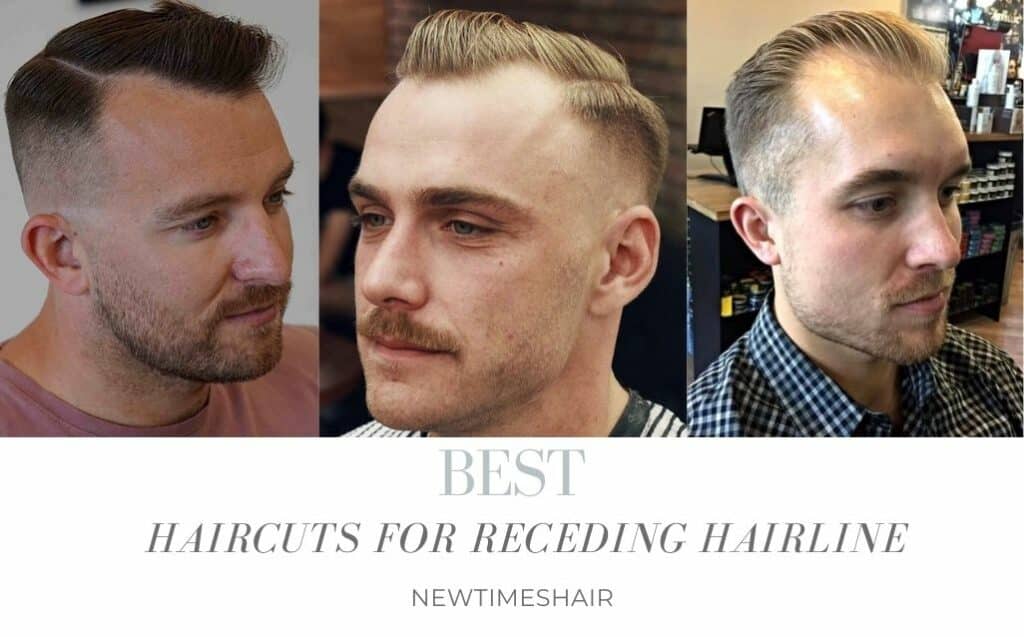
A receding hairline can feel personal.
It sneaks up on you.
First, the corners shift.
Then the mirror gets rude.
The fix is not panic. The fix is a better cut.
The best haircuts for receding hairlines are usually short, clean, and easy to style. Cuts like the buzz cut, Crew cut, Textured crop, and Quiff can make a receding hairline look sharper and less obvious. This guide covers which styles work best and when a Newtimes Hair solution may make more sense.
Read our related article: How to Fix a Receding Hairline
Key Takeaways
- The best haircuts for receding hairlines are usually short, clean, and textured.
- The safest options for most men are the buzz cut, the crew cut, the textured crop, and the quiff.
- Shorter styles usually work better because they reduce contrast and make thinning hair less obvious.
- Longer styles can still work, but only when the top has enough density.
- If styling is no longer enough, a frontal system from Newtimes Hair may be a better solution.
Haircuts for Receding Hairlines: the Fast Answer
The best haircuts for receding hairlines usually do one of three things.
- They add texture.
- They add height.
- Or they stop weak hair from pretending it is thick hair.
That is why the same styles keep showing up across so many salons and hair clinics. The most common cuts are: buzz cut, Crew cut, Textured crop, Quiff, side part, fade-based styles, faux hawk, pompadour, Caesar, slicked-back looks, and a clean shave.
Read our related article: 100 Haircuts for Balding Men on Top and Front Hairline
What are the Best Haircuts for men with Receding Hairline?
For most men, the safest answers are the buzz cut, Crew cut, Textured crop, and a clean fade. Those styles keep the shape neat and make thinning areas less obvious. Wimpole says a high fade helps the hairline blend in, while Forte highlights the Textured crop and Crew cut for their ability to create a fuller look.
Is Shorter or Longer Hair Better for Receding Hairlines?
Usually, the best haircuts for men with receding hairline are short cuts.
Mid-to-long hair often falls apart when the front starts receding. Shorter haircuts remove weight, make styling easier, and let you shape the front closer to the hairline. That matches the overall pattern in the competitor pages, which lean heavily into short crops, fades, crew cuts, and buzzed styles.
Receding Hairlines and the Rule That Matters Most
The point is not to “hide” everything.
The point is to make the whole shape look intentional.
When a haircut works, your eye goes to the face, the texture, and the outline. When a haircut fails, your eye goes straight to the weak front hairline.
Work with the Hairline You Have
This is where most men mess up. They style for the old hairline.
That old hairline is gone. Fine. Build a better look around the one you have now.
Keep the Sides Cleaner than the Top
Shorter sides and a little more structure on top is one of the safest formulas for receding hairline haircuts. That pattern shows up over and over in competitor lists because it works across different face shapes and different stages of hair loss.
Use Matte Styling, not Wet Styling
Wet shine is often the enemy of thinning hair. It separates the strands and shows more scalp. Texture, movement, and a matte finish usually make thinning areas look better. Forte’s guides repeatedly push texture and volume for exactly that reason.
Stage of Hair Loss | Hairstyle Ideas | Why It Works |
Early recession | Textured crop, side-swept fringe, soft Quiff, longer Crew cut | They soften the front and add movement |
Mild to moderate recession | Crew cut, taper fade, side part, high fade, Caesar cut | They keep the outline neat and reduce contrast |
Deeper recession | buzz cut, close cut, regulation cut, clean shave | They stop the fight and simplify the shape |
Recession with strong top density | pompadour, faux hawk, brushed-up Quiff, slicked-back styles | They use height and volume to pull the eye up |
Advanced front loss | Short cut plus beard, or a frontal system from Newtimes Hair | They either simplify the look or rebuild the front |
Short Haircuts for Receding Hairlines that Always Stay in the Game
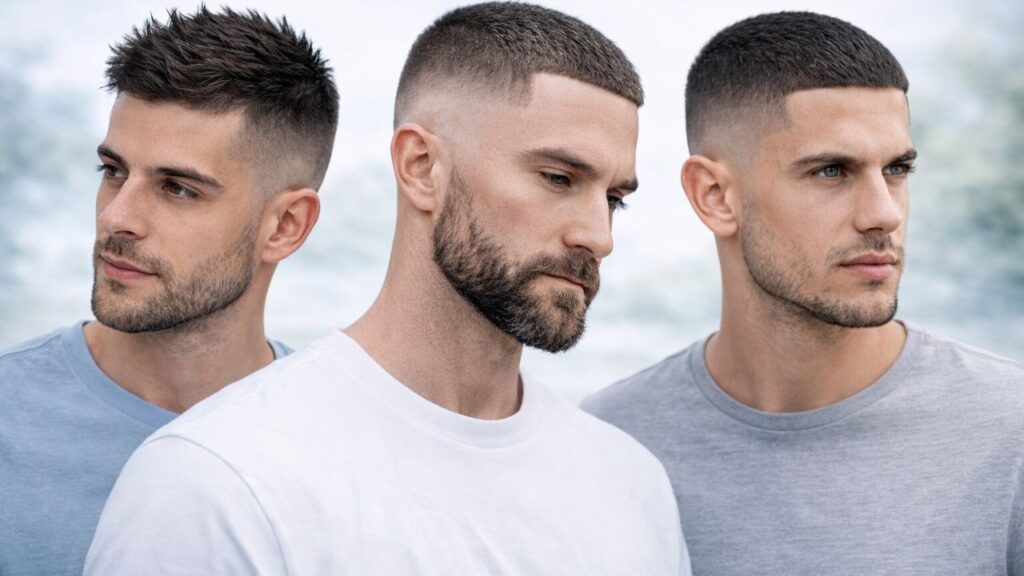
It’ll be ultimately safe to pick a short haircut for receding hairline. Why?
- They are simple.
- They are clean.
- They do not need a miracle.
1. Buzz cut for Receding Hairline
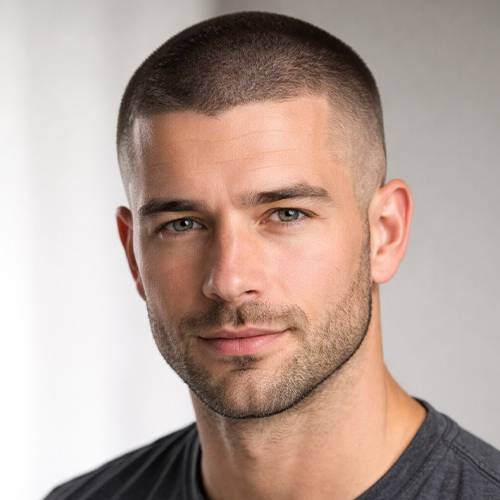
The buzz cut for a receding hairline is one of the best answers because it reduces contrast across the whole scalp. StyleSeat calls it a simple, effective approach, and even non-competitor barber sources say going uniformly shorter often makes the recession blend into the overall head shape.
Best For:
Men with moderate to advanced recession, men who want very low maintenance, and anyone comfortable keeping the hair extremely short.
Not Good For:
Men who want more styling options, men who prefer fuller but shorter hairstyles for receding hairlines, or anyone who does not want to show more scalp or head shape.
2. Close Cut
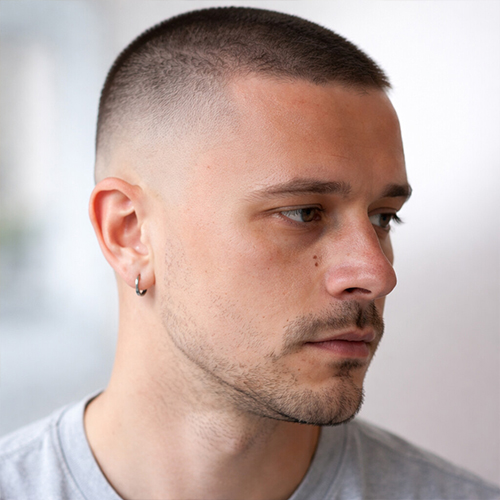
The close cut is a confidence-first option, keeping everything short and even. It is a good choice when the goal is to stop fighting the hairline and clean everything up.
Best For:
Men with mild to deep recession, men who like short hair, and anyone who wants a clean look with almost no styling.
Not Good For:
Men who want visible texture, more volume on top, or a haircut with a more fashion-forward finish.
3. Butch Cut
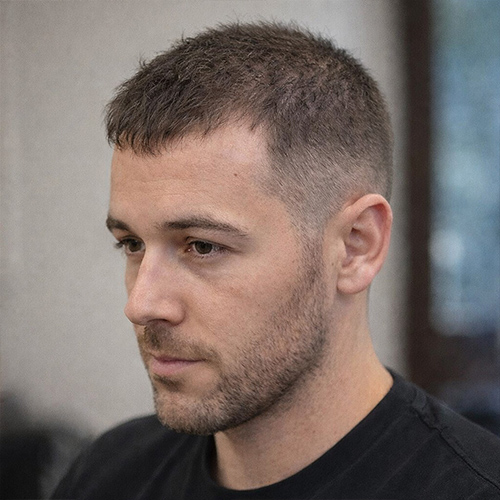
The butch cut is another short, even option from StyleSeat. It is low-maintenance and works best when you want a blunt, no-drama look.
Best For:
Men with straight or coarse hair, men who prefer a no-nonsense haircut, and anyone who wants a uniform short style.
Not Good For:
Men who want softness, movement, or more flexibility in how the top is styled.
4. High and Tight

Newtimes Hair’s own coverage of balding men includes the high and tight as part of the short-style toolbox, and it makes sense here, too. Tight sides, short top, low effort.
Best For:
Men with receding temples, active lifestyles, and anyone who likes clean military-style haircuts.
Not Good For:
Men who do not like very short sides, men who want more top length, or anyone who prefers softer hairstyles.
5. Buzzed Skin Fade
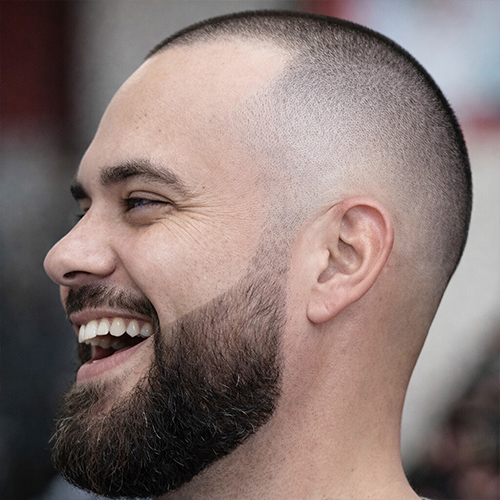
A buzzed skin fade for a receding hairline is a cleaner, sharper version of the classic buzz cut. It keeps everything short enough to stop the hairline from being the whole story, while the skin fade adds a more modern outline around the sides and back. This is one of the easiest low-maintenance options when the goal is to look intentional, fresh, and masculine.
Best For:
Men with strong facial features, active lifestyles, and anyone who wants a low-maintenance haircut that does not depend on styling.
Not Good For:
Men who want to hide scalp visibility, those who are uncomfortable showing their head shape, or anyone who prefers fuller, softer, more movable hairstyles.
6. High Fade Military Cut or Burst Fade with Receding Hairline
The high fade military cut (burst fade for receding hairline) is a sharp, practical hairstyle that keeps the sides very short and the top neat and controlled. It works well for receding hairlines because it creates a clean structure and does not rely on heavy styling or awkward coverage. The result is a haircut that looks disciplined, masculine, and easy to maintain.
Best for:
Men with mild to moderate recession, low-maintenance preferences, and hair that looks better short and controlled.
Not good for:
Men with advanced thinning on top, scalp-show concerns, or anyone who prefers softer, fuller hairstyles.
Crew Cut: Hairstyles for Receding Hairlines, Still a Beast
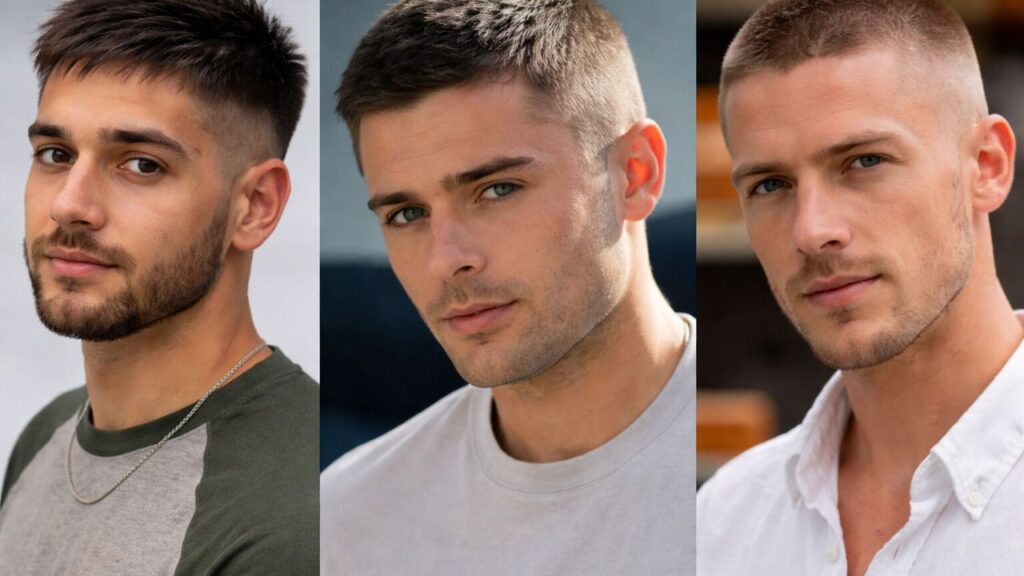
The Crew cut keeps showing up because it keeps working.
That is not sexy. It is useful.
Why the Crew Cut Works
A Crew cut keeps the sides neat and leaves a bit more length on top. That can soften a receding hairline and make the front look a little stronger. StyleSeat, Forte, and The Spot all include the Crew cut in their core recommendations.
7. Longer Crew Cut
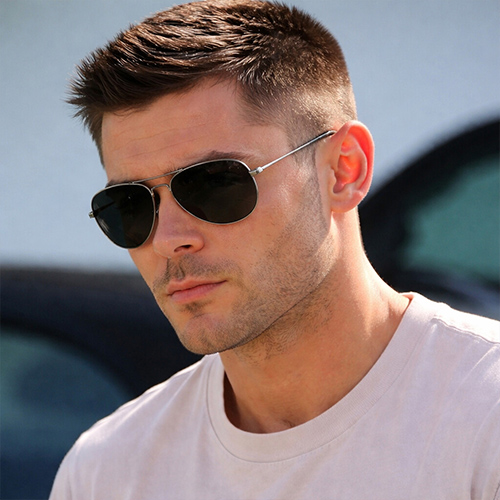
Wimpole says a longer Crew cut can help cover recession at the temples, especially when the front still has some density.
Best For:
Men with mild recession, decent density at the front, and anyone who wants a safe classic haircut with a little flexibility.
Not Good For:
Men with advanced thinning at the front, very weak temple areas, or hair that falls flat too easily.
8. Bald Fade with Crew Cut
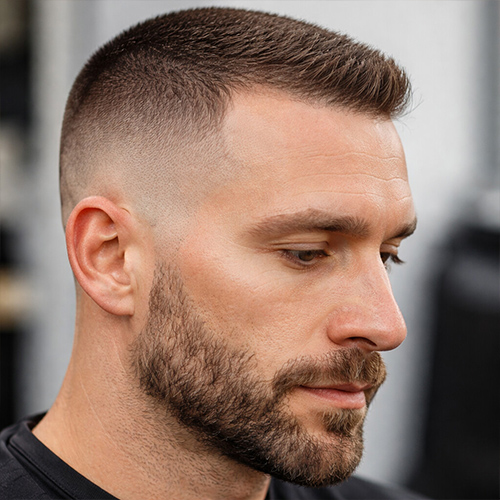
A bald fade and a crew cut is a smart variation. The ultra-clean sides sharpen the outline while the short top keeps the style easy.
Best For:
Men with a widow’s peak, mild to moderate recession, and anyone who wants a cleaner version of the crew cut.
Not Good For:
Men who do not like skin-tight fades, men who want more softness on the sides, or anyone who prefers longer styles.
Quiff for Receding Hairlines: Great Receding Hairline Haircut When the Top Can Still Play
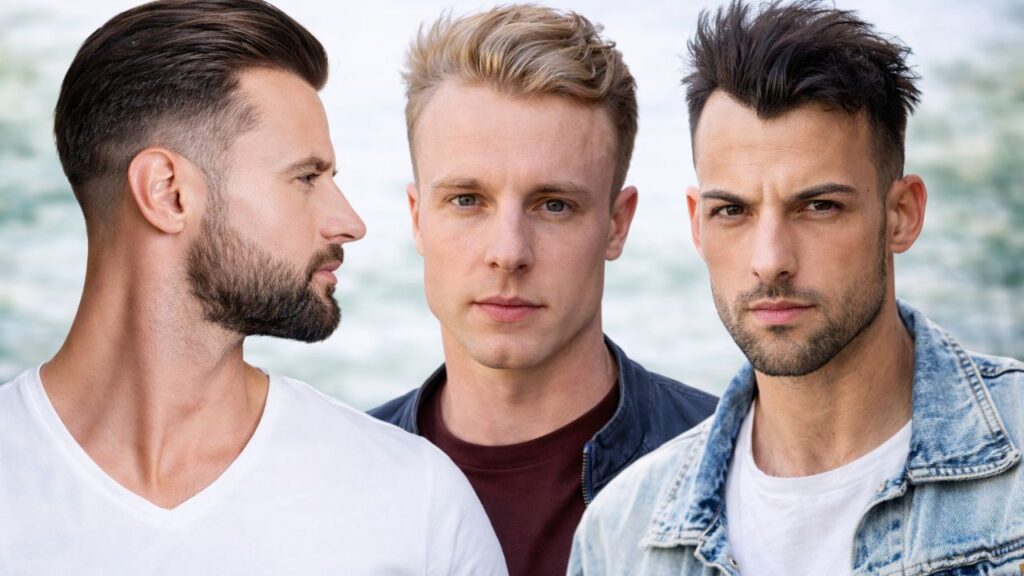
A Quiff can work very well.
A forced Quiff can look like a hostage situation. It forces down the hair at the front and blurs where the hairline starts.
9. Brushed-up Quiff
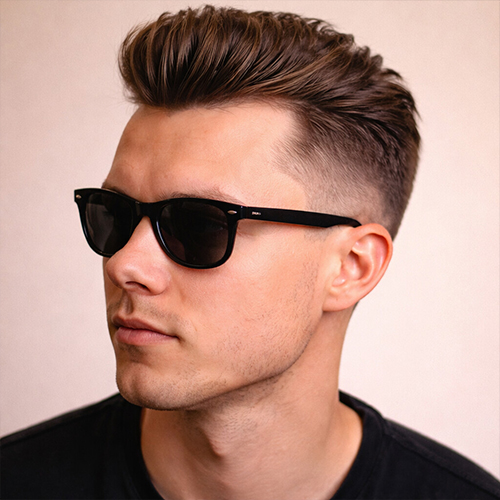
The brushed-up Quiff makes maximum use of the hair you still have. More lift on top can make the front look fuller.
The lift helps draw attention upward and makes the front look fuller. It is one of the better choices when the hairline has moved back a little, but the center still has enough hair to hold shape.
Best For:
Men with early recession, medium to strong top density, and hair that can hold height.
Not Good For:
Men with very weak front hair, advanced temple loss, or hair that cannot hold volume without looking thin.
10. Quiff with Taper
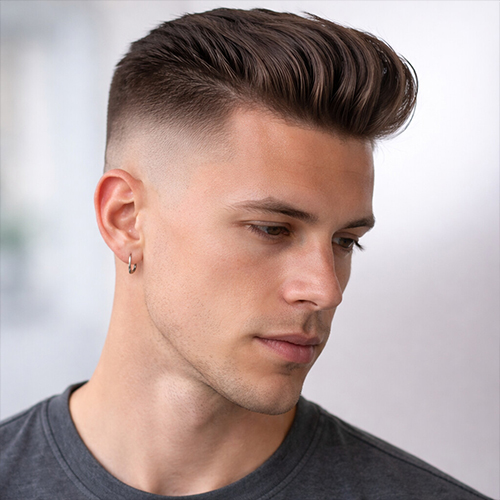
The Quiff with taper is a smart combo if you want height without a harsh outline.
Best For:
Men with mild recession, decent top density, and anyone who wants a neat but modern look.
Not Good For:
Men with sparse hair at the front, men who want extremely low maintenance, or anyone who dislikes styling products.
11. Soft Quiff
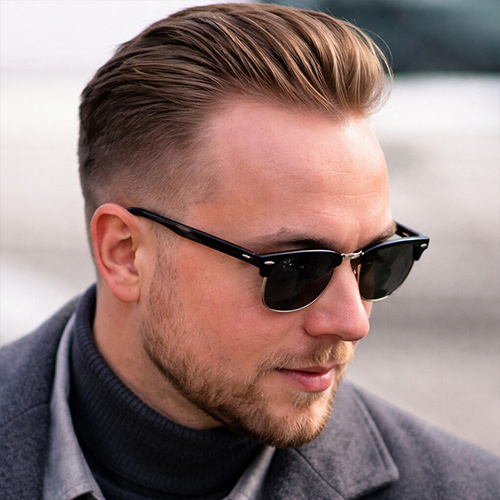
A soft quiff works because it adds lift without making the front look stiff or forced. It keeps the hair loose, natural, and easier to control. This makes it better for receding hairlines than a hard, overstyled quiff that only draws more attention to the front.
Best For:
Men with mild temple recession, naturally soft hair, and enough density to create light height.
Not Good For:
Men with advanced thinning, very fine hair that separates easily, or anyone trying to create a big dramatic front.
Textured Crop for Receding Hairlines: the Smart Modern Cheat Code
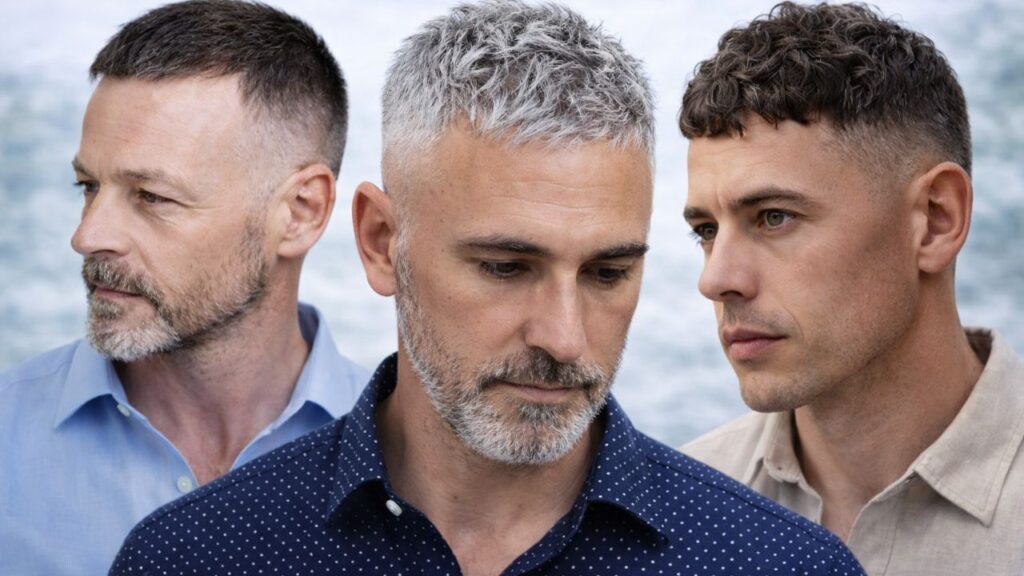
The Textured crop is one of the best modern hairline haircuts for a reason.
Texture hides a lot.
Why the Textured Crop Works
A Textured crop breaks up the front edge of the hairline and creates movement on top. Forte says the choppy layers and short fringe help create fullness, and The Spot also treats it as a strong, low-maintenance option.
12. Modern Crop Cut
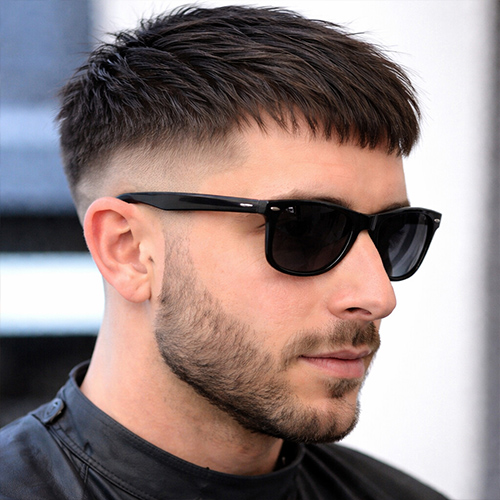
A modern crop cut is a clean, easy style that works well for receding hairlines because it keeps the front controlled and the overall shape tidy. It does not ask for too much length or volume. That makes it one of the safer modern options.
Best For:
Men with mild to moderate recession, men who want a modern haircut, and anyone who likes short, easy styling.
Not Good For:
Men who want longer hair on top, more movement, or a very classic side-parted finish.
13. Caesar Cut
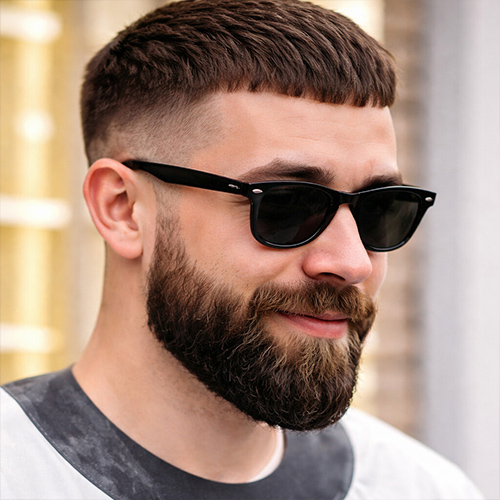
The Caesar cut is another forward-styled option in Forte’s list, using fringe to visually strengthen the front. Forte’s separate Caesar guide says the cut can help men with thinning hairlines create a fuller front appearance.
Best For:
Men with mild to moderate recession, straight hair, and anyone who suits a short fringe.
Not Good For:
Men with very thin front hair, very curly hair that does not sit forward well, or anyone with advanced frontal loss.
Can Long Hair Still Work?
Sometimes. Just not for everyone.
If the hair on top still has decent density, some longer styles can work. StyleSeat includes long and wavy, top knot, slicked-over side part, and low fade with long top, while Forte includes long layered cut, middle part, curtain hair, shaggy haircut, tousled shag, and flow haircut.
Taper, Bald Fade, and Short Sides for Receding Hairlines
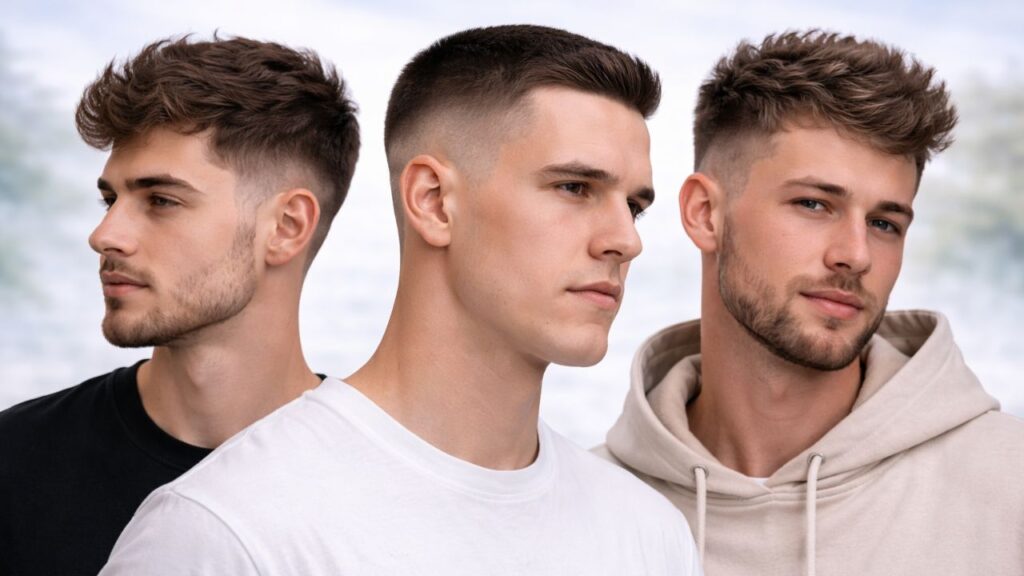
This is the quiet power section.
A lot of great haircuts are really about what happens on the edges.
14. Taper Fade
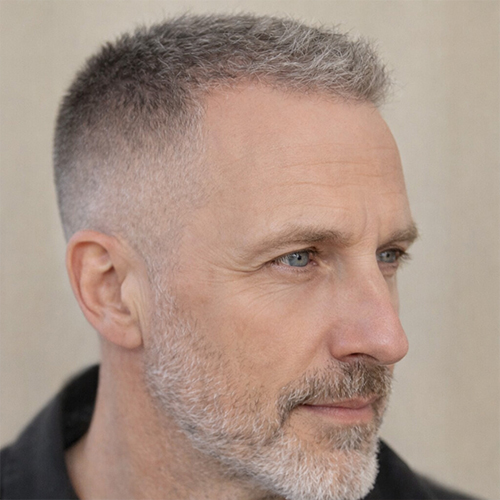
The taper fade shows up on StyleSeat and Forte because it cleans up the outline while keeping the overall look natural. Forte explicitly says short, clean sides can draw focus away from thinning areas and make the top look fuller.
Best For:
Men with mild to moderate recession, office-friendly style preferences, and anyone who wants a clean natural finish.
Not Good For:
Men who want dramatic contrast, men who prefer fuller sides, or anyone who wants a very bold skin-fade look.
15. Short Sides with Longer Top
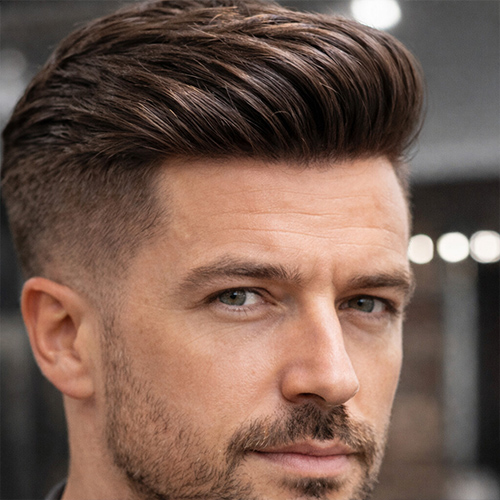
Short sides with a little more on top is one of the safest patterns in men’s hairline hairstyles. It gives you room to style without making the temple corners the star of the show.
Best For:
Men with decent top density, mild recession, and anyone who still wants some styling freedom.
Not Good For:
Men with weak top density, men whose longer top hair falls apart quickly, or anyone who wants a true wash-and-go cut.
16. High Fade and Skin Fade
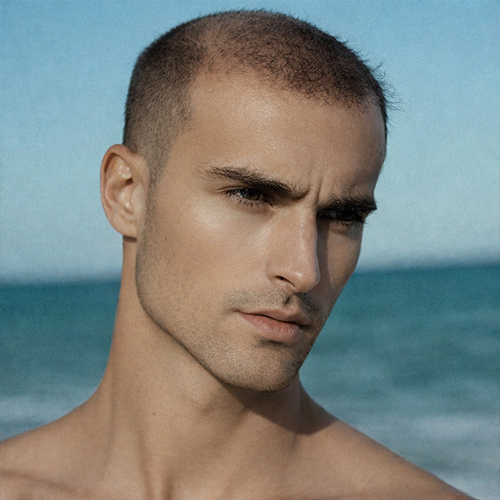
The high fade helps the hairline blend into the rest of the hair, and notes that bald or skin fade versions achieve the best blend.
Best For:
Men with moderate recession, men who suit sharp barbered cuts, and anyone who wants a modern finish.
Not Good For:
Men who dislike very short sides, men with scalp-shape concerns, or anyone who wants softer edges.
17. Bald Fade
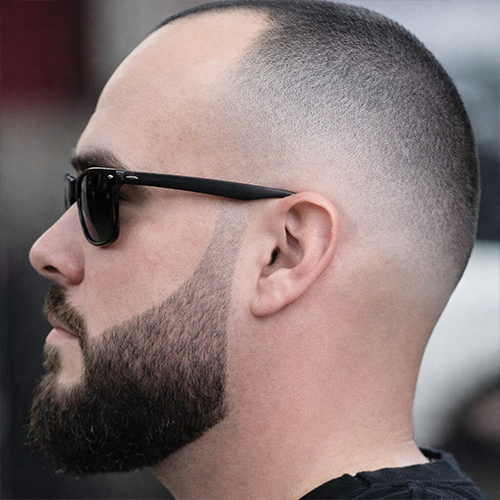
A bald fade can look especially clean when the recession is more obvious. Forte supports that logic, and StyleSeat uses it in more than one variation.
Best For:
Men with deeper recessions, sharp facial features, and anyone who likes clean, high-contrast haircuts.
Not Good For:
Men who want fuller sides, men who dislike frequent barber maintenance, or anyone uncomfortable with skin-close fading.
18. Taper with Rounded Lineup
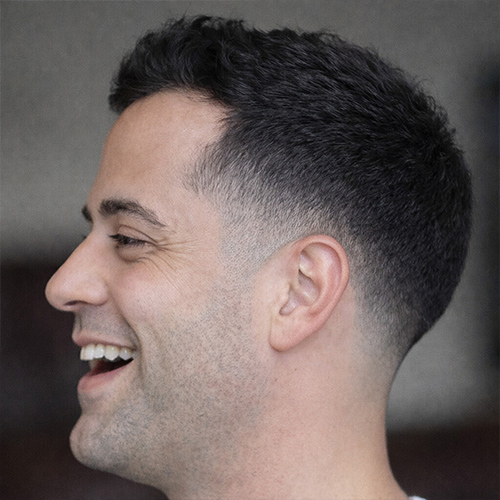
A taper with a rounded lineup can work well when you want a clean edge without making the front look too harsh. The taper keeps the sides polished, and the rounded shape softens the transition at the hairline so the overall look feels natural. This is especially useful for men who want definition without drawing too much attention to the recession itself.
Best for:
Men who want a neat barbershop finish, especially those with curly, coily, or textured hair and a hairline that benefits from a softer outline.
Not good for:
Men who want a very sharp angular hairline, those with major frontal thinning, or anyone whose front edge is too weak to support visible shape-up work.
19. High Fade with Facial Hair
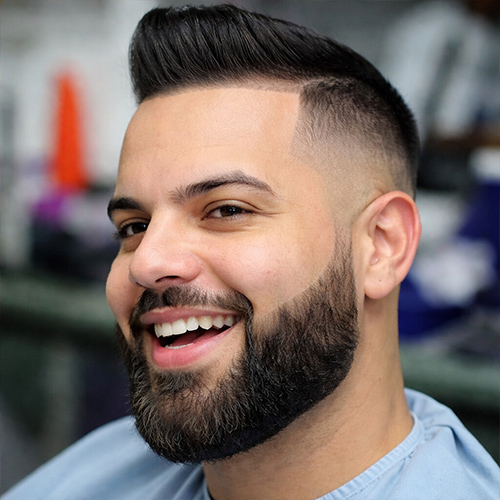
A high fade with facial hair is one of the most reliable combinations for receding hairlines. The high fade keeps the sides clean and reduces contrast around the temples, while the beard adds structure and pulls attention lower on the face. It is a strong option when you want the haircut to look sharp without needing a lot of styling on top.
Best for:
Men with receding temples, short-to-medium top length, and enough beard growth to balance the face well.
Not good for:
Men who cannot grow facial hair evenly, do not like very short sides, or have scalp shape concerns they would rather not expose them with a high fade.
Receding Hairline Haircuts Male Readers Keep Choosing When There’s Hair That’ll Still Do
Across the competitor pages, the overlap is useful. It shows which styles keep winning.
20. Side Part

The side part is a timeless move that shifts focus away from the hairline and pairs well with a fade or taper.
Best For:
Men with mild to moderate recession, decent density on one side of the top, and a preference for classic grooming.
Not Good For:
Men with very fine hair, deep temple recession, or anyone using too much product that makes the scalp more visible.
21. Slicked-Over Side Part
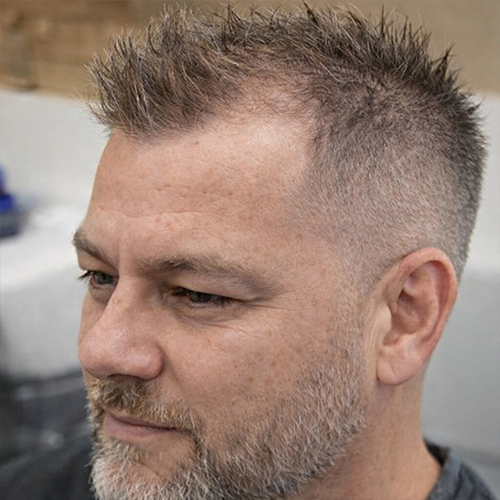
A slicked-over with side part is a medium-length option for men who still have stronger density in one area of the top.
Best For:
Men with mild temple recession, straight to slightly wavy hair, and enough top density to create a natural side sweep.
Not Good For:
Deep recession, very thin hair on top, or anyone trying to use the style to fully cover bald areas. A heavy comb over usually makes hair loss more obvious instead of less.
22. Modern-Day Comb Over
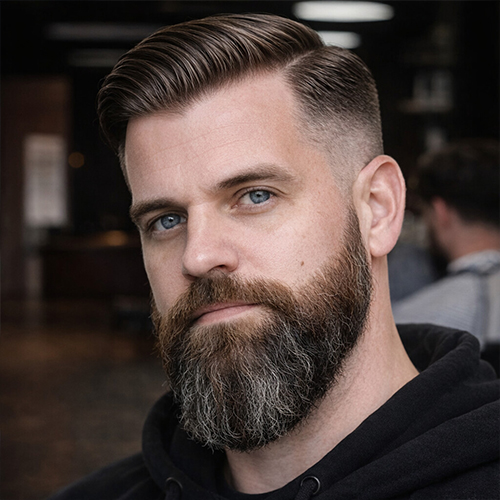
The comb over can still be done, but in a lighter, more modern form. This is not the old-school panic sweep. It works only when the hair still has enough density to carry it.
The trick is to keep the sides neat, avoid a heavy sweep, and use a soft side part that works with the hairline instead of trying to fake a lower one. When done right, it looks classic and sharp.
Best for:
Men with mild temple recession, straight to slightly wavy hair, and enough top density to create a natural side sweep.
Not good for:
Deep recession, very thin hair on top, or anyone trying to use the style to fully cover bald areas. A heavy comb over usually makes hair loss more obvious instead of less.
Best Haircut for Receding Hairline and Big Forehead
A big forehead is not a disaster. A bad haircut is.
The best answers are usually a Textured crop, soft Quiff, side-swept fringe, or a slightly longer Crew cut. Those styles add movement and stop the forehead from becoming the only thing people notice. Wimpole and Forte both favor styles that either add volume or soften the front.
However, try to avoid very flat, very shiny, very tight slick-backs, which can put a giant arrow on the hairline.
Best Haircut for Receding Hairline Black Male
This deserves its own section because texture changes how styles sit and how the hairline reads.
23. Bald Fade with Locs
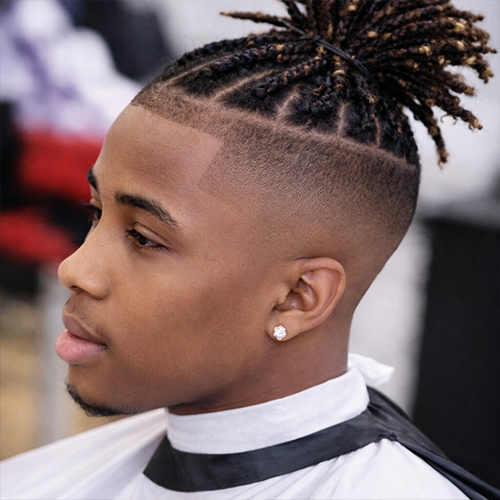
A bald fade with locs is useful because not every reader wants a straight-hair solution.
Best For:
Black men with locs, men who want a cleaner edge around the sides, and anyone who wants to keep length on top.
Not Good For:
Men with weak density at the front loc line, men who do not want the sides cut very short, or anyone wanting a softer, unshaped look.
24. Brushed Curls and Curly Pompadour
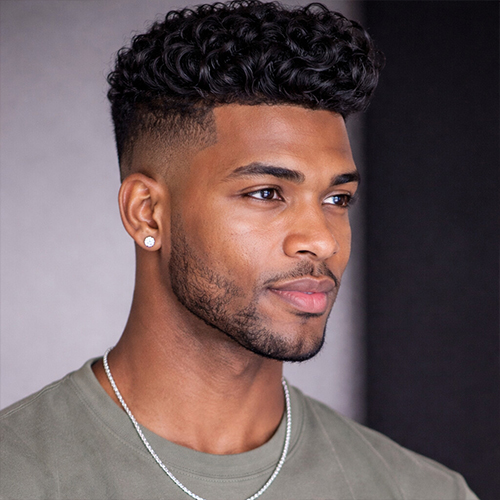
Brushed-up curls and curly pompadour feature natural texture. Natural texture can help create volume on top and make thinning areas less obvious.
Best For:
Men with curly hair, mild to moderate recession, and enough top density to create volume.
Not Good For:
Men with weak curls at the front, advanced thinning on top, or anyone whose curls separate too much and expose the scalp.
25. Waves, Cropped Curls, and Shaped Cuts
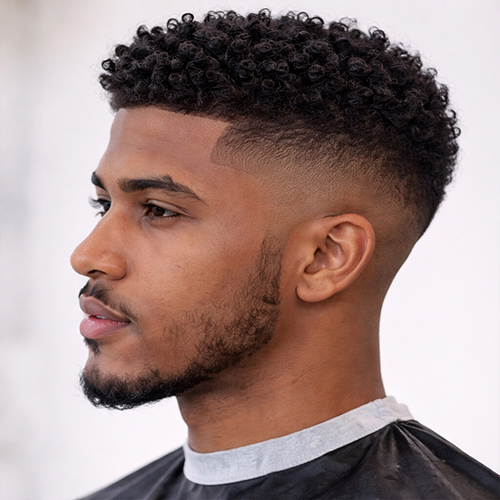
Even when a specific style name is not listed on every page, the same principle holds: clean fade, shaped edges, textured top. AAD also notes that hair-care practices can affect visible hair loss, and it links to Black hair-care guidance as part of its public resources.
Best For:
Black men with waves or curls, men who want definition, and anyone who suits shaped barbershop cuts.
Not Good For:
Men with very weak front density, men who want longer loose hair, or anyone who does not maintain lineups and shape-ups regularly.
Long Haircuts for Receding Hairlines: Yes, But be Realistic
Longer hair is not banned.
It is just riskier.
26. Long and Wavy
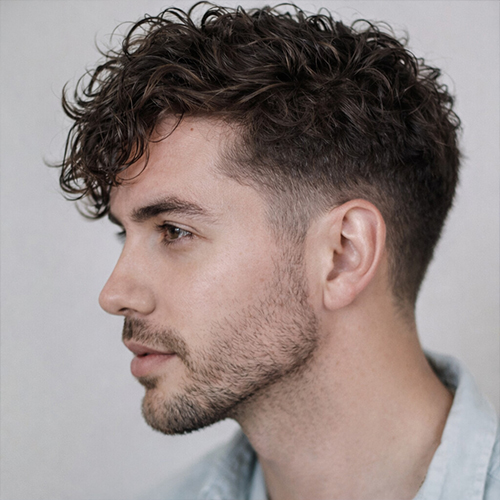
The long and wavy hair with a deep part creates movement and can help distract from thinner spots.
Best For:
Men with mild recession, naturally wavy hair, and good overall density on top.
Not Good For:
Men with thin flat hair, deeper front loss, or anyone whose longer hair splits and exposes the scalp.
27. Long Layered Cut
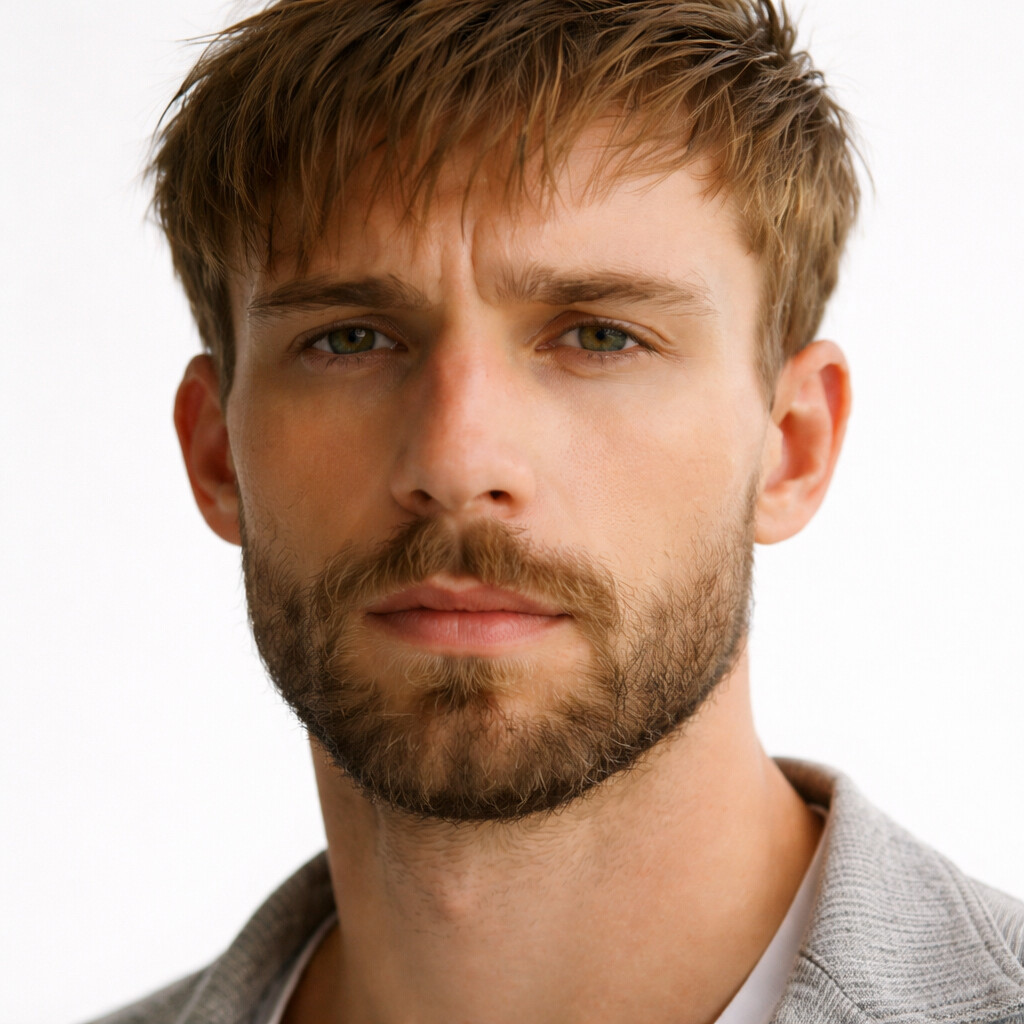
A long, layered cut uses flow and height to reduce focus on the front hairline.
Best For:
Men with mild recession, medium to thick hair, and anyone who prefers a longer, softer style.
Not Good For:
Men with diffuse thinning, weak front density, or hair that becomes stringy when it gets longer.
28. Top Knot
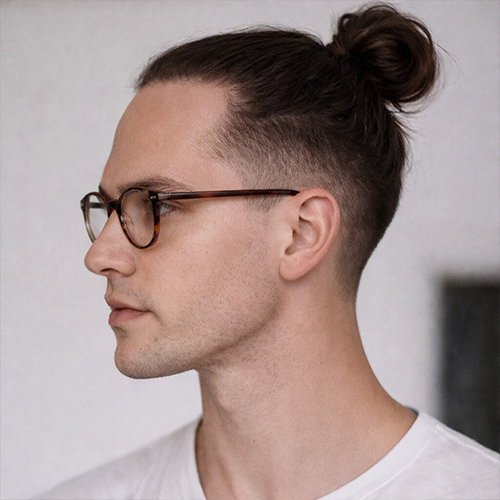
Top knot is the keep-the-length-but-buzz-the-sides style. It can work if the top is still dense enough.
Best For:
Men with good top density, longer hair on top, and a preference for tied-back styles.
Not Good For:
Men with a weak front line, thin top hair, or anyone whose top knot only makes the recession look tighter and more obvious.
29. Undercut with Spikes
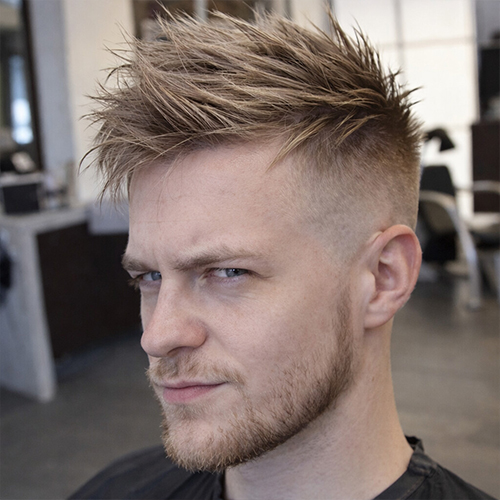
The undercut with spikes can be a solid choice when you still have enough density on top. The shorter or disconnected sides make the style look deliberate, while the spiked texture adds movement and keeps the eye off the corners. This works best with matte product and controlled texture, not stiff gel and sharply separated spikes.
Best for:
Men with good density through the top, a more youthful or edgy style preference, and hair that can hold texture easily.
Not good for:
Very fine thinning hair, advanced recession, or professional settings where a softer and more classic haircut may be a better fit.
Longer Medium Styles if You Still Have Enough Hair to Play With
This is the “maybe” zone.
30. Side-Swept Fringe

A side-swept fringe softens the front line and moves attention across the face instead of straight back to the temples. It can be very useful when the recession is still mild, and the fringe has enough density to sit properly. It looks best when it stays light and natural.
Best For:
Men with mild recession, decent front density, and hair that naturally falls to one side.
Not Good For:
Men with thin, weak fringe hair, deep recession, or anyone trying to create heavy coverage from too little hair.
31. Middle Part and Curtain Hair
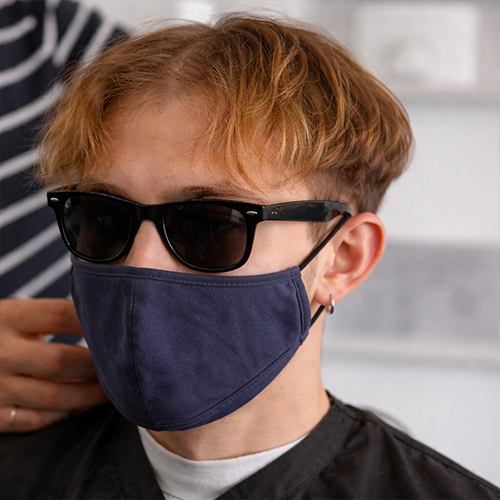
The middle part and curtain hair are softer options that let the hair fall around the temples. These work best when the recession is mild, and the medium-length density is still good.
Best For:
Men with mild recession, medium density, and straight or wavy hair that sits neatly around the face.
Not Good For:
Men with deeper recession, thin hair that separates easily, or anyone whose middle part only opens the temples further.
32. Flow Haircut, Tousled Shag, and Shaggy Hair Cut

Flow haircut, tousled shag, and shaggy haircut are for guys who hate rigid barber cuts and still have enough hair to create movement.
Best For:
Men with mild recession, medium to thick hair, and anyone who prefers relaxed, textured styles.
Not Good For:
Men with fine thinning hair, advanced recession, or hair that looks limp once it grows out.
33. Voluminous in the Middle
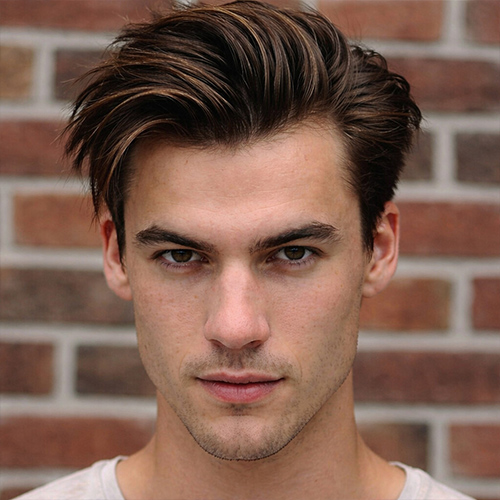
A style with volume in the middle keeps more lift through the center of the top while the sides stay tighter and cleaner. That shape can help when the recession is stronger at the temples but the middle still has decent density to work with. It draws attention upward and inward, which makes the front look more balanced.
Best for:
Men whose middle front section is still fuller than the corners, especially with thick or medium-density hair.
Not good for:
Diffuse thinning across the whole top, very weak frontal density, or hair that collapses quickly and cannot hold height.
Volume Styles that Can Still Save the Day
These styles work only when the top has enough support.
34. Faux Hawk
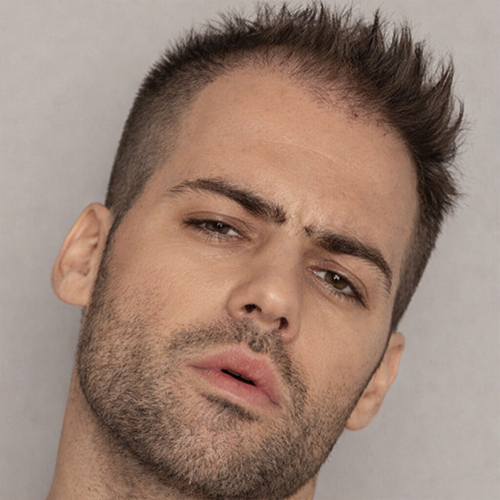
The Haux Hawk shows up across multiple competitor pages because volume through the center makes the corners matter less.
Best For:
Men with stronger density through the center, mild to moderate recession, and hair that can hold texture.
Not Good For:
Men with very thin top hair, advanced recession, or anyone who prefers softer classic cuts.
35. Pompadour and Pompadour with Mid Fade

The pompadour, pompadour with mid fade, is the option for men who still have real density on top and want a sharper shape.
Best For:
Men with strong top density, mild recession, and hair that can hold volume well.
Not Good For:
Men with weak front density, deep recession, or anyone whose pompadour only exposes more scalp when styled up.
36. Spiky Hair and mid Fade with Spiked Hair
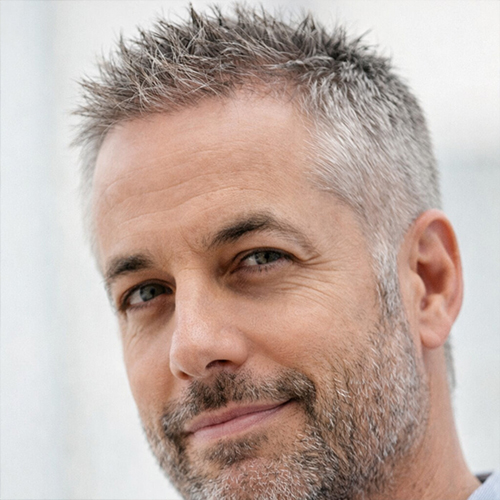
Spiky hair and mid fade with spiked hair are also good options. Small spikes and lift can make the front look stronger, especially in straighter hair.
Slicked Back, Business Cut, and Regulation Cut for Classic Guys
Some men want a cleaner, more traditional vibe.
That is fair.
37. Slicked Back
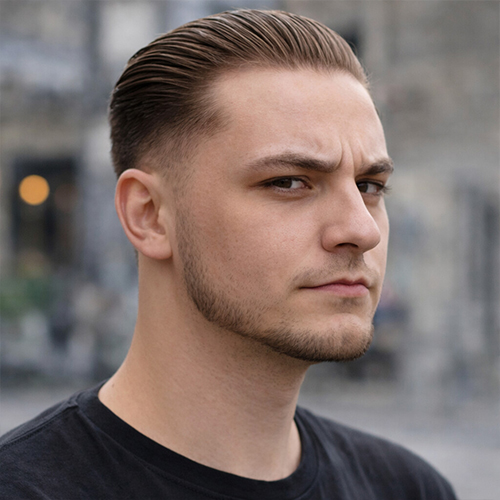
StyleSeat includes slicked back as a close-cropped-sides, longer-bangs look that can still work with a deeper hairline if the density is there. However, if your hair is extremely thin, then keep away from it, as it will put your scalp under the spotlight.
Best For:
Men with straight hair, decent top density, and a preference for youthful textured styles.
Not Good For:
Men with very fine thin hair, advanced recession, or anyone using shiny products that expose the scalp.
38. Business Cut
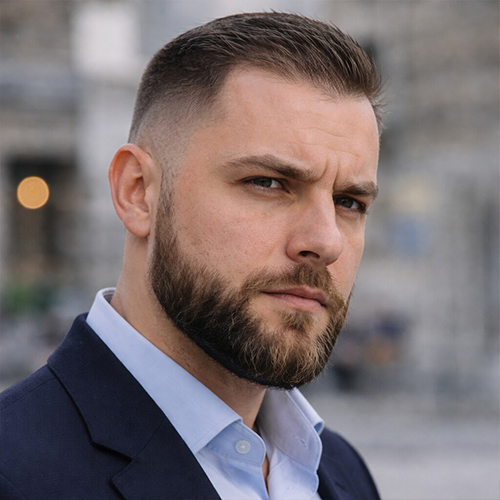
The business cut from StyleSeat is basically the office-safe answer in this whole category: tidy, balanced, and not too loud.
Best For:
Men with medium to strong top density, classic style preferences, and hair that can be brushed back neatly.
Not Good For:
Men with very thin hair, shiny scalp, showing density, or anyone whose slicked-back style makes the front look flatter and weaker.
39. Regulation Cut and Ivy League
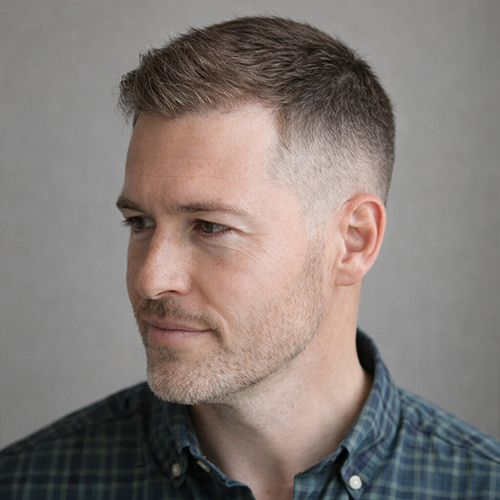
StyleSeat includes the regulation cut, and Forte includes the Ivy League. Both are classic, controlled, and useful when you want a polished look without forcing a fake front.
Best For:
Men with mild to moderate recession, straight hair, and anyone who wants a polished traditional haircut.
Not Good For:
Men with very weak front density, men who prefer loose messy styles, or anyone wanting a more modern textured look.
40. Subtle Tapered Fade
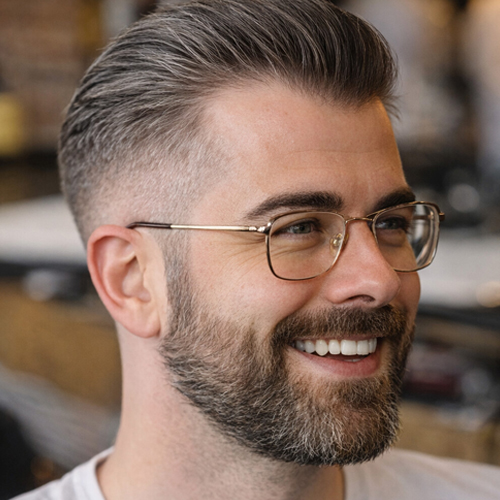
Most fades are aggressive. That is the point. A subtle tapered fade is different. It cleans up the sides without taking things all the way down to the scalp. So if you want a haircut that looks sharp but not try-hard, this is a solid move.
Best For:
Men with mild to moderate recession, guys who want a natural look, and anyone who wants clean sides without a harsh fade.
Not Good For:
Men who want a dramatic barbershop fade, or men with heavier thinning, usually need something shorter and more decisive.
Haircuts to Avoid with Receding Hairlines
Not every style is your friend.
Some just expose the problem faster.
Heavy Comb-Overs
If it looks engineered, it probably looks bad.
Super-Wet Slick Backs
A shiny product can separate strands and make thinning hair look thinner. The better competitor advice leans toward texture, volume, and softer finishes instead.
Weak Long Fronts with no Support
When the front hair is grown longer but does not have enough density underneath, it starts to separate, collapse, and expose the hairline. Instead of creating coverage, it draws attention to the exact area you are trying to soften.
When Newtimes Hair Matters More than Another Haircut
Long front pieces with poor density can collapse, split, and expose the exact hairline you were trying to soften. That is one big reason the leading pages favor shorter solutions.
This is where your brand has an edge.
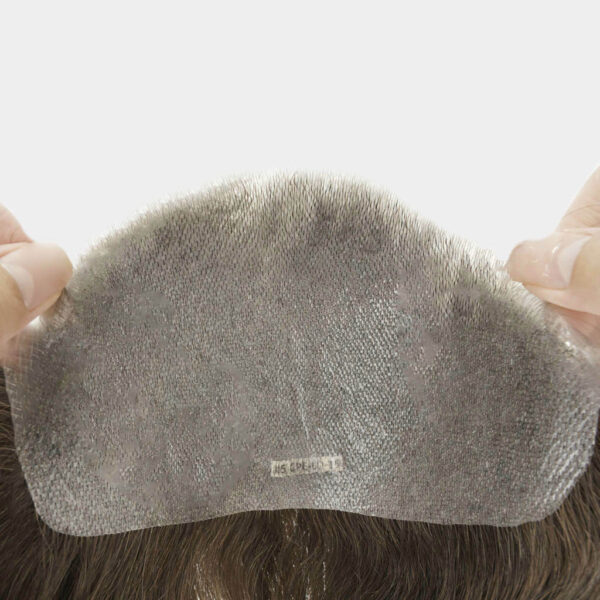
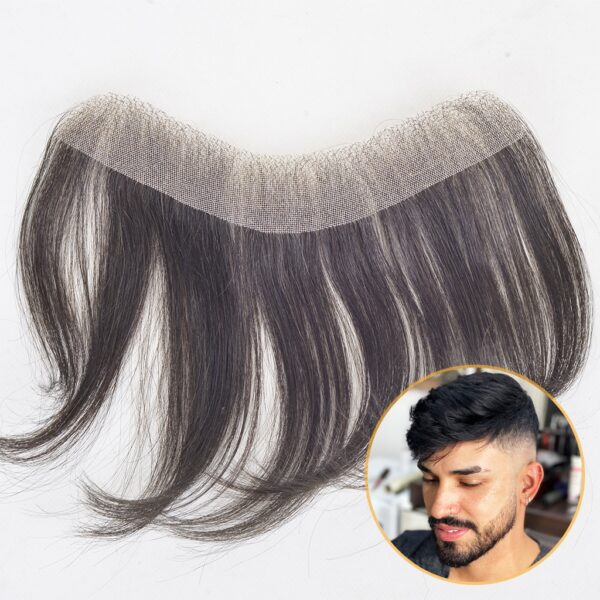
Most competitor posts stop at “get a better haircut.” Newtimes Hair can answer the next question: What happens when no normal cut can rebuild the front hairline you want? Your current and recent Newtimes content already connects haircut advice with hair replacement options for balding men, including frontal solutions when styling alone is not enough.
When a Haircut is Enough
A normal haircut may be enough if the recession is mild, the top still has density, and the goal is just to look sharper.
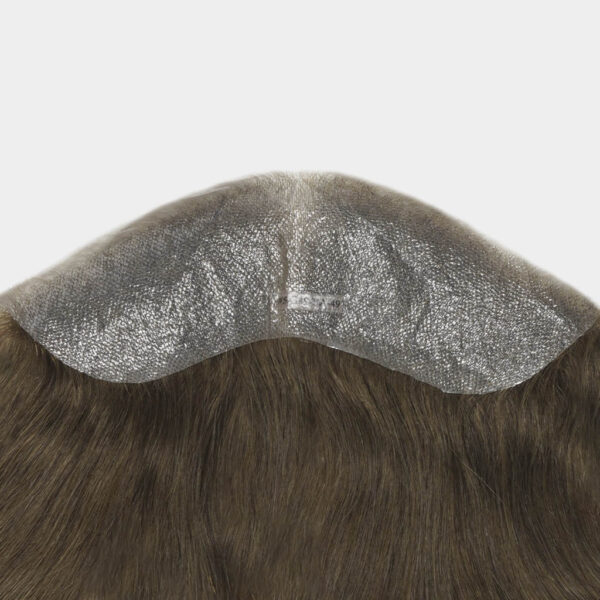
When a Frontal System Makes More Sense
If the front edge is too sparse for a Quiff, side part, crop, or brushed-back style to sit right, a frontal hair system can make more sense than forcing weak hair to fake a stronger hairline. That is a natural Newtimes Hair relevance point that most competitor articles do not cover well.
Things to Consider Dealing With Receding Hairlines
Choosing the next haircut is going to be a lot easier. We’ve just listed 34 haircuts ranging from classic to the top trends, and they all work well to cover up or downplay a hairline that has been receding.
Here are a few guidelines to follow:
- Long hair in the front to cover the temples: growing the hair out in the front to create “bangs” will help you style it to the side or straight forward. This method will physically cover the temples to create the illusion of normal hairlines.
- High fades and undercuts to blur the hairline edge: If you’re not into long hair on top or having bangs growing out, go for a high fade or high undercut. A high bald fade, in particular, is a great way to blur the hairline edges and make the recession less obvious. Fading or shaving from your temples down will help get this hairline-erasing effect.
- Line-ups will help create a faux hairline: Use clippers and a razor to line up or edge up the hairline border. This way, you will be able to create a false but normal-looking hairline even if your customers are receding. Shave backward to bring the hairline back a little, so it will minimize the depths of your regressing sections.
- Befriend with wavy or curly textures: Anything that can add volume and coverage on top of the customer’s head will help you cover a receding hairline. The wavy or curly texture is encouraged to better disguise hairline retraction. Use gel or mousse in your customer’s hair and ruffle it in a scrunching motion while the hair’s still damp, and let it dry to accentuate the natural texture of the hair.
Final Thoughts on Receding Hairline Haircuts
A receding hairline is not the end of looking good.
It is just the end of lazy styling.
Pick the right cut. Keep the fade, taper, or sides clean. Let the top do a job it can actually do. And if the front is too weak for a normal style to land, use a better solution instead of forcing a bad one.
That is the real answer.
As always, if the wearer doesn’t have much hair, have a thorough look at the top-notch hair systems by New Times Hair. We have custom options, too, to get hair systems tailor-made exactly for your client’s desired look.
About the Author
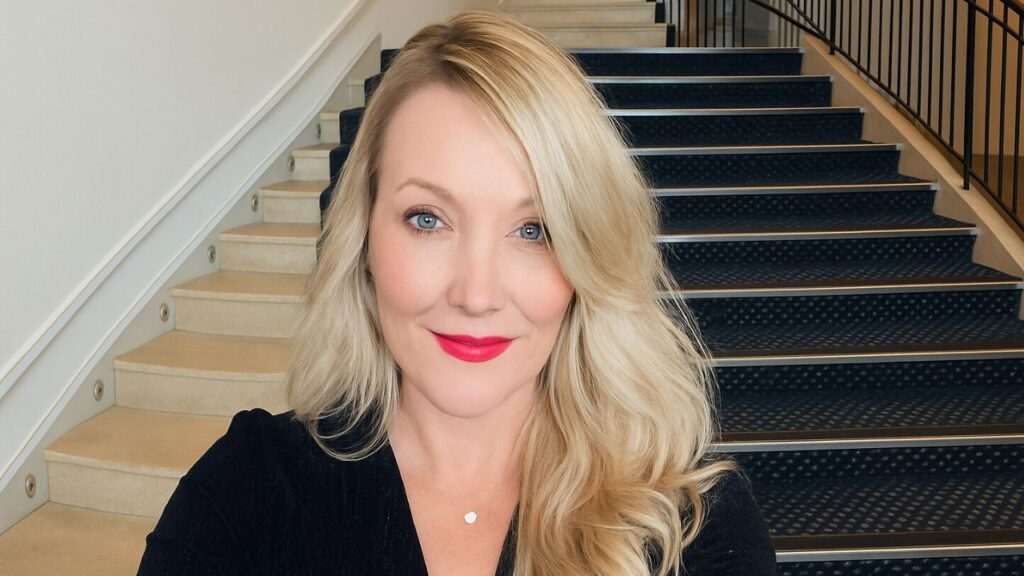
Julia Griffiths is a veteran hairstylist, barber, educator, and reviewer with more than 23 years of hands-on industry experience. She is the founder of Crosscuts Barbers and also teaches CPD-accredited Men’s Hair Systems courses through Hair Revival Training, bringing practical salon knowledge and specialist hair system expertise to her work with Newtimes Hair.