



- Summer Sweat Is a Hair System Problem Before It Becomes a Hairline Problem
- Start With the Base, Because Some Systems Just Run Hot
- Scalp Prep Matters More When the Client Sweats
- Do Not Rush the Cure Time
- Build a Summer Maintenance Schedule Instead of Waiting for Problems
- Teach Clients to Wash More, But Not Rougher
- Protect the Hair From Sun Damage
- Keep Summer Styling Lighter
- When to Recommend a Backup System
- Key Takeaways
- About the Author
- FAQs
How Hair Replacement Professionals Help Hair System Clients Deal With Summer Sweat
- Summer Sweat Is a Hair System Problem Before It Becomes a Hairline Problem
- Start With the Base, Because Some Systems Just Run Hot
- Scalp Prep Matters More When the Client Sweats
- Do Not Rush the Cure Time
- Build a Summer Maintenance Schedule Instead of Waiting for Problems
- Teach Clients to Wash More, But Not Rougher
- Protect the Hair From Sun Damage
- Keep Summer Styling Lighter
- When to Recommend a Backup System
- Key Takeaways
- About the Author
- FAQs
Summer is when a hair system starts telling the truth.
A client can leave a hair replacement center looking perfect in April. Clean hairline. Smooth bond. Nice movement. No complaints. Then July arrives, and suddenly the same client is texting you from a parking lot because the front edge feels loose after two sweaty afternoons.
That does not always mean the installation was bad.
Heat changes the game. Sweat, humidity, sunscreen, scalp oil, gym sessions, and long days outdoors all work against the bond. The hair replacement professional’s job is not just to install the hair system and hope for the best. The real work is helping the client understand what changes in summer and what they need to do differently.
A good summer hair system plan comes down to three things: choosing the right base, preparing the scalp properly, and giving the client an aftercare routine they will actually follow.
Summer Sweat Is a Hair System Problem Before It Becomes a Hairline Problem
Most clients only notice the problem when the edge lifts. But the issue usually starts earlier.
The scalp gets warmer. Sweat sits under the base. Adhesive softens faster. The client touches the hairline more because they feel nervous. Then they add styling product, sunscreen, or a cap on top of all that. By the time the front starts lifting, the bond has already been fighting for its life for days.
Hair replacement professionals should explain this plainly. Sweat does not mean the client “did something wrong.” It means the normal rules need to be adjusted.
For summer appointments, ask a few blunt but useful questions:
- Do you work outside or in a hot room?
- Do you exercise heavily?
- Do you sweat a lot from the scalp?
- Are you going on vacation or swimming?
- Do you usually wear hats?
You do not need to turn the consultation into an interrogation. But if you skip these questions, you may choose the wrong base or bond schedule before the client even sits down.
Related read: How Long Can You Wear a Hair System with Glue On?
Start With the Base, Because Some Systems Just Run Hot
A full thin skin hair system can look clean and sharp, especially when the client wants an easy wipe-down surface. But in heavy summer heat, it can feel warm. For some clients, too warm.
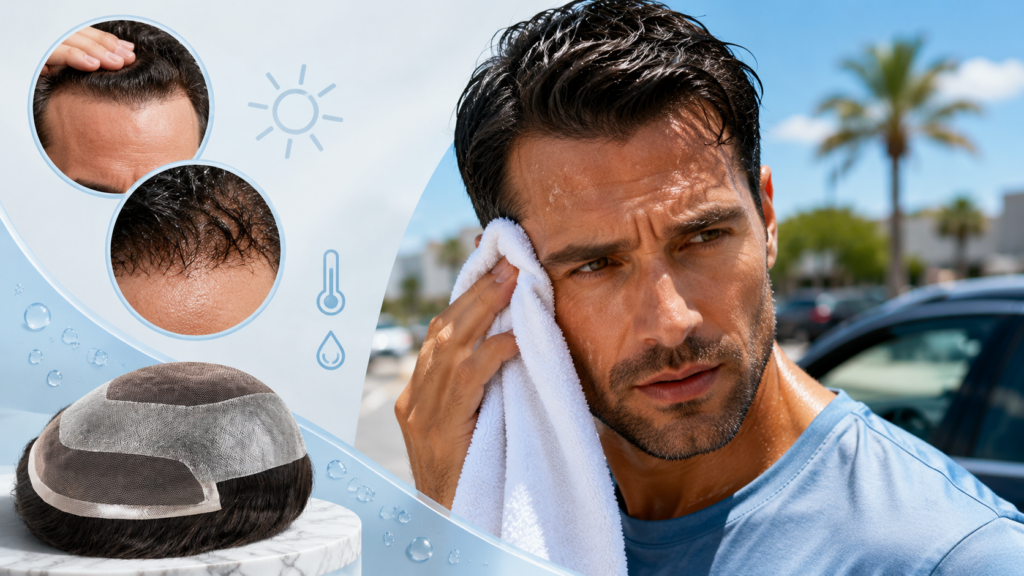
If a client sweats a lot, a breathable base is usually easier to live with. Lace lets more air pass through. A lace center can make a big difference for comfort, even if the perimeter still needs stronger attachment support.
This is where hair replacement professionals can prevent complaints before they happen. The client may walk in asking for the thinnest, most invisible base because that is what they saw online. But online photos do not show sweat building under a system after a long shift or a humid commute.
For summer, be honest with them. The most invisible option is not always the most comfortable option.
Newtimes Hair offers different stock and custom hair system base options, including lace, skin, mono, and combination bases. For hair replacement centers, that matters because not every client should be pushed into the same construction. A client who barely sweats and wants a crisp hairline may be fine with one choice. A client who runs hot all day may need something more breathable, even if it means changing the usual installation plan.
Scalp Prep Matters More When the Client Sweats
Summer bonding starts before the adhesive touches the scalp.
The scalp should be clean, dry, and cool. Not “mostly dry.” Not “he just came in from outside, but we are running behind.” Actually dry and cooled down.
If the client is already sweating in the chair, the bond is starting with a disadvantage. Give the scalp a few minutes. Use a cool setting if needed. Clean away oil properly. If you use a scalp protector, apply it correctly and let it dry according to the product instructions.
This part is not glamorous. Nobody posts a dramatic before-and-after of scalp prep.
But this is often the difference between a client getting through the week comfortably and a client blaming the system by Thursday.
Do Not Rush the Cure Time
Clients hate hearing this, but they need to hear it anyway: the bond needs time.
If the adhesive needs a full cure period, tell the client that clearly. No gym right after installation. No long hot shower that night. No swimming because “it should be fine.” No testing the hairline with his fingertips every fifteen minutes in the mirror. All because the hair needs settling.
A hair replacement professional can do a beautiful install and still lose the battle if the client treats the first 24 hours like nothing matters.
Give them simple wording:
“Your system is secure now, but the bond is still settling. Keep it dry and avoid heavy sweating for the first day. After that, it will handle normal life much better.”
That sounds small. It saves appointments.
Build a Summer Maintenance Schedule Instead of Waiting for Problems
In cooler months, some clients can stretch maintenance longer. In summer, they cannot.
Sweat and scalp oil build up faster. The client may notice itching sooner. The hair may feel heavier because the product and salt are sitting in it. The bond may need cleaning or refreshing before the normal appointment date.
Hair replacement professionals should set expectations before the client complains.
For heavy sweaters, shorter maintenance intervals are often more realistic. That does not mean the system is of poor quality. It means the client’s lifestyle and weather are putting more pressure on the attachment.
A simple summer check-in can help:
“During hot months, you may need maintenance sooner than usual. If the front starts feeling tacky or itchy, do not wait until it becomes a full lift. Message us early.”
That one line makes the client feel guided instead of embarrassed.
Teach Clients to Wash More, But Not Rougher
Sweat does not mean the client should scrub the system like a kitchen floor.
They may need to wash a little more often in summer, especially after heavy sweating. But the washing has to stay gentle. Harsh shampoo, aggressive rubbing, and hot water can make the hair feel dry faster. System hair does not receive natural scalp oil the way growing hair does, so once it starts feeling dry, the client notices.
Recommend a sulfate-free, hydrating shampoo. Teach them to cleanse the scalp and base area carefully. Remind them to rinse well, because leftover product can create itching and buildup.
And please, warn them about alcohol-heavy styling products. Some clients keep using the same strong gel or spray they used before wearing a system. Then the sun hits, the hair dries out, and everyone wonders why the piece feels rough.
It is usually not one big mistake. It is a few small bad habits stacking up.
Protect the Hair From Sun Damage
Summer damage is not only about the bond.
Sun exposure can make hair look faded, brassy, or dry. This is especially annoying when the color match was perfect at the install and then slowly drifts after weeks outdoors.
For clients who spend real time in the sun, recommend a lightweight leave-in conditioner with UV protection. A loose hat can also help when they are outside for hours. The keyword is loose. A tight hat rubbing against the front hairline all day can create its own problem.
Clients do not always think of system hair as something that needs sun protection. Hair replacement professionals should make it part of the aftercare conversation.
Keep Summer Styling Lighter
Heavy waxes and thick pomades can be a mess in hot weather. They mix with sweat, sit in the hair, and make the system feel dirty faster.
For summer, steer clients toward lighter styling products. Water-based creams, light sprays, or minimal products often work better. If the client wears longer hair, encourage practical styling when needed. Getting hair off the neck on a hot day is not just about comfort. It also reduces sweat and friction.
This is where professional advice becomes personal. You are not just saying, “Use less product.” You are helping the client live with the system in real weather, on real days, when they are busy and hot and do not want to think about their hair every ten minutes.
Related read: How to Install and Style a Hair System.
When to Recommend a Backup System
Some clients need a backup unit. Not everyone, but more than people think.
If a client travels often, sweats heavily, works in heat, or depends on their appearance for work, having only one system can be stressful. A backup gives the professional team more room to rotate, clean, repair, or replace without panic.
For hair replacement businesses, Newtimes Hair’s stock hair systems can be useful here because they help handle urgent needs faster than a fully custom order. Custom systems still matter, especially for more difficult color or base requirements. But for summer emergencies, stock availability can be the thing that keeps a client from spiraling.
Nobody enjoys telling a client, “We have to wait.” Summer hairline panic does not become more charming with a longer lead time.
Key Takeaways
- Summer sweat can loosen a hair system faster, but hair replacement professionals can prevent many problems with better planning.
- The base matters. Clients who sweat heavily often do better with breathable designs, especially lace or combination bases.
- Scalp prep and cure time are not optional. A clean, dry, cool scalp gives the bond a better chance.
- Clients may need more frequent maintenance in hot weather. That should be explained before the first lift happens.
- Sun protection and lighter styling products help the hair stay fresher, softer, and more natural-looking.
- Newtimes Hair can support hair replacement centers with stock and custom hair system options, so professionals can match the system to the client’s climate, lifestyle, and comfort needs instead of forcing one solution onto everyone.
About the Author

Julia Griffiths is an experienced hair professional, barber, educator, and men’s hair systems trainer. She is the founder of Hair Revival Training, where she delivers CPD-accredited men’s hair system courses for stylists, and she also runs Crosscuts Barbers, a barbershop she opened at age 27. As an author and reviewer for Newtimes Hair, Julia brings practical salon experience, training expertise, and a strong focus on quality hair replacement solutions to her content.