




- Key Takeaways
- Don’t Ask “What’s the Best Hair Extension Method?”
- Stage 1: Entry-Level Cash Flow Product-Tape-In Extensions
- Stage 2: Profit Upgrade Product- Weft Hair Extensions
- Stage 3: Differentiation Product-Flat-Tip Extensions
- Stocking Strategy for Maximizing Profit
- How to Lower Initial Investment Costs?
- Q&A Section
- Call to Action:
What Hair Extension Methods Should a Small Salon Stock First? A Profit-First Guide
- Key Takeaways
- Don’t Ask “What’s the Best Hair Extension Method?”
- Stage 1: Entry-Level Cash Flow Product-Tape-In Extensions
- Stage 2: Profit Upgrade Product- Weft Hair Extensions
- Stage 3: Differentiation Product-Flat-Tip Extensions
- Stocking Strategy for Maximizing Profit
- How to Lower Initial Investment Costs?
- Q&A Section
- Call to Action:
Many salon owners have experienced this dilemma: seeing new styles appear every day on TikTok and Instagram, they always worry that if their hair extension inventory is not complete enough, they will not be able to meet clients’ needs. But in fact, every salon has limited energy and budget. What is popular is not necessarily the most suitable, and what looks good is not necessarily the most profitable. Instead of letting those trend-following purchases gather dust in storage and lock up your cash flow, it is better to focus your efforts on order winners—the core products that are easiest to sell, easiest to drive repeat purchases, and most capable of bringing stable profits.
We can try a more efficient inventory management method: the “80/20 rule,” allocating most of the budget to high-turnover basic products and then allocating a small portion of the budget to high-profit upgrade products. This is how sustainable profitability can be achieved.
As your loyal, long-standing wholesale hair extension supplier, NEWTIMES HAIR will help you analyze here: which hair extension methods small salons should stock first, which products are worth keeping in regular inventory, which products are suitable for on-demand customization, and how to generate higher profits with less inventory.
Key Takeaways
- Small salons don’t need to stock every hair extension method at the beginning.
- Tape-In Extensions are a good first choice because they are fast to install, easy to learn, and inventory-friendly.
- Weft Hair Extensions can help salons offer higher-ticket transformation services.
- Flat-Tip Extensions are suitable for clients who want more comfort, invisibility, and personalized placement.
- Salons should prioritize popular lengths like 18″ and 22″ first, with 20 inches added based on demand
- Rooted blondes, browns, balayage, and natural mixed colors are safer stocking choices.
- A reliable wholesale supplier can help reduce quality risks, refunds, and inventory pressu
Don’t Ask “What’s the Best Hair Extension Method?”
In fact, every hair extension method has its own strengths and weaknesses. Clients have different hair types, different budgets, different lifestyles, and different levels of willingness to spend time on maintenance. So for small salons, the question is never “Should I stock every hair extension product?” but rather “Which methods are easiest to sell, easiest to install well, easiest to maintain, and also easiest to profit from?” These are the true order winners worth prioritizing.
Stage 1: Entry-Level Cash Flow Product-Tape-In Extensions
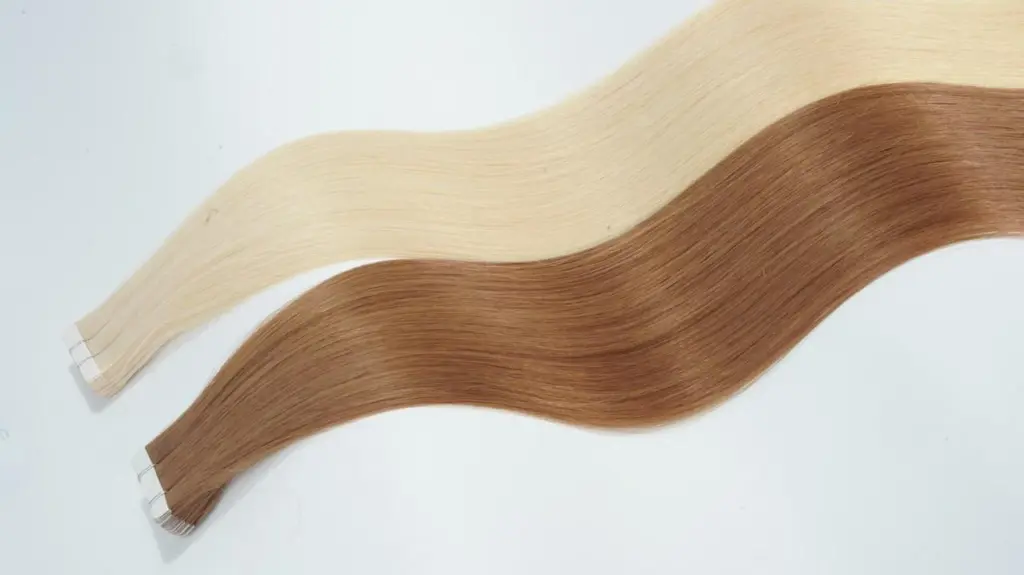
As an entry-level product for salons, tape-ins can create extremely strong turnover in the early stage of salon operations, namely Stage 1. This is because they have the following characteristics:
Extremely High Chair Turnover Rate:
For small salons, the shorter the installation time, the more clients a stylist can serve in one day. Compared with keratin bond extensions, which require at least about 3–6 hours to install, a full-head Tape-In Extensions application usually takes only 30–90 minutes. This means that focusing on wholesaling Tape-In Extensions and offering related services to clients may help increase the daily revenue of a single salon chair.
Low Cost Investment:
The equipment needed for Tape-In hair Extensions only includes a pair of tape-in pliers, a tail comb, and replacement tape. In addition, the technical difficulty is also relatively low, the error rate is relatively controllable, and they are easier to learn than bead-based and heat-fusion methods.
More Friendly Inventory Pressure:
At present, Tape-In Extensions are one of the professional hair extension methods that are the most inventory-friendly and financially flexible for small salons. Therefore, they can be listed as a priority stocking option. In addition, the stocking logic for Tape-In is relatively clear, and the popular lengths in the current hair extension market are highly concentrated. Salons can consider mainly stocking 18″ (45cm) and 22″ (55cm) hair extension products. If a client wants 16″ or 20″, the longer length can be trimmed directly. Because the overall integration after tape installation is strong, the hairstyle after trimming is also relatively natural.
Stage 2: Profit Upgrade Product- Weft Hair Extensions
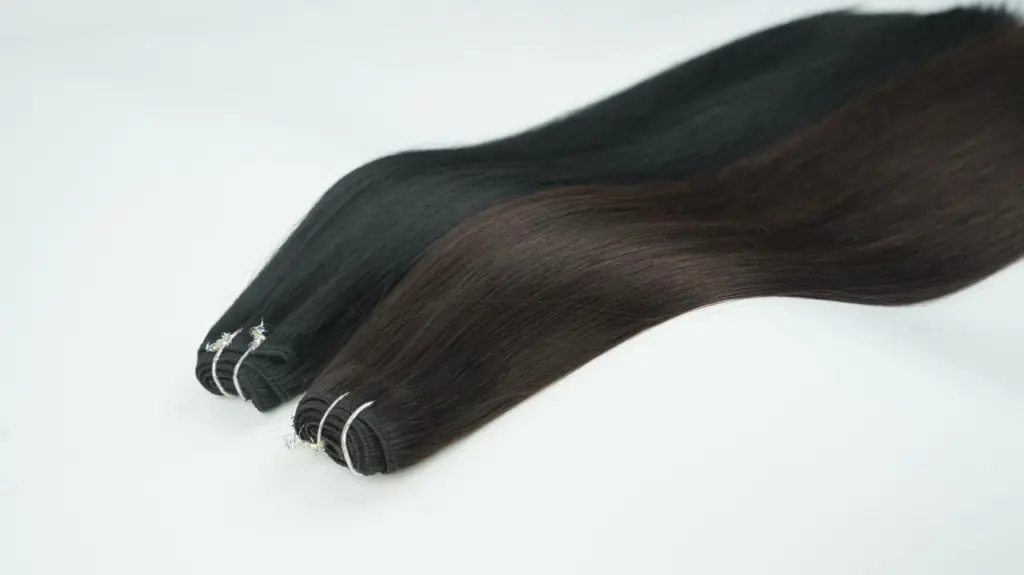
The Tape-In Extensions mentioned above are very much like a stepping stone for salons entering the hair extension industry. In the early stage, they can help salons start operating hair extension services with relatively low risk. But after the technique becomes mature and operations are on track, the needs of loyal clients in the second stage may shift from “wanting to try hair extensions” to “wanting truly noticeable changes in length and thickness.” At this point, salons can consider wholesaling some products such as Weft Hair Extensions that help improve profit margins.
Stronger Volume Coverage:
For many clients trying hair extensions for the first time, Tape-In Extensions can already deliver a sufficiently noticeable volume-adding effect, while also being lightweight, natural to wear, and not placing too much burden on the scalp. But when clients gradually begin to pursue more invisible and seamless hair extension options, higher-density volume, fuller ends, and a more complete overall transformation effect, Weft Hair Extensions become a more suitable advanced option. Their advantage is that they can cover a larger installation area through one full weft and provide more concentrated volume support within a unit area. Therefore, they are especially suitable for clients who need obvious thickening, full-head lengthening, or a stronger before-and-after effect. For small salons, wholesaling Weft products appropriately can help the salon upgrade from basic volume-adding services to higher-ticket complete transformation service.
Starting to Move Toward Higher-End Positioning:
Since the installation and price threshold of Tape-In are relatively friendly, many clients will regard it as an entry-level option. But if a salon wants to build its positioning toward the high-end direction, it still needs some hair extension methods that can reflect the salon’s professional ability to enhance consumers’ perceived professionalism. Weft installation methods, such as sew in, are often regarded as “high-end handmade customization.” Salons can charge a higher premium to clients for their exclusive sewing technique.
Simplified Inventory:
Weft Hair Extensions do not require salons to stock a large number of complicated sub-specifications from the beginning. As long as the stylist masters the core Weft installation and sewing techniques, they can flexibly combine different volume and styling effects through layered sewing of a small number of core colors and common lengths, ultimately achieving an extremely high capital turnover rate.
Stage 3: Differentiation Product-Flat-Tip Extensions
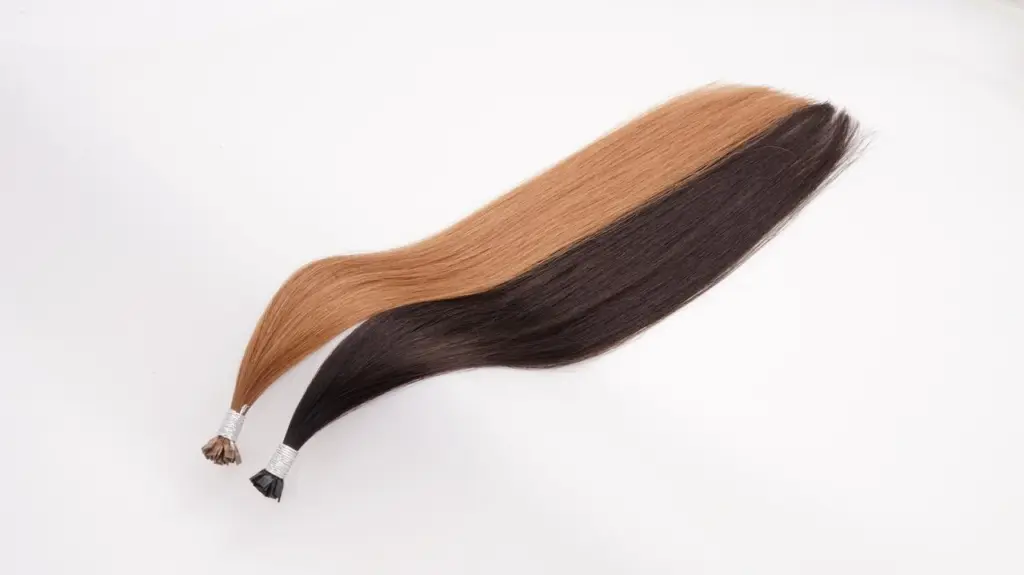
Although Weft itself is already a high-end hair extension option, its advantages lean more toward large-area volume increase and overall hairstyle transformation. Some consumers may not need to increase their overall hair volume, but only have very refined needs for partial hairstyle transformation. For example: adding volume locally, while also wanting it to be highly comfortable, invisible, flexible, and natural. Therefore, in the third stage of business advancement, Flat-Tip can be used as an upgrade option on the menu to further expand the target consumers to those clients who are willing to pay a higher price for comfort, naturalness, and personalized solutions.
Technical Premium:
Refined hair extension work is easier to charge a high premium for. When doing Flat-Tip hair extensions, the stylist needs to carry out “point-to-point” precise implantation based on the client’s skull shape, hair whorl direction, and even the distribution of stress points in the hair. This kind of refined professional technique may greatly enhance the sense of ceremony perceived by consumers. This means that when clients see the stylist sectioning as precisely as a surgeon, their psychological acceptance of high manual service fees will increase significantly.
Extremely low Material Waste:
Flat-Tip is generally charged by strand, and the stylist does not need to do a second trim on the connection points. This means the salon can maximize “use as much as needed, take as much as needed, and charge for as much as used.” Even if there are hair extensions left over after serving a client, the remaining hair can also be used for highlights or partial repair for other clients, helping the salon achieve zero inventory waste as much as possible.
Reduced Complaint Rate:
Flat-Tip extensions feature a uniquely flat, low-profile connection point designed to move naturally with the client’s own hair. This discreet design helps create a seamless blend after installation, making the bonds barely noticeable even when the client is lying down or sleeping. By reducing bulk and distributing weight more comfortably at the attachment area, Flat-Tips are often preferred by clients looking for a more comfortable wear experience, including those with sensitive scalps.
Stocking Strategy for Maximizing Profit
Budget Allocation:
| Product Stage | Recommended Inventory Share | Product Type | Main Positioning | Suitable Clients | Stocking Recommendation |
| Stage 1 | 70%–80% | Tape-In Extensions | Entry-level cash flow product | Clients trying hair extensions for the first time, wanting fast volume, and looking for a natural, lightweight effect | Keep core colors and common lengths in regular stock as the basic inventory for the salon’s hair extension business |
| Stage 2 | 20%–15% | Weft Hair Extensions | Profit upgrade product | Clients who want obvious lengthening, thickening, full-head transformation, and higher-ticket transformation services | Stock selectively, focusing on high-turnover colors and lengths suitable for full-head transformations |
| Stage 3 | 10%–5% | Flat-Tip Extensions | Differentiated custom product | Clients who want partial volume enhancement, comfort, invisibility, natural movement, and personalized solutions | Stock in small quantities or customize on demand; large-volume stocking is not recommended in the early stage |
If the salon is located in a high-end community, it needs to consider increasing the budget share for Weft and Flat-Tip by about 10% to meet high-net-worth clients’ demand for comfort. In addition, the salon needs to reserve a portion of the budget, around 5%, for high-quality consumables such as high-strength sewing thread, because most hair extension-related complaints come from salons using cheap consumables, not from the hair extension products themselves.
Color Allocation:
Since the current mainstream trend in the European and American hair extension market favors blonde and brown shades that already have roots, layers, highlights, and transitional effects, salons can allocate more budget to these hair colors. Considering that small salons have limited funds, it is not recommended to stock large quantities of pure light blonde as a coloring canvas. A more stable and effective approach is to allocate 20%–25% of the budget to balayage and mix colors with natural blending effects, such as sunkissed blonde, Hazel Harmony, and sandy blonde. The other budget can be allocated to high-turnover basic colors such as Midnight Mocha, Chestnut, and Golden Blonde. The specific allocation can be further adjusted later based on client feedback.
Length Selection:
For small salons, it is worth considering prioritizing naturally beautiful lengths such as 18″, 20″, and 22″. Extra-long lengths such as 24″ and 26″ can be purchased on demand after client needs are clear.
How to Lower Initial Investment Costs?
- Choose a wholesale hair extension supplier with testing videos: Before placing a large order, first check whether the supplier’s official website can provide quality testing videos.
- Supplier transparency: Choose a B2B partner that can directly provide supply chain information to reduce refunds and complaints caused by unstable quality.
Q&A Section
What Hair Extension Method Should a Small Salon Stock First?
Tape-In Extensions are usually the best first option because they are quick to install, easy to manage, and require a lower starting investment.
Why are Tape-In Extensions Suitable for Small Salons?
They have a fast chair turnover rate, simple tools, lower technical difficulty, and lighter inventory pressure.
When Should Salons Add Weft Hair Extensions?
Salons can add Weft Hair Extensions once they want to offer fuller, higher-value transformation services.
Are Flat-Tip Extensions Necessary for Every Salon?
Not necessarily. Flat-Tips are better as an upgrade option for clients who want comfort, natural movement, and more customized results.
What lengths Should Small Salons Stock First?
18″, 20″, and 22″ are practical starting choices. Longer lengths like 24″ and 26″ can be ordered on demand.
How Can Salons Reduce Inventory Risk?
They can focus on core best-selling products first, use the 80/20 stocking rule, and work with a transparent wholesale supplier.
Call to Action:
Want to improve hair extension inventory efficiency and reduce the risk of overstocking? Choose NEWTIMES HAIR to precisely stock Tape-In, Weft, and Flat-Tip Extensions for your salon, reduce inventory pressure, and improve profit margins.