




- Key Takeaways
- Step 1: Start Lean: Why 1–2 Core Hair Extension Methods Can Help Manage Costs
- Step 2: Quality Control: Test Samples Before Buying Wholesale Hair Extensions in Bulk
- Step 3: Financial Model: Build a Standard Consultation and Pricing Process
- Step 4: Strategic Alignment: Choose a Supplier That Can Support Long-Term Salon Purchasing Needs
- FAQ: Starting a Hair Extension Business as a Stylist
How to Start a Hair Extension Business as a Stylist: Wholesale Suppliers, Pricing, Inventory & Client Retention
- Key Takeaways
- Step 1: Start Lean: Why 1–2 Core Hair Extension Methods Can Help Manage Costs
- Step 2: Quality Control: Test Samples Before Buying Wholesale Hair Extensions in Bulk
- Step 3: Financial Model: Build a Standard Consultation and Pricing Process
- Step 4: Strategic Alignment: Choose a Supplier That Can Support Long-Term Salon Purchasing Needs
- FAQ: Starting a Hair Extension Business as a Stylist
Many stylists, after mastering core hair extension techniques and building a solid client base, begin to consider opening their own salon and making the transition from a technical hairstylist to a salon business owner.
In fact, the salon business continues to show strong potential as global consumers seek professional hair services, styling upgrades, and personalized image management.
However, it is worth noting that if a salon relies only on basic services such as regular haircuts and coloring, its profit margin may often be relatively limited. These services usually have lower average order values and face more intense competition.
By comparison, hair extension services are a high-value category with strong business potential. Hair extensions usually have a higher service price, deliver visible results, and create a clear before-and-after transformation, which can help clients better understand the value of the service.
At the same time, hair extension clients often need regular maintenance, reinstallation, aftercare, and replacement hair. This may create more opportunities for repeat bookings and ongoing client relationships.
For this reason, more salons and stylists are beginning to position hair extensions as one of their core services for supporting service differentiation, building a professional salon identity, and encouraging client engagement.
As a stylist starting a hair extension business plan, you need to choose the right hair extension methods, find a reliable wholesale hair extension supplier, build a small starting inventory, create a pricing structure that considers costs and target margins, create a consultation process, and plan maintenance appointments that encourage first-time clients to return for future services.
Key Takeaways
- Start with 1–2 hair extension methods instead of offering every type at the beginning.
- Test samples before purchasing wholesale hair extensions in bulk.
- Create a consultation process and price your services based on hair cost, installation time, maintenance services, and target margin.
- Choose a wholesale hair extension supplier that provides product information, repeat-order support, and quality control processes that fit your salon’s purchasing needs.
Step 1: Start Lean: Why 1–2 Core Hair Extension Methods Can Help Manage Costs
Reduce Training and Operating Costs
Every hair extension method comes with different installation techniques, product inventory needs, consultation processes, pricing models, and aftercare requirements.
If you offer every type of hair extension service from the very beginning, you will need to spend more time learning different installation techniques, build multiple service workflows, and take on greater inventory pressure.
By contrast, focusing on 1–2 core hair extension methods at the beginning can make it easier to control startup costs, improve service efficiency, and build client cases and word-of-mouth over time.
Once your techniques, client demand, and repeat-booking process become more stable, you can gradually expand your hair extension product lines. This is usually a better approach for long-term salon planning.
What is the Best Hair Extension Method for Your Salon
When a stylist first starts building a salon business, it is important to choose the right starting category based on the salon’s positioning and target clients. This can also help strengthen the salon’s brand image.
If your salon focuses on efficient services and wants to shorten installation time while increasing appointment turnover, you may start with Tape In Hair Extension wholesale. Tape-ins are relatively fast to install and are suitable for clients who want to add volume or length without spending too much time in the salon.
If your salon has a more premium positioning and wants to offer higher-ticket services through more advanced techniques, you may consider Genius Weft or Keratin Bond Hair Extension wholesale.
These methods usually require more advanced stylist training and may be suitable for clients who want a more customized or natural-looking result.
Step 2: Quality Control: Test Samples Before Buying Wholesale Hair Extensions in Bulk
Build a Standard Sample Testing Process
Testing hair extension samples should not rely only on a quick touch test or visual inspection.
Some hair extension products may look smooth, shiny, and problem-free when they first arrive. However, after washing, brushing, blow-drying, or heat styling, they may become dry, tangled, shedding-prone, or frizzy.
Stylists can refer to the checklist below as a sample testing process:
| Test Item | Evaluation Focus | Specific Inspection Method |
| Hair Quality Durability | Evaluate whether Remy hair can maintain smoothness and softness. | After washing, observe whether the hair remains smooth, and whether it is prone to tangling, dryness, or frizz. |
| Hair End Thickness | Evaluate whether the hair volume is even and whether the hair ends are full. | Check whether there are issues such as thick top and thin bottom, sparse hair ends, or an unnatural appearance. |
| Shedding and Tangling | Evaluate product stability and daily-use performance. | Through combing, washing, and blow-drying tests, observe whether the hair is prone to shedding or tangling. |
| Attachment Durability | Evaluate whether the installation area is secure. | For Tape In, I Tip, K Tip, Weft, and other products, test whether the tape tabs, bonds, or weft stitching are secure. |
| Color Stability | Evaluate whether the color is accurate and whether it is prone to fading. | After washing, observe whether there is obvious color fading, and compare the color with the color ring or reference image to check consistency. |
| Bleaching and Dyeing Limitations | Evaluate whether the product is suitable for secondary dyeing or color adjustment. | If a client may need secondary coloring, test in advance the level of color processing the product can reasonably tolerate. |
Building a standardized sample testing process can help salons make more informed purchasing decisions.
Step 3: Financial Model: Build a Standard Consultation and Pricing Process
Use a Multi-Factor Hair Extension Pricing Formula
When pricing hair extension services, stylists should not only refer to the product purchase cost. They also should not simply copy the prices of other salons.
A more reasonable approach is to consider product cost, installation time, technical difficulty, local spending levels, client budget, and future maintenance services.
For Tape In Hair Extensions, which are more efficient to install, salons may use a clearer package-based pricing model. This can make it easier for clients to understand what is included in the service.
For premium hair extension services such as Genius Weft or Keratin Bond, where the final result depends more heavily on technique and customization, the price should better reflect the stylist’s professional skill, time investment, blending haircut, and overall styling value.
However, it is important to note that there is no fixed hair extension pricing formula that applies to every salon.
What truly matters is that your price should cover both product and service costs, support a reasonable target margin, and clearly show clients the value they are paying for.
Note: The suggestions above are for business reference only. Please adjust your actual pricing according to local laws, regulations, and your salon’s own operating costs.
Create a Clear Client Consultation Process
A professional consultation process not only helps clients choose the right hair extension method, but may also support clearer communication, better service matching, and stronger client relationships.
During the initial consultation stage, stylists should fully understand the client’s scalp condition, desired result, budget, and whether they are willing to commit to future maintenance.
For clients who care about efficiency, stylists can recommend tape-ins. For clients who want a high-end, natural blended result, keratin bond extensions may be a better option. For clients who want more volume, Genius Weft can be recommended.
Most importantly, the maintenance service schedule and pricing should be clearly explained during the initial consultation. This can help reduce misunderstandings about future maintenance costs.
Step 4: Strategic Alignment: Choose a Supplier That Can Support Long-Term Salon Purchasing Needs
Quality Control Support for Repeat Wholesale Orders
A salon hair extension business relies heavily on repeat orders because hair extension services usually require regular maintenance and reinstallation.
To make repeat orders easier to manage, salons may prefer to source the same colors from the same hair extension factory.
To support salon service quality, NEW TIMES HAIR uses quality control steps to review hair feel, color, and fullness across production batches:
- Hair feel and smoothness testing: All finished products go through multiple rounds of combing tests to review hair feel, smoothness, frizz appearance, static response, and movement before products move forward in the quality control process.
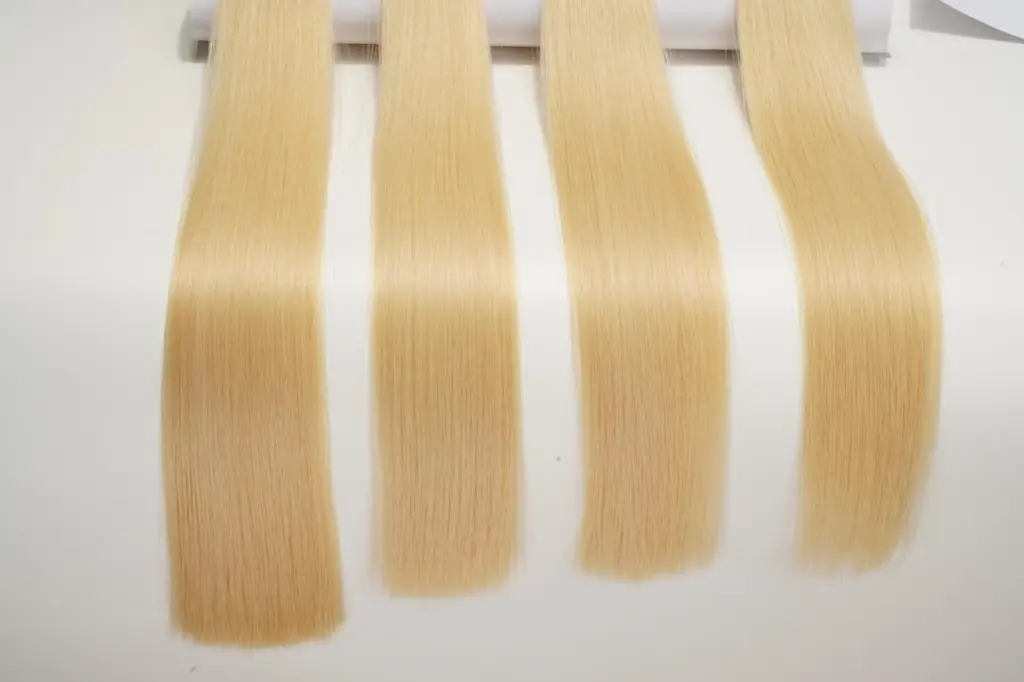
- Color difference minimization: A standardized color-matching environment is used to compare finished products with standard color references and support color consistency review across production batches.

- Scientific fullness ratio: Based on market demand, we precisely adjust and match product fullness. Our goal is to support a fuller-looking result and help reduce unnecessary trimming where possible.
Standardized Production System: How ISO 9001 Supports Bulk Hair Extension Orders
NEWTIMES HAIR operates under an ISO 9001 Certified Quality Management framework. This means our hair extension production process is supported by standardized procedures, process monitoring, and continuous improvement.
For salons and wholesale clients, this type of quality management system can provide useful reference points when evaluating supplier reliability, production consistency, inspection processes, and bulk order support.
Compliance and Traceability: Supporting a More Trustworthy Salon Brand
NEWTIMES HAIR provides CE compliance-related support where applicable. CE marking only applies to products covered by specific EU rules, so salons should review the relevant product documentation based on their target market and product category.
For products placed on the European market, Newtimes Hair also provides EU GPSR-related support where applicable. This may include product identification, traceability information, safety information, labeling support, and EU contact information for business partners.
For salon owners, these compliance and traceability materials can serve as additional reference points during purchasing decisions, client communication, and long-term supplier evaluation.

FAQ: Starting a Hair Extension Business as a Stylist
How Do I Start a Hair Extension Business as a Stylist?
To start a hair extension business as a stylist, begin with 1–2 core hair extension methods, such as tape-ins, Genius wefts, or keratin bonds. Before purchasing wholesale hair extensions in bulk, test samples, build a small starting inventory, create a consultation and pricing process, and look for a wholesale hair extension supplier that can support repeat orders, product information, and long-term salon purchasing needs.
How Do I Become a Hair Extension Specialist?
To become a hair extension specialist, you need to learn specific installation methods such as tape-ins, genius wefts, keratin bonds, sectioning, color matching, blending, removal, and maintenance. You should also practice client consultations and build a portfolio of real before-and-after results. As your skills, service process, and client base develop, hair extensions can become a valuable service category for your salon.
What Hair Extension Method Should I Offer First?
Many stylists start with Tape In Hair Extensions because they are relatively fast to install, easy for clients to understand, and commonly used for adding volume or length. If your salon targets clients who want a more customized or natural-looking result, Genius Weft or Keratin Bond Hair Extensions may also be worth considering, depending on your training, service time, and client demand.
Should I Buy Wholesale Hair Extensions Before Testing Samples?
It is not recommended to purchase wholesale hair extensions in bulk before testing samples. Samples can be reviewed after washing, brushing, blow-drying, and heat styling, because some quality issues may not be obvious during the first visual inspection. A sample testing process can help salons make more informed purchasing decisions.
How Do I Choose Reliable Wholesale Hair Extension Suppliers?
When choosing wholesale hair extension suppliers, salons may look at color matching, hair feel after washing, shedding and tangling performance during sample testing, repeat-order support, product information, and quality control processes. These factors can help salons better evaluate whether a supplier is suitable for their long-term business needs.
How Should Salons Price Hair Extension Services?
Salons can price hair extension services based on product cost, installation time, technical difficulty, salon overhead, local pricing standards, target client spending power, maintenance services, and desired target margin. There is no single fixed formula for every salon. A practical pricing structure should help cover costs, support profitability planning, and clearly explain the value of the service to the client.
Why Is Client Retention Important in a Hair Extension Business?
Client retention is important because hair extension clients often need maintenance, reinstallation, aftercare, or replacement hair over time. Compared with one-time basic services, this gives salons more opportunities to build ongoing client relationships and repeat bookings.
Why Do ISO 9001, CE Compliance, and EU GPSR Matter for Salons?
ISO 9001, CE Compliance, and EU GPSR-related support can help salons review a supplier’s production management, quality control process, compliance documentation, and product traceability information. For salon owners, these systems may provide additional reference points when making purchasing decisions, communicating with clients, and evaluating long-term supplier partnerships.
Build Your Hair Extension Business on More Informed Sourcing Decisions
Stable sourcing, clear product information, and a structured quality management process can all support more informed supplier evaluation.
Work with NEWTIMES HAIR, a wholesale hair extension vendor that provides product documentation, compliance-related support where applicable, and a quality management system designed for professional salon and wholesale needs.