

Can Hair System Manufacturers Customize Gray Percentage by Area?
Yes. For suitable custom hair systems, manufacturers can create different gray percentages in different areas of the unit. A client might need just a touch of gray at the front, a little more through the crown, or a softer blend near the edges. Rather than settling for one percentage everywhere, you can discuss a gray distribution that follows the areas your client actually needs covered.
At Newtimes Hair, we know those small differences can make a big impression in the salon chair. Our official custom-order form has separate gray-percentage fields for eight areas, as well as options for gray fiber and how the percentages are calculated. Our published NL22220 custom case also shows an example of regional gray customization. These details give us a helpful starting point for exploring a design together.
If you are helping a client whose natural graying is uneven, this guide will show you when stock may be enough, when a custom blend may be worth considering, and how to share a clear request without getting lost in technical details.
Key Takeaways
- Customize Gray Percentage by Area: Suitable custom hair systems can have different gray percentages across up to eight zones, including the front, top, crown, back, temples, and sides, depending on base coverage.
- Clarify Gray Percentage Calculations: Distinguish between “Percentage of the Total Hair” and “Extra Percentage of Grey” before confirming production specifications.
- Choose the Right Gray Fiber: Newtimes Hair offers Human, Synthetic, and Yak gray fiber options. Selected custom designs may also combine different fibers.
- Know When to Choose Stock or Custom: Stock gray hair systems suit clients whose gray blend already matches their needs, while regional customization helps address uneven gray patterns or specific design requirements.
- Provide Clear References for Custom Orders: Share photos, base-color references, the base model or template, and desired gray distribution. Confirm feasibility, percentage tolerances, pricing, and lead time before production.
When Might Your Client Benefit From Regional Gray Customization?
Sometimes a well-matched stock gray system is all you need. Other times, you may notice that one area blends beautifully while another still looks a little too dark or too silver. That is where a region-specific gray blend may be helpful.
1. The hairline and crown have different gray patterns
Perhaps your client has only a few gray strands at the front but noticeably more around the crown. If the system covers both areas, we can explore separate gray targets to better reflect that natural variation.
2. The system needs to blend with grayer side or back hair
A darker top paired with silver side or back hair can make the edge of a replacement more noticeable. It helps to show us where the system ends and the client’s own hair begins. We can then discuss the gray balance near that transition. For a top-only system, the surrounding temples and sideburns remain natural hair, so the focus is on how the covered area blends into them.
3. You want an easier starting point for a returning client
When a client loves the result, keeping the base-color reference, relevant gray targets, fiber choice, and a few photos makes the next conversation much easier. They give the factory a useful visual guide for future orders, even though individual strands may not fall in exactly the same place each time.
How Newtimes Hair’s Custom Order Form Helps You Plan the Gray Blend
The 2026 Newtimes Hair Systems Catalog includes the custom-order form shown below. Its Hair Details section identifies eight areas, each with a space for gray percentage. You can use these fields to explain where your client needs a little more or a little less gray. Our team can then review how those choices fit the selected base and construction.
| Form area | How it helps you plan the blend |
| Front / Top | Share the gray look you want at the hairline and across the top. |
| Crown / Back | Show where you would like the gray balance to change toward the crown or back. |
| Left / Right Temple | If the unit includes the temples, we can consider different targets on each side. |
| Left / Right Side | If these areas are part of the base, you can describe each side separately. |
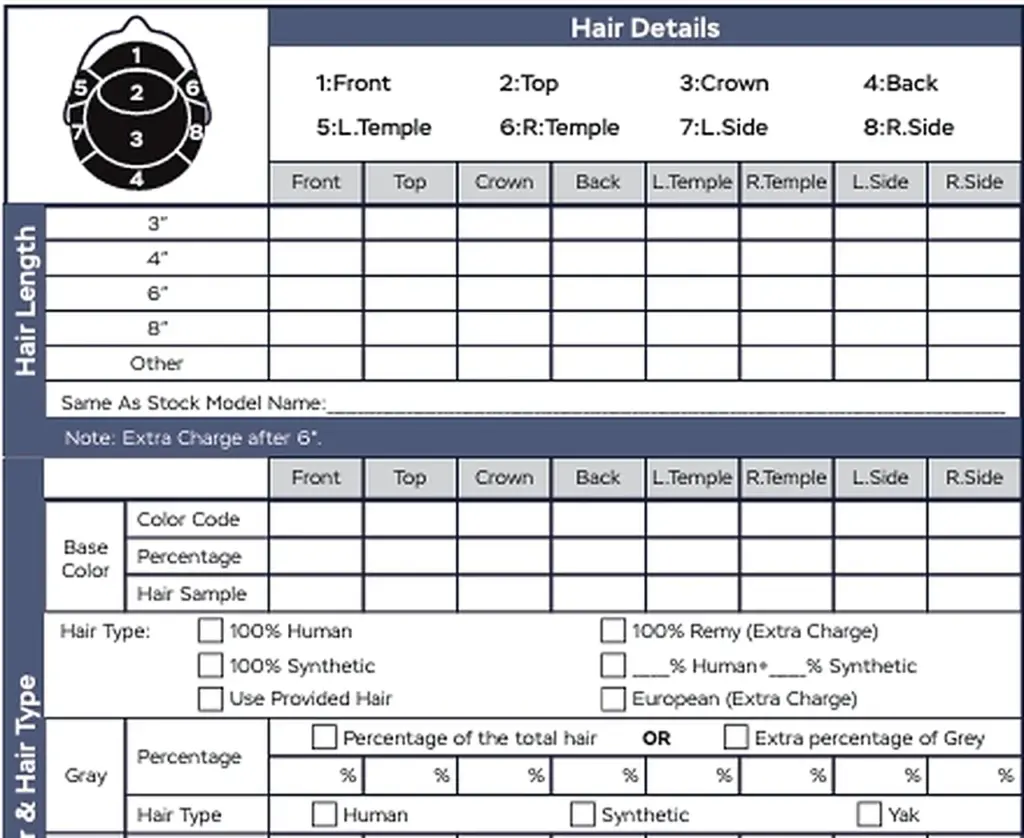
Figure 1. Newtimes Hair custom-order form showing the eight Hair Details zones, base-color references, and gray-percentage fields.
1. Let’s make sure the gray percentages mean the same thing
You will notice two options in the Gray section: “Percentage of the total hair” and “Extra percentage of Grey.” They describe different ways of entering a gray request. A quick conversation about which one you intend helps us translate your target into a clearer production specification.
For example, “20% gray at the crown” may mean the desired share of gray in the finished blend, or it may refer to an additional-gray instruction. The form lists both choices without a universal conversion formula. If you share the intended appearance, we can help clarify which calculation to use before the order is finalized.
2. Choose the gray fiber that suits your client’s styling plans
Under Gray Hair Type, the form offers Human, Synthetic, and Yak options, separately from the system’s main Hair Type. That flexibility gives us more to discuss than color alone. Each material comes with its own styling and processing considerations, so the most suitable choice depends on the look, planned salon services, and base design. Selected custom designs may also use a mix of fibers.
If you would like a closer look at material differences, our guide to Human Gray Hair vs. Synthetic Gray Hair is a useful next read.
3. Think of gray, base color, highlights, and density as separate details
A natural match often comes from getting several small details right. The form lets you record base-color codes, percentages, and hair-sample references by area. Highlights have their own fields; hair density and wave/curl are recorded elsewhere. Together, these details help explain the look you have in mind. Gray percentage describes the color blend, while density describes how much hair is present.
The form also includes base size or a template, front contour, hair direction, and lace or skin construction choices. Those details tell us which regions are part of the actual unit. If you are considering bleached knots as well, the form marks that option for lace orders; our team can review it alongside the chosen gray fiber and base.
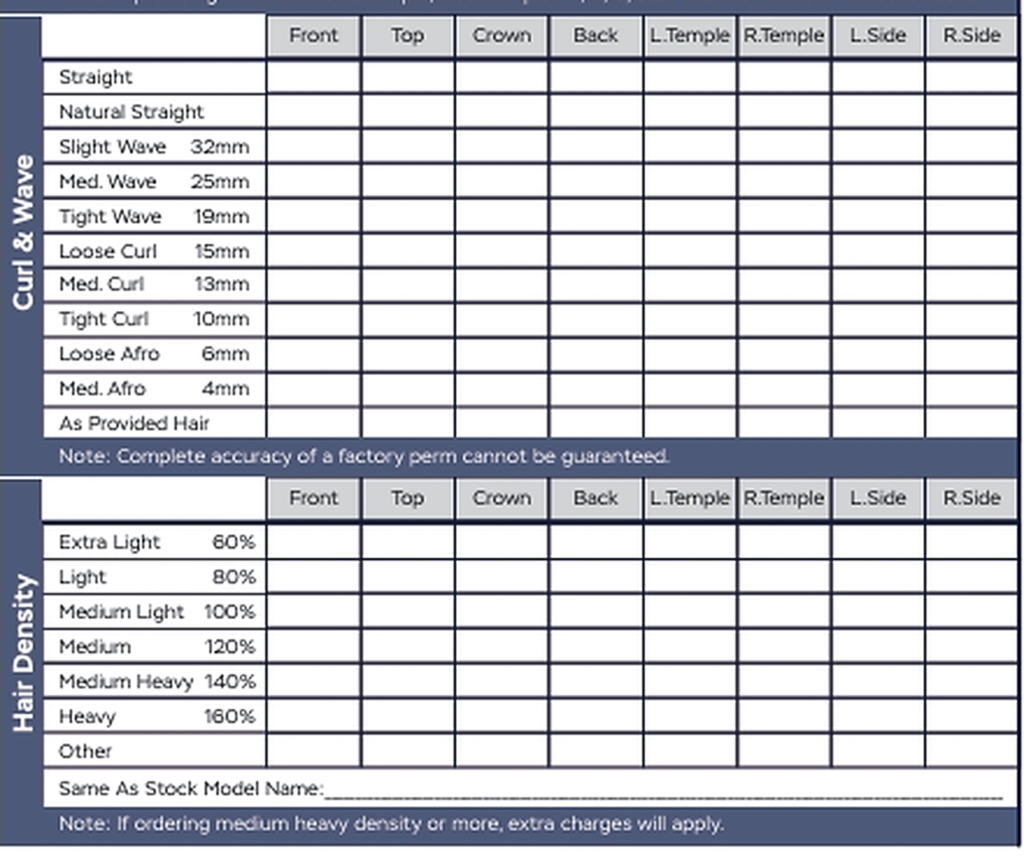
Figure 2. Wave/curl and hair-density fields appear separately from the gray-percentage section.
What Could a Regional Gray Map Look Like?
Imagine a client whose unit covers the front, top, crown, and back of the upper head. You could begin by sharing an approximate picture of the result you want, such as the example below:
| Covered zone | Example target gray % | What to look at together |
| Front | 10% | How the hairline blends with nearby natural hair |
| Top | 15% | How it relates to the main hair-color reference |
| Crown | 25% | Whether a little more visible silver feels right |
| Back | 20% | How the rear edge blends into surrounding hair |
These percentages are only an illustration of how to describe a client’s preferred look; they are not stock formulas or pre-approved production targets. Your supplier can review the percentage basis, fiber, transitions, and achievable tolerance with you. If the base does not cover the temples or sides, those fields simply do not need a separate target.
Stock Gray Hair System or Regional Custom: Where Should You Start?
| Client need | A good place to start | Why it may help |
| Even salt-and-pepper blend | In-stock gray system | A suitable ready-made match can keep the order simple. |
| Different gray levels within the unit | Regional custom review | We can discuss gray targets for the areas included in the base. |
| Special fiber, gradient, base, or density needs | Custom design conversation | We can explore the look, compatible materials, cost, and timing together. |
| An urgent need and a more complex long-term match | Stock now; consider custom next | Meet the appointment while saving ideas for a closer future match. |
There is no need to make every gray match a custom project. If a ready-made option feels right for your client, explore our Mixed With Gray collection first. If the pattern is more individual, our custom hair system cases may give you ideas for a tailored approach. You can also compare the broader differences in Stock Hair Systems vs. Custom Hair Systems. We are happy to help you weigh the two routes.
A Real Example of Regional Gray Customization: NL22220
If you would like to see how these details come together in a real specification, take a look at our NL22220 custom gray toupee. The published example describes #3 human hair combined with different gray percentages across the unit.
Another Real Custom Gray Hair System Order: 5mm French Lace Folded-Net Design
Here’s another example of a Newtimes Hair custom gray hair system, featuring a 5 mm French lace folded-net design for a more natural-looking finish.
| Published NL22220 feature | Listed specification |
| Base | 0.03 mm ultra-thin PU skin |
| Base size | Follow the customer template |
| Hair length | 4 inches / 10 cm |
| Hair curl | 32 mm |
| Hair density | Light to light-medium (90%) |
| Overall fiber composition | 70% human hair, 25% yak hair, 5% synthetic fiber |
| Color / hair direction | Follow hair sample / Freestyle |
One useful distinction: the published 70% human hair, 25% yak hair, and 5% synthetic fiber figures describe the overall fiber composition, not the gray percentage of each area. The product page does not list an exact front-to-crown gray map. Think of NL22220 as a concrete example of the possibilities, while your client’s blend can be discussed on its own merits.
How Can Your Salon Request a Custom Gray Blend?
You do not need to arrive with eight carefully calculated percentages. A few clear photos, a base model or template, and a sense of where the gray should change are a useful starting point. Here is a simple way to put that information together.
Step 1. Show us the gray pattern you are trying to match
Photos taken in similar lighting can help show the front, top, crown, and the transition toward the sides or back. If you have a labeled hair sample or a Newtimes Hair color-ring reference, you are welcome to include it. Both the underlying color and the gray strands matter.
Step 2. Share the area the replacement will cover
A current model number, base measurements, or head template helps us understand the actual coverage. You can also point out an edge where blending is particularly important. The custom form includes a space for a sketch if that is easier than explaining the shape in words.
Step 3. Tell us which areas should look grayer or darker
If you have percentage estimates, include them. If not, a simple note such as “a little more gray at the crown than at the front” is a useful start. You can also mention whether you prefer Human, Synthetic, or Yak gray fiber, or ask us to discuss the options in light of your client’s styling routine.
Step 4. Fine-tune the details before confirming the order
Once we understand the look, we can discuss possible percentage increments, visual tolerances, and whether a gentle transition or a more defined regional difference is appropriate. This is also a good moment to review any planned coloring or heat styling, then agree on price, lead time, and the details to keep for future orders.
An Easy Example You Can Use for a Custom-Gray Inquiry
| What to share | A helpful example |
| Salon / current unit | HRC account and current base model or template |
| Base color reference | Color code or labeled physical hair sample |
| Covered gray zones | Front 10%; Top 15%; Crown 25%; Back 20% (example only) |
| Calculation choice | Percentage of total hair; we can clarify the definition together |
| Gray fiber / styling | Preferred fiber, haircut, coloring plans, or heat styling |
| What you would like to know | Please advise on options, estimated price, lead time, and repeat-order details |
Have a client in mind? You are welcome to Contact Newtimes Hair with a few photos, the base area, and the gray differences you are noticing. We can help you work out which details are needed for a suitable custom quotation.
A Few Helpful Details to Agree on Before Production
- Percentage basis and tolerance: We can clarify whether each number refers to the gray share of total hair or an extra-gray request, and discuss the increments and tolerances for the design.
- Coverage and transitions: We can check which of the eight zones are actually covered and how you would like one area to blend into the next.
- Fiber and styling: Let’s match the gray fiber choice with your client’s coloring plans, heat styling, base construction, and care routine.
- Visual references: Color-ring shades, labeled samples, and clear photos can help us agree on the intended overall appearance.
- Order and reorder details: We can review price, production lead time, final specifications, and the references worth keeping for the next unit.
Let’s Find a Gray Blend That Feels Right for Your Client
A natural-looking salt-and-pepper hair system is not necessarily the one with the most gray. It is the one that brings the underlying shade, placement, proportion, and transitions into harmony with the individual wearing it. Sometimes stock will give you that match beautifully; sometimes a custom gray map can help you get closer.
If your client is close to an existing shade, our mixed-with-gray stock selection is a practical place to begin. For more individual patterns, our custom-order specification form and published NL22220 case show how we can start planning the details together.
When you are ready, Please submit your inquiry below. Request a custom gray feasibility review with a few photos and the base model. We can talk through the options, then help you confirm the specification, price, and timing for the order that suits your client.