




- A practical guide for hair replacement centers comparing product quality, repeat-order consistency, service time, and purchasing terms before a larger order.
- Which Hair-System Supplier Offers the Best Value After a Pilot?
- 1. What Should You Request for a Hair-System Sample Evaluation?
- 2. How Many Samples or Pilot Units Are Enough for a Useful Test?
- 3. Which Specifications Should Stay Fixed So Suppliers Can Be Compared Fairly?
- 4. How Should Buyers Inspect the Base, Hairline, Ventilation, Color, Density, and Workmanship?
- 5. How Should You Test Washing, Styling, Attachment, and Wear?
- 6. How Should You Record Results and Decide Whether to Order?
- 7. How Can You Limit Client Risk During a Hair-System Pilot?
- How Newtimes Hair Fits Into a Sample and Pilot Evaluation
- Final Takeaway
- About the Author
- FAQs
Hair-System Sample and Pilot Testing: Which Supplier Offers the Best Value?
- A practical guide for hair replacement centers comparing product quality, repeat-order consistency, service time, and purchasing terms before a larger order.
- Which Hair-System Supplier Offers the Best Value After a Pilot?
- 1. What Should You Request for a Hair-System Sample Evaluation?
- 2. How Many Samples or Pilot Units Are Enough for a Useful Test?
- 3. Which Specifications Should Stay Fixed So Suppliers Can Be Compared Fairly?
- 4. How Should Buyers Inspect the Base, Hairline, Ventilation, Color, Density, and Workmanship?
- 5. How Should You Test Washing, Styling, Attachment, and Wear?
- 6. How Should You Record Results and Decide Whether to Order?
- 7. How Can You Limit Client Risk During a Hair-System Pilot?
- How Newtimes Hair Fits Into a Sample and Pilot Evaluation
- Final Takeaway
- About the Author
- FAQs
A practical guide for hair replacement centers comparing product quality, repeat-order consistency, service time, and purchasing terms before a larger order.
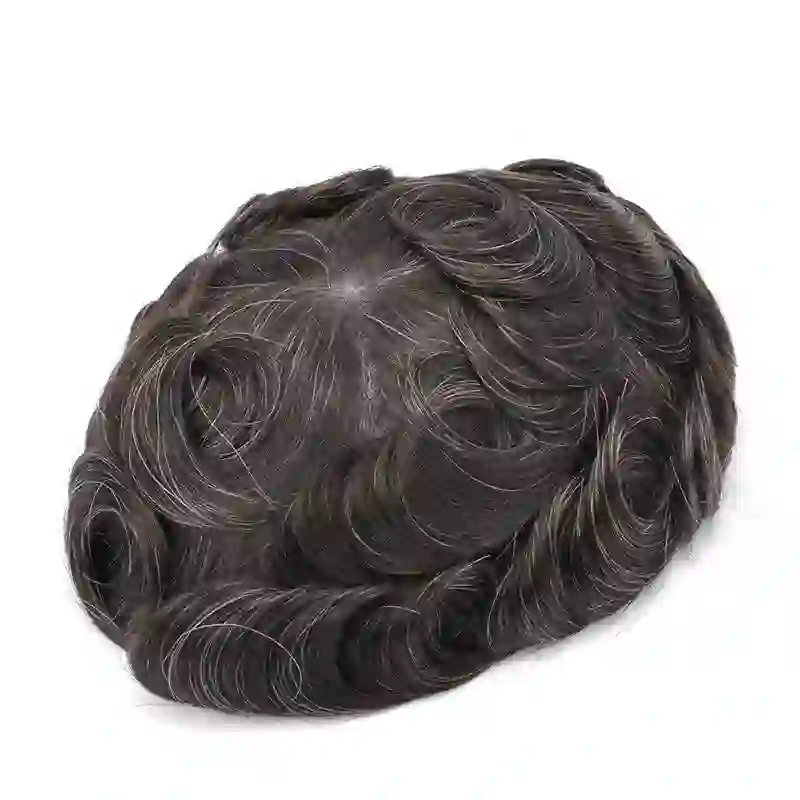
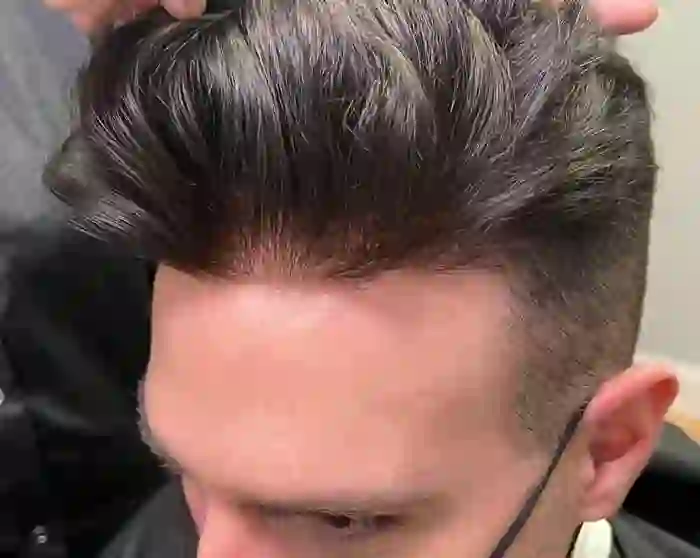
A hair system can look excellent in a product photo. The problems may only show up during fitting, at the first maintenance appointment, or when you reorder the same model and receive something that looks or feels different.
Before placing a larger order, you need answers. Does the next unit match? Can your team fit and maintain it within the time you’ve allowed? How does the supplier respond when something goes wrong?
A sample lets you inspect an individual unit. A pilot goes further: you evaluate several units under agreed conditions, record their performance, and assess whether the supplier is ready for your next order.
This Newtimes Hair guide helps professional hair replacement centers compare specifications, test results, and total costs to decide which supplier offers the best value for their requirements.
The sample quantities and scoring examples are planning suggestions, not validated industry benchmarks or published Newtimes Hair sample-order policies.
Which Hair-System Supplier Offers the Best Value After a Pilot?
The best-value supplier meets your requirements at an acceptable total cost. Compare the same specifications, quantities, finishing services, and delivery conditions.
Keep the one-off pilot budget separate from ongoing purchasing costs. For an evaluated delivery, calculate:
Cost per accepted unit = Net cost attributable to that delivery ÷ Units accepted for their intended service
Include product charges, freight, applicable duties, inspection and preparation labor, and rework. Deduct confirmed credits or refunds without counting any expense twice. Track units reserved for testing separately. If no units are accepted, report the failed evaluation and its cost.
Record fitting and maintenance time alongside the purchase cost. A cheaper unit may offer less value if it creates extra work. Use actual observations and mark unknown costs clearly; a small pilot does not establish future failure rates.
1. What Should You Request for a Hair-System Sample Evaluation?
Instead of asking for a hairpiece, ask for a useful sample kit. A useful kit will give the buyer more than enough information to help him inspect the unit. The test can also be reproduced, and the results can be used to compare other suppliers.
A representative full hair system
Where possible, ask for a complete unit in the intended configuration. A small hair swatch cannot demonstrate how the base, front contour, ventilation, density, and workmanship work together.
For a fair supplier comparison, request the same configuration from each supplier, or document any differences that prevent a like-for-like comparison.
A written specification sheet
Confirm a dated specification sheet before the samples arrive. Include the model or SKU, the product details listed in Section 3, and any finishing, packaging, or labeling requirements. Record changes so every sample can be checked against the correct version.
Reference materials
Depending on the product, ask for or prepare:
- An approved color ring, color swatch, or sample for physical reference.
- A density reference or template.
- Base-design and hairline photographs.
- The confirmed order form or specification record.
- Installation, attachment, washing, and maintenance instructions relevant to the unit.
Newtimes Hair’s professional color charts demonstrate that screen and monitor settings can also affect how the color is perceived. That’s why you need to ask for a physical color ring or hair sample for a more accurate match.
A test record and commercial checklist
Each sample should have a unique ID linked to the supplier, model, specification version, and production information available.
Ask for a written quote covering both the order for evaluation and the follow-up order. Record quantities by specification, minimum quantity per model or color, finishing charges, payment terms, quote validity, dispatch location, production time, transit estimates, and the terms for defects or returns. Confirm which conditions change when the order size or product mix changes.
Before you alter a sample
Check the terms before cutting, washing, coloring, bonding, or wearing the unit. Photograph its condition on arrival and report any visible mismatch before testing begins.
Newtimes Hair’s FAQ places condition and packaging requirements on ordinary stock returns. A claim about a manufacturing defect is a separate matter. Confirm the remedy and evidence required for your particular order before you start the trial.
If a reference unit is approved by both parties, retain its photographs and specifications as the comparison standard for subsequent units.
2. How Many Samples or Pilot Units Are Enough for a Useful Test?
There is no single sample count that proves a supplier can produce defect-free units. The appropriate quantity depends on the product, order value, expected volume, number of service locations, and consequences of failure.
A practical starting point is to separate initial screening from the actual pilot.
| Stage | Illustrative planning quantity | What you can observe |
| Initial screening | 2–3 comparable units per supplier, where feasible | Whether the sampled units meet the basic requirements and merit further evaluation |
| Controlled pilot | 5–10 units of the preferred configuration | Variation among the tested units and performance under the agreed conditions |
| Larger or multi-location rollout | Consider 10–20 units or a risk-based sampling plan | Performance in the locations and configurations actually included in the trial |
These quantities are planning examples, not statistical sampling standards or quality guarantees. Define how many units represent each configuration, production date, and location.
One sample can reveal construction and appearance, but cannot establish repeat-order consistency. Where feasible, include units from different production dates or place a second small order later. A smaller pilot may be practical for expensive bespoke units, but provides less evidence.
3. Which Specifications Should Stay Fixed So Suppliers Can Be Compared Fairly?
In evaluating different suppliers, it is vital that the same product requirements and test conditions are used throughout to establish a fair comparison between different suppliers.
Fix the product specifications
Minimum Characteristics to be kept constant for a like-for-like comparison of different suppliers are:
- Base material, thickness, dimensions, and perimeter design.
- Front contour and hairline construction.
- Ventilation method and hair direction.
- Hair length
- Hair color
- Percentage of gray hairs
- Degree of curl or wave
- Density
- The density distribution over the front, top, crown, etc. zones.
- Any required pre-cutting, finishing, or customization.
Treat written product labels as physical references to be checked. Find out from your suppliers how they define color, density, etc. in their hair products. Note any differences before accepting the two products as identical.
These aspects determine the appearance of the hair system, how it will behave when it is attached, and how it will be processed and handled by the center.
For reasons set out in Newtimes Hair’s guides to hair-system base designs, natural front hairlines, and hair ventilation techniques, these specifications need to be evaluated in combination.
Newtimes Hair’s guides to hair-system base designs, natural front hairlines, and hair ventilation techniques explain why these specifications should be considered together.
Fix the test conditions
Use the same:
- Inspection lighting, reference materials, and measurement methods.
- Type of approved adhesive or tape system (and preparation products) for bonding/joystick test, and for removal.
- Washing and care products, method, and test frequency.
- Styling tools and permitted heat settings.
- Combing method and number of strokes.
- Test duration, recording format, and evaluation criteria.
- Staff training level and fitting procedure, where practical.
Treat any supplier recommendation for an alternative design for a genuine reason as separate comparisons against the original specification, rather than combining them into one price comparison.
4. How Should Buyers Inspect the Base, Hairline, Ventilation, Color, Density, and Workmanship?
Measure and observe all samples against the corresponding written specification, using fixed settings for viewing, etc., and recording of results (including photographs) in detail.
| Inspection area | What to check | What should trigger further review |
| Base | Dimensions, shape, edges, material, thickness where specified, seams, tears, holes, and perimeter construction | Incorrect dimensions, damage, irregular construction, or an unapproved material change |
| Hairline | Front contour, density transition, root visibility, and suitability for the intended hairstyle | An abrupt or visibly mismatched hairline, inconsistent contour, or unexpected root visibility |
| Ventilation | Hair direction, parting, crown pattern, knot or root appearance, and consistency across zones | Incorrect direction, visible inconsistencies, or construction that does not support the intended style |
| Color | Match against the approved physical reference under consistent lighting; check roots, lengths, highlights, and grey distribution where relevant | A mismatch that falls outside the agreed tolerance or makes the system difficult to blend |
| Density | Overall fullness and density distribution, especially at the front and areas that need to blend with the client’s remaining hair | A density mismatch that changes the intended appearance or service result |
| Workmanship | Loose threads, irregular edges, tangling, unexpected residue, uneven finishing, shedding, and packaging or labeling | Damage, repeated construction defects, unexplained shedding, or an unapproved specification change |
Agree on tolerances and measurement methods before testing. Compare color against a physical reference under consistent lighting, and assess the hairline both close up and at normal viewing distance. Check density by zone rather than overall fullness alone.
Photograph each mismatch with its sample ID. Avoid aggressive handling that could damage the unit and distort the result.
5. How Should You Test Washing, Styling, Attachment, and Wear?
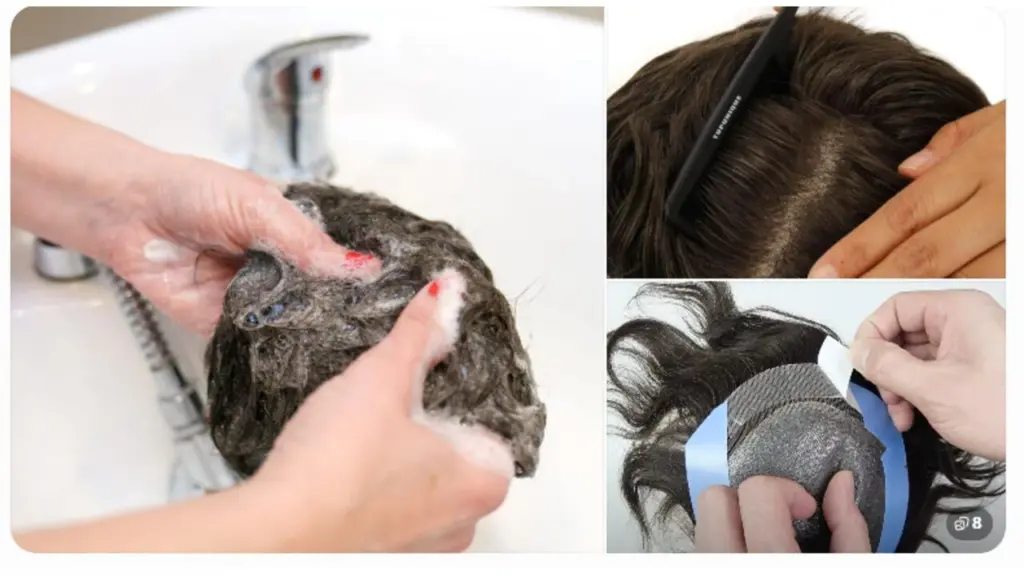
Test the system under its intended service conditions. Follow product-specific care instructions and use consistent methods across comparable samples.
Before cutting, washing, bonding, or wearing a sample, confirm how testing affects return eligibility and defect claims. Photograph its condition on arrival.
Washing and maintenance
Use the same approved products, washing method, drying procedure, and agreed number of cycles. After each cycle, record tangling, shedding or breakage, texture changes, base damage, and maintenance time.
Combing and styling
Use the same tools and technique. Record whether the hair is wet or dry and how it is detangled. Keep heat within the product’s permitted limits; test chemical treatments only when the supplier confirms suitability.
Attachment and removal
Use compatible adhesive or tape, preparation products, and remover. Record edge lift, residue, cleanup time, and damage during removal. Investigate the product, compatibility, and application procedure before assigning responsibility for a failure.
Wear testing
Complete inspection and bench tests first. For a limited client trial, follow the precautions in the rollout section below. Record wear duration, activity, maintenance, comfort feedback, and the unit’s condition after removal.
See Newtimes Hair’s maintenance guide for background. Set the test duration for the selected product rather than applying one wear period to every system.
6. How Should You Record Results and Decide Whether to Order?
Use one scorecard for every supplier and every unit. Record the test setup, the expected result, the observed result, the evidence, and the disposition of each issue.
For each unit, record the supplier, model, sample ID, specification version, and available production information. Add the test date, operator, method, photographs, results, corrective action, and final approval.
Classify defects by severity
| Severity | Meaning | Example |
| Critical | The unit fails a critical specification or cannot be used safely or as intended | Wrong base configuration, structural damage, or an unapproved substitution that invalidates the test |
| Major | The issue materially affects fitting, appearance, normal service, or repeatability | A significant color or density mismatch, persistent tangling, or an attachment problem under the agreed procedure |
| Minor | The issue does not materially affect use but should be documented or corrected | A non-critical packaging or labeling inconsistency |
The classification should be agreed internally before testing. A defect should not be downgraded just because the supplier is otherwise performing well.
A suggested weighted scorecard
Use the following as a starting template, then adjust the weights to your service model.
| Category | Weight |
| Specification compliance | 25 |
| Base construction and workmanship | 20 |
| Hairline, ventilation, and density | 20 |
| Color, texture, length, and curl | 15 |
| Wash, attachment, and styling performance | 15 |
| Supplier communication, documentation, and delivery | 5 |
| Total | 100 |
Define the scale before testing: 5 = fully meets requirements; 4 = minor deviation; 3 = correction and retest needed; 2 = major deviation; 1 = unusable for the intended requirement.
Weighted result = Rating ÷ 5 × Category weight.
Mark unfinished checks “not tested.” Keep individual unit results so an average cannot hide a critical failure.
The following thresholds are one possible internal decision rule, not an industry standard:
- Pass: at least 85/100, all required tests complete, all critical requirements met, and no unresolved critical or major defects.
- Conditional: 75–84/100, or a higher score with a correctable major issue. No critical defect may remain. Correct and retest before approval.
- Fail: below 75/100, a critical failure, or a repeated major problem that remains unresolved.
A high average score must never override a critical failure. If the front contour is wrong or a unit has a structural defect, good scores for packaging and communication do not make that unit acceptable.
Before approving the next order
Confirm the price, order quantity, delivery timing, repeat-order process, and after-sales responsibilities. These are approval conditions, even when the product scores well.
Record the approved configuration, specification version, locations covered, next order quantity, and responsible reviewer. Decide whether to proceed, correct and retest, or stop. Increase volume only within the scope supported by the evaluation.
7. How Can You Limit Client Risk During a Hair-System Pilot?
Introduce the new system alongside approved products, with a suitable backup available.
- Inspect the sample: check it against the written specification.
- Complete technical tests: have trained staff evaluate washing, styling, attachment, and removal using an appropriate test setup.
- Run a limited client trial: proceed only after earlier checks pass, explain the evaluation, obtain the client’s informed agreement, and follow the adhesive manufacturer’s precautions.
Avoid time-critical appointments where a failure would cause disproportionate disruption. Keep pilot units identifiable and record fitting, maintenance, and follow-up results.
Do not proceed with an unsuitable attachment method or over active scalp irritation simply to complete the trial. Expand only after reviewing the evidence.
How Newtimes Hair Fits Into a Sample and Pilot Evaluation
Newtimes Hair’s published custom hair system information describes 40 quality checkpoints across a six-stage inspection process and says custom specifications and template samples are stored to support repeat orders.
To discuss an evaluation, share your intended configuration, sample quantity, and follow-up order requirements. Ask the team to confirm availability, current pricing and timing, available inspection information, and the terms that apply once testing begins.
Discuss Your Sample or Pilot Requirements
Final Takeaway
A good sample is a starting point, not proof that a supplier is ready for a bulk order.
For a hair replacement center, the more reliable decision comes from a written specification, comparable samples, controlled tests, documented failures, clear acceptance criteria, and a staged rollout that protects existing client outcomes.
The best-value supplier is the one that meets your requirements consistently, supports your service workflow, and offers acceptable total cost and purchasing conditions. A controlled pilot gives you evidence to make that decision before a larger commitment.
About the Author

Alf Hou is a Hair Replacement Specialist and Technical Consultant at Newtimes Hair, with expertise in hair systems, product selection, fitting, and maintenance. He shares practical insights to help hair professionals make informed decisions and deliver consistent results.