
- Key Takeaways
- Quick Answer: What Density Looks Most Natural?
- What Is Hair Density in a Hair System?
- Why Do Low-Density Hair Systems Look More Natural?
- Low Density Is Really About Matching the Client
- Low Density vs Medium Density: Which Should a Salon Choose?
- Density Does Not Work Alone
- Newtimes Hair Low-Density Options for Salons and Professionals
- The Salon Density Check Before Ordering
- When Low Density Is Not the Best Choice
- Why Stock Low-Density Systems Help Reduce First-Order Risk
- Final Thoughts
- About the Author
- FAQs About Low-Density Hair Systems
Low Density Hair Systems: Why Less Hair Often Looks More Natural
- Key Takeaways
- Quick Answer: What Density Looks Most Natural?
- What Is Hair Density in a Hair System?
- Why Do Low-Density Hair Systems Look More Natural?
- Low Density Is Really About Matching the Client
- Low Density vs Medium Density: Which Should a Salon Choose?
- Density Does Not Work Alone
- Newtimes Hair Low-Density Options for Salons and Professionals
- The Salon Density Check Before Ordering
- When Low Density Is Not the Best Choice
- Why Stock Low-Density Systems Help Reduce First-Order Risk
- Final Thoughts
- About the Author
- FAQs About Low-Density Hair Systems
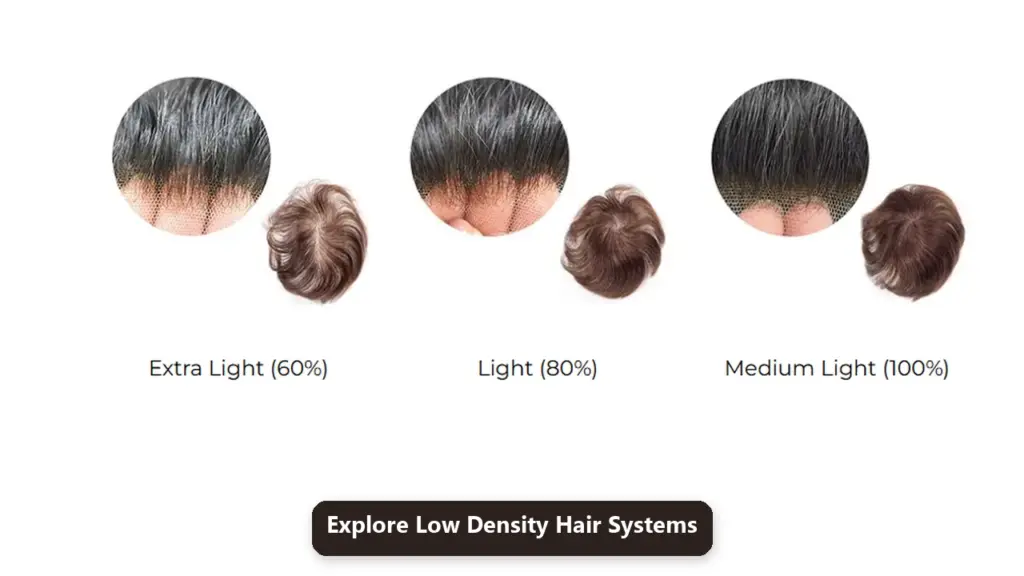
A low-density hair system usually looks more natural because it’s more likely to match how real hair usually behaves: it has basic movement, slight scalp visibility, softer volume, and a hairline that does not scream for attention. That’s what real hair usually looks like. You want your hair to look real and not bald, but not perfectly voluminous that looks unreal.
For many men, especially clients with fine hair, mature hairlines, or thinner side and back hair, an 80% to 90% density hair system can look more believable than a fuller 100% or 120% unit or above.
Here is the part people get wrong.
Low density is not about giving the client “less.” It is about giving him the right amount of hair for his face, age, natural hair, and lifestyle. Too much density can turn a good hair system into a bad secret. The hair may be high quality. The base may be well made. The color may even be close. But if the density does not match the person wearing it, the whole result starts looking heavy.
Newtimes Hair supplies stock and custom hair systems for salons, stylists, clinics, wholesalers, and professional buyers. In real salon work, density is one of the specs that separates a natural cut-in from a unit that looks fine in the box and strange on the head.
Key Takeaways
- Low-density hair systems often look more natural because they match real hair behavior: softer volume, better movement, a lighter hairline, and more believable blending.
- For many men, especially clients with fine hair, thin side hair, or mature hairlines, 80% to 90% density is a strong starting point.
- Density should not be chosen alone. Base material, ventilation, hair direction, color, grey percentage, and cut-in all affect the final result.
- Newtimes Hair’s ReaLite Collection gives salons stock low-density options, including VELLUM LIGHT, SUNNY, and NCON-L, so professional buyers can test low-density systems without waiting for a full custom order.
- The best density is not the fullest density. It is the density that makes the client look like himself again.
Quick Answer: What Density Looks Most Natural?
For many male hair system wearers, light density or light-to-medium density often looks the most natural. In Newtimes Hair’s ReaLite Collection, low-density systems generally sit around 80% to 90% density, which works well for clients with fine hair, thinner remaining hair, older age, or a subtle everyday style.
That does not mean every client should wear low density. A younger client with naturally thick side hair may need medium density. A client with a forward pomp or high-volume style may also need more density in selected areas. The real goal is not low density. The real goal is density consistency.
What Is Hair Density in a Hair System?
Hair density means how much hair is ventilated into the base of a hair system. In practical salon language, it controls how full, light, flat, thick, or breathable the finished style looks.
Most clients think density is about coverage. Stylists know better.
Density affects:
- how the front hairline sits
- whether the system blends with side and back hair
- how much lift the style can hold
- whether the scalp looks naturally visible
- how believable the unit looks under bright light
- how comfortable the system feels during daily wear
A dense hair system can cover more. It can also expose more.
It exposes the mismatch.
If a man has thin, soft side hair and a very full top piece, people may not know exactly what is wrong. But they will feel that something is off. The top looks too young for the face. The side hair looks too weak for the top. The haircut starts doing too much work.
That is why low-density systems are popular with professional buyers serving clients who want realism more than drama.
Why Do Low-Density Hair Systems Look More Natural?
Low-density hair systems look more natural because real hair is rarely perfectly thick from front to crown. Natural hair has variation. It has direction. It has small gaps. It moves.
A low-density system gives the stylist room to create that realism.
With lighter density, the hairline can look softer instead of blocky. The top does not sit like a helmet. The crown does not look artificially packed. The whole style feels less like a replacement and more like hair that belongs to the person.
This matters most for clients who already have fine or thin hair around the sides and back. A thick system on thin side hair is one of the fastest ways to make a hairpiece look obvious.
Not because the system is bad.
Because the spec is wrong.
Low Density Is Really About Matching the Client
The most natural hair system density is the one that matches the client’s existing hair and the style he can realistically wear.
For salons, the best density conversation starts with the client’s side hair. Not the catalog photo. Not the hairstyle he had at 22. Not the “before hair loss” fantasy in his head.
Look at what is actually there.
If the side and back hair are fine, soft, or sparse, a lower-density hair system usually blends better. If the client is older, a full youthful top can look suspicious, especially if the hairline is too sharp. If the client wants a conservative office style, heavy density can feel out of place even when the color is right.
A good stylist does not just ask, “How much hair do you want?”
A good stylist asks, “How much hair will look believable on you?”
Low Density vs Medium Density: Which Should a Salon Choose?
Use low density when realism, age consistency, and blending matter more than volume. Use medium density when the client has naturally thicker side hair, wants fuller styling, or needs stronger top coverage.
| Client Situation | Better Starting Density | Why |
|---|---|---|
| Fine or thin side hair | 80% | Blends more naturally with existing hair |
| Mature client or age 50+ | 80% to 90% | Avoids a top-heavy, overly young look |
| Subtle office style | 80% to 90% | Keeps the result quiet and believable |
| Active wearer in a warm climate | 80% to 90% | Feels lighter and can improve comfort |
| Younger client with thick side hair | 90% to 100% | Needs enough fullness to match natural hair |
| Pomp, brush-back, or high-volume styling | 90%+ with planned direction | Needs controlled lift, not just more hair |
| First order with a new supplier | Stock low-density option | Lets the salon test fit, color, density, and base behavior faster |
The quiet truth: many clients ask for more density because they are afraid of looking thin. But the thing that gives them away is often too much hair, not too little.
Density Does Not Work Alone
Density is only one part of a natural hair system. A low-density unit can still look wrong if the base, ventilation, hairline, color, grey percentage, or cut-in does not match the wearer.
For Newtimes Hair professional buyers, density should be checked alongside these specs:
Base material: Thin skin, Swiss lace, mono, and hybrid bases all show density differently. A light-density thin skin system can give a clean, knotless look. A light Swiss lace system can feel airier and more breathable. A mono base can offer better durability for clients who care more about lifespan.
Hairline design: A lower-density top still needs a soft front. If the hairline is too straight or too packed, the unit can look artificial even at 80% density.
Hair direction: Freestyle gives flexibility, while parting, brush-back, flat-back, and whorl patterns shape how volume appears. Newtimes Hair’s hair direction options also allow density to be increased around the parting area when needed for a more natural result.
Color and grey percentage: Older clients often need both lower density and grey blending. Low density with the wrong color still looks fake. A little grey in the right area may do more for realism than adding more hair.
Cut-in: The final haircut decides whether density blends. A low-density unit can still look bulky if the perimeter is not cut and blended properly.
This is where professional buyers have an advantage. They can treat density as part of a full specification, not a single number.
Newtimes Hair Low-Density Options for Salons and Professionals
Newtimes Hair’s ReaLite Collection is built for clients who want a light-density hair system with a natural, age-appropriate finish. The collection includes stock systems around 80% to 90% density, covering different base needs.
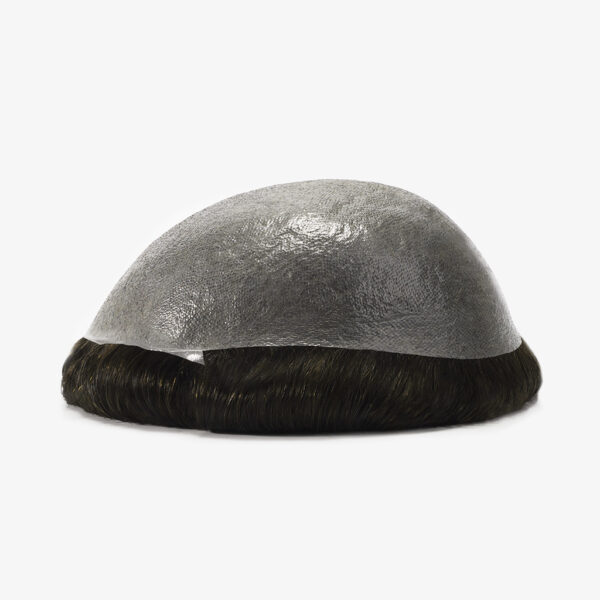
VELLUM LIGHT: 0.03mm Thin Skin With 80% Density
VELLUM LIGHT is a 0.03mm thin skin hair system with 80% density. It uses 100% human hair, a full skin base, freestyle hair direction, and an A-shaped front contour.
This is a strong choice when the client wants a clean, close-to-scalp look with a thin skin base. The V-looped ventilation creates a knotless effect, which helps the system look smoother at the root. For salons, it is useful when the client wants a realistic finish without a heavy top.
Best fit: clients who want a thin skin base, easy styling, and a light-density look.
SUNNY: Full Swiss Lace With 90% Density
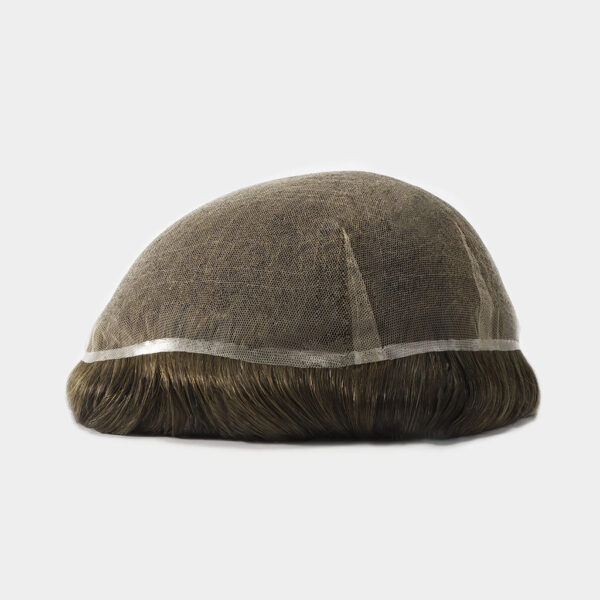
SUNNY is a full Swiss lace hair system at 90% density. It is designed for a featherlight feel, strong breathability, and a soft, natural appearance.
This is the more breathable low-density route. Swiss lace works well for clients who care about airflow, comfort, and hairline realism. It is a good option for warm climates, active lifestyles, or clients who dislike the heavier feel of some base materials.
Best fit: clients who want a breathable lace system with light-to-medium realism.
NCON-L: Mono Base With 80% Density
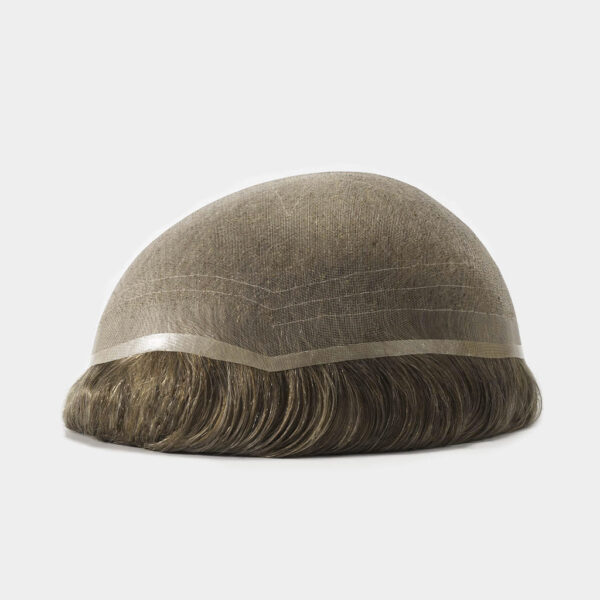
NCON-L is an 80% density monofilament toupee made for clients with thin hair who still need a stronger, longer-lasting base. It uses super-fine welded mono with a bleached front hairline and freestyle direction.
This is the practical one. Mono is not usually chosen only for maximum invisibility. It is chosen because it is durable. For clients who are hard on their systems, or salons that want a low-density option with more wear resistance, NCON-L gives a useful balance.
Best fit: clients who prioritize durability but still need lighter density for natural blending.
The Salon Density Check Before Ordering
Before choosing a low-density hair system, check the client in normal light, not just under flattering salon lighting.
A simple workflow works best:
- Look at the side and back hair first.
- Check hair shaft thickness, not only visible coverage.
- Decide whether the client’s age supports a fuller top.
- Ask how he actually styles his hair on a normal weekday.
- Choose the base material around comfort, realism, and durability.
- Confirm whether grey blending is needed.
- Decide whether stock is enough or custom density mapping is safer.
That last point matters.
Stock low-density systems are useful when the client fits common base sizes, common colors, and standard density needs. Custom is better when density must vary by zone, such as lighter at the hairline, slightly fuller through the part, and softer again near the crown.
A natural result is rarely one number across the whole head. It is a judgment call.
When Low Density Is Not the Best Choice
Low density is not automatically better. It is better for the right client.
Avoid going too light when the client has very thick side hair, wants a dense modern crop, needs strong coverage for a high-contrast style, or expects dramatic volume. In those cases, 80% density may look underfilled instead of realistic.
The mistake is treating low density like a trend.
It is not a trend. It is a matching tool.
A 35-year-old with dense side hair and a swept-back style may need more density than a 62-year-old with fine side hair and a short business cut. Both can look natural. They just should not be wearing the same spec.
Why Stock Low-Density Systems Help Reduce First-Order Risk
For salons testing a new supplier or building a low-density category, stock systems can reduce friction. A stock low-density unit lets the stylist evaluate hair quality, base behavior, color match, density, and cut-in results before moving into more exact custom specs.
Newtimes Hair offers stock low-density options through the ReaLite Collection, including thin skin, Swiss lace, and mono choices. That gives professional buyers a practical first step: test the density and base combination, learn what clients respond to, then customize when the case demands it.
This is especially useful for salons that serve older men, fine-haired clients, or clients who want a quieter result. These clients often care less about “big hair” and more about not being noticed for the wrong reason.
Final Thoughts
Low density looks natural when it matches the person wearing it.
For clients with fine hair, mature hairlines, or thinner side and back hair, an 80% or 90% density hair system often blends better than a fuller unit. It gives the stylist room to soften the hairline, control volume, and avoid that overbuilt “too much hair” look.
Newtimes Hair’s low-density stock options give salons a practical way to test the look first, then move into custom density mapping when the client needs more precise control.
The best hair system is not the one with the most hair. It is the one nobody stops to question.
Need a realistic low-density option for fine-haired or mature clients? Explore Newtimes Hair’s ReaLite Collection, or contact our team to compare thin skin, Swiss lace, mono, and custom density options for your salon.
About the Author
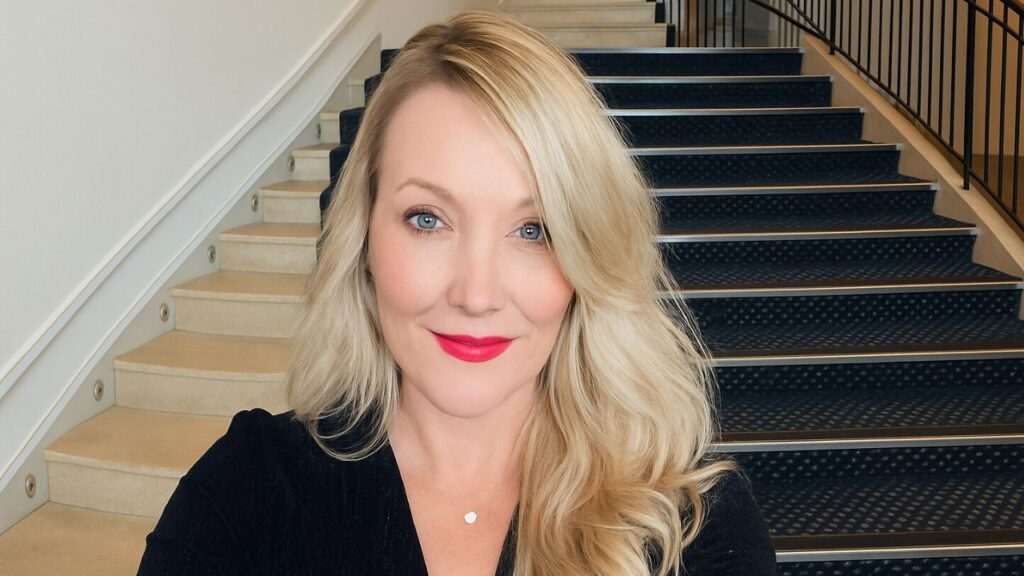
Julia Griffiths is a barber, educator, and hair-system specialist with more than two decades of hands-on industry experience. She owns Crosscuts Barbers in Wendover, where she provides traditional and contemporary barbering alongside discreet, bespoke hair-replacement services. Julia is also the founder of Hair Revival Training, delivering CPD-accredited men’s hair-system courses for barbers and hairdressers who want to expand their professional skills. Working closely with both clients and fellow professionals gives Julia a practical, well-rounded perspective that shapes her writing and reviews for Newtimes Hair. Her advice is rooted in everyday salon experience—from consultations and fittings to cutting, styling, and aftercare—with a strong focus on quality workmanship and helping people regain their confidence.