

Which Hair Systems Offer the Best Value in Middle Eastern Heat?

For a hair replacement center (HRC), the best-value hair system is one the client can wear comfortably and your team can maintain at a workable cost. In hot conditions, start by comparing the base, the attachment routine, and the time each service takes.
Newtimes Hair’s AERO (HS7) and SUNNY offer full-lace options when airflow is a priority. HOLLYWOOD, REGAL (N6), and NEW AUSTRALIA combine lace with polyurethane (PU) attachment areas. APEX LACE (HS27P) and ROCK MONO (D7-3) offer reinforced mono constructions for clients whose priorities include fuller density and base strength.
These recommendations combine published specifications with individual wearer accounts. They are starting points for client trials, not a ranking from controlled climate tests. The useful question is which combination works for your client and your service schedule.
Start with the Client’s Routine
The Middle East has different climates, and the season matters. The UAE Union Atlas describes hot summers with high humidity. Saudi Arabia’s National Center for Meteorology also distinguishes coastal conditions from the generally drier interior.
That gives you context, not a product prescription. Two clients in Dubai may need different systems: one spends the day in air conditioning; the other works outdoors and exercises after work.
Before recommending a base, ask about scalp perspiration, outdoor exposure, exercise and swimming, previous lifting, and how often the client can attend maintenance appointments. Then discuss the desired hairline, density, color, and gray blend. A regional preference should never replace a consultation.
What Do Wearer Reports Actually Tell Us?
In a May 2026 discussion about sweating in Dubai, a wearer describes substantial scalp perspiration. Replies suggest lace and preparation products, but the thread does not establish that those suggestions solved the problem. For an HRC, it is a reason to ask about sweating before promising a hold time.
A first-time wearer in Dubai describes a full-lace system at 100% density, calls its appearance puffy, and separately asks about heat. The post does not show that heat caused the puffiness. Density, fit, and styling need their own assessment.
Experiences also differ. In a lace-versus-poly discussion, one wearer reports that an ultra-thin skin system held up well during a hot, humid Southeast Asian trip with extensive walking. It is an individual account outside the Middle East, but a useful reminder to evaluate skin systems fairly.
These discussions identify consultation questions. They are not a market survey or evidence that one Newtimes Hair model outperforms another.
Which Newtimes Hair Models Should You Compare?
The table combines current product specifications with suggested evaluation priorities. Click each model for its specifications. Density percentages are Newtimes Hair’s catalog labels; use physical references when comparing appearance across suppliers.
| Model | Published construction and density | What to evaluate for your client |
| AERO (HS7) | Full French lace; 90%, 100%, or 110% density | Open-mesh construction and the right density for blending. Check handling and adhesive cleanup during servicing. |
| SUNNY | Full Swiss lace; 90% density | Softness and a lighter-density appearance. Discuss the careful handling required by delicate lace. |
| HOLLYWOOD | French lace with thin clear PU around the base and a ½-inch French lace front; 100% density | Whether a lace front and PU attachment areas suit the client’s hairstyle and your maintenance method. |
| REGAL (N6) and REGAL-M (N6M) | French lace with clear PU sides and back; N6 is 100%, N6M is 120% density | Compare the density required for blending while retaining this type of lace-and-PU construction. |
| NEW AUSTRALIA and NEW AUSTRALIA PRO | French lace with a 1-inch clear PU front and 2-inch clear PU sides and back; both 110% density | Wider attachment areas and the different front-hair ventilation methods discussed below. Check the remaining lace area after fitting. |
| APEX LACE (HS27P) | Fine mono, skin-gauze perimeter, and 1-inch French lace front; 120% density | A fuller-density option with a lace front. Evaluate comfort, cleanup, and condition after repeated servicing. |
| ROCK MONO (D7-3) | Fine mono with a 1-inch PU-coated perimeter and ⅛-inch folded lace front; 120% density | Reinforced construction for clients who prioritize base strength. Assess the actual hairline and wear experience on a sample. |
Confirm the required size, color, density, and available configuration before ordering.
Newtimes Hair systems for your reference:
-
 NEW AUSTRALIA PRO French Lace Hair System Toupee With a Wider PU Perimeter
-
Product on sale
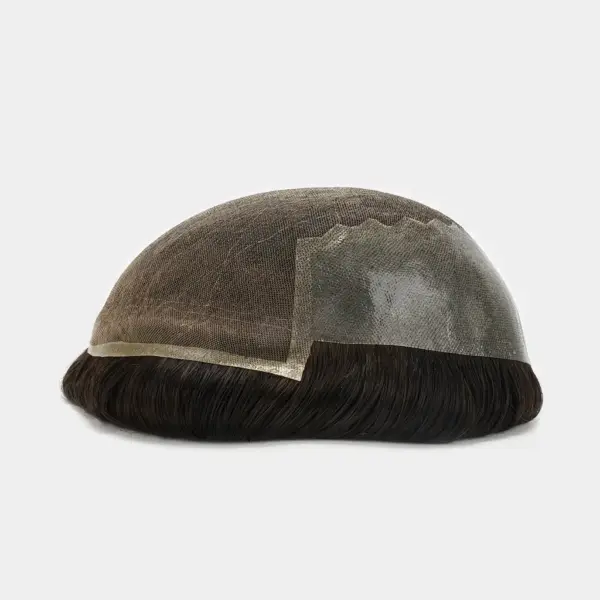 N6M French Lace Men’s Hair System With PU Sides and back
-
Product on sale
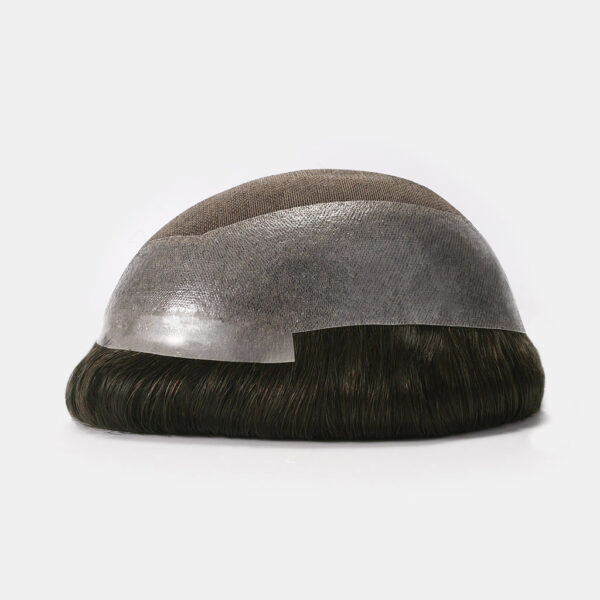 NEW AUSTRALIA French Lace Hair System Toupee With a Wider PU Perimeter
-
Product on sale
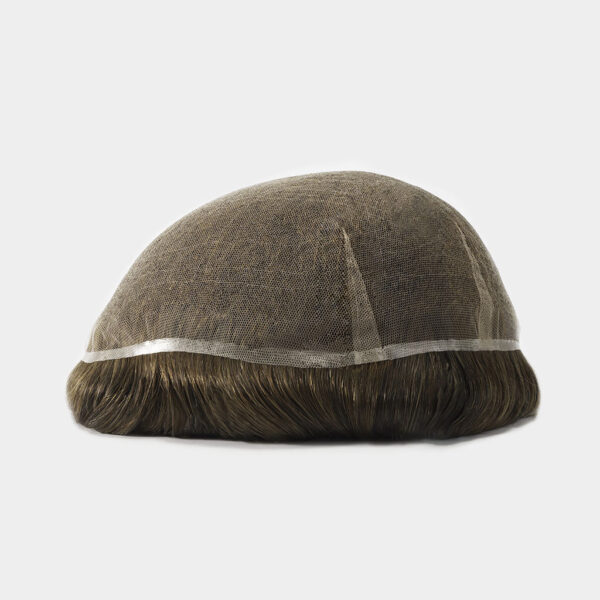 SUNNY Full Swiss Lace Hair System Wholesale
-
Product on sale
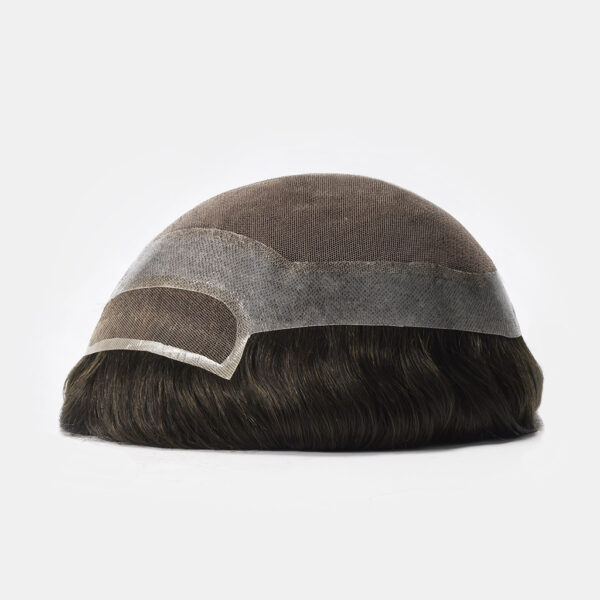 HOLLYWOOD Hair Systems for Men with Thin Skin Perimeter and a Realistic Lace Front
-
Product on sale
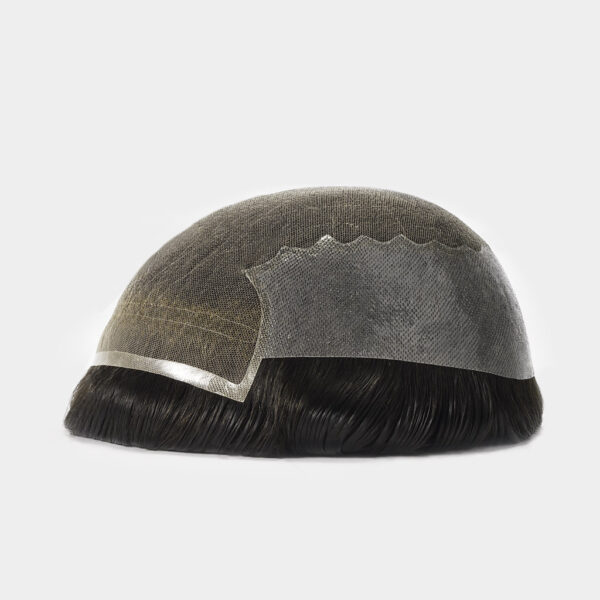 N6 French Lace Men’s Hair System With PU Sides and back
-
Product on sale
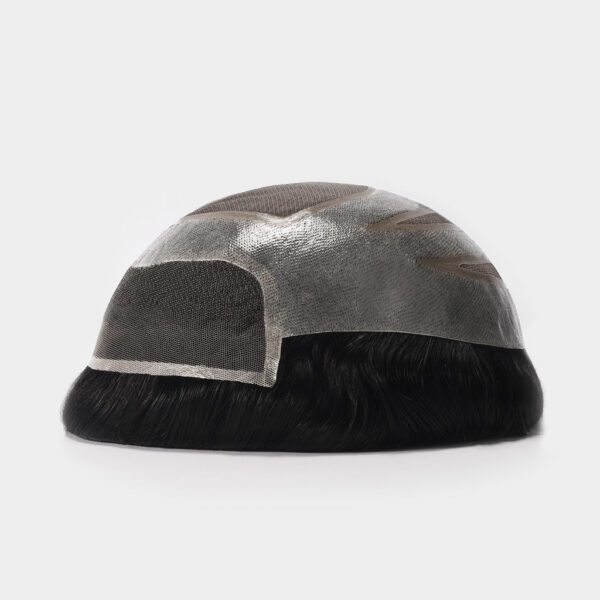 HS27P Fine Mono Hairpiece With Skin Gauze Perimeter and Lace Front
-
Product on sale
 D7-3 Fine Mono Hair System With PU Perimeter for Wholesale
Full Lace or a PU Perimeter?
Full lace provides open mesh across the base. A hybrid replaces some of that mesh with PU attachment areas. Wider PU can give your technician more surface to work with, but it also reduces the open-mesh area.
That trade-off deserves a practical check. Fit the intended size, examine the remaining construction, and time the cleanup. A wider border is useful only if it supports the service you need to deliver.
Both French and Swiss lace belong on the shortlist when ventilation matters. Without comparable airflow measurements, there is no sound basis here for declaring either material the universal cooling winner.
Full Lace Hair System Collection by Newtimes Hair
NEW AUSTRALIA or NEW AUSTRALIA PRO?
The useful distinction is at the front hairline. NEW AUSTRALIA PRO’s product description explains that it replaces the original model’s front V-looping with small single split knots. The published base layout and 110% density remain the same.
Newtimes Hair describes the change as an improvement in hairline durability. Treat that as the manufacturer’s design claim, then compare front appearance and shedding during your own evaluation. It does not establish a specific lifespan, better adhesive hold, or superior performance in Gulf heat.
Can a Skin System Still Be the Right Choice?
Yes. A continuous PU base lacks the open mesh of lace, so it offers a different ventilation arrangement. However, the smooth bonding surface may suit a particular wearer and make your preferred cleaning routine easier. Newtimes Hair’s base-material FAQ explains the construction differences.
If a client already wears skin comfortably, investigate the actual complaint before changing the base. A lifting edge, an unsuitable cut, and discomfort during exercise call for different checks. The client’s location alone does not settle the choice.
Treat Attachment and Aftercare as Part of the Purchase
A ventilated base cannot compensate for an unsuitable adhesive or a rushed installation. Walker Tape’s adhesive-selection guide considers climate, activity, skin characteristics, and desired hold. Its recommendations for hotter conditions include both tapes and liquid adhesives.
Avoid blanket rules that tape always beats glue or that all water-based adhesives fail in humidity. Select the specific product for the wearer and base, then follow its preparation, application, and curing instructions. Give the client that product’s guidance on exercise, showering, and swimming.
Sun exposure deserves attention too. The American Academy of Dermatology explains that UV can damage hair and change its color, and recommends shade and protective headwear. Its advice concerns hair generally, rather than tested hair-system assemblies. For replacement hair, confirm that any care product is compatible with the hair, base, and adhesive before recommending it.
Agree on a follow-up plan and ask the client to report unexpected lifting or discomfort. For service procedures, see our guide to helping hair-system clients manage summer sweat.
How Can an HRC Build a Useful Starting Range?
Start with distinct client needs, then use demand and trial results to decide quantities.
For clients prioritizing airflow, evaluate AERO or SUNNY, with density and handling requirements guiding the choice.
For clients needing a lace-and-PU combination, compare HOLLYWOOD, N6, and the NEW AUSTRALIA models. Border layout and front construction matter more than the shared “hybrid” label.
For clients seeking fuller density and reinforced construction, assess N6M, HS27P, or D7-3. Include comfort and maintenance in that assessment.
You do not need every model to cover these needs. Match color and gray content with physical references, and confirm how many units you need in each configuration. Newtimes Hair’s ordering tools include base, color, and density references for these discussions.
If a stock specification does not fit the requirement, discuss custom options before committing. Confirm the agreed construction, quantities, pricing, and delivery terms in writing.
Which Option Offers the Best Value After Normal Wear?
The invoice is only part of the decision. A cheaper system may cost more to service if it requires lengthy cleanup or extra appointments. A higher-priced option earns its place only if its benefits matter to the client and your business.
During a trial, record the season, indoor and outdoor exposure, exercise, perspiration, and the adhesive routine. Track comfort, lifting, cleaning time, hair condition, and any unplanned visits over comparable observation periods. Keep other conditions as consistent as practical and record differences that prevent a fair comparison.
Compare the purchase and delivery cost alongside the labor and consumables actually used. Check whether repeat units match the agreed specification. Before altering a sample, confirm the applicable return and defect terms.
For the broader purchasing framework, use our hair-system sample and pilot-testing guide. A trial can support a decision for the clients and conditions observed; it cannot prove how every wearer will respond.
Choose the Next Order Around Your Clients
Choose the combination that meets the client’s appearance and comfort needs within a service routine your team can deliver consistently. Use the first units to learn before expanding the order.
Explore Newtimes Hair’s men’s hair systems and discuss your required base, density, color mix, sample quantities, and replenishment needs with our team.
About the Author

Alf Hou is a Hair Replacement Specialist and Technical Consultant at Newtimes Hair, where he has supported hair replacement centers, salons, and distributors worldwide since 2018. His expertise covers hair system construction, custom product specifications, installation, maintenance, and supplier quality evaluation. Alf shares practical, technically informed guidance to help hair professionals make confident product decisions, improve service consistency, and meet their clients’ needs. Connect with Alf Hou on LinkedIn.