

How Is a V-Loop Hair System Made—and When Is It Worth Choosing?
A V-loop hair system is made by passing hair through a polyurethane (PU) skin base and bringing it back out to form a V-shaped loop, without tying a conventional knot. In the construction described by Newtimes Hair, polyurethane seals the roots to help retain the hair and finish the underside.
That explains the knotless appearance. For a salon, the next question is practical: does this construction suit the client’s hairstyle, handling habits, and replacement budget?
Watch Newtimes Hair’s V-loop construction demonstration, then use the checks below when comparing samples or planning an order.
What Does V-Loop Ventilation Mean?
“Ventilation” describes how hair is attached to a hair system base. It does not describe airflow.
V-loop is a construction technique, so the name alone does not tell you the base thickness, density, or expected wear life. It also does not tell you whether the entire unit is V-looped. Ask where the technique is used and how the other areas are constructed.
This guide focuses on attaching hair to a prepared skin base. Making the base is a separate stage; our hair system base construction guide explains that distinction and demonstrates a hybrid-base example.
How Is Hair V-Looped Into a Skin Base?
The useful sequence for a buyer to understand is specification, looping, root sealing, and inspection. The details of a finished order depend on the selected model and agreed construction.
1. Confirm the Specifications and Ventilation Layout
Start with the base thickness and size, then confirm the hair length, density, color, curl, and intended direction. Record whether V-looping covers the whole base or selected areas.
A natural-looking sample is only useful if you know what you are approving. If a later order changes the density or hair length, ask the supplier to confirm that the revised specification suits the base.
2. Form the V-Loops
The technician passes a hair strand through the skin base, turns it back, and brings it out again. Both ends emerge from the surface, creating the characteristic V-shaped path.
There is no conventional tied knot at that point. The process is repeated across the specified area.
For a buyer, a close-up should help answer two questions: can you see how the hair enters the base, and does the finished root direction suit the intended style? A photograph of the styled top alone will not show the whole construction.
3. Seal the Roots of the V Loops
After ventilation, polyurethane is applied to seal the roots. Newtimes Hair’s ventilation guide describes this as helping secure the hair while giving the underside a smooth finish.
This root-sealing stage takes place during manufacture. Attaching the finished system to a client’s scalp is a separate procedure.
Sealing helps retain the hair, but it does not make the unit shed-proof. The finished construction still needs appropriate handling.
4. Inspect the Finished Sample
Before approving a sample, compare it with the written specification. These are practical buyer checks, rather than a substitute for the manufacturer’s production testing.
| Check | What to examine or request |
| Ventilation layout | Confirmation of full-base or selected-area V-looping, with the other methods identified |
| Hairline | A close-up with the hair moved away from the front, plus an ordinary viewing-distance image |
| Underside | A clear view of the sealing finish and any visible damage |
| Hair specifications | The ordered length, density, color, curl, and direction |
| Repeat orders | A saved model code, specification, and approved reference images |
| Handling guidance | Written care instructions for that particular construction |
Photographs help document appearance; they do not establish wear life or batch consistency. Evaluate the sample under the supplier’s recommended care routine and record what you observe.
Avoid using an aggressive pull on wet hair as an informal quality test. If you need retention testing, agree the method and acceptance criteria with the supplier first.
What Does V-Loop Construction Change for the Client?
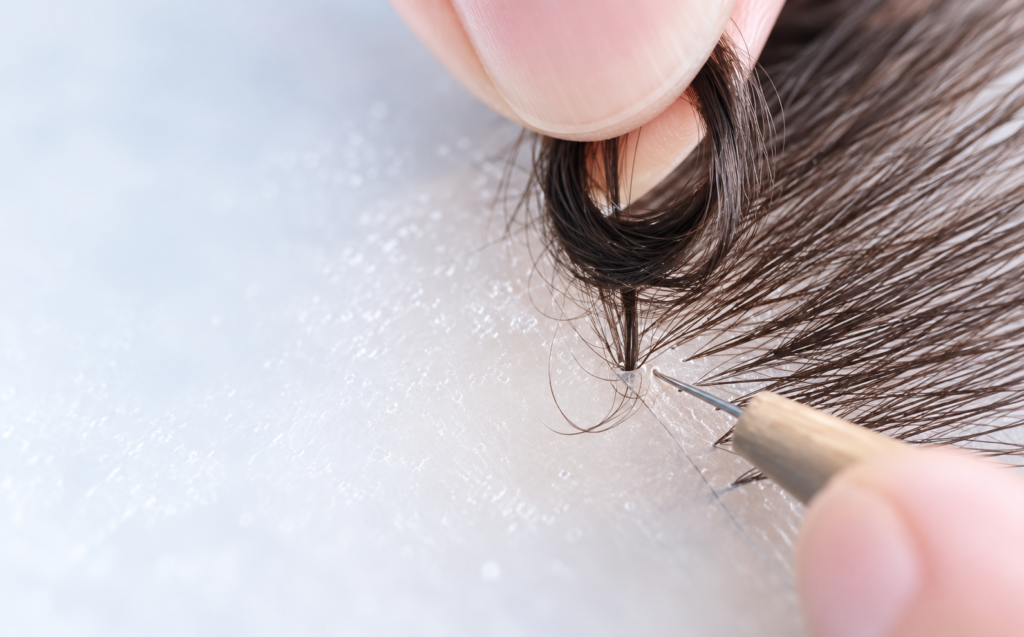
The main attraction is the absence of knots at the roots. That can help create a discreet hairline, particularly when the hairstyle exposes the front.
V-loop construction can also provide root lift and styling flexibility. The finished result still depends on the model, density, hair direction, fit, and cut-in. “Knotless” describes the attachment method; it does not guarantee that every installation will be undetectable.
When looking at a sample, move the hair into the style your client actually wants. A swept-back style and a forward fringe expose different parts of the system. Check the area the client will show.
What Are the Limitations?
Hair retention deserves attention. Newtimes Hair describes knotted skin construction as generally offering greater durability than V-loop construction. That is a useful comparison, but it is not a promise that every knotted unit will outlast every V-loop unit.
Base damage and hair shedding are also different problems. Ask the supplier what an expected wear estimate refers to, and assess the complete model rather than using thickness as the only measure.
Your client’s routine matters. A client who pulls hard when brushing or expects very little aftercare may find a delicate V-loop system frustrating. Discuss that before recommending it.
Newtimes Hair’s care guidance advises against brushing V-looped hair while wet, particularly after hot-water exposure. Follow the instructions for the selected model and demonstrate the recommended handling during the fitting appointment.
V-Loop or Knotted Skin: Which Offers the Best Value?
The best value depends on what the client needs and what the salon must spend to deliver it.
V-loop is worth considering when a knotless-looking hairline and root lift matter to the client, and the care routine is realistic for them. Knotted skin or a construction combining methods may deserve closer attention when hair retention is the priority. Compare actual models with suitable specifications before choosing.
A low unit price is only one part of the purchase. For a meaningful comparison, record:
- Landed product cost: the quoted unit price, shipping, and any applicable import charges.
- Service time: fitting, cut-in, routine maintenance, and any unplanned appointments.
- Replacement needs: supplier guidance alongside your own experience with the approved model.
- Order composition: quantities by model, size and color, including stock that may be slow to sell.
- Purchasing conditions: eligibility for the quoted price, available quantities, dispatch timing and the applicable after-sales terms.
Compare those costs over the same planning period. Use your own records where possible; an estimated replacement interval should remain an estimate.
For example, a client who regularly exposes the hairline may attach more value to a knotless finish than a client whose main concern is reducing replacement visits. Neither preference creates a universal winner.
For the wider technical comparison, including normal injected hair for a flatter, more controlled direction, see 7 Hair Ventilation Techniques Explained.
Which Newtimes Hair Models Can You Compare?
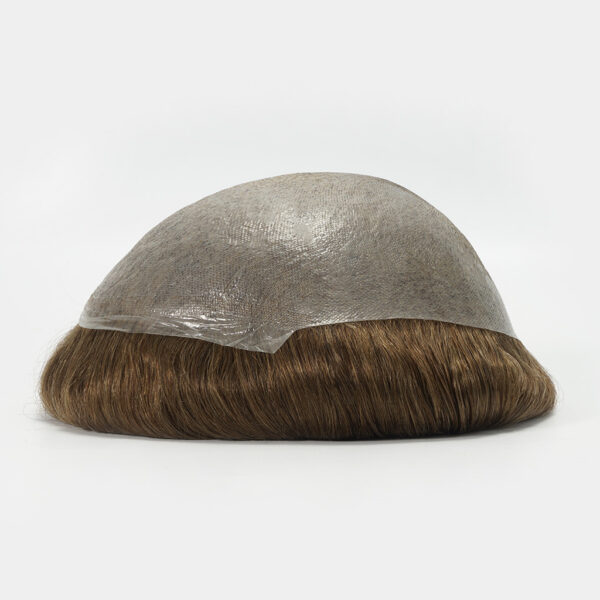
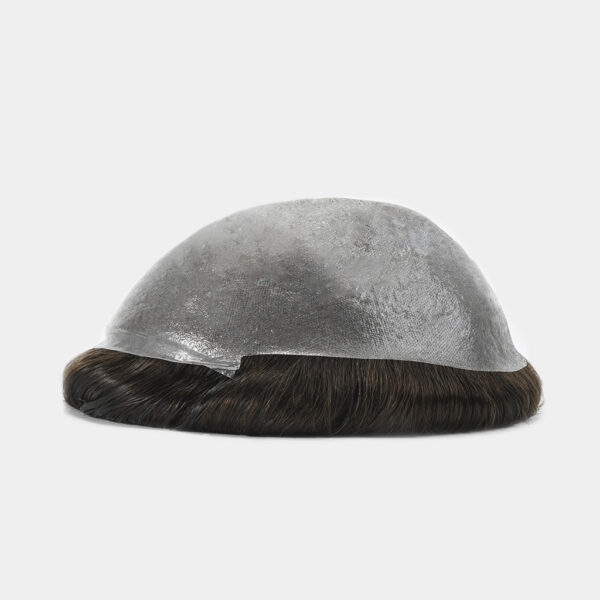
Two published examples are VELLUM HS25V and STRYKE HS1V. The product specifications below were checked on October 22, 2026.
| Model | Listed skin base | Listed density | Listed hair length | Listed direction |
| VELLUM HS25V | 0.03 mm, V-looped | Light/Medium, 100% | 5 inches / 12.7 cm | Freestyle |
| STRYKE HS1V | 0.06 mm, V-looped | Light/Medium, 100% | 5 inches / 12.7 cm | Freestyle |
These are product examples, not a tested value ranking. Both list the same density and hair length, so the thicker base should not be described as the higher-density option.
Check the selected variant and current product information before ordering. For other base designs or hair specifications, discuss feasibility through our custom hair systems page.
What Should You Confirm Before Reordering or Buying in Volume?
Keep the approved sample’s specifications with the order. Ask the supplier to confirm any proposed changes before production or dispatch.
For a first order, send a short brief covering the hairstyle, base size, preferred thickness, density, color, curl, and quantities. Explain what matters most to the client: the exposed hairline, styling direction, or replacement routine.
Then confirm three things in writing:
- What will arrive: model, variant, ventilation layout, and any customization.
- When it can arrive: stock availability, processing or production time, shipping service, and destination.
- What happens if there is a problem: inspection requirements and applicable return and warranty conditions.
A sample is a useful starting point. For a larger supplier commitment, our remote factory audit guide covers the wider evidence to request.
If you are ready to compare options, send Newtimes Hair your specification and order mix through the custom enquiry page. Ask for a recommendation, current quotation, and sample availability before committing to a larger order.
About the Author

Alf Hou is a Hair Replacement Specialist and Technical Consultant at Newtimes Hair, with industry experience since 2018. He specializes in hair system construction, base materials, and ventilation techniques, including V-looping. Drawing on his technical product knowledge, Alf helps hair replacement professionals understand how manufacturing techniques influence natural appearance, durability, and product selection.