


- What Is Hair Ventilation Concerned With?
- Quick Comparison: Which Hair Ventilation Method Should You Choose?
- The Art of Hair Ventilation with Knots: Ventilating Lace, Mono and Selected Skin Hair Systems
- Knotless Methods in Hair System & Wig Making
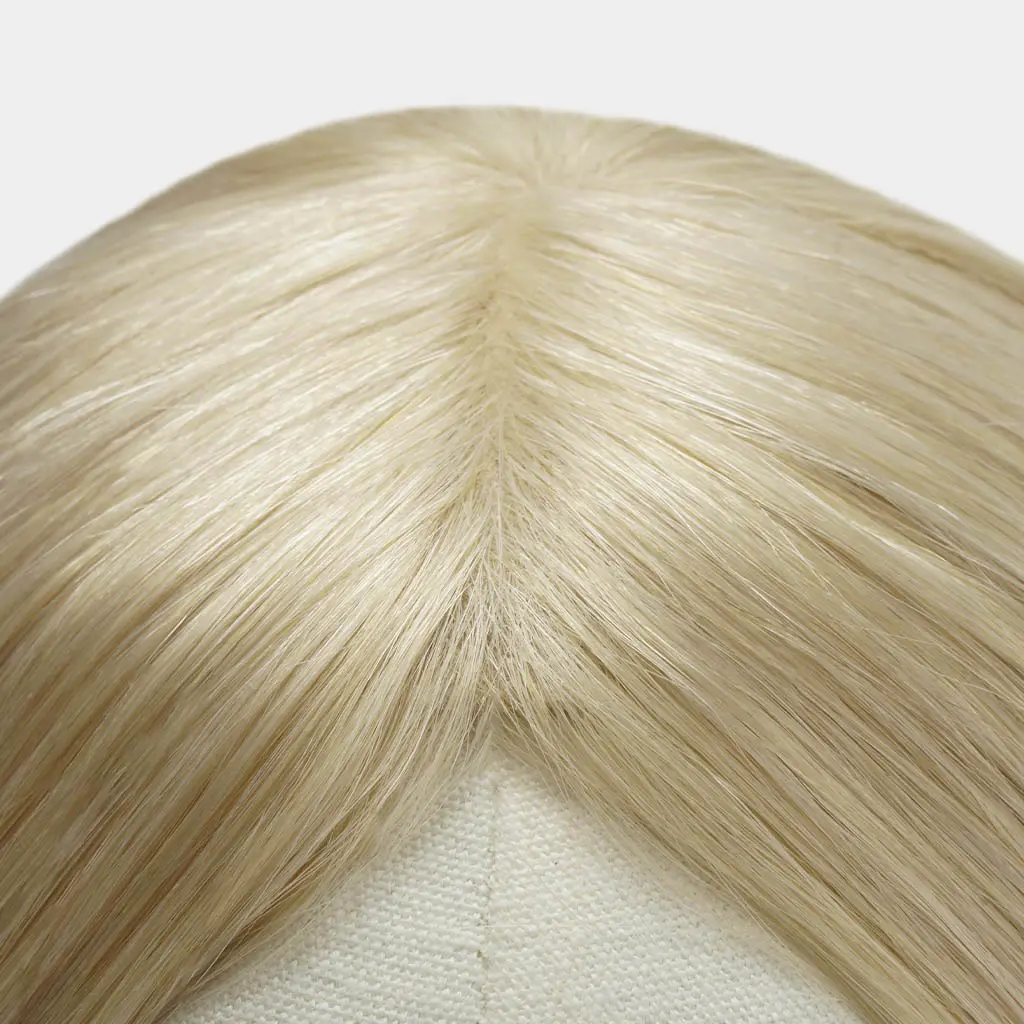
- What About Silk Top Construction?
- Skin Thickness Matters More Than Many Salons Think
- How Salons Should Choose the Right Ventilation Technique
- Key Takeaways
- About the Author
7 Hair Ventilation Techniques Explained: The Art of Ventilating Hair to the Base
- What Is Hair Ventilation Concerned With?
- Quick Comparison: Which Hair Ventilation Method Should You Choose?
- The Art of Hair Ventilation with Knots: Ventilating Lace, Mono and Selected Skin Hair Systems
- Knotless Methods in Hair System & Wig Making
- What About Silk Top Construction?
- Skin Thickness Matters More Than Many Salons Think
- How Salons Should Choose the Right Ventilation Technique
- Key Takeaways
- About the Author
Hair ventilation (ventilating hair into the base material) is the process of securing hair into a wig or hair system base by tying, looping, or injecting each strand into the material. The hair system or wig does not look natural because of the hair alone. How the hair is ventilated affects the hair direction, root lift, shedding resistance, and how natural the hairline or part line looks once the system or wig is worn.
In this guide, we’ll walk through the main ventilation techniques used for wigs, toppers, and hair systems, including knots, V-loops, injected hair, and silk top construction.
What Is Hair Ventilation Concerned With?
Hair ventilation techniques include knotting methods such as single flat knots, double flat knots, single split knots, and double split knots, as well as knotless ventilation techniques like V-loop and injected hair.
For salons, stylists, clinics, wholesalers, and hair replacement professionals, this is not just factory vocabulary. The ventilation method affects hair direction, realism, shedding resistance, density, styling freedom, and how real the hairline or part looks on the hair system or wig.
A hair system or wig can use the same human hair, color, density, and base size. But if one uses V-loop ventilation and the other uses single split knots, they will not perform the same way.
The better question is not “Which ventilation technique is best?”
The better question is: Which ventilation technique is best for this base material, this hairline, this client, and this salon workflow?
Quick Comparison: Which Hair Ventilation Method Should You Choose?
Use this quick guide to match each ventilation method with the right client’s need before you read the details.
| Ventilation Type | Best For | Main Advantage | Main Tradeoff | Representative Product |
| Single Flat Knot | Flat side or back blending | Small knot, flatter hair direction | Less durable, higher shedding risk | Custom skin or lace systems for temple, side, or nape areas |
| Single Split Knot | Front hairlines, lace fronts, thin skin systems | Small, naturally lifted, more secure than flat knots | Needs correct pressing and rubbing to control hair direction | VADON-M (SKU: HS1M) or New Australia Pro |
| Double Flat Knot | PE line, elastic mesh, larger-hole bases | Stronger than single flat knot, tidy hair direction | Bigger and more visible | CECILY (SKU: PES-2) hair integration system or custom PE mesh systems |
| Double Split Knot | Top, crown, back, mono, lace body areas | Strong hold, fuller lift, obedient styling direction | Too visible for exposed front hairlines | CONQUER (SKU: HOLLYWOOD-MONO) |
| V-Loop | Ultra-thin skin systems and invisible-looking hairlines | Knotless, natural lift, free styling direction | More delicate than knotted ventilation | STRYKE (SKU: HS1V) or VELLUM (SKU: HS25V) |
| Normal Injected Hair | Skin bases with flat, smooth styling | Knotless look, no return hair, neat short-hair effect | Harder to change hair direction | TORQ LUX (SKU: INSEU) |
| Lift Injected Hair | Custom skin bases needing more root lift | More flexible direction than normal injected hair | Shorter lifespan, less durable | Custom lift-injected skin systems |
The comparison above gives you a quick way to separate the main methods. Next, we’ll look at each ventilation method in detail so you can match the right base technique to the right client need.
The Art of Hair Ventilation with Knots: Ventilating Lace, Mono and Selected Skin Hair Systems
In a narrower, more traditional sense, hair ventilation means tying strands of hair to a wig base with a ventilating needle (also known as a ventilating hook). That is the standard definition of how hair gets ventilated.
At Newtimes Hair, we use different knotting techniques across our wigs, toppers, and hair systems. Let’s take a closer look at each one.
Single Flat Knot: Best When the Hair Needs to Lie Flat
A single flat knot, also known as a single knot, is used for both lace and PU bases. It is created by passing the tip of the ventilating needle in and out through the base material, hooking a small strand of hair onto the needle, and then pulling the needle back to form a knot.
Single knots are designed to stay as close as possible to the surface of the base for a flatter effect. They are usually very small, so they are less noticeable and can blend more naturally at the temples and the back of the head, where the client’s bio hair is usually short and thin.
However, because single knots are small, they are also quite delicate. On lace bases, they can loosen more easily than double knots or split knots.
That’s why this knotting technique is not a default option in modern wig making. It is more of a targeted solution. When a client specifically wants the hair at the temples and the back of the head to lie flat, we may suggest single knots. If the client wants stronger hold or more lift, we’d recommend double knots.
Use single flat knots when:
- The client wants a flatter hairstyle.
- The side, temple, or nape area needs soft blending.
- Low-lift matters more than durability.
Avoid single flat knots when:
- The client strongly opposes shedding.
- The hair needs heavy brushing or styling.
- The client wants a fuller, more lifted look.
Representative product: A custom skin or lace hair system or wig with single flat knots placed in the temple, side, or nape area for flatter blending.
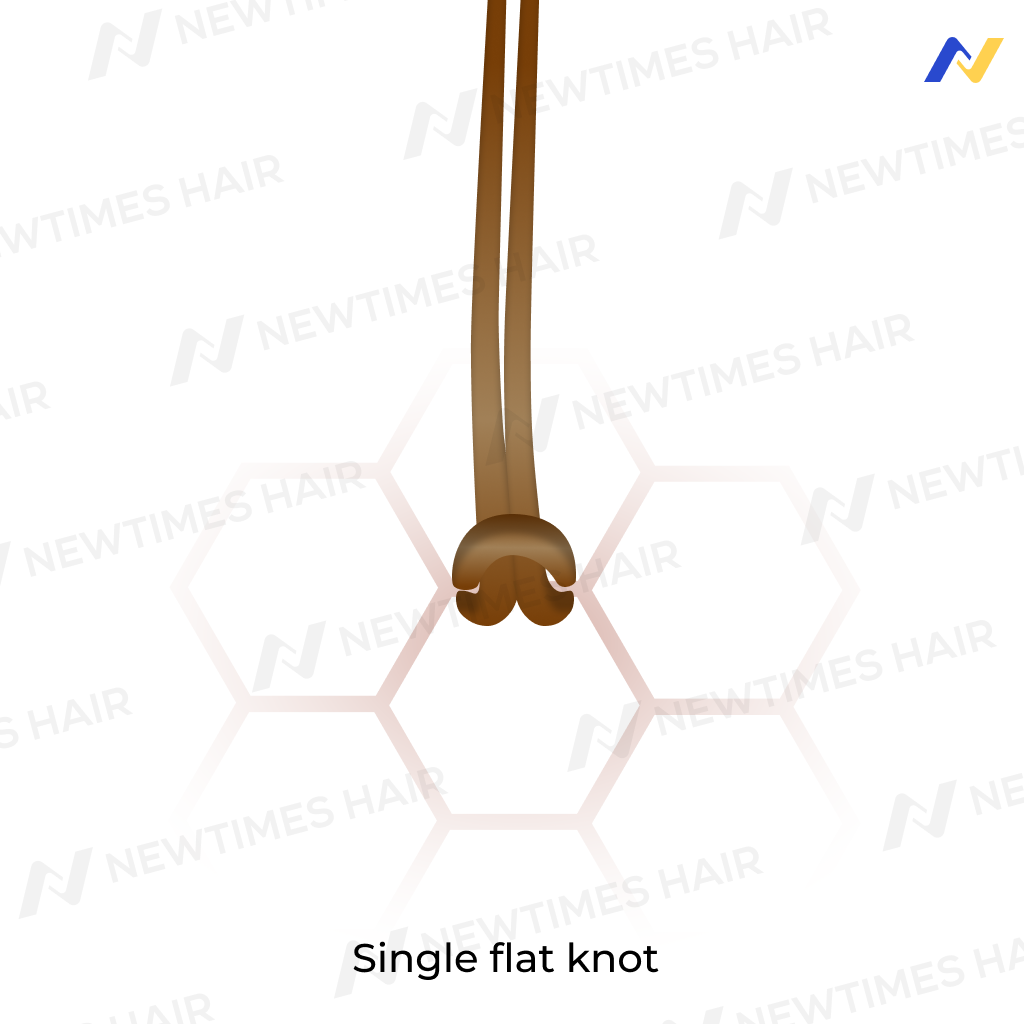
Video: Single Flat Knot vs. Single Split Knot
Single flat knots and single split knots are easy to confuse because both are small knotting methods. The video below shows the difference in hair direction, root lift, and knot behavior, so you can see why single flat knots create a flatter effect while single split knots are more useful for natural-looking front areas.
Single Split Knots: The Realistic Front-Hairline Workhorse
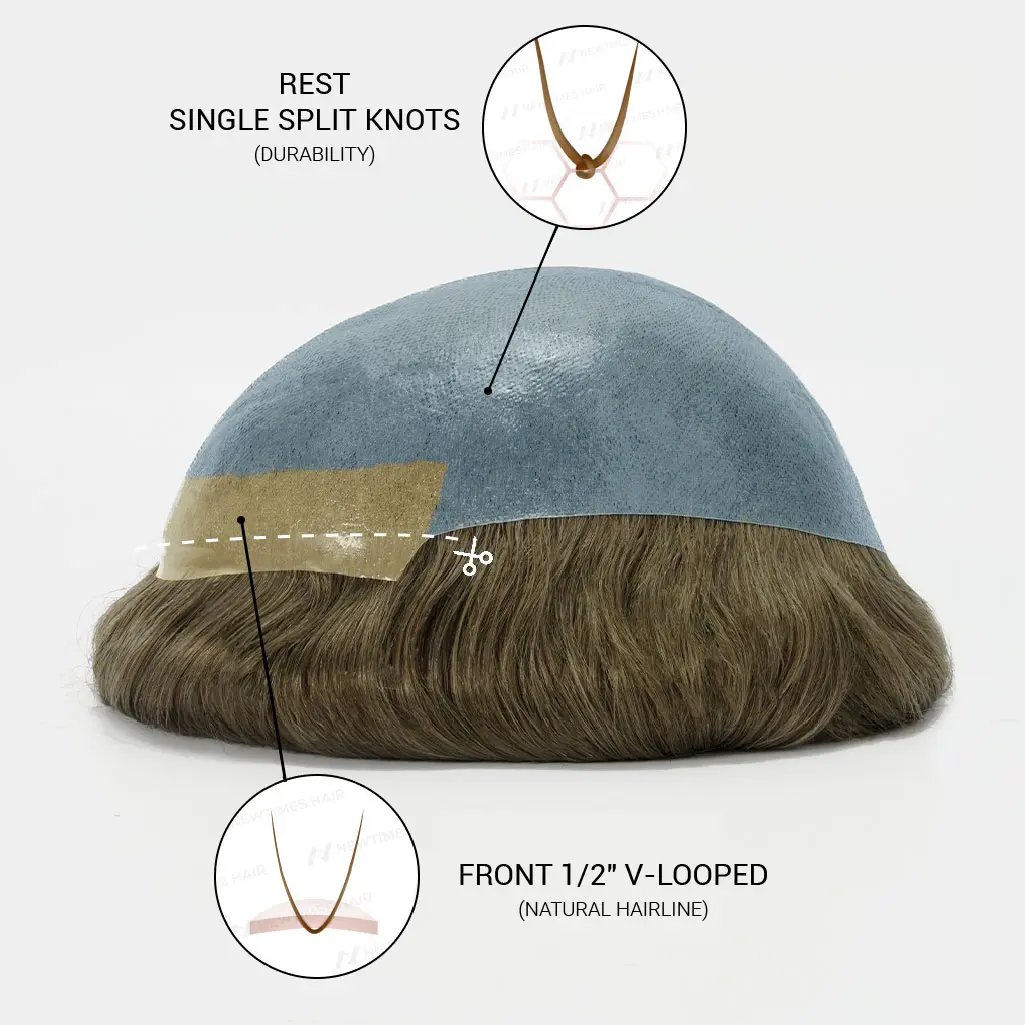
A single split knot is one of the most useful knotting techniques in hair replacement as it balances the natural appearance with better hold. It is commonly used on lace fronts and selected skin bases where the hair needs to look real but still stay firmly attached to the base.
To create a single split knot, the technician passes the tip of the needle in and out through the base material, hooks a small strand of hair onto the needle, and then pulls the hair back through the same needle path. As the hair is pulled through, one small knot is formed around the base material. Unlike a flat knot, the two hair strands separate slightly after knotting, which gives the hair more lift and a more natural direction.
The knot is small but has more lift than a flat knot. Because the knot is small, it works well in areas where the system or wig needs a more natural effect, especially the front hairline.
This is why single split knots are commonly used on lace fronts, single-layer lace, and some skin bases. On skin bases, the knots can be sealed with a thin layer of poly to improve hold and help reduce shedding.
Single split knots can also be bleached to make the front hairline look more natural. Bleaching lightens the dark knots, making them less visible against the base and scalp. It is particularly useful for lace front wigs and hair systems, but it must be done carefully. If the knots are over-bleached, the hair roots may weaken, and the system may shed more easily.
There is one practical production detail worth knowing: a single split knot needs to be properly pressed and rubbed after it is formed. If it is not tamed properly, the hairs can go in different directions and become quite messy.
That is the kind of detail clients rarely talk about, but as professionals, we need to care about it.
Use single split knots when:
- The front hairline needs to look very natural.
- The client wants more root lift than flat knots can provide.
- The base needs a small knot with better security.
- The ventilated wig or system is full lace, has a lace front, or has a suitable PU base.
Avoid single split knots when:
- The area of the head is not obvious – double split knots will do perfectly
- The client wants a very flat hairstyle.
- Production quality cannot control the hair direction properly.
Representative product: VADON-M (SKU: HS1M) is a strong example because it uses a V-looped front hairline and single split knots across the rest of the 0.08mm skin base for longer wear.
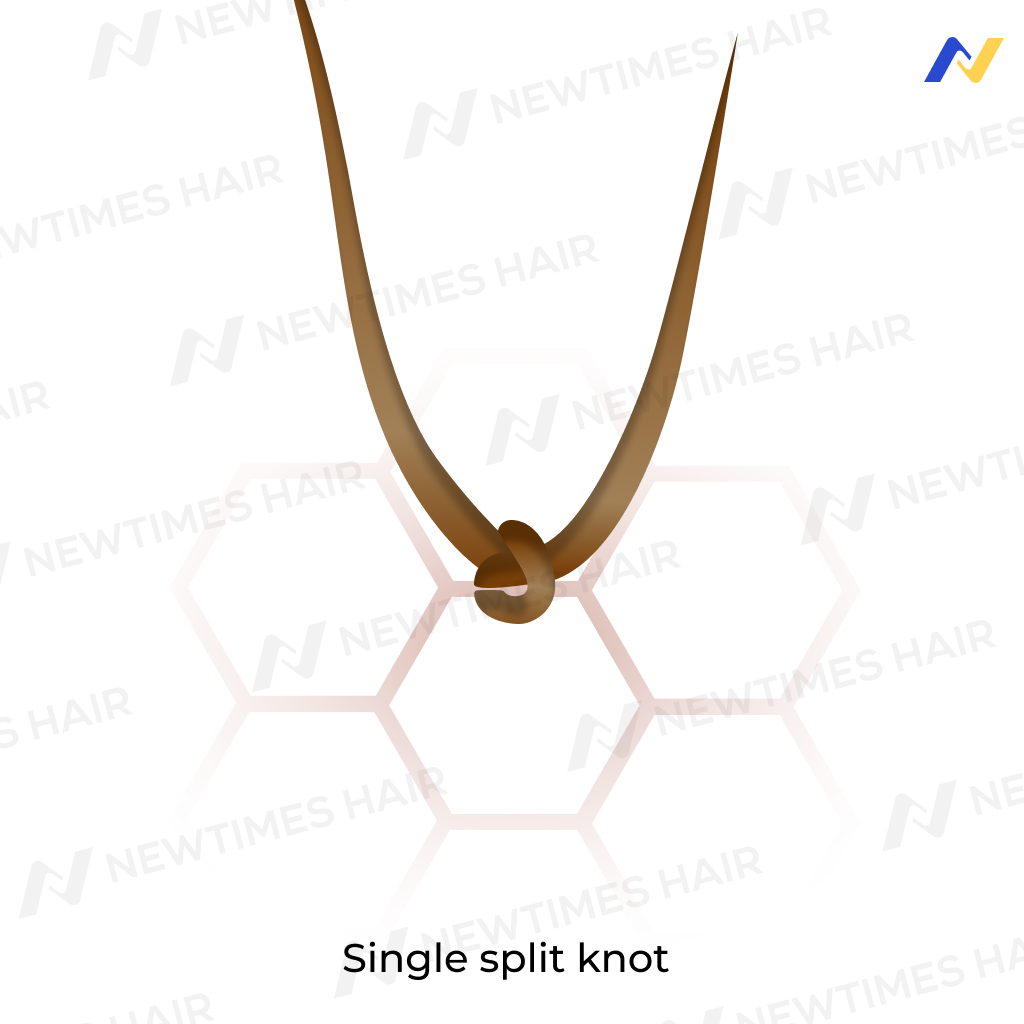
Video: Single Split Knot vs. Double Split Knot
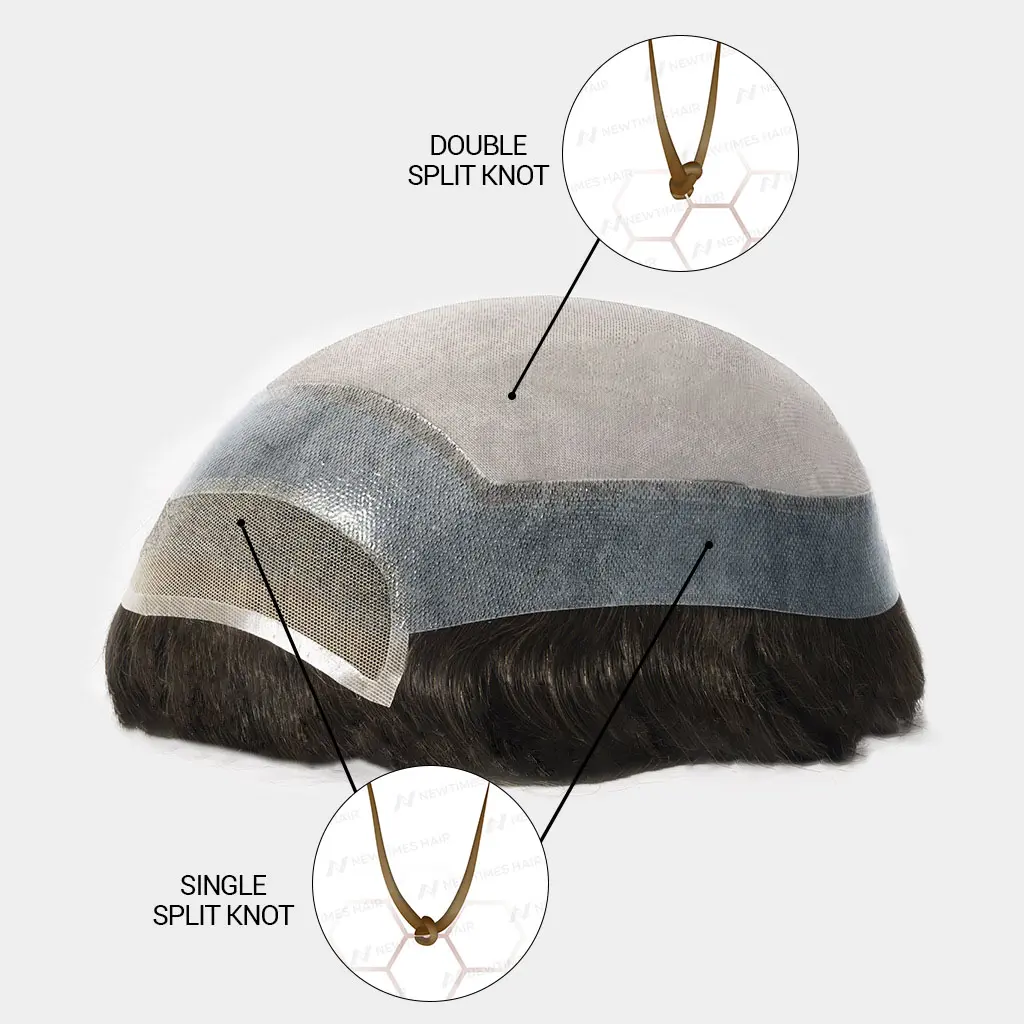
Single split knots and double split knots are often used together in one hair system, but they solve different problems. The video below shows how each knot is made and why single split knots are better for natural-looking front areas, while double split knots are better for covered areas that need stronger hold.
Double Split Knots: The More Durable Choice for Ventilating Hair Wigs and Systems
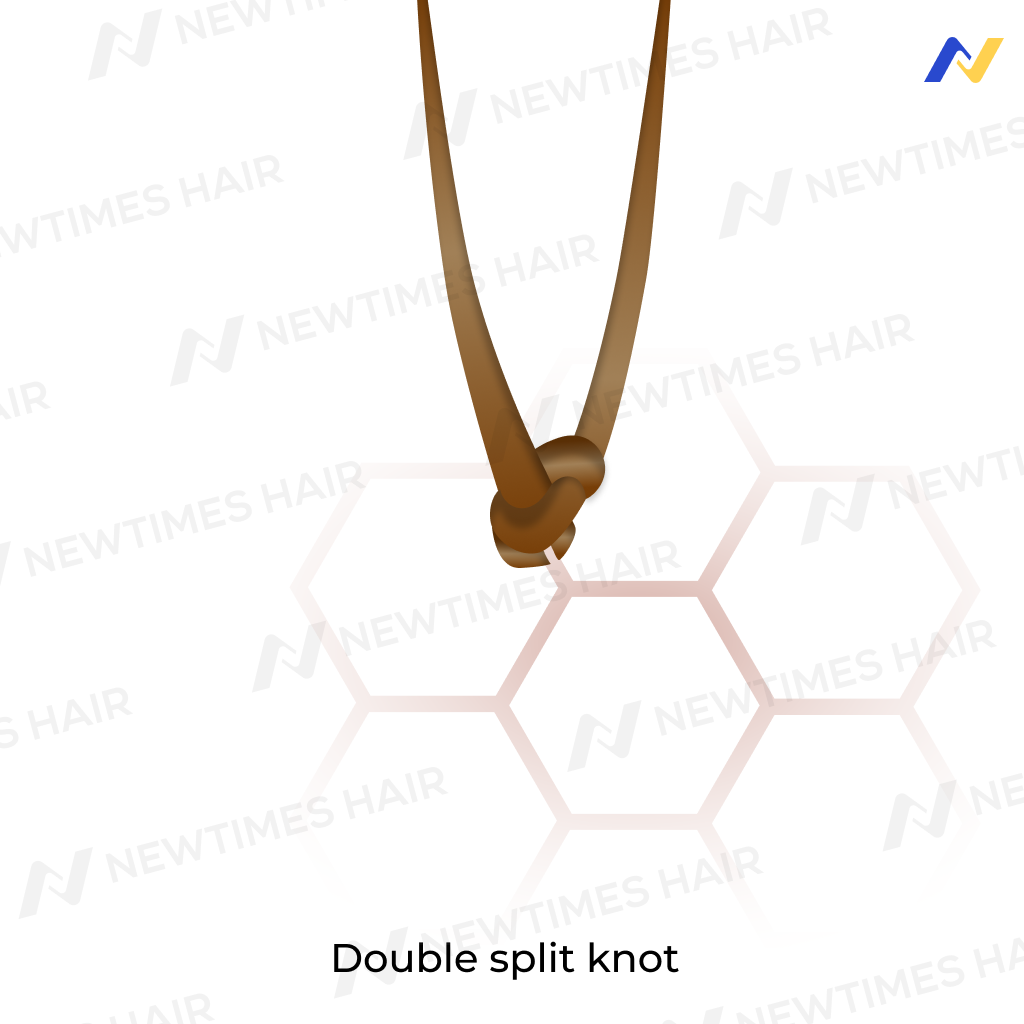
Double split knots are larger and stronger than single split knots. They are made by reversing the hair twice with the ventilating needle. The result is a bigger knot, stronger hold, and a more controllable direction.
The difference is pretty straightforward: single split knots are smaller and easier to hide, while these knots are bigger and stronger. That is why double split knots are usually used in areas where a super secure hold matters more, such as the main body of lace units and mono bases.
But they should not be used carelessly at the front hairline of the wig or system. Why? Simple: the knot is bigger; pulling the hair at the front back will reveal the knots easily. This is why many professional systems use single split knots at the front and double split knots for the crown and other areas, where the hair is denser and can effectively hide the knots.
The front needs realism. The top and back need strength.
That is not a compromise. That is a good base design habit.
Use double split knots when:
- The hair at the top, crown, or back needs stronger hold.
- The system or wig uses mono or lace for the base.
- The client wants better durability and styling control.
- The knots get easily hidden by surrounding hair.
Avoid double split knots when:
- The front hairline is obvious.
- The client wants an ultra-realistic lace-front look.
- The base material is too delicate.
Representative product: CONQUER (SKU: HOLLYWOOD-MONO), a fine mono hair system with a lace front and PU perimeter, is a good representative product for durability-focused mono/lace construction.
Double Flat Knot: Stronger, Flatter, and Useful on Larger-Hole Mesh Bases
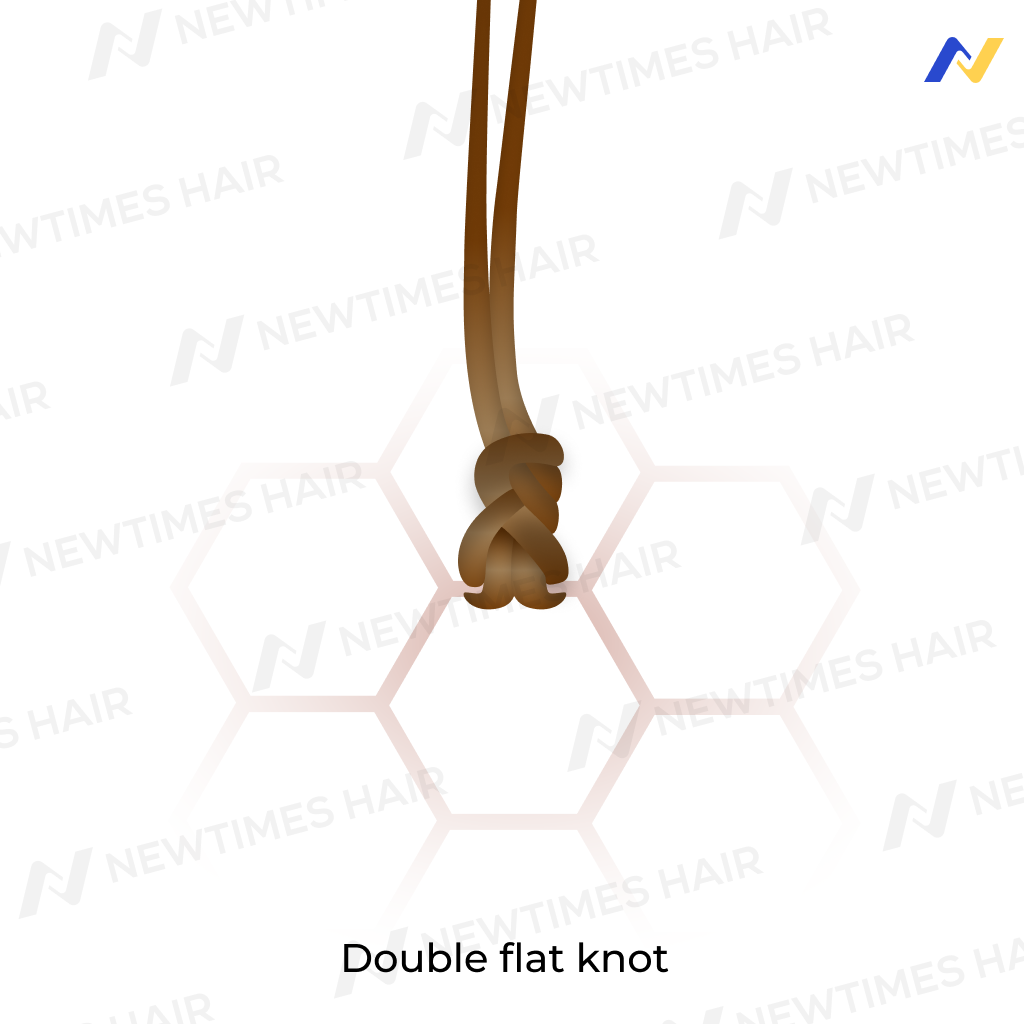
A double flat knot is larger and stronger than a single flat knot. It keeps the hair direction more controlled and flatter than split knots, which makes it useful on larger-hole base materials.
This technique is not usually chosen for invisible hairlines. It is more practical on PE lines, elastic mesh bases, and some hair integration systems, where secure hold and neat hair direction matter more than hiding every knot.
Here is the practical salon version: for mesh hair systems with larger holes, the hair can get messy more easily because split knots allow each pair of strands to separate too much. A flat knot keeps the strands closer together, making the hair direction easier to control.
Use double flat knots when:
- The holes in the mesh are large.
- The hair needs to lie neatly and stay controlled.
- Securely hold matters more than an invisible knot.
Avoid double flat knots when:
- The front hairline needs to be obvious.
- The base is too delicate for larger knots.
Representative product: CECILY (SKU: PES-2) hair integration system or custom PE mesh integration systems.
Knotless Methods in Hair System & Wig Making
If you ventilate hair without knots, then you are adopting a knotless technique. Knotless methods simply mean ventilating hair to the wig or system without knots. They are used mainly for poly skin hair systems or hairpieces.
V-Loop: The Knotless Method for Thin Skin Hair Systems
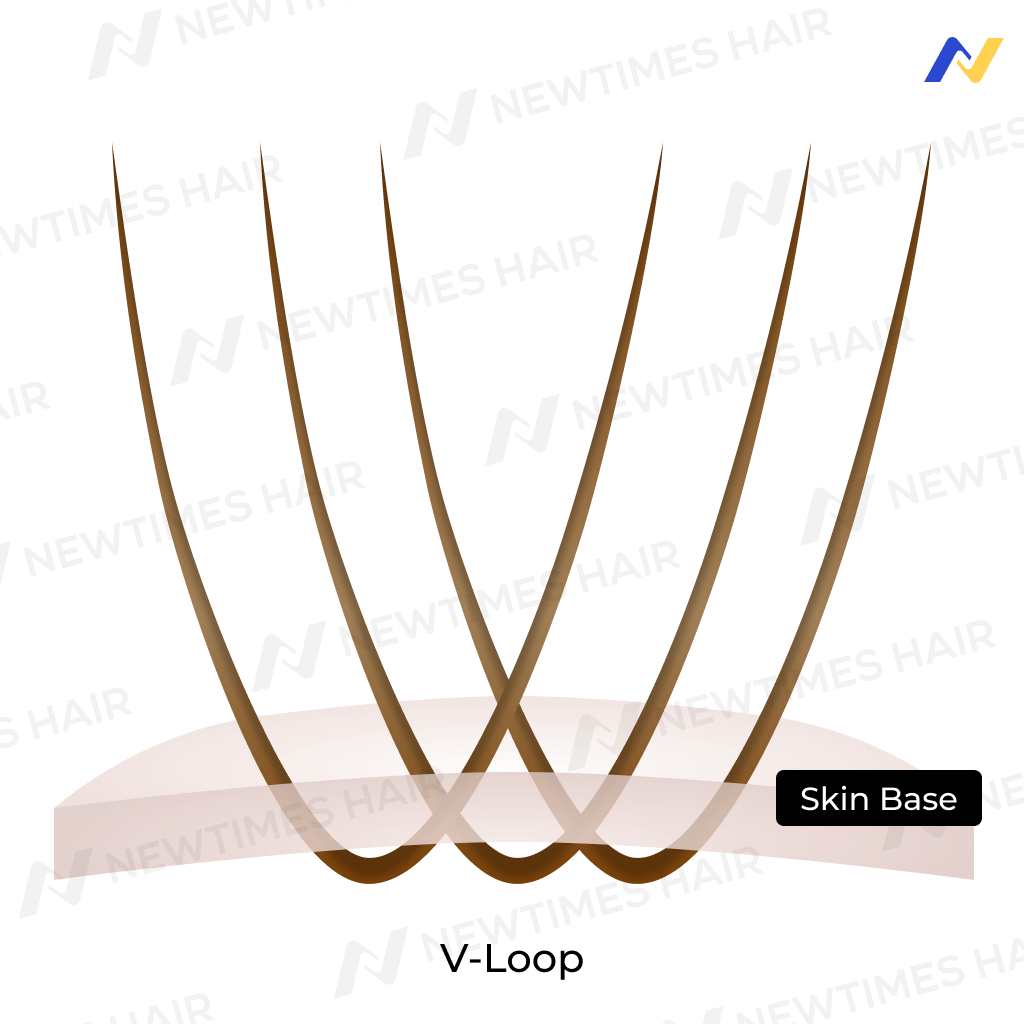
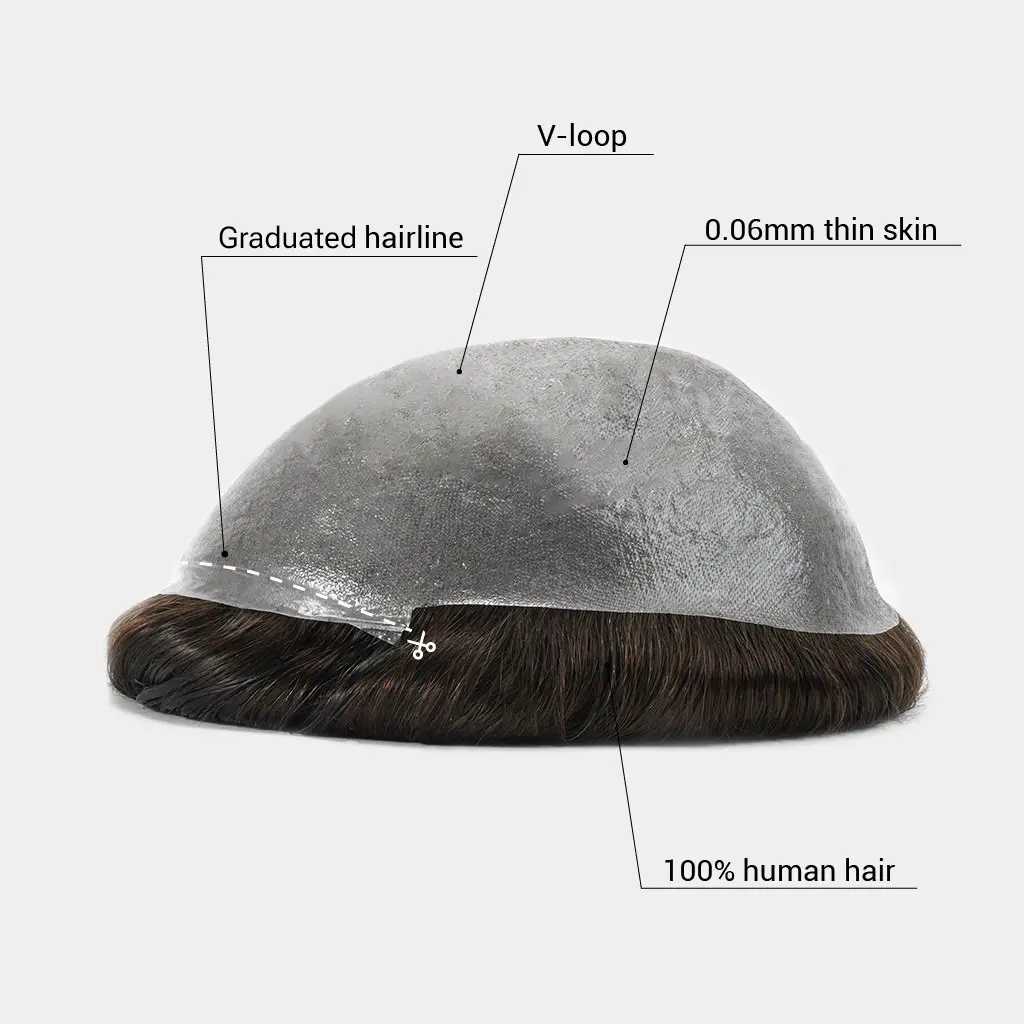
A V-loop does not use a knot. A strand of hair gets threaded in and out through the skin base and comes out, forming a V-shaped path. This creates a clean, knotless appearance that can mimic hair growing from the scalp.
V-loops are used only on skin hair systems. The V-looped roots are then sealed with a layer of polyurethane, so the hair stays in place and the underside of the skin base feels smooth against the client’s scalp.
The biggest advantage of V-loops is realism. V-looped hair has no visible knots and has natural lift. The hair gets ventilated easily throughout the wig base and styled freely.
However, V-loops are not as secure as knots. They are more suitable for clients who brush their hair gently and understand the maintenance restrictions. For someone who brushes vigorously or often pulls on the hair, V-loops may not last very long because the hair can shed more easily.
Watch the video below to see how V-loop ventilation creates a knotless look on thin skin bases.
Use V-loop ventilation when:
- The client wants a knotless effect.
- A knotless front hairline is a must.
- The client values natural lift and styling freedom.
- The base is ultra-thin skin, such as 0.03mm or 0.06mm.
Avoid V-loop ventilation when:
- The client needs maximum shedding resistance.
- The client is rough with washing or brushing.
- The hair length or density is too heavy for a very thin base.
Representative product: STRYKE (SKU: HS1V) uses V-looped human hair on a 0.06mm thin skin base for a knotless finish and invisible-looking hairline. VELLUM (SKU: HS25V) is another reference for 0.03mm ultra-thin skin with V-looped hair.
Normal Injected Hair: Knotless, Flat, and Neat
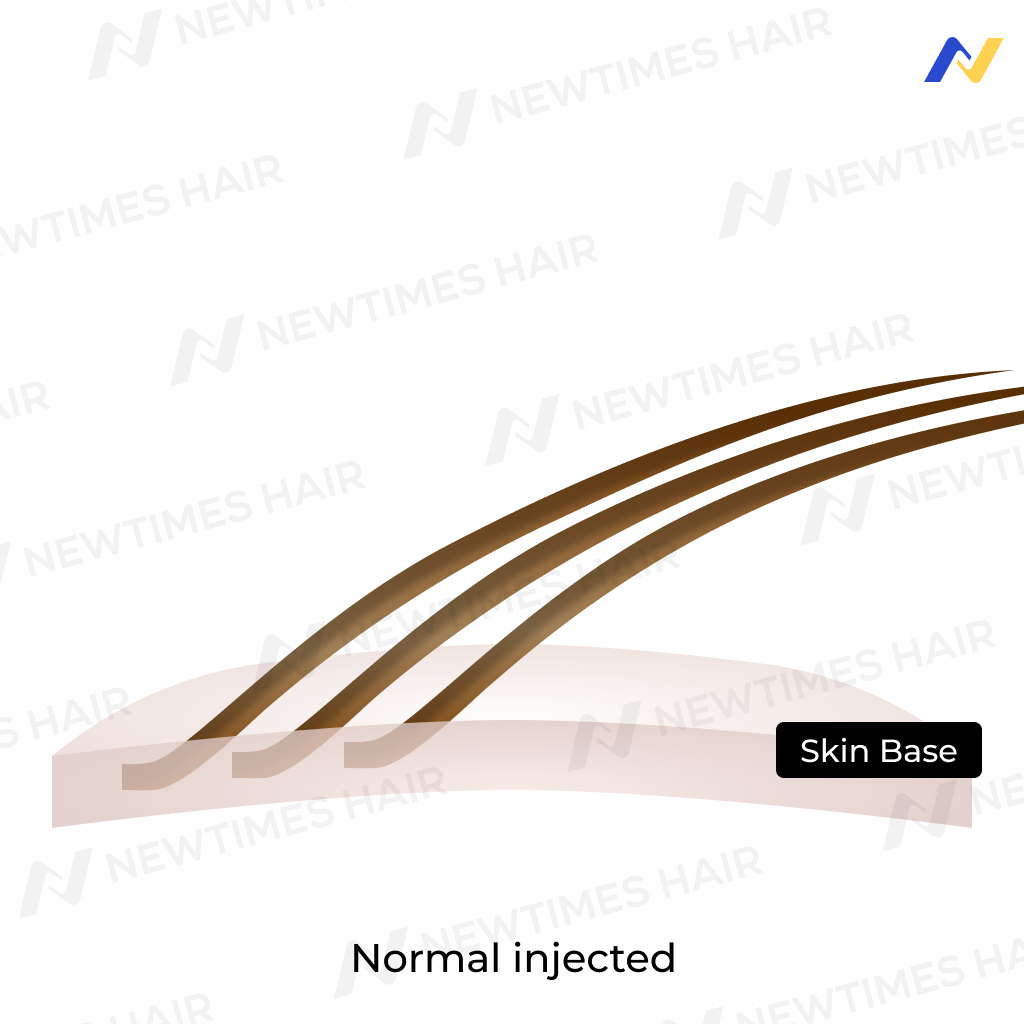
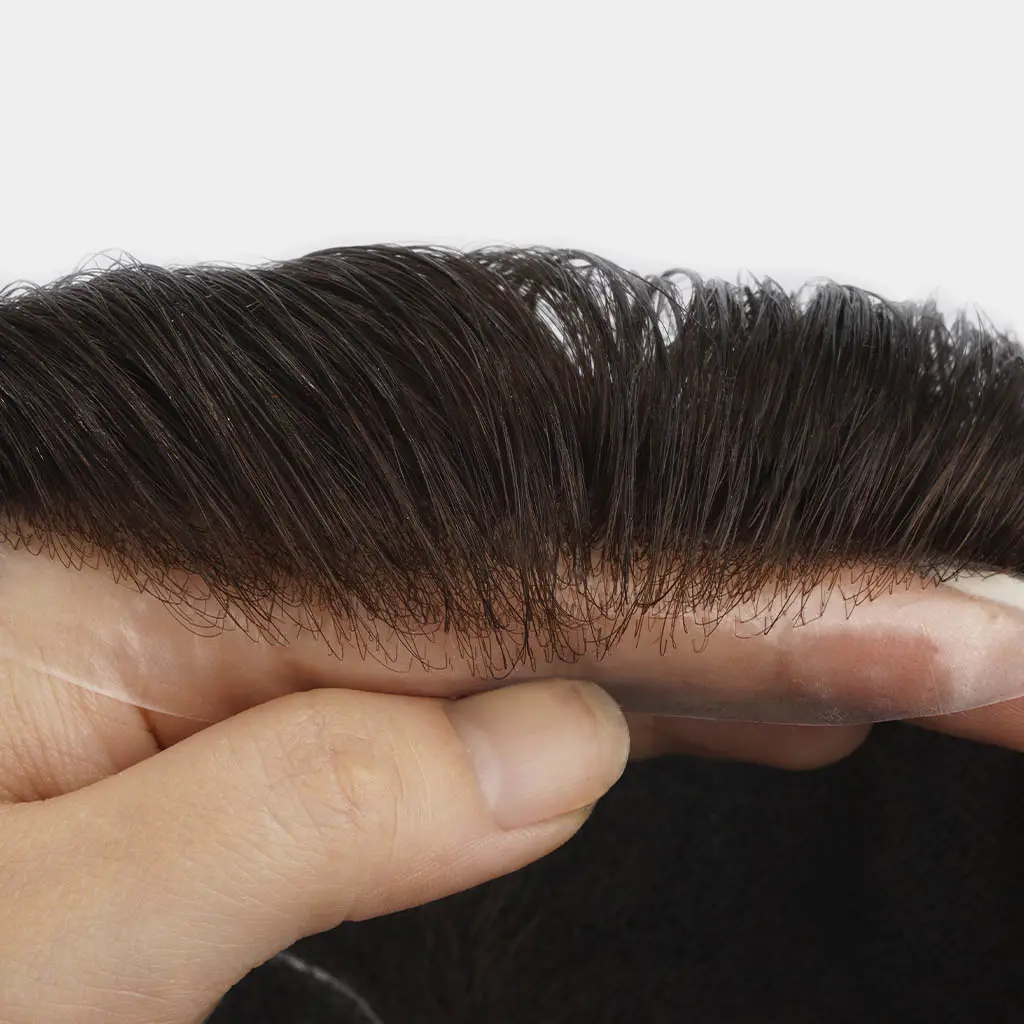
Normal injected hair, also called flat injected hair, is used on skin bases. A ventilation needle punches each strand into the skin base. After ventilation, the roots are trimmed, sealed with polyurethane, and ironed down so they lie flat on the underside of the base.
This creates a knotless appearance with no return hair, which is one advantage injected hair has over V-looped hair. Since the hair is neatly ironed down in one uniform direction, it is especially suitable for creating the cleanest crew cut on the planet.
But the same process also gives normal injected hair its limitation: the roots are ironed down, so the hair on the top side tends to lie in the opposite direction. That can make it harder to change the hair direction.
In practical terms, normal injected hair is excellent for neat, short, controlled styles. Buzz cuts and crew cuts can look clean and authentic with this method. If the client wants big lift or frequent restyling, it may not be the best option.
Injected hair generally requires a skin base around 0.08mm or thicker. If the base is too thin, it may not hold the injected roots securely.
The video below shows how normal injected hair is ventilated into a skin base and why it creates a flatter, neater finish.
Use normal injected hair when:
- The client wants a knotless effect.
- The hairstyle is short, neat, and flatter.
- The client wants no visible knots and no return hair.
- The skin base is thick enough to hold injected roots.
Avoid normal injected hair when:
- The client wants the most natural lift.
- The client frequently changes hair direction.
- The base is too thin for injection.
Representative product: TORQ LUX (SKU: INSEU) uses injected European virgin hair on a 0.08mm skin base for a natural, realistic look.
Lift Injected Hair: More Flexible Direction, Shorter Lifespan
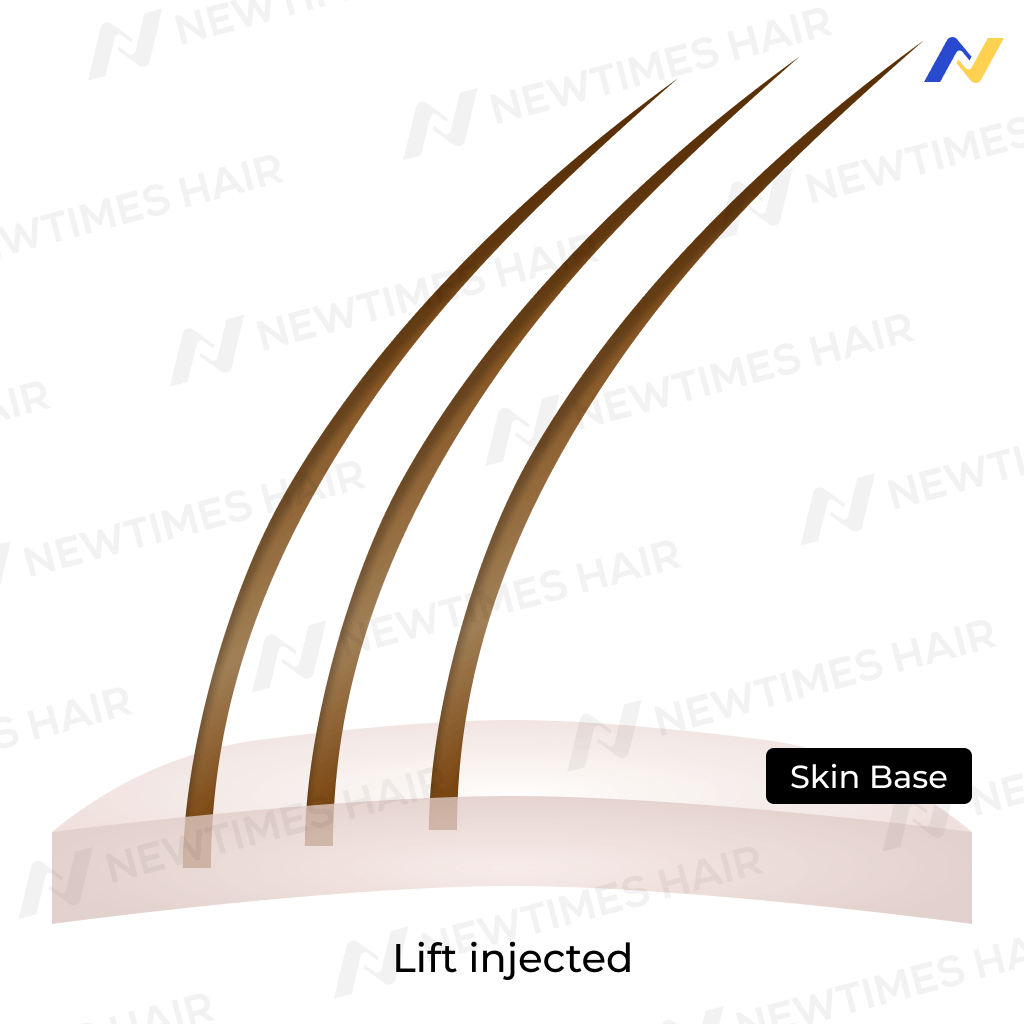
Lift injected hair is also used on skin bases, but the root handling is different. The roots are trimmed shorter, and they are not ironed down in the same way as normal injected hair. Instead, polyurethane is applied to seal the roots, so the hair does not lie flat against the surface of the base.
The result is more lift, more flexibility, and more styling options.
That sounds perfect, but there is a cost.
Lift-injected hair systems usually have a shorter lifespan than normal injected systems because the hair is not rooted as deeply or ironed down as normal injected hair. This makes lift injection a better custom option for clients more concerned about lifting than durability.
This is not a method to oversell. It is a method to recommend carefully.
Watch the video below to see how lift-injected hair differs from normal injected hair in root direction and styling behavior.
Use lift-injected hair when:
- The client wants a more lifted skin-base look.
- Styling flexibility matters more than lifespan.
- The order is custom, and the client understands the tradeoff.
Avoid lift-injected hair when:
- The client wants injected hair to last long.
- The client expects low-maintenance.
- The client is strongly against shedding.
Representative product: Custom lift-injected skin hair systems.
What About Silk Top Construction?
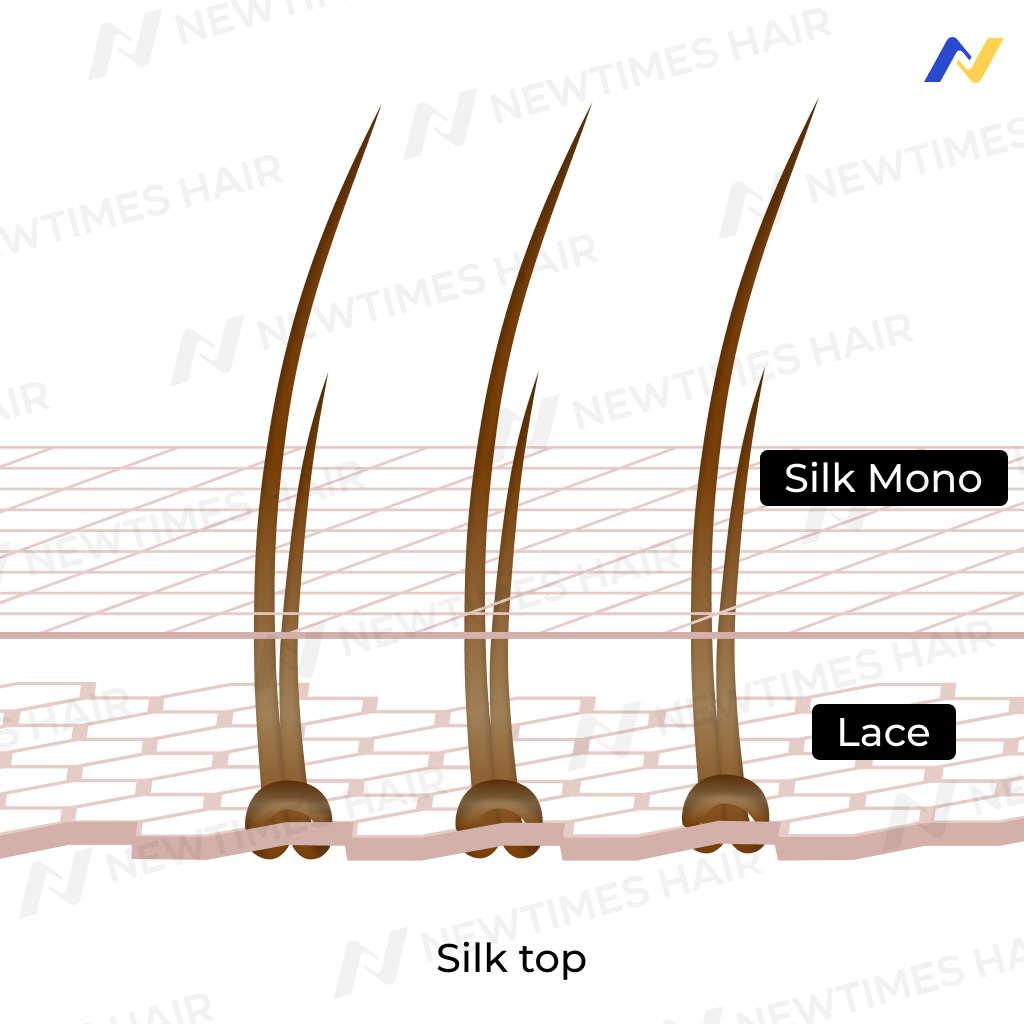
A silk top is not a knotting method by itself. It is a layered base construction technique used to hide the knots and create scalp-like parts.
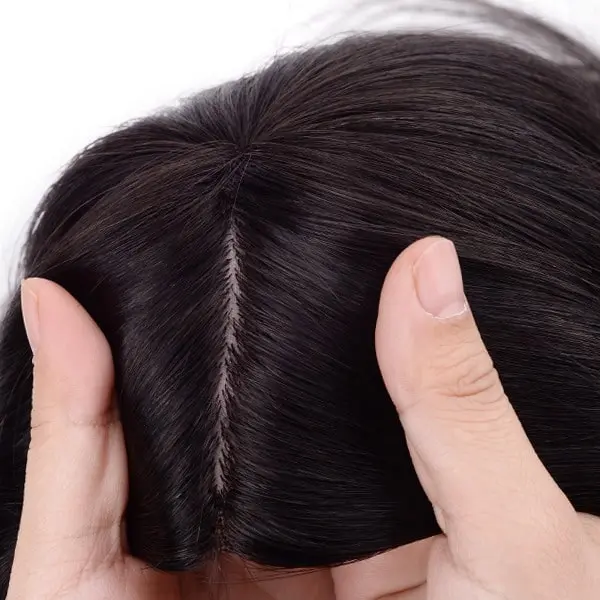
Silk-top bases are typically made with two layers. The hair is first ventilated to the bottom lace layer, then out through a top silk layer. This creates a perfectly knotless effect with zero return hairs. The silk top looks just like the real human scalp in every way, and that creates the super-realistic parts.
The silk-top technique is more popularly used for making the wig, topper, and other female hairpieces.
However, silk top pieces are more complex, take more work to make, and are usually more expensive. Plus, with multiple layers, they are not always the lightest or most breathable option. But when the client wants a convincing part line, a good silk top topper or wig will be the perfect option.
The video below shows how silk top construction hides the knots under the silk layer to create a scalp-like part.
Use silk top construction when:
- The client wants a realistic scalp look for the wig or hairpiece.
- The part line or crown will be visible.
- The client wears longer hair for her wig or topper.
- Scalp realism matters more than the lightest possible base.
Avoid silk top construction when:
- The client wants maximum breathability.
- The client wants the lowest-cost option.
- The hairstyle does not expose the part or crown area.
Representative product: NW4660 custom silk top hair system for women. TEENA silk top mesh integration topper is also a useful reference for women’s integration clients.
Skin Thickness Matters More Than Many Salons Think
Ventilation for skin systems cannot be discussed properly without also covering skin thickness. A 0.03mm skin base, a 0.06mm skin base, a 0.08mm skin base, and a 0.12mm skin base should not be treated like the same product with different numbers.
They behave differently.
Injected hair is not suitable for 0.03mm ultra-thin skin bases because the skin is too thin to hold the injected roots securely. For this thickness, V-loop ventilation is usually the better choice. Injected hair generally requires a skin base around 0.08mm or thicker so the roots can be sealed securely.
Here is a practical way to think about it:
0.03mm Ultra-Thin Skin Base
Usually suits: V-loop; selected single split knot options may be possible
Best for: Maximum realism
Watch out for: Very delicate wear and limited support for heavier hair
0.06mm Thin Skin Base
Usually suits: V-loop
Best for: A practical balance of realism and wear for many clients
Watch out for: Rough brushing, heavy density, or unrealistic lifespan expectations
0.08mm Skin Base
Usually suits: Single split knots or injected hair, depending on the order
Best for: Better durability and fuller density
Watch out for: Choosing the wrong ventilation method for the client’s styling habits
0.10mm-0.12mm Skin Base
Usually suits: Injected hair or knotted hair
Best for: Stronger, longer-lasting systems that can support more density
Watch out for: A slightly thicker base feel compared with ultra-thin skin
This is why a salon should not choose a ventilation method in isolation. Base thickness, density, hair length, client behavior, and expected lifespan all have to work together.
How Salons Should Choose the Right Ventilation Technique
The best ventilation method is the one that matches your target clients’ needs, preferences, and styling and maintenance routines. For Salons, that choice also affects inventory planning, price positioning, and risks.
A simple salon rule:
- V-loop thin skin systems for clients who want a natural, knotless hairline.
- Single split knots or mixed-ventilations for those who need better durability.
- Use double split knots in fairly covered areas where security matters more than hiding the knots.
- Normal-injected hair for clients who prefer neat, short, flat styles.
- Reserve silk top for higher-end wig and topper wearers who want a realistic part
- Be careful when selling delicate knotless systems to clients who expect long wear or low maintenance.
This is where professional product selection matters. Clients usually ask for “natural.” Wholesalers, salon owners, and distributors have to translate that request into the right base design, density, hair direction, ventilation method, and realistic aftercare expectations.
Key Takeaways
- Hair ventilation controls how the hair looks, moves, sheds, and blends with the client’s own hair.
- Single split knots are commonly used for realistic front hairlines because they are small, lifted, and more secure than flat knots.
- Double split knots are stronger and more obedient, but they are better suited to top, crown, back, mono, and lace body areas.
- V-loop creates a knotless, thin-skin look with natural lift, but it requires gentle maintenance.
- Normal injected hair gives a knotless, neat, short-hair effect, but it is less flexible for changing hair direction.
- Lift injected hair offers more root lift and styling flexibility, but it usually does not last as long as normal injected hair.
- Silk top hides knots under a silk layer, making it excellent for realistic part lines and crown areas.
- The right ventilation method depends on the client’s base material, visible hairline, hairstyle, density, hair length, durability expectations, and maintenance habits.
About the Author

Julia Griffiths is a UK-based hair professional, barber, educator, and men’s hair system specialist with decades of hands-on salon experience. She is the founder of Crosscuts Barbers, a long-running barbershop she opened at age 27, and Hair Revival Training, where she delivers CPD-accredited men’s hair system training for stylists and salon professionals. As a Newtimes Hair author and reviewer, Julia brings practical expertise in barbering, hair replacement, Remy hair quality, and professional client care to help readers make more confident hair system decisions.