



- What Are K Tips Hair Extensions?
- How the K-Tip Application Process Works
- K-Tip Hair Extensions Pros and Cons
- Are K-Tip Extensions Damaging to Natural Hair?
- How Long Do K-Tip Extensions Last?
- K-Tip vs. I-Tip Extensions: Which Is Better?
- How Much Are K-Tip Extensions, and Are They Worth It?
- How to Find K-Tip Extensions Near Me - and Choose a Qualified Stylist
- How Newtimes Hair Keeps Quality Consistent
- Final Takeaway
- About the Author
- K Tip Extensions FAQs
What Are K Tip Extensions? A Complete Guide for Salons and First-Time Wearers
- What Are K Tips Hair Extensions?
- How the K-Tip Application Process Works
- K-Tip Hair Extensions Pros and Cons
- Are K-Tip Extensions Damaging to Natural Hair?
- How Long Do K-Tip Extensions Last?
- K-Tip vs. I-Tip Extensions: Which Is Better?
- How Much Are K-Tip Extensions, and Are They Worth It?
- How to Find K-Tip Extensions Near Me - and Choose a Qualified Stylist
- How Newtimes Hair Keeps Quality Consistent
- Final Takeaway
- About the Author
- K Tip Extensions FAQs
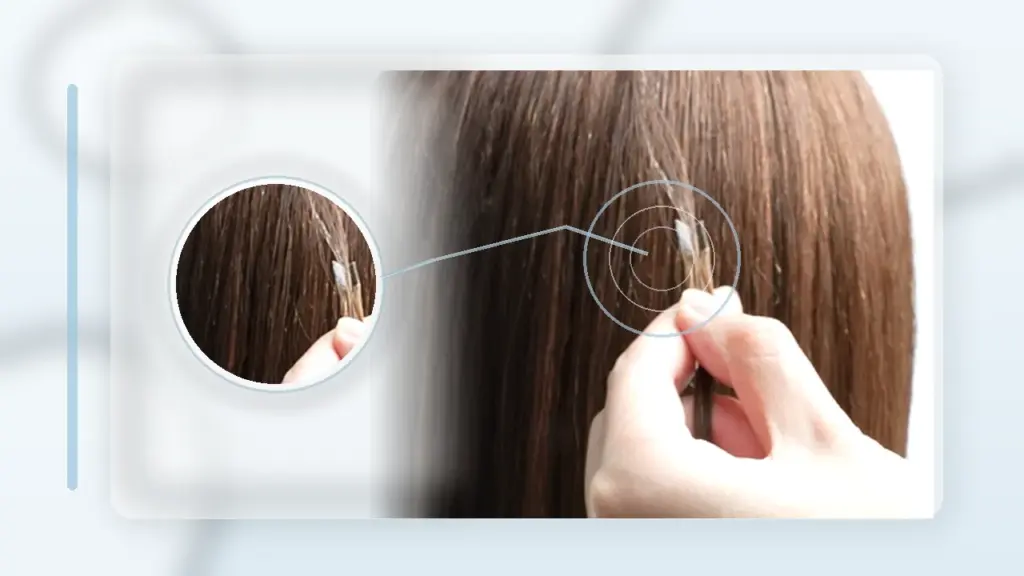
K-tip extensions, also known as keratin tip hair extensions, are one of the most natural-looking ways to add length, volume, or both. They move strand by strand. The bonds are small. And when the color, weight, and placement are right, they can be hard to spot – even in an updo.
That sounds simple. The service is not.
K-tip hair extensions are a professional method. The result depends on the quality of the extension hair used, the bond, the tools, and the size of the section where extensions are required. The stylist’s training and how clients care for the hair also play a part. Get those details right, and K-tips can become a valuable premium service for a salon. Get them wrong, and the client’s natural hair may pay the price.
This guide explains what K-tip extensions are, how the application process works, how long they last, what they cost in the United States, and how they compare with I-tip extensions. It also covers fine hair, black hair, curly textures, buying them wholesale, and the questions first-time clients usually ask before they commit.
| Short answer: K-tip extensions are individual hair-extension strands with a small keratin-based tip. A trained stylist softens the tip with a controlled heating tool and shapes the bond around a small section of the client’s hair. They are also called keratin tip, keratin bond, pre-bonded, hot-fusion, or fusion extensions. |
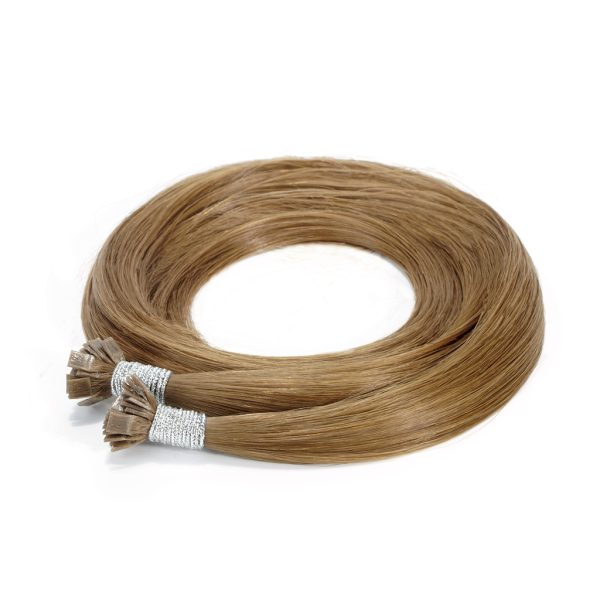
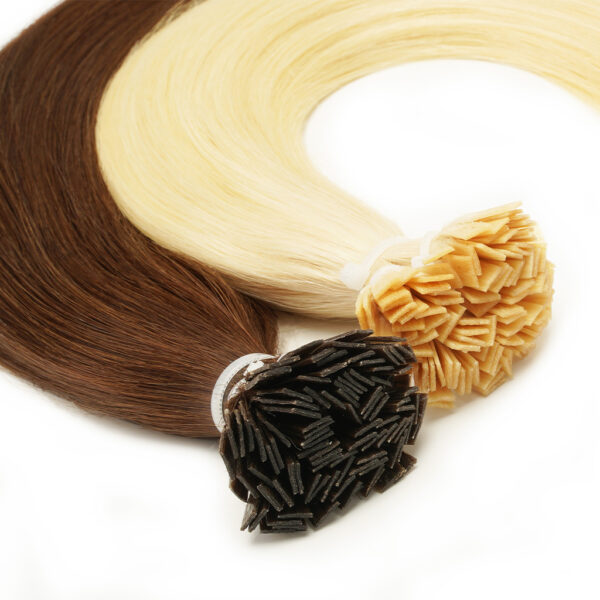
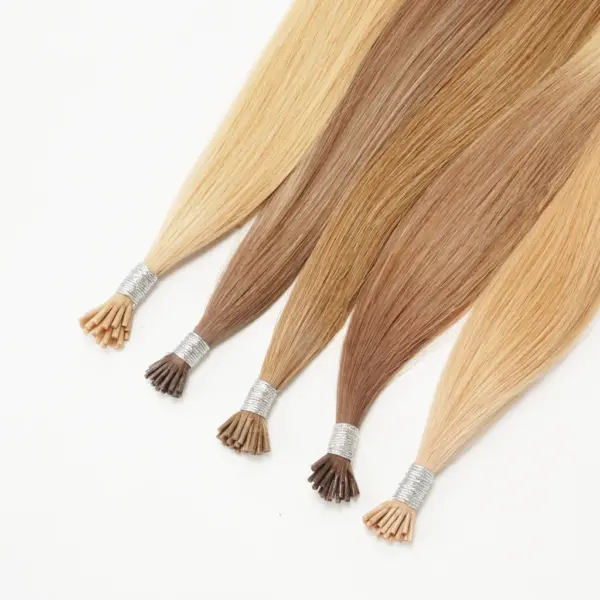
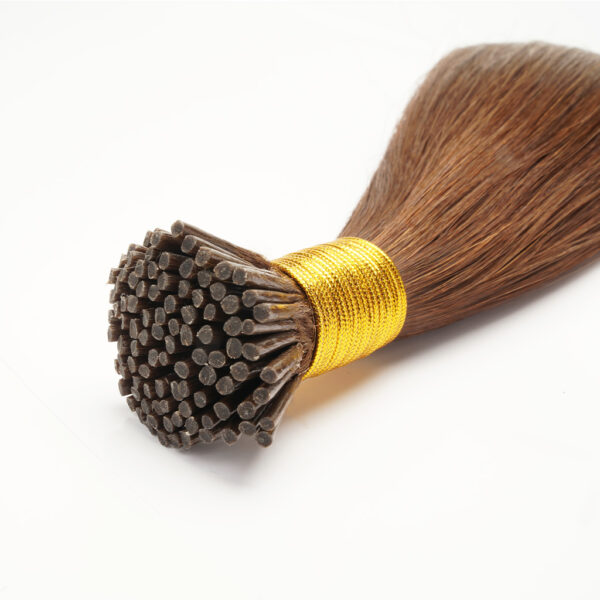
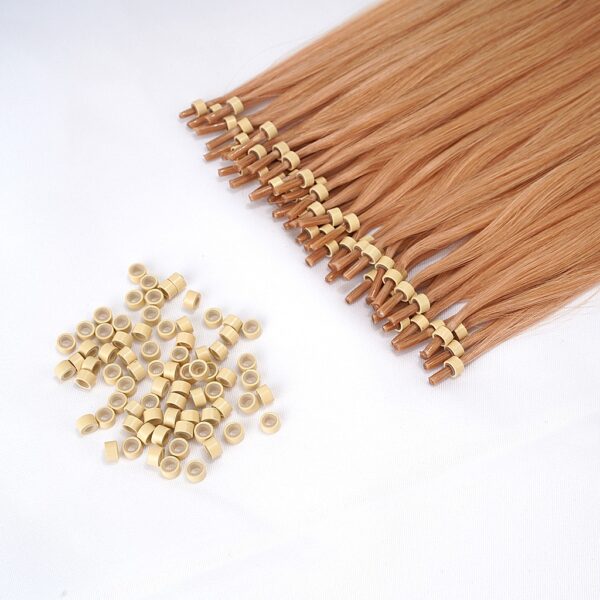
Wholesale K-tip extensions, fusion hair extensions collection.
What Are K Tips Hair Extensions?
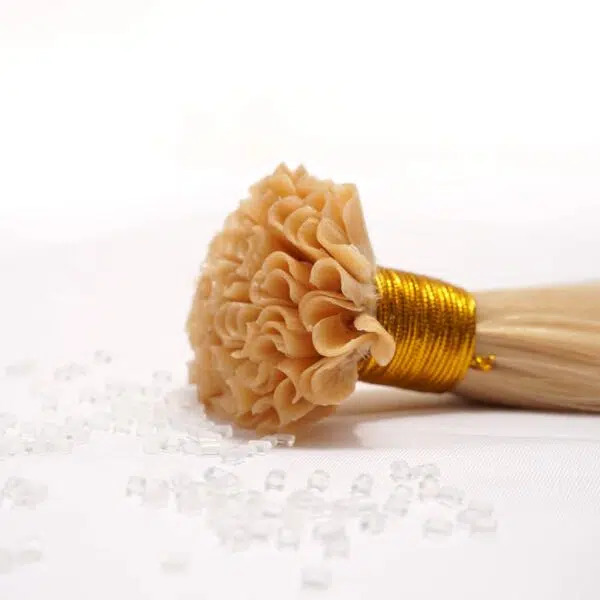
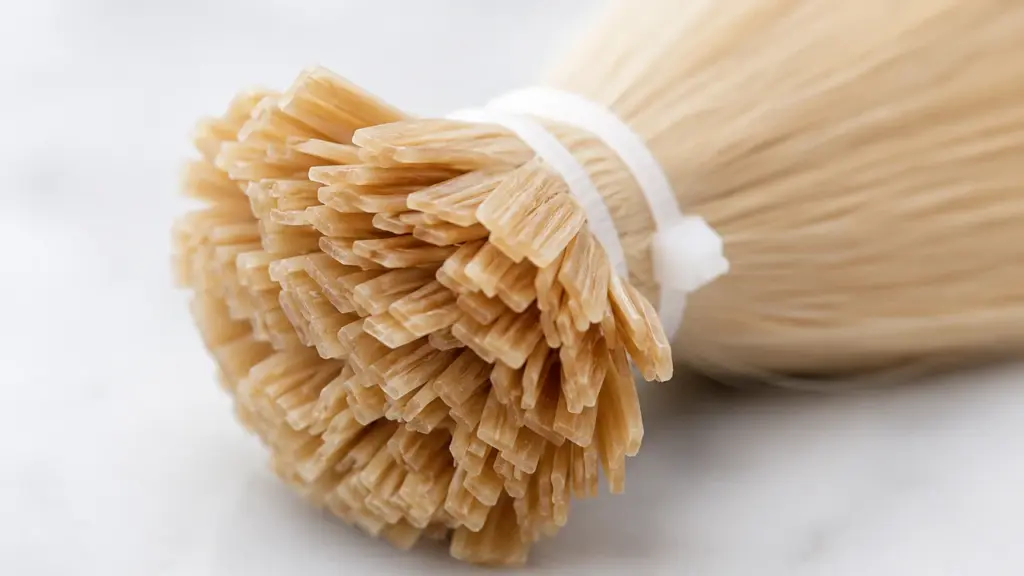
What are k tips hair extensions, exactly? Each piece is a small strand of extension hair held together at one end by a pre-formed keratin-based bond. During installation, a stylist places the keratin tip beside a carefully matched section of natural hair. A fusion tool softens the tip. The stylist then shapes it into a compact bond and lets it cool.
The finished bonds sit close to the scalp, but not on it. Because the extensions are applied one strand at a time, they have more independent movement than a wide tape or weft. That movement is the big appeal. The hair can fall, swing, and separate in a way that looks natural.
Refer to our related post: The Seven Most Popular Types of Hair Extensions
K-tip, keratin bond, and fusion extensions: are they different?
Most of the time, these names describe the same family of methods. “K” means keratin. “Tip” refers to the pre-bonded end. “Fusion extensions” describes the application method: the softened bond is formed around a small section of the client’s hair.
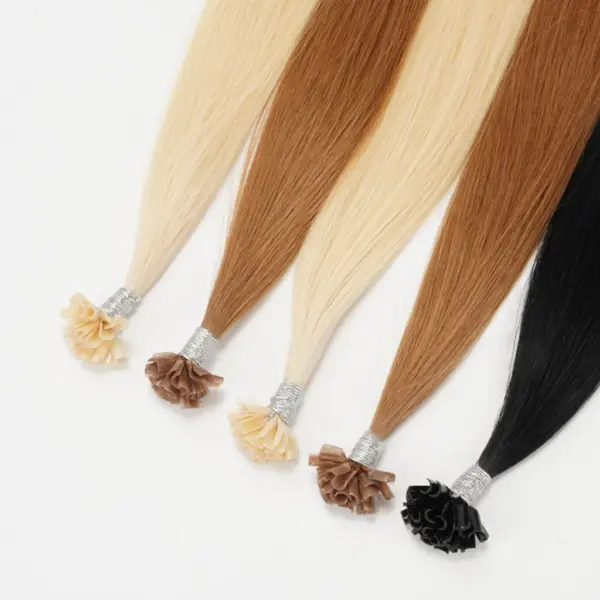
U-tip, V-tip, flat-tip, and nail-tip products are variations in the shape of the pre-formed tip. The shape can change how quickly a stylist works and how the finished bond lies, but the basic idea remains the same.
Related: A Guide to K-Tip Extensions
What are k tip extensions good for?
They are commonly used to add length, build volume, fill uneven areas, create color effects without lightening the client’s own hair, and give stylists precise control over placement. They are especially useful when a wide attachment could show through the hairstyle.
K-tips are not automatically the best method for every head of hair. A professional consultation should consider density, strand strength, scalp condition, lifestyle, maintenance habits, and the style the client wants to wear.
Check out our hair extensions before and after.
How the K-Tip Application Process Works
A full application usually takes about two to five hours. The time depends on the number of strands, the stylist’s technique, and whether the goal is light volume or a full-length transformation. This is detailed work. Rushing it is a bad bargain.
The professional fusion extension installation
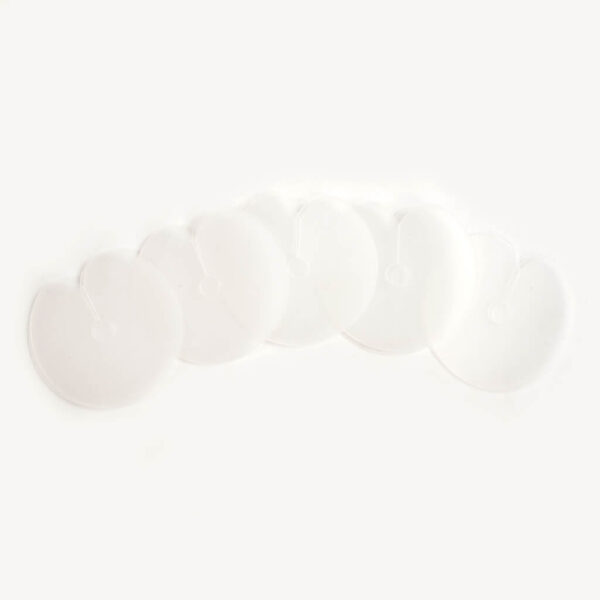
The stylist begins with clean, dry hair and maps the placement. Small sections are isolated with a protective disc or another safe sectioning method. Each natural-hair section should be strong enough to support the extension strand without excessive tension.
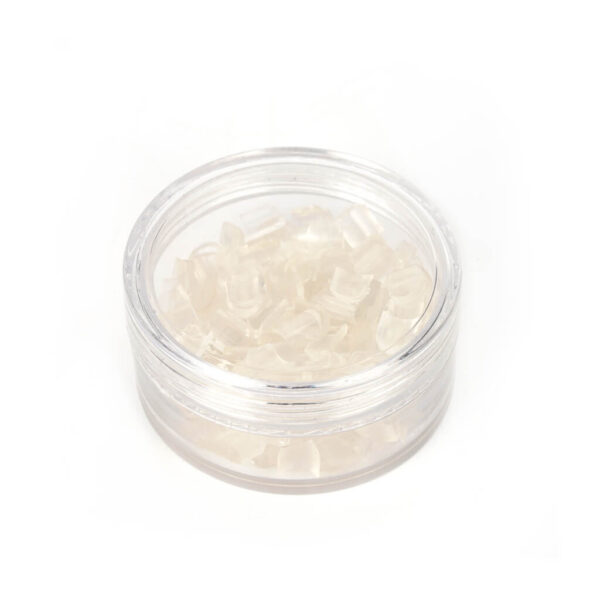
Next, the stylist positions the keratin tip below the scalp, softens it with a temperature-controlled fusion tool, and rolls or shapes the bond. The bond should be neat, sealed, and comfortable. It should allow normal movement without pinching the scalp.
After all strands are applied, the stylist checks the bonds, blends the haircut, and explains home care. The client should leave knowing how to brush, wash, sleep, style, and recognize when trouble is coming. A gorgeous result without an aftercare plan is only half a service.
Explore popular types of hair extensions.
Tools and training a salon needs
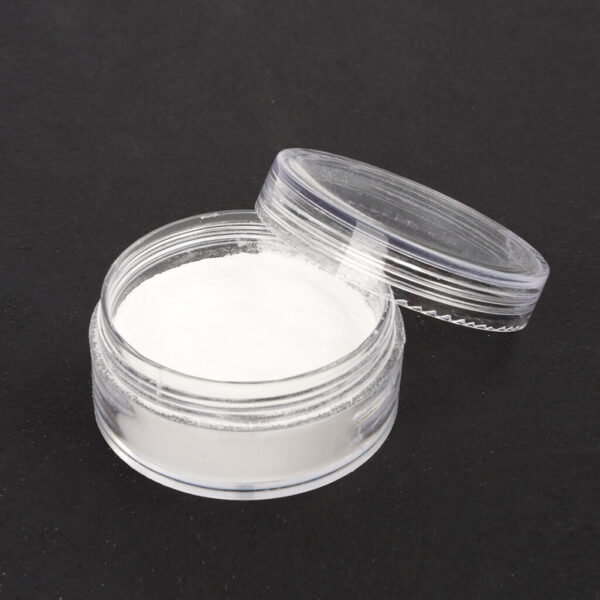
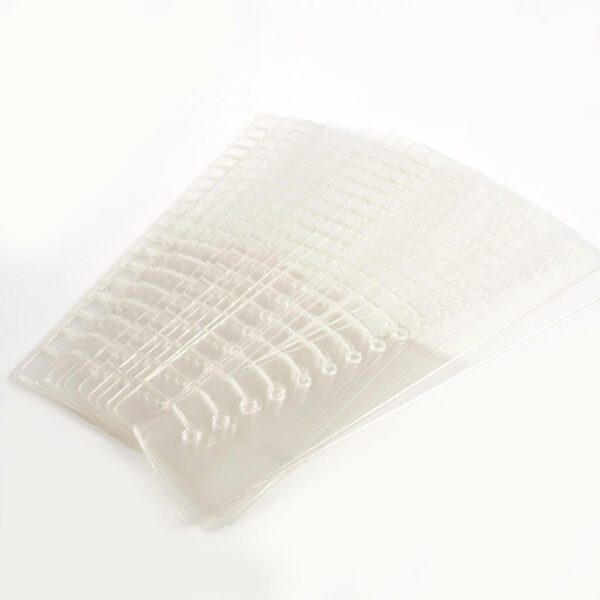
A salon adding this service needs more than extension hair and keratin glue. It needs reliable fusion tools with controlled heat, sectioning clips, protector discs, an extension-safe brush, bond-removal tools, and the correct professional removal solution. Color matching, weight distribution, bond sizing, and safe removal also require hands-on training.
For a new service menu, start small. Practice consistent bonds. Photograph the work. Track how the hair performs after washing and real-life wear. Then expand the shade and length range based on actual client demand instead of buying every color because the swatch ring looked pretty.
K-Tip Hair Extensions Pros and Cons
K-tip extensions have strong selling points, but no extension method is perfect. Here is the honest version.
Pros:
- Pro – Natural movement: individual bonds allow the hair to move in many directions and blend well with layered styles.
- Pro – Precise placement: a stylist can add volume or color exactly where it is needed.
- Pro – Discreet bonds: correctly sized bonds can hide well in many densities and hairstyles.
- Pro – Long wear: a well-installed set can often be worn for about three to five months, depending on growth and care.
- Pro – Styling freedom: clients can usually wear ponytails, updos, straight styles, and curly looks when placement is planned for them.
Cons:
- Con – Time and cost: strand-by-strand work takes skill, patience, and several hours.
- Con – Professional removal is essential: pulling, picking, or melting bonds at home can break natural hair.
- Con – Not a simple move-up service: grown-out bonds are normally removed. Reuse requires suitable hair and professional rebonding, if the product allows it.
- Con – Heat and tension must be controlled: poor application can cause breakage, discomfort, or traction-related hair loss.
- Con – Daily care matters: oils, heavy products, rough brushing, and high heat directly on the bonds can shorten wear.
Are K-Tip Extensions Damaging to Natural Hair?
K-tip extensions are not damage-free by definition. They can be worn safely by many people, but safety depends on the person and the service. The fact that natural hair contains keratin does not prove that every keratin bond or adhesive is harmless. The real risks are usually mechanical stress, oversized strands, poor placement, excessive heat, matting, delayed removal, or rough removal.
The American Academy of Dermatology warns that extensions can damage hair or contribute to hair loss when they create repeated pulling. Its simple rule is useful: if a style hurts or feels too tight, it needs to be loosened. Pain is not proof that the service is “working.” It is a warning.
K-tip extensions on fine, thin, or fragile natural hair
Fine hair describes the diameter of each strand. Thin hair describes lower overall density. A client can have one, both, or neither. K-tips may work for some fine-haired clients because the stylist can customize bond size and placement. But “small bond” does not mean “no weight.”
Clients with active shedding, inflamed scalps, unexplained thinning, significant breakage, or traction alopecia should be referred to a dermatologist before an installation. A stylist should never use extensions to hide a condition that needs medical attention.
K-tips extensions for Black hair and curly natural hair
K-tip extensions can be used on Black hair and on curly or coily textures. The method must respect the client’s density, curl pattern, shrinkage, edge fragility, styling routine, and any chemical processing. Texture matching matters just as much as color matching.
The AAD’s guidance on traction alopecia notes that repeated tension can be especially relevant for women of African descent and for people who regularly wear tight styles. That does not mean K-tips are off-limits. It means the stylist should avoid overloaded sections, protect the hairline, respond immediately to pain, and recommend breaks when the hair needs them.
For curly clients, the stylist should also plan for how the client wears the hair most days. A straight extension on naturally curly hair may demand frequent heat styling. A closer texture match can reduce daily work and help the blend look believable in humid weather, not just under salon lights.
How Long Do K-Tip Extensions Last?
Most professionally installed K-tip extensions are worn for about three to five months. Some brands and salons quote up to six months. The correct removal date depends on hair growth, shedding, bond condition, tangling, and the health of the natural hair – not a race to keep them in as long as humanly possible.
The extension hair itself may remain usable longer than one wearing period if it is premium-quality human hair and has been cared for well. But the keratin bonds grow away from the scalp. They do not stay in the correct position forever. When the bonds have grown out, a stylist removes them. If the hair and product are designed for reuse, the strands may be cleaned, re-tipped, and professionally reapplied.
Check out Newtimes Hair’s wholesale human hair extensions and how to take care of them through our hair extension care guide.
Natural hair and K-tip aftercare
- Brush gently at least once or twice a day with an extension-safe brush. Support the roots with one hand while detangling.
- Wash the scalp as needed, but avoid scrubbing, twisting, or piling the hair on top of the head.
- Keep heavy oils, masks, and conditioners away from the bonds unless the product is specifically approved by the stylist.
- Dry the roots and bonds thoroughly. Do not go to bed with wet extensions.
- Keep flat irons and curling tools off the bonds. Heat can soften or weaken them.
- Separate the bonds regularly with clean fingers to reduce matting as natural shedding collects between them.
- Book a check if bonds slip, twist, mat, hurt, or become visible. Do not wait for a small problem to turn into a removal marathon.
K-Tip vs. I-Tip Extensions: Which Is Better?
First, let’s get the definitions right. I-tip extensions, in a broader sense, are also part of the K-tips family, because I-tip extensions have a keratin tip in the shape of a letter “I”. Common k-tips, like U-tips and flat tips, require heat for attachment, while I-tips (as well as Y-tips) don’t. Stylists call them differently simply because they habitually do so.
Neither method wins for every client. K-tip extensions use a heat-softened keratin bond. I-tip extensions use small beads or rings and no fusion heat during installation. The healthier choice is the one that fits the client’s hair, is installed with correct weight and tension, and can be maintained properly.
Factor | K-Tip Extensions | I-Tip Extensions |
Attachment | Keratin-based bond softened with controlled heat | Bead or ring clamped around extension and natural hair |
Movement | Very natural individual-strand movement | Natural movement, with a small bead at the attachment |
Maintenance | Normally removed after the wear period; possible rebonding depends on product | Beads can often be opened and moved up during maintenance |
Best fit | Clients wanting discreet, long-wear bonds and precise placement | Clients wanting a no-fusion-heat method and reusable move-ups |
Main caution | Heat control, section balance, matting, and professional removal | Bead weight, metal sensitivity, slipping, and tension |
What is the healthiest hair extension method? Usually, there is no universal answer. Clip-ins can reduce long-term attachment time but may still pull if they are heavy or worn in the same spot daily. Tape-ins spread weight over a wider area but need regular move-ups. Sew-ins avoid adhesive but can create tension if the foundation is tight. K-tips offer precise placement but demand careful heat, weight, and removal. A skilled consultation beats a trendy label every time.
How Much Are K-Tip Extensions, and Are They Worth It?
In the United States, a full K-tip service commonly costs about $800 to $2,500, including hair and installation. Partial volume services may cost less. Luxury transformations, very long hair, custom color work, or high-cost metro salons can exceed $3,000.
Professional removal commonly ranges from about $100 to $500, or it may be priced per bond or per hour. A maintenance check, trim, detangling appointment, or corrective work may run roughly $50 to $300. These are broad U.S. market ranges, not fixed prices. Location, extension quality, number of strands, hair length, color matching, stylist experience, and the condition of the bonds all change the quote.
What are K-tip extensions worth to a salon? They can support premium tickets, repeat consultations, aftercare sales, removals, color services, and long-term client relationships. But the margin is not just “price charged minus cost of hair.” Training time, consultation time, application labor, color inventory, wasted shades, corrections, and removal support all belong in the calculation.
Explore more about how much hair extensions cost.
A practical starter range for small wholesale buyers
For a salon starting small, the Newtimes Hair fusion hair extensions collection is the logical category page to review first. A focused opening order should favor versatile lengths and the shades clients request most often, then expand using consultation records.
Flat-tip and U-tip options are useful starting points because the application method is familiar to trained fusion stylists, the bond shapes are practical, and the range supports natural, ombré, and highlighted looks. Premium Remy human hair, consistent color, intact cuticles, secure tips, and dependable reorder matching matter more than a giant opening inventory.
Salon buyers comparing methods can also browse the main wholesale human hair extensions collection and the all hair extensions page before choosing how much of the service menu should be built around fusion extensions.
Check out how to choose a reliable extension supplier.
How to Find K-Tip Extensions Near Me – and Choose a Qualified Stylist
Searching “K-tip extensions near me” will produce plenty of options. A nearby salon is convenient. Qualified work is better.
Look for a stylist who shows clear close-ups of bonds, not only curled after photos. Ask what training they completed, which hair and keratin bond they use, how they choose strand weight, how they protect fine areas and edges, and how they remove the extensions. A good consultation includes scalp and hair assessment, color matching, pricing, expected wear time, aftercare, and a removal plan.
Red flags include pain being dismissed as normal, bonds placed directly against the scalp, one-size-fits-all strand weights, vague product sourcing, no removal service, and a price that seems impossible for several hours of skilled labor. Cheap can become expensive very quickly when correction work enters the chat.
For salon owners adding K-tip services
Start with education, consultation standards, and a controlled inventory. Build a written policy for deposits, cancellations, client-supplied hair, maintenance, removal, and corrective work. Take baseline photos of the client’s scalp and density with permission. Record the shade, length, number of strands, bond placement, and products used.
Wholesale support also matters. A supplier should make it easy to compare hair grades, lengths, shades, tip styles, minimum orders, lead times, quality controls, and replacement policies. Salon owners who want help planning a starter K-tip range can contact New Times Hair for product and wholesale guidance.
How Newtimes Hair Keeps Quality Consistent
For salons and distributors, quality is not just “does it look good in the package?” It is whether the next order looks and performs like the last one.
Newtimes Hair supports that with ISO 9001 quality management, raw-hair selection, production checks, and final inspection. That matters with hybrid systems because the base has several moving parts: lace, PU/poly, mono, ventilation, density, and the front hairline all have to work together. If one part is sloppy, the client feels it during wear. The stylist feels it during maintenance.
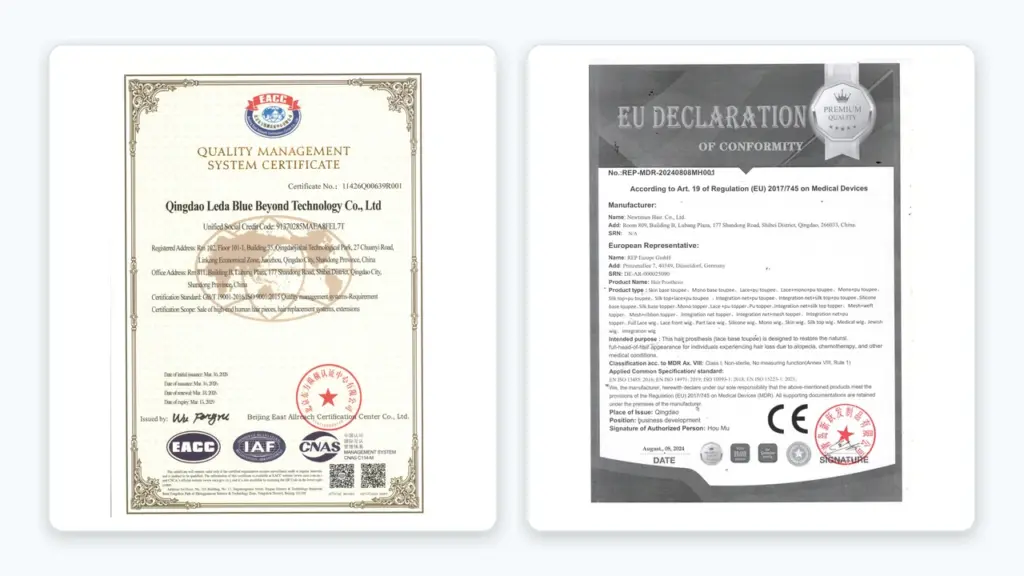
Newtimes Hair also follows CE compliance where applicable, EU GPSR requirements for traceability and product safety information, and ethical human-hair sourcing standards.
For professional buyers, this is the real point: a hybrid system should not be a lucky one-off. It needs to be repeatable enough for salon work, wholesale orders, and long-term client relationships.
Source: Newtimes Hair Quality & Compliance
Adding K-tip extensions to your salon menu? Explore Newtimes Hair fusion extensions or Contact Newtimes Hair for help choosing lengths, shades, tip styles, and a practical starter order.
Final Takeaway
K-tip extensions can deliver natural movement, discreet bonds, and long-lasting length and volume. They can also become a strong premium service for salons. The method rewards precision. Quality hair matters. Training matters. Section balance matters. Aftercare and professional removal matter just as much as the installation photo.
For first-time wearers, the best next step is to consult a trained stylist. For salon owners and hairstylists, the best next step is to build the service around education, honest pricing, safe procedures, and a focused wholesale range that can grow with real demand.
Ready to explore wholesale K-tip extensions? View Newtimes Hair fusion extensions or contact the Newtimes Hair team for help choosing a practical starter range for your salon.
About the Author
Megan Turner is the award-winning founder of Hair Statement, with over 14 years of experience in cutting, coloring, and hair extensions. Trained at Sassoon Academy, she combines technical expertise with a strong commitment to client care, safety, and wellbeing. Through TikTok and Instagram, Megan shares transformations, styling tips, and advice for fellow stylists.