



- Key Takeaways
- How to Avoid Visible Hair System Edges with Your Hair at the Front Hairline
- Preventing Shine and Eliminated Shine Problems Before the Tape Line Shows
- Lace Systems, Lace Front, Skin, and Thinner Bases: Pick the Base that Fits the Job
- Placement, Color, and Adhesive Mistakes that Make Edges Obvious
- Styling can Hide Edges or Expose Them. Choose Wisely.
- Why is My Part Line so Visible?
- How Newtimes Hair Helps Hair Replacement Centers Get a Natural Result
- About the Author
- FAQs
How to Avoid Visible Hair System Edges and Blend Your Hair for a Natural Hairline
- Key Takeaways
- How to Avoid Visible Hair System Edges with Your Hair at the Front Hairline
- Preventing Shine and Eliminated Shine Problems Before the Tape Line Shows
- Lace Systems, Lace Front, Skin, and Thinner Bases: Pick the Base that Fits the Job
- Placement, Color, and Adhesive Mistakes that Make Edges Obvious
- Styling can Hide Edges or Expose Them. Choose Wisely.
- Why is My Part Line so Visible?
- How Newtimes Hair Helps Hair Replacement Centers Get a Natural Result
- About the Author
- FAQs
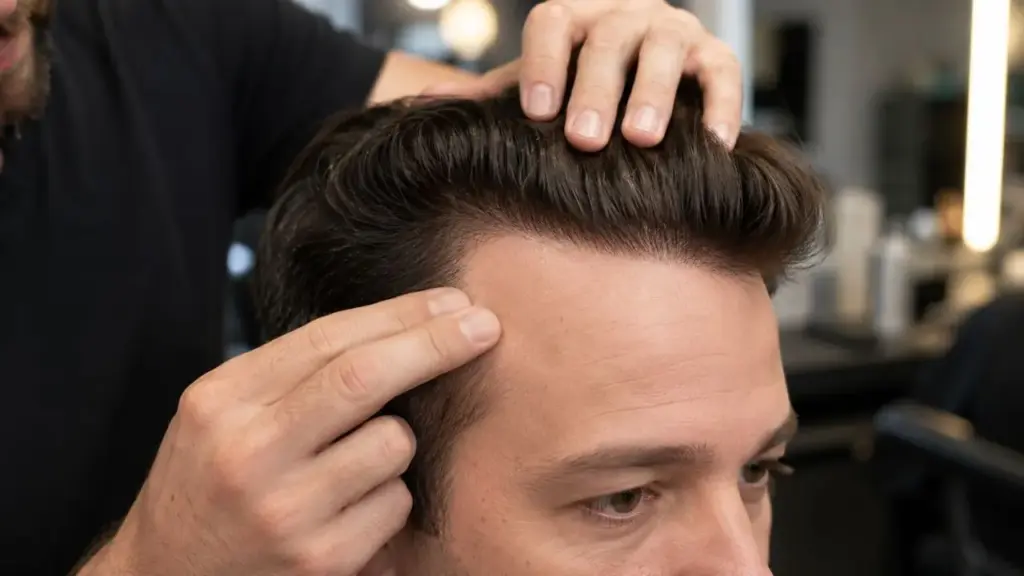
To avoid visible hair system edges, your attention should really be on where people actually notice first: the front hairline, the edge of the base, the adhesive shine, hair density, and whether it is blending with your own hair.
Basically, if the edge lies flat and the color and texture match your bio hair, the hair system should most likely look natural. Following that, the front hairline should appear soft with a graduated look, meaning it shouldn’t look too perfect to make people guess. The bond should not reflect light under bright rooms, sunlight, or phone flash.
A great hair system should not announce itself.
No weird edge.
No shiny tape line.
No stiff front.
No “bro, is that a toupee?” moment under bright lights.
But visible hair system edges happen. A lot. And here is the annoying truth: most of the time, the problem is not the hair system itself. It is the fit, the cut, the bond, the shine, the base material, the color, or the way the front hairline was handled.
Small stuff.
But small stuff can wreck the whole illusion.
The good news? You can fix most of it. If you want to blend your hair naturally, focus on better placement, cleaner bonding, lower shine, softer front density, and a cut-in that connects the system with your natural hair instead of making both sides look like strangers at a party.
Let’s break it down.
Key Takeaways
- Visible hair system edges usually come from small details, including poor placement, shiny adhesive, thick base material, bad trimming, heavy front density, or weak blending with your natural hair.
- The front hairline should look natural, not perfect. A slightly mature, softly shaped hairline usually looks more believable than a sharp, straight, overly low hairline.
- To make hair system edges less visible, control the base, bond, and shine. Thin lace, skin, or hybrid bases work best for exposed styles, especially when the edge is trimmed cleanly and pressed flat.
- Blending is not just about glue. Color, texture, gray percentage, density, and haircut all affect whether the hair system blends naturally with your bio hair.
- The best hair system setup depends on lifestyle. Sweat, scalp oil, styling habits, maintenance routine, and whether the hairline is exposed should all influence the base, adhesive, and hairstyle choice.
How to Avoid Visible Hair System Edges with Your Hair at the Front Hairline
Start at the front hairline. Always. That is the first place people notice, and it is where small mistakes turn loud fast. A hair system can be expensive, soft, breathable, and well-made, but if the front sits too low, too straight, too dense, or too shiny, the illusion falls apart. LaVivid calls out the same thing: a front that is too perfect and thick looks fake, while Superhairpieces stresses that color and density matching matter just as much as the base.
The fix is boring, which is great. You want a softer hairline, not a ruler-straight wall of hair. You want the front to follow your real facial curves, not fight them. You want enough recession and irregularity to look human. Real hair is messy in a useful way. A fake hairline is usually too neat.
Invisible Hairline Rule: Stop Trying to Make It Perfect
A truly invisible hairline usually looks a little imperfect. Slight variation is your friend. If you force a dead-straight front hairline, you get that “something is off” look, even when people cannot explain why. For male wearers especially, a softer, slightly broken-up front edge usually reads more natural than a dense teenage line dropped onto an adult face.
Preventing Shine and Eliminated Shine Problems Before the Tape Line Shows
Most people blame the lace or the skin base when the real issue is shine. The scalp reflects light more than hair does, so bright overhead light can make the part, the base, or the tape line jump out fast. Walker Tape recommends preventing shine with dull tape, liquid adhesives, anti-shine powder, and better bonding habits. DermMatch’s explanation of visible scalp under light lines up with that, too: reflection and contrast make exposed areas look much more obvious.
If you want more eliminated shine and less panic, keep it simple. Use a use a liquid adhesive approach if tape keeps flashing under light. Let the bond cure. Clean buildup off the front. If needed, tap on a little powder or a lightweight, matte spray to dull the glow. That is not cheating. That is just being smarter than the light in your bathroom.
Preventing Shine at the Front Hairline
Here is the short version:
- Clean the scalp well before bonding.
- Apply adhesive evenly, not in thick blobs.
- Let the bond set before you wear it hard.
- Use an anti-shine powder or a matte product if the front hairline still shows through.
- Touch up lift early, before a tiny edge becomes a visible tape line.
Lace Systems, Lace Front, Skin, and Thinner Bases: Pick the Base that Fits the Job
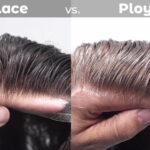
There is no magic winner. Lace systems, lace front units, skin systems, and hybrids all have strengths. Walker Tape and Superhairpieces both make the same core point in different ways: the most natural result comes from matching the system to the wearer, not from blindly worshipping one base type.
Here is the practical version:
Goal | Better fit | Watch out For |
Soft exposed hairline | Lace front or finer lace | Delicate edge, needs cleaner maintenance |
Smoother scalp look with short hair | Skin or other thinner bases | Can reflect light if shine is not managed |
Balance of realism and durability | Hybrid hairpiece setup | More variables to place and blend right |
Walker notes that thinner products at the front can help maintain a more natural exposed hairline, while Superhairpieces says the right answer depends on the client, not on internet mythology.
Placement, Color, and Adhesive Mistakes that Make Edges Obvious
A lot of visible edges are not caused by bad materials. They are caused by rushed installs. Walker Tape points out that bad placement alone can wreck the result, and LaVivid says the wrong color, texture, and density create a visible seam even when the unit itself is decent.
If the unit sits too far forward, the hairline looks strange. Too far back, and the forehead looks off. If the adhesive is too heavy, the front gets bulky. If the color is half a shade wrong, the blend dies. If the density does not match your hair on the sides and back, people may not spot the exact problem, but they will feel it.
Use Your Hand Before You Use More Glue
Before you reach for more adhesive, use your hand and your eyes. Press the edge down. Check the hairline in daylight, not just under soft indoor light. Ask whether the issue is really lift, or if the problem is shine, placement, or a bad cut. More glue is not always the fix. Sometimes it is the start of a worse mess. Walker’s touch-up guidance works best when the underlying placement and prep are already right.
Styling can Hide Edges or Expose Them. Choose Wisely.
This is where people sabotage themselves. Superhairpieces flat-out says styling is one of the most underestimated factors in a realistic result, and they are right. A solid toupee can still look fake if the cut exposes every weak point in the hairline.
A few styling tricks help:
- If the front hairline is not perfect yet, do not force a fully exposed front style on day one.
- Use texture to break up the edge so the hair does not sit like a helmet.
- Blend the system with your hair using a careful cut, not just product.
- If needed, style both together with a curling iron or by blow drying it in a way that makes both sections move as one. Extension guides say the same basic thing: styling both sections together makes the blend look more seamless.
Check out our tapes, glues, and other accessories.
Lace, Tape Line, and Short Style Warnings
Short styles are less forgiving. They show more lace, more skin, and more of the tape line if the bond is sloppy. That does not mean short is bad. It means short demands cleaner work. If a client wants a sharp, exposed front, the install and maintenance have to be sharper too.
Why is My Part Line so Visible?
Sometimes it is not a hair-loss crisis. Sometimes the part just catches light and shows more scalp. DermMatch notes that scalp skin reflects light more than hair does, especially under bright lighting, and Kibo adds that a part can widen over time from repeated same-spot tension and sun exposure. That is why one mirror says, “You look fine,” and another says, “What the hell is happening?”
If the part line is suddenly louder than usual, check the simple stuff first: product buildup, overhead light, repeated same-spot styling, and whether the hair around the part has gone flatter or thinner. Rotating the part, reducing tension, and protecting the exposed scalp can help. If the widening keeps progressing, that is the point to get a professional look at it.
How Newtimes Hair Helps Hair Replacement Centers Get a Natural Result
This is where Newtimes Hair has a real advantage. The company is built for professionals, not random impulse buyers, and it backs its lines with a 6-stage quality check, a 30-day return policy, a 90-day warranty, global service teams, and large-scale manufacturing capacity.
Newtimes also offers stock and custom options across lace, skin, mono, and hybrid categories, which makes it easier to choose a system that fits the cut, the client, and the desired hairline instead of forcing one answer onto everybody.
Some hair systems and wigs are covered by insurance. Refer to our related article for more details: Does Insurance Cover Hair Systems and Wigs?
For hair replacement centers and studios trying to reduce visible edges, that matters. Better base choice. Better color matching options. Better support. Less guessing. If you are a professional buyer, you can also reach the team through Newtimes’ U.S., Spain, and China contacts when a client case gets specific.
About the Author

Julia Griffiths is a barber and hair system educator with years of real salon experience. She is the founder of Crosscuts Barbers and Hair Revival Training, and shares practical advice for Newtimes Hair.