



- Key Takeaways
- What Is a Hair System and How Does It Work for Hair Loss?
- Hair System vs Wig, Toupee, Hairpiece, and Hair Wigs
- Types of Hair Systems: Lace, Skin, Mono, Human Hair, and Adhesive
- Non-Surgical Hair System vs Hair Transplant and Surgical Hair Replacement
- How Long Does a Hair System Last?
- Is Getting a Hair System Worth It for Hair Loss?
- Can You Tell If Someone Has a Hair System?
- Hair System Maintenance: The Part Nobody Gets to Skip
- Final Answer: What Is a Hair System?
- About the Author
- FAQs
What Is a Hair System? Hair Loss, Hair Replacement & Human Hair Systems Explained
- Key Takeaways
- What Is a Hair System and How Does It Work for Hair Loss?
- Hair System vs Wig, Toupee, Hairpiece, and Hair Wigs
- Types of Hair Systems: Lace, Skin, Mono, Human Hair, and Adhesive
- Non-Surgical Hair System vs Hair Transplant and Surgical Hair Replacement
- How Long Does a Hair System Last?
- Is Getting a Hair System Worth It for Hair Loss?
- Can You Tell If Someone Has a Hair System?
- Hair System Maintenance: The Part Nobody Gets to Skip
- Final Answer: What Is a Hair System?
- About the Author
- FAQs
What is a hair system? A hair system is a non-surgical hair replacement option made to cover thinning hair, bald spots, or larger areas of hair loss. Hair is tied, injected, or ventilated into a base, such as lace, poly, monofilament, etc. That base sits on the scalp and is attached with tape, glue, clips, or other adhesives.
So yes, it is a hairpiece.
But no, it is not the tragic old toupee people joke about.
Modern hair systems can be light, soft, breathable, and natural-looking. Some use lace. Some use thin skin. Some use mono. Some use human hair. Some are stock systems. Some are custom systems.
The point is simple: replace the look of lost hair without surgery.
And if the system is done right, nobody should be staring at your scalp trying to solve a mystery.
Key Takeaways
- A hair system is a non-surgical hair replacement that covers hair loss using hair attached to a scalp-like base.
- Modern hair systems can use lace, thin skin, mono, or hybrid bases, depending on comfort, realism, and durability.
- A hair system is different from a wig because it is usually attached to the scalp and blended with existing hair.
- Most hair systems last from a few weeks to several months, depending on base type, hair quality, attachment, and maintenance.
- The most natural results come from the right base, color match, density, hairline, and cut-in.
What Is a Hair System and How Does It Work for Hair Loss?
A hair system works by covering the hair loss area with a fitted base and natural-looking hair.
Not in six months.
Not after surgery.
Right away.
The base is shaped to fit the scalp. The hair is matched to the wearer’s color, curl, density, length, and direction. Then the system is attached and cut in so the added hair blends with the surrounding hair.
Here is the usual process:
- Measure the thinning or bald area.
- Choose the base material.
- Match the hair color, curl, density, length, and style.
- Cut the base to fit the scalp.
- Attach the system with tape, glue, clips, or adhesives.
- Cut and blend the hair for a natural finish.
That last step matters. A great hair system with a lazy haircut can look awful. A simple hair system with a smart cut can look shockingly natural.
What Is a Hair System for Men?
A hair system for men usually covers male pattern hair loss: front hairline, crown, top of the head, or full top area. They are for men to use.
A men’s hair system fixes the balance. It adds hair where the scalp is showing and blends that hair into the sides and back.
Good men’s hair systems use natural density, the right hair direction, and a hairline that does not look drawn on.
What Is a Hair System for Women?
Many people consider a hair system for women to be a topper, integration piece, partial hairpiece, or full coverage wig. We can’t say they are wrong. Why? It’s only a name.
But with Newtimes Hair, women’s hair systems are pretty similar to men’s hairpieces. They share similar bases, be it a skin, lace, or mono, and need to be applied using glue or tape. The main difference is that they got longer hair.
A full wig is not always the answer. Sometimes a smaller hairpiece is smarter. It is lighter, cooler, and easier to blend with natural hair.
Hair System vs Wig, Toupee, Hairpiece, and Hair Wigs
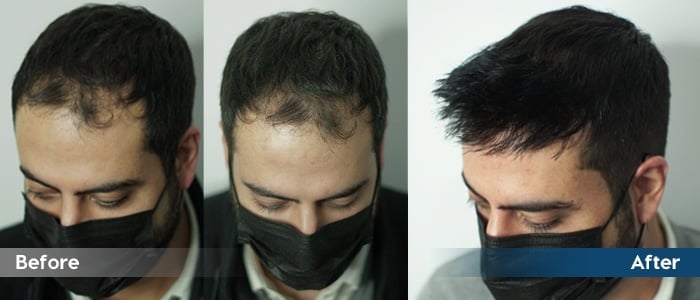
People use these words like they all mean the same thing.
They do not.
A wig usually covers the whole head. A hair system usually covers a specific hair loss area and blends with the wearer’s existing hair. A toupee is an older word for a men’s hairpiece. Hair wigs are usually removed more often. Hair systems are often bonded for longer wear.
Term | What It Usually Means | Best For |
Hair system | Semi-permanent hair replacement attached to the scalp | Top thinning, crown loss, frontal hair loss |
Wig | Full-head hair covering | Full hair loss or medical hair loss |
Toupee | Older term for a men’s hairpiece | Male pattern baldness |
Hair transplant | Surgical hair replacement | People with enough donor hair |
Is a Hair System Just a Wig?
No. A hair system is not just a wig.
Both can use synthetic hair or human hair. Both can cover hair loss. But a hair system is usually attached to the scalp using glue or tape and worn for days or weeks. A wig, however, is usually designed to be removed more often.
Men usually wear hair systems, and women usually wear wigs (also, there are wigs for men to wear, too). A wig covers the full head. A hair system replaces missing hair in a more targeted way.
Toupee vs Hair System
A toupee is a hairpiece, usually for men. A hair system is the broader, modern term. However, today, most hair pros consider these two terms interchangeably.
To have full understanding of what a toupee is, refer to our article What is a Toupee?
“Toupee” carries baggage. It makes people think of stiff hair, bad hairlines, and something flying off in the wind like it has somewhere better to be. Many people regard toupee as an old term, which makes them recall the 1950s when the term was first invented, indicating that it somehow didn’t look as real as it does today.
Modern systems are different. Today’s systems, toupees can use lace, skin, mono, and hybrid bases. They can be made with human hair, cut into modern styles, and look natural enough that people just see the person.
Types of Hair Systems: Lace, Skin, Mono, Human Hair, and Adhesive
There is no one best hair system. There is only the right one that fits a particular client.
That would be nice. It would also be nonsense.
The right system depends on how severe the wearer’s hair loss is, their scalp, lifestyle, budget, the climate he lives in, styling goals, and maintenance preferences.
That is why we use different bases.
Lace Hair Systems
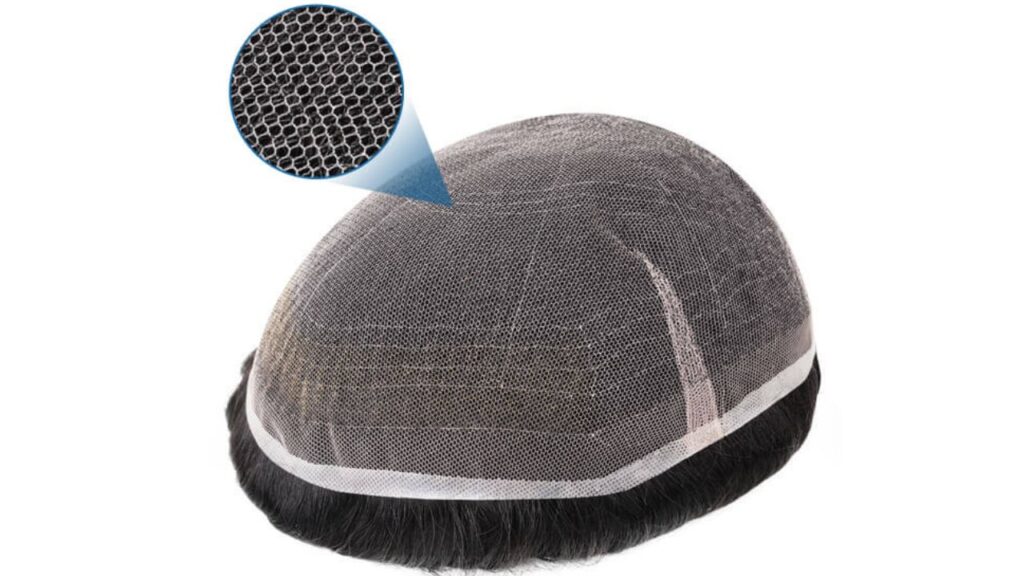
Lace hair systems are popular because they breathe well and look natural.
A lace front can make the hairline soft and realistic. French lace is stronger. Swiss lace is thinner and more delicate.
Lace looks great, but lace is not bulletproof.
Skin, Thin Skin, and Poly Hair Systems
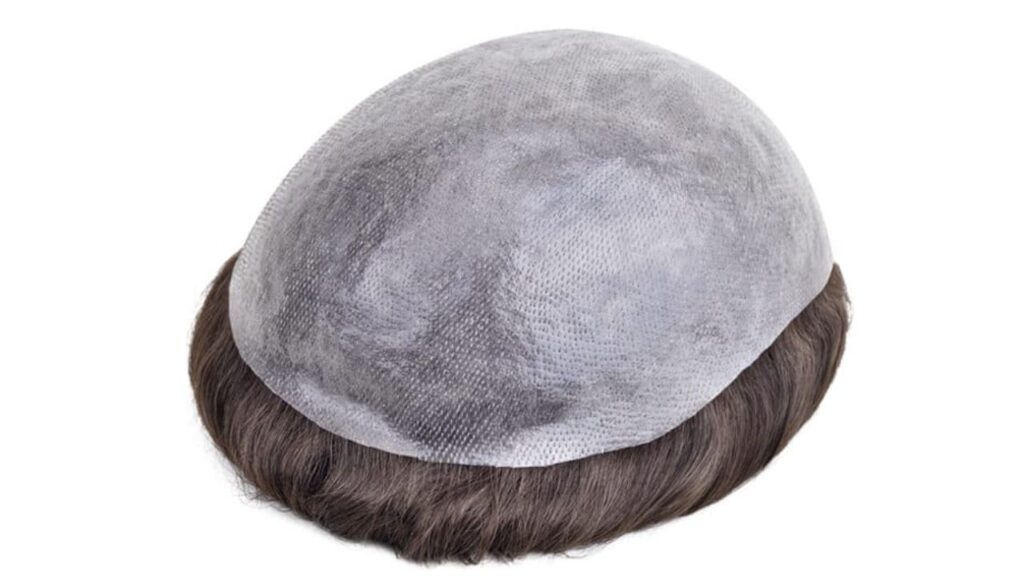
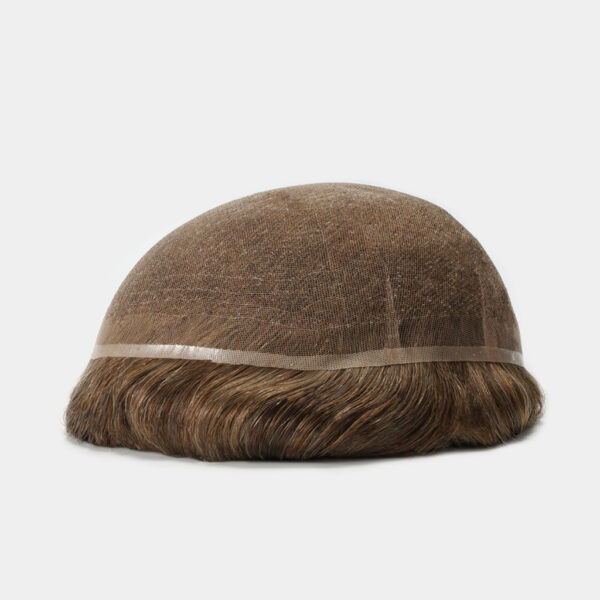
Skin systems use a polyurethane base. That’s why they are also known broadly in the circle as poly hair systems.
Thin skin can look like scalp. It also works well with tape and glue. Many hair replacement professionals like skin bases because they are easier to attach, clean, and rebond.
The thinner the skin, the more natural it can look. However, the thicker the skin, the longer it usually lasts.
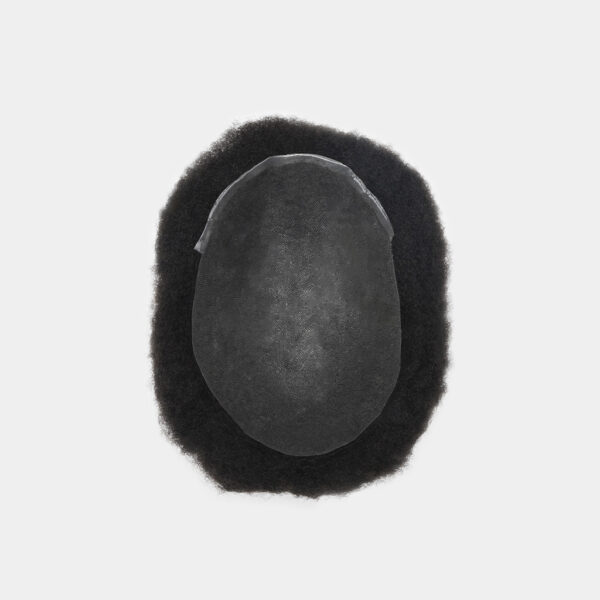
Monofilament or Mono Systems

Mono hair systems are built for strength. The majority of the base is a big piece of monofilament material where hair gets tied to.
A monofilament base is often used when the wearer needs more durability. Mono bases can handle more wear than delicate lace or ultra-thin skin bases.
Hybrid systems balance comfort, durability, and natural appearance.
Hybrid Hair Systems
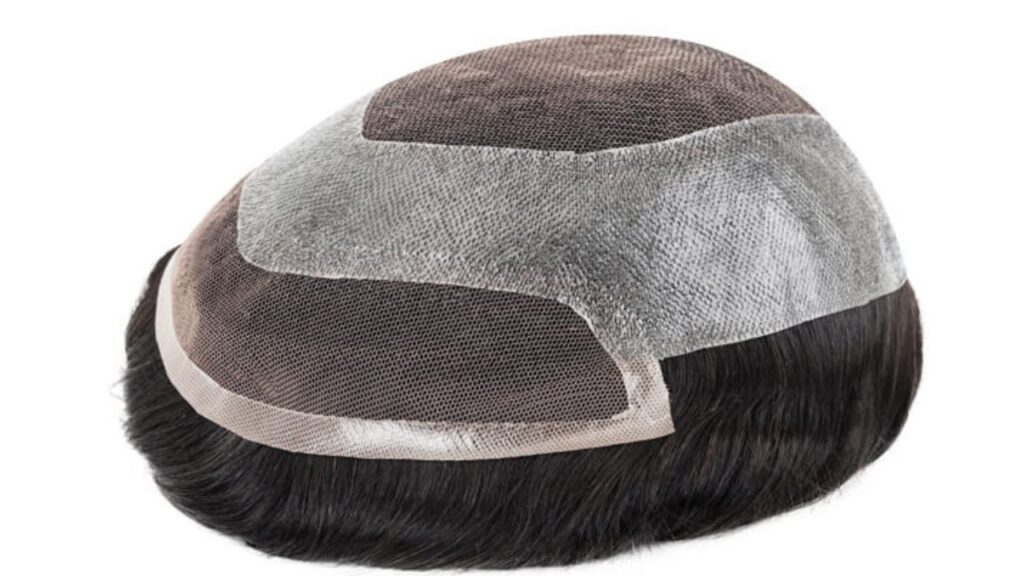
Hybrid hair systems, as their name suggests, are hair systems whose base is a mixture of all or any of these base materials. They are usually custom-made hair systems to meet clients’ specific needs.
For example, someone wants the hair to be more breathable, but wants easy maintenance, they can get a skin base with a lace front. For those who can’t tolerate knots, but want it to be super breathable, they can get a skin base with lace on the top where it sweats the most.
Once the base design is determined, they can get mass-produced as a new model.
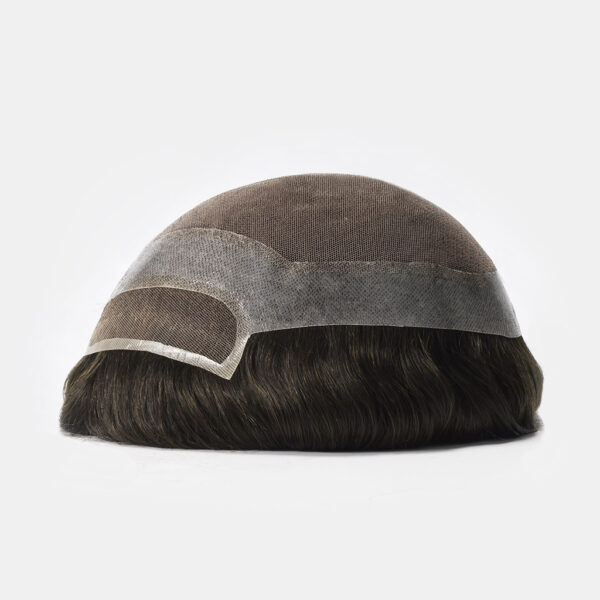
Why Human Hair Systems?
Human hair systems usually move and feel more natural than synthetic systems. That’s why, since the beginning, Newtimes Hair has always used human hair for all our hairpieces, including hair extensions.
They can be cut, styled, and shaped more easily. For hair replacement centers, human hair is often the better choice because clients want the hair to behave like real hair.
Human hair looks better when you treat it like something worth keeping.
Adhesive, Tape, Glue, and Attachment
Attachment is how the hair system stays on the scalp.
Tape is clean and simple. Glue can create a smoother hold, especially around the front hairline. Clips can work for temporary wear, but they are not right for every client. Most hair systems are attached using glue and tape. Only a very small portion uses clips.
The best attachment method depends on the base, scalp, skin sensitivity, climate, sweat level, and how long the wearer wants the bond to last.
Bad attachment can ruin a good hair system.
The edge lifts. The front shines. Sweat breaks the bond. Nobody needs that.
Related article: Hair System Tape vs Glue.
Non-Surgical Hair System vs Hair Transplant and Surgical Hair Replacement
A hair system is a non-surgical hair replacement procedure.
A transplant is a surgical hair replacement procedure.
A transplant moves follicles from one area of the scalp to another. It can work for the right person. But it takes time, costs more upfront, and depends on donor hair.
A hair system gives instant coverage: no surgery, no recovery, no waiting months for grafts to grow.
Related article: Hair System vs Hair Transplant.
Hair System vs Hair Transplant: Which One Is Better?
Neither one wins for everybody.
A transplant may suit someone with strong donor hair, stable hair loss, realistic goals, and the budget for surgery.
A hair system may suit someone who wants fast results, has advanced hair loss, does not want surgery, or does not have enough donor hair.
Here is the blunt version.
A transplant tries to regrow coverage.
A hair system looks at coverage now.
When a Hair System Makes More Sense
A hair system makes more sense when the client wants instant density, needs a full look for work or photos, has limited donor hair, or wants to avoid surgical hair replacement.
It also makes sense when style matters.
Because honestly, some people do not want “slightly improved.” They want their hair back.
When a Transplant Makes More Sense
A transplant may make more sense when the client has enough donor hair, stable hair loss, and wants a surgical route.
But expectations matter. A transplant does not always create thick hair. Sometimes it creates a modest improvement. That may be enough. Or it may not.
How Long Does a Hair System Last?
Most hair systems last from a few weeks to several months.
Some stronger systems may last longer with careful maintenance. But no system lasts forever.
This is where beginners get disappointed. They think they are buying “new hair.” What they are really buying is a wearable hair product.
How Long Do Hair Systems Last With Daily Wear?
With daily wear, the bond usually needs service every few weeks.
The hair system itself may last longer, but the attachment will not last forever. Sweat, scalp oil, workouts, sleeping, weather, and hair products all affect the hold.
As a practical guide, thin skin systems may last about 1–3 months. Lace systems may last about 2–4 months. Mono and stronger hybrid systems may last several months or longer with proper maintenance.
A wearer who cleans the base gently, uses the right products, and rotates systems can usually get more life from each unit.
Is Getting a Hair System Worth It for Hair Loss?
Yes, a hair system can be worth it.
But only if the wearer understands the deal.
The deal is this: you get instant hair, but you also get maintenance.
A good system can change how someone feels in photos, meetings, dates, weddings, video calls, and boring Tuesday mornings. Hair loss can quietly wreck confidence. Then they put on a good system and realize how much it did.
That does not make them vain. It makes them human.
How Much Does a Hair System Cost?
Hair system cost depends on base type, hair type, size, customization, order quantity, and whether the buyer goes through a hair replacement center, studio, clinic, retailer, or wholesale supplier.
Stock hair systems are usually faster and more affordable. Custom hair systems cost more but can match exact specs, including size, color, curl, density, grey percentage, base design, and hair direction.
Newtimes Hair supplies stock and custom hair systems, women’s toppers, hairpieces, toupees, wigs, tools, tapes, adhesives, and system products for professional buyers.
For more details on hair system cost, refer to our related post: Hair System Cost a Wearer Per Year.
Stock Hair Systems vs Custom Hair Systems
Stock hair systems are ready-made. They are faster, easier to order, and useful for first-time buyers.
Custom hair systems are built to exact specs. They are better for unusual sizes, special colors, grey blending, curl patterns, density needs, or clients who need a precise fit.
For a first order, stock is often the smarter start.
Based on internal VOC analysis, first-order risk often comes from quality uncertainty, color mismatch, refund friction, and spec mistakes. That is why many hair replacement businesses start with stock systems to test the hair, base, density, and durability before moving into custom systems.
For more details, refer to our related post: Stock vs Custom Hair Systems.
For difficult color or grey matching, custom can be better — but only with proper references. Use a color ring. Send a hair sample. Map the grey. Do not trust one blurry phone photo taken under bathroom lighting.
Can You Tell If Someone Has a Hair System?
Usually, no.
Not if it is fitted, attached, and cut properly.
But yes, people can tell when it is done badly.
The big giveaways are a hard hairline, wrong color, too much density, lifted edges, visible gaps, shiny glue, or a base that does not sit flat against the scalp.
A tiny gap between the scalp and the hair system can make the whole thing look fake.
The goal is not perfect hair. The goal is believable hair.
What Makes Hair Systems Look Natural?
Natural systems usually get five things right: base, color, density, hairline, and cut-in.
The base must fit the scalp. The color must match in real light. The density must match the wearer’s age and side hair. The hairline should be soft, not brick-like. The cut-in must blend everything.
“Hair System Near Me” or “Online Supplier”?
Searching “hair system near me” is useful if the wearer needs fitting, attachment, haircut, or maintenance near where they live.
But local service is only half the story. A hair replacement professional still needs good hair systems. Bad hair can make good professionals look bad.
For hair replacement businesses, the real question is simple: can the supplier deliver consistent hair, stable color, clean bases, good density, reliable shipping, and reorder support?
Hair System Maintenance: The Part Nobody Gets to Skip
Hair system maintenance is not optional.
You clean the scalp. You clean the base. You remove the old adhesive. You rebond the system. You style the hair. Then you do it again later.
Common Maintenance Mistakes
The most common maintenance mistakes are waiting too long between services, pulling the system off too fast, using harsh shampoo, brushing aggressively, sleeping on wet hair, and ignoring scalp irritation.
Treat it like something you want to keep looking good.
Can You Shower, Sleep, Swim, and Exercise With a Hair System?
Yes, many people shower, sleep, swim, and exercise with bonded hair systems.
But the bond and hair need care.
Chlorine, salt water, sweat, heat, and rough towels can shorten lifespan.
That is not a product failure. That is physics.
Final Answer: What Is a Hair System?
A hair system is a non-surgical solution for hair loss.
It is a base with hair attached to it. The base sits on the scalp. The hair blends with the wearer’s existing hair. The result is instant hair replacement without surgery.
It can be lace, skin, mono, or hybrid. It can be stock or custom. It can use human hair. It can be a hairpiece, toupee, topper, or full system.
The best one is not the fanciest one.
The best one is the one that fits the person, looks natural, survives their lifestyle, and does not make them think about their hair all day.
For hair replacement centers, studios, clinics, and other professional buyers, Newtimes Hair provides stock and custom hair systems, hairpieces, toupees, toppers, wigs, adhesives, tools, and support.
Because clients are not really buying hair. They are buying the chance to stop worrying about it.
About the Author

Julia Griffiths is a seasoned barber, hair systems educator, and Newtimes Hair author/reviewer. She runs Crosscuts Barbers and founded Hair Revival Training, bringing real salon experience and hands-on hair replacement knowledge to her content.
FAQs
This post is extremely radiant. I really like this post. It is outstanding amongst other posts that I’ve read in quite a while. Much obliged for this better than average post. I truly value it!
June 13, 2026 6:15 pm