

- Key Takeaways
- Quick Answer: What Are Hair Extension Vendors & Manufacturers?
- Hair Extension Vendor vs. Manufacturer: Why This Confuses So Many Buyers
- What Actually Makes a Good Hair Extension Supplier?
- Quick Comparison Table: Hair Extension Vendors and Manufacturers
- What Actually Makes a Good Hair Extension Supplier?
- 1) Newtimes Hair
- 2) Bellami Professional
- 3) Great Lengths
- 4) Donna Bella Hair
- 5) Babe Hair
- 6) DreamCatchers
- 7) Cinderella Hair
- 8) Hairdreams
- 9) Indique Hair
- 10) Factory Suppliers in Vietnam and China
- How to Choose the Right Hair Extension Supplier
- Red Flags to Watch for When Comparing Hair Extension Suppliers
- How to Test a Hair Extension Supplier Before a Bulk Order
- Final Thoughts
- About the Author
- FAQs About Hair Extension Vendors & Manufacturers
Hair Extension Vendors & Manufacturers 2026: 10 of the Best Wholesale Hair Extension Suppliers You Must Know!
- Key Takeaways
- Quick Answer: What Are Hair Extension Vendors & Manufacturers?
- Hair Extension Vendor vs. Manufacturer: Why This Confuses So Many Buyers
- What Actually Makes a Good Hair Extension Supplier?
- Quick Comparison Table: Hair Extension Vendors and Manufacturers
- What Actually Makes a Good Hair Extension Supplier?
- 1) Newtimes Hair
- 2) Bellami Professional
- 3) Great Lengths
- 4) Donna Bella Hair
- 5) Babe Hair
- 6) DreamCatchers
- 7) Cinderella Hair
- 8) Hairdreams
- 9) Indique Hair
- 10) Factory Suppliers in Vietnam and China
- How to Choose the Right Hair Extension Supplier
- Red Flags to Watch for When Comparing Hair Extension Suppliers
- How to Test a Hair Extension Supplier Before a Bulk Order
- Final Thoughts
- About the Author
- FAQs About Hair Extension Vendors & Manufacturers
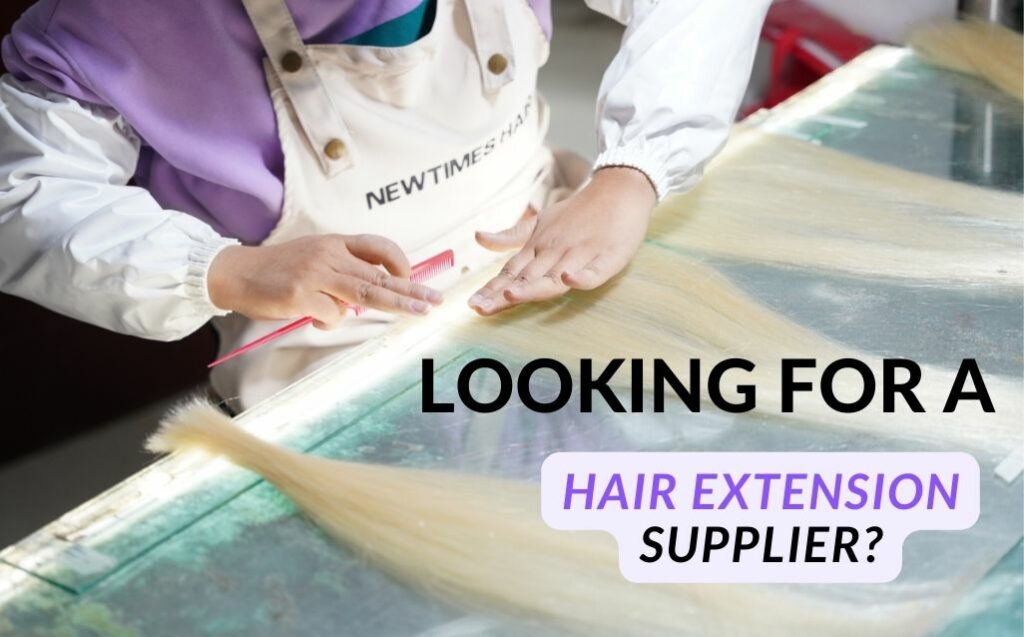
Finding hair extension vendors & manufacturers sounds easy until you actually have to do it.
At first, every supplier looks great. Nice website. Smooth product photos. Big promises. “Premium quality.” “Best price.” “100% human hair.” Everybody says the same thing, and after a while, it all starts to sound like background noise.
Then you place an order.
That’s when reality shows up.
Maybe the quality drops after the sample. Maybe the color is off. Maybe communication suddenly gets weird the moment you ask specific questions. Maybe the supplier that looked perfect on paper turns out to be a headache in real life.
That’s the problem with this industry: there are a lot of companies selling hair, but far fewer that are actually dependable when money, timing, and reputation are on the line.
So this guide is for buyers who want to cut through the fluff. If you’re searching for hair extension vendors and manufacturers, this is what actually matters: who these wholesale hair extension suppliers are, what type of business they suit, and how to avoid picking the wrong one.
Key Takeaways
- Hair extension vendors and manufacturers play different roles. Vendors mainly sell products, while manufacturers offer more control over production, customization, and private label support.
- The best supplier depends on your business model. Salons often prefer vendors for convenience, while brands and distributors usually need manufacturers for scale and customization.
- Consistency matters more than low pricing. Reliable quality, stable lead times, and clear communication usually matter more than saving a little on each order.
- Not all wholesale hair suppliers are true manufacturers. Many act as resellers, which can limit customization, production control, and long-term flexibility.
- Factory-based manufacturers can be better for growth. They often provide stronger OEM, private label, and bulk production support for scaling hair brands.
Quick Answer: What Are Hair Extension Vendors & Manufacturers?
Here’s the plain-English version.
A hair extension vendor sells hair products to other businesses or professionals.
A hair extension manufacturer actually makes the products, or at least controls production closely enough to offer more say over quality, specs, and customization.
Some suppliers do both. Some absolutely do not.
That distinction matters because the right supplier depends on what you actually need.
If your goal is simple ordering, ready stock, and lower complexity, a vendor may be enough.
If your goal is private label growth, custom packaging, stronger control over specs, and better long-term margins, you usually want a manufacturer or a supplier with real manufacturing capability behind it. Your current article already leans in that direction, but the opening answer comes too late and the buyer intent gets buried under generic market commentary.
Hair Extension Vendor vs. Manufacturer: Why This Confuses So Many Buyers
A lot of buyers use these terms interchangeably, and that’s where the trouble starts.
A vendor might be:
- a wholesaler,
- a distributor,
- a trading company,
- a brand,
- or a manufacturer.
That is a big range.
And no, it’s not just semantics. It affects pricing, customization, lead times, minimum order quantities, and how much control you really have once the business grows.
A manufacturer usually makes more sense when you care about things like:
- private label packaging,
- custom colors or textures,
- OEM support,
- and scaling without being boxed in.
A vendor is often easier when you care more about:
- smaller test orders,
- faster buying,
- simpler communication,
- and ready-to-ship stock.
Neither model is magically better. The real question is whether the supplier fits the kind of business you’re building.
If you’re building a hair brand and want stronger margins, custom packaging, or OEM support, then working directly with a manufacturer is usually the smarter move. However, some manufacturers are vendors themselves, too.
Why? Simple, the factory can hire staff to help them deal with salons, stylists, retailers, etc., and sell extensions to them.
What Actually Makes a Good Hair Extension Supplier?
Not the branding.
Not the Instagram feed.
Not the dramatic claims about “luxury” and “premium.”
A good supplier stays solid after the first nice conversation. That means they can deliver consistent quality, communicate well, and avoid turning every simple order into a small crisis.
The best wholesale buyers usually judge suppliers on a few very unglamorous things:
- product consistency,
- lead times,
- communication,
- product range,
- customization options,
- packaging quality,
- pricing stability,
- and repeat-order reliability.
That last one matters a lot.
A sample order is easy to make look good. The real question is whether order number four still looks like order number one.
Quick Comparison Table: Hair Extension Vendors and Manufacturers
Supplier | Supplier Type | Best For | Main Advantage | Watch-Out |
Newtimes Hair | Vendor + manufacturer-style supplier | Wholesalers, brands, distributors | Broad catalog and customization options + OEM + Brand setup | Needs neutral presentation when featured on its own site |
Bellami Professional | Professional vendor | Stylists and salon teams | Strong market recognition | Not built around deep OEM needs |
Great Lengths | Premium salon supplier | Luxury service salons | High-end positioning | Not the route for budget-first buyers |
Donna Bella Hair | Vendor | Independent stylists and growing salons | Practical and accessible | Less control than factory sourcing |
Babe Hair | Vendor | Everyday salon use | Straightforward product range | Limited for buyers wanting full customization |
Cinderella Hair | Professional vendor | Salons wanting dependable options | Established presence | Less relevant for custom manufacturing needs |
Hairdreams | Premium supplier | Service-led premium salons | Fits transformation-focused businesses | More salon-focused than private-label-focused |
Indique Hair | Brand-led vendor | Premium salons and retailers | Strong premium image | Less about factory-style flexibility |
Dream Catchers | Wholesale vendor | Stylists & salons | Method variety + accessibility | Not manufacturer-driven |
Other factory suppliers in Vietnam and China | Manufacturers | Brands, wholesalers, OEM buyers | Scale, cost control, and customization | Requires better vetting and stronger process discipline |
The table format above is the kind of thing ranking articles increasingly do well because it helps buyers compare faster and helps AI systems extract the page’s point without guessing. Current ranking pages also tend to use tables of contents, comparison-style sections, and “how to choose” frameworks rather than only supplier blurbs.
What Actually Makes a Good Hair Extension Supplier?
Not the homepage.
Not the logo.
Not the dramatic claims about being “the best in the industry.”
A good supplier is one that still looks good after the first order, the third order, and the first annoying problem.
That means they can usually deliver on the boring stuff that actually matters:
- consistent quality,
- clear communication,
- realistic lead times,
- sensible pricing,
- decent packaging,
- and repeat orders that do not mysteriously drift away from the sample.
That last part matters more than people admit.
A nice sample proves almost nothing by itself. A supplier earns trust when the sample, the pilot order, and the bulk order still feel like they came from the same business.
1) Newtimes Hair
Newtimes Hair makes sense for buyers who want a range without painting themselves into a corner.
Its current article positions the company as a supplier for tape-ins, keratin tip extensions, clip-ins, wigs, toppers, and men’s hair systems, which gives it more breadth than a supplier focused on one narrow category. That matters for buyers who do not want to juggle multiple vendors just to cover a normal wholesale catalog.
Where Newtimes Hair becomes more interesting is the flexibility side.
For buyers thinking about:
- custom packaging,
- private label growth,
- broader product sourcing,
- or a longer-term supply relationship,
- From mass production to distribution, they have everything up to standard.
- A complete supply chain will always continue to supply, even in crises.
- Full range of hair extensions available in methods, colors, lengths, etc.
- Efficient in updating its clients with the latest hair extension methods and tools.
- Mature, professional OEM and customization services.
That kind of supplier tends to be more useful than a basic reseller.
The only caution here is editorial, not commercial: if you’re publishing this article on the Newtimes Hair site, the New Times Hair section has to sound balanced. The current version reads too much like a self-introduction and not enough like a neutral evaluation.
More than a hair extension supplier, New Times Hair has all the resources to help beginners start a hair business. We serve our customers in multiple languages and are online 24/7, answering product or order-related queries.
Apply now to get our wholesale prices or request a sample to experience the quality of our products for yourself.
2) Bellami Professional
Bellami Professional has something a lot of suppliers want, and not all of them earn: recognition.
Stylists know the name. Salons know the name. That kind of familiarity lowers friction for some buyers because people are often more comfortable buying what already feels familiar.
That said, recognition is not the same as flexibility.
Bellami Professional is usually more attractive for buyers who want:
- salon familiarity,
- widely recognized extension formats,
- and a simpler professional-buying experience.
It may be less attractive for buyers looking for deep customization or manufacturer-style control.
3) Great Lengths
Great Lengths lives in the premium conversation for a reason.
It has long been associated with higher-end salon services, and that reputation carries weight for businesses serving clients who care about experience as much as outcome.
This is not usually the route people take when they are chasing the lowest cost. It’s more often the route for salons that want a supplier aligned with premium pricing and service positioning.
That makes Great Lengths a better fit for:
- luxury salons,
- premium service providers,
- and businesses that sell trust as much as product.
4) Donna Bella Hair
Donna Bella Hair tends to appeal to businesses that want practical options without all the heavy luxury framing.
That can be a good thing.
Not every salon needs a supplier wrapped in prestige. Some just want hair that works, methods clients ask for, and a sourcing process that doesn’t make life harder than it needs to be.
Donna Bella Hair is often a fit for:
- independent stylists,
- growing salons,
- and buyers who value usability over image.
5) Babe Hair
Babe Hair is another supplier that feels more practical than dramatic, and honestly, that works in its favor.
A lot of salon owners are not looking for some grand sourcing adventure. They want products they can use consistently, methods their clients already understand, and a supplier relationship that feels manageable.
Babe Hair tends to suit:
- salon professionals,
- repeat-service businesses,
- and buyers who want flexibility without too much operational complexity.
6) DreamCatchers
DreamCatchers is a well-known name among stylists, especially in the professional salon space.
It offers a range of extension methods, including wefts, tape-ins, and I-tip styles, making it flexible for different installation preferences.
Where it stands out is accessibility.
It’s relatively easy for stylists to start working with, and the product range covers most common client needs without requiring a complicated sourcing setup.
That said, it behaves more like a professional vendor than a true manufacturer.
So while it works well for:
- salons,
- stylists,
- and service-based businesses,
it may be less suitable for buyers looking for:
- private label,
- deep customization,
- or factory-direct pricing advantages.
7) Cinderella Hair
Cinderella Hair has been around long enough to feel established, and in this industry, that still matters.
Some suppliers win attention by being flashy. Others win by being consistently useful. Cinderella Hair tends to fall into the second category.
It’s often a sensible option for buyers who want:
- a familiar professional supplier,
- multiple extension methods,
- and a relatively stable salon-oriented buying experience.
Not every supplier needs to reinvent the industry. Sometimes, dependable is enough.
8) Hairdreams
Hairdreams is usually a better fit for salons selling a premium service, not just a product.
That distinction matters.
If your business model is built around consultation, transformation, and a higher-touch client experience, then supplier image and service alignment matter more. Hairdreams tends to work in that kind of environment.
It suits businesses that want:
- premium positioning,
- a salon-service mindset,
- and a supplier that fits a more elevated client journey.
9) Indique Hair
Indique Hair sits more naturally in the premium end of the market.
That doesn’t automatically make it better. It just makes it different.
Some businesses want a supplier that feels polished, established, and easy to position at a higher price point. Indique tends to appeal to that type of buyer.
It makes sense for businesses that care about:
- premium brand perception,
- stronger visual presentation,
- and higher-end customer positioning.
If your business model depends heavily on margin through branding and presentation, a supplier like this can be a smart fit.
10) Factory Suppliers in Vietnam and China
This is where things stop being casual.
Many wholesale buyers start with known vendors and eventually move toward factory suppliers in Vietnam or China once they realize how much more control they need over cost, packaging, customization, or private label development.
The upside is obvious:
- better scale,
- more customization,
- stronger OEM potential,
- and often better margins over time.
The downside is just as obvious:
- more vetting,
- more process,
- more responsibility,
- and less room for lazy decision-making.
Factory sourcing is not automatically better. But for serious brand builders, it is often where the real leverage starts.
How to Choose the Right Hair Extension Supplier
This is the part where a lot of people make the mistake of chasing the most impressive story instead of the best fit.
A better approach is to ask blunt questions early.
Ask what kind of supplier they really are
Do they manufacture directly, or mainly resell?
Which products are made in-house?
Which ones are outsourced?
Can they support OEM or private label, or do they just like using those words in marketing copy?
Look past the sample
A sample is useful, but it is not proof of long-term consistency.
You want to know whether the supplier can keep quality stable across repeat orders, not just impress you once.
Check whether the business model actually fits yours
A supplier may offer decent hair and still be the wrong choice if they cannot handle:
- your order size,
- your timeline,
- your packaging needs,
- your target margins,
- or your growth plans.
Pay attention when the questions get specific
This is usually where the truth shows up.
Plenty of suppliers sound good when the questions are easy. The better ones still sound good when you ask about lead times, quality control, batch consistency, and who actually makes the product.
Red Flags to Watch for When Comparing Hair Extension Suppliers
A polished website is nice. It is not evidence.
Be careful if a supplier:
- dodges direct questions about manufacturing — especially when you ask whether they produce in-house;
- cannot explain product differences clearly — because they should know why one line costs more than another;
- gets vague about lead times — which often becomes your problem later;
- refuses to send detailed samples — never a great sign;
- makes claims that sound too perfect — “best quality” and “no shedding” are not serious answers;
- uses inconsistent product photos — which can suggest a stitched-together catalog;
- changes prices without a clear reason — especially early in the relationship.
One red flag alone does not always kill the deal.
A cluster of them usually should.
How to Test a Hair Extension Supplier Before a Bulk Order
This is where buyers stop guessing and start learning something useful.
Do not just admire the sample and move on. Actually test it.
Look at:
- texture consistency — does it feel even from top to bottom, or does it go rough halfway through?
- color accuracy — does it match what was promised, especially under natural light?
- softness — does it feel naturally healthy, or suspiciously coated?
- shedding — a little can be normal; too much this early is not;
- tangling — because hair that tangles fast tends to stay annoying;
- odor — strong chemical smell usually means something;
- construction quality — check the bonds, wefts, or tape tabs closely;
- packaging — especially if you plan to resell under your own brand.
Then test the supplier, not just the product.
Ask yourself:
- Did they answer clearly?
- Did they communicate on time?
- Did they send what they promised?
- Did anything feel vague, evasive, or weirdly complicated?
The higher-ranking manufacturer-style articles tend to do this part better than generic list posts: they explain how to verify quality, what to ask before ordering, how to compare pricing structures, and what operational details buyers should actually test.
Get in Touch
Final Thoughts
Most buyers do not get into trouble because they picked the cheapest supplier.
They get into trouble because they believed the easiest story.
The story that a nice website means reliability. The story that a smooth sample means long-term consistency. The story that “manufacturer” on a homepage automatically means factory control.
It usually does not.
Good sourcing is less glamorous than people want it to be. It is mostly about asking better questions, spotting weak answers, and testing before you commit.
Which is not sexy.
But it is how smart buyers avoid expensive nonsense.
About the Author

Lauren Mae Wilson is the owner of The Hair Extensions Expert, a San Francisco salon focused on premium hair extensions. With 12+ years in the beauty industry and training across multiple extension methods, she combines hands-on salon experience with industry insight as a contributor and reviewer for New Times Hair.
FAQs About Hair Extension Vendors & Manufacturers
I want wholesale shop of human hair
November 21, 2023 10:16 pmHi Rahul, thank you for reaching out to us. If you operate a salon or are a certified cosmetologist or stylist, please come to this page, https://www.newtimeshair.com/wholesale, and fill out the application. If possible, please provide a copy of your cosmetology or hairdressing license. We will open up a wholesale account for you after processing your application. Or you can simply provide the address of your business or a few photos of your business venue via email at marketing9@newtimeshair.com
April 18, 2024 5:16 pm