


- What Is a Men's Frontal Hairpiece?
- Who Is a Front Partial Hair System Suitable For?
- How to Choose the Base Material
- How to Measure and Order the Right Size
- Should a Salon Choose Stock or Custom?
- How to Install and Blend a Frontal Hairpiece
- Men's Frontal Hair Piece Before&After
- How to Make the Hairline Look Natural
- Shop Partial Hairpieces for Receding Hairline
- Maintenance and Expected Lifespan
- Conclusion: Is a Frontal Hairpiece Right for Your Client?
- About the Author
- FAQs
Men’s Frontal Hair Pieces: How Front Partial Hair Systems Work
- What Is a Men's Frontal Hairpiece?
- Who Is a Front Partial Hair System Suitable For?
- How to Choose the Base Material
- How to Measure and Order the Right Size
- Should a Salon Choose Stock or Custom?
- How to Install and Blend a Frontal Hairpiece
- Men's Frontal Hair Piece Before&After
- How to Make the Hairline Look Natural
- Shop Partial Hairpieces for Receding Hairline
- Maintenance and Expected Lifespan
- Conclusion: Is a Frontal Hairpiece Right for Your Client?
- About the Author
- FAQs
A men’s frontal hairpiece, also called a front partial hair system, is a small hair-replacement unit designed to cover hair loss concentrated around the front hairline. It can be a suitable option for clients with a receding hairline who do not yet need a full hair system.
For salons and hair-replacement professionals, the main decision is not simply whether a frontal piece looks natural. The base material, coverage size, density, attachment method, colour, and blending technique all affect the result. This guide explains how to assess a client, choose the right unit, install it, and plan ongoing maintenance.
What Is a Men’s Frontal Hairpiece?
A men’s frontal hairpiece is a partial hair system that covers the front section of the scalp rather than the entire top of the head. It is primarily used to rebuild a receding or incomplete hairline when the client still has sufficient hair behind the unit for blending.
Unlike a full hair system, a frontal piece does not attempt to replace hair across the crown and whole upper scalp. The correct choice depends on the actual area requiring coverage, the client’s existing density, and the look they want to achieve.
Newtimes Hair’s frontal and partial hairpiece range has standing lines available in several coverage sizes and natural shades, making the category practical for salons that want standard options available for consultations.
View the frontal and partial range.
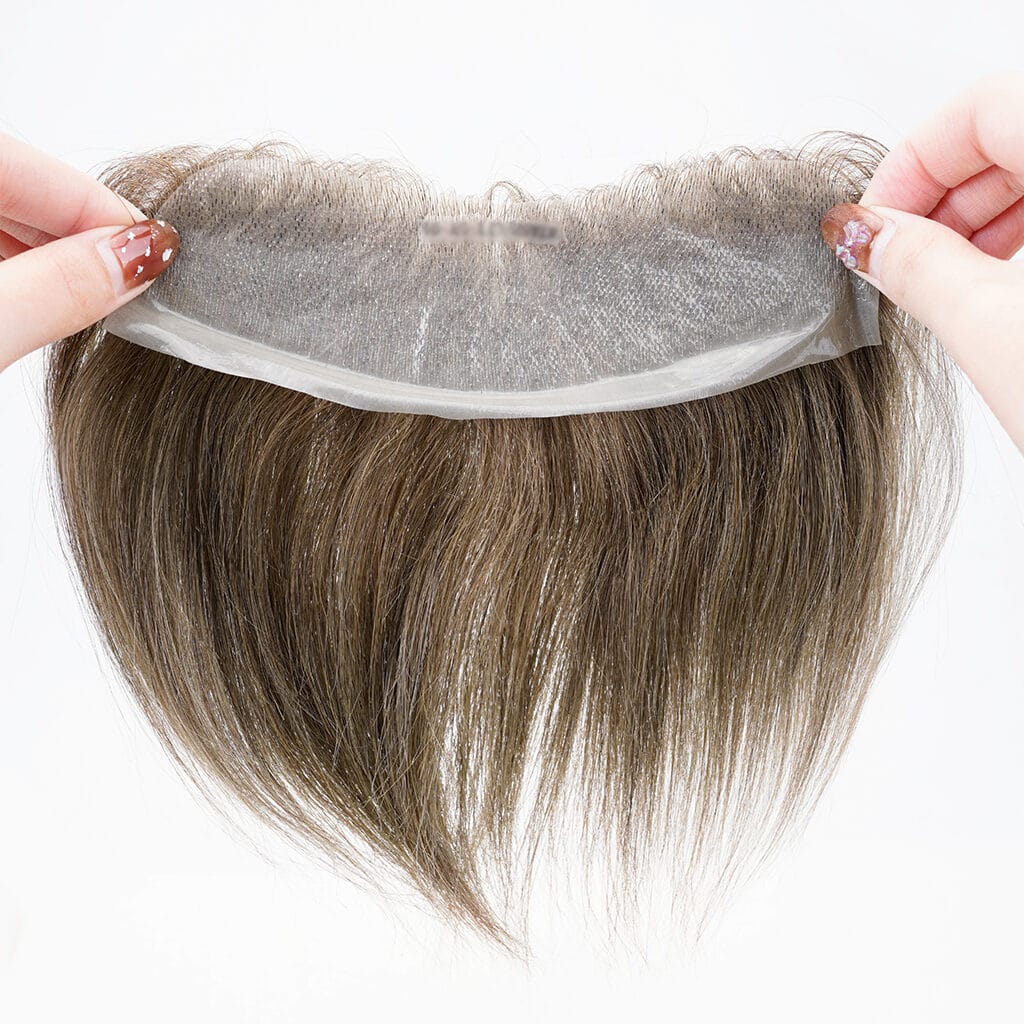
Compared with a typical hair system, a frontal hairpiece is smaller and covers just the front hairline. Thus, it is more suitable for people who are suffering from a receding hairline instead of balding on the crown or the whole head.
Why a Frontal Hairpiece May Suit a Client
- It covers only the area affected by front-hairline recession.
- It may be less involved than choosing a full hair system.
- It can give the stylist a smaller area to position and blend.
- It allows a client to explore non-surgical hair replacement without immediately choosing full scalp coverage.
- Stock options can be useful for common measurements, colours, and densities.
- A smaller unit may simplify inventory for salons introducing hair-replacement services.
Important Limitations to Explain
- It is not designed to cover extensive crown or top-of-scalp loss.
- The front edge still requires careful placement and blending.
- The best base depends on the client’s priorities, such as breathability, durability, density, and discretion.
- Lifespan varies by construction, hair quality, attachment method, washing frequency, and maintenance.
- First-time clients may benefit from professional fitting and styling.
| Consideration | Frontal hairpiece | Full hair system |
|---|---|---|
| Coverage | Front hairline or limited frontal area | Larger area across the top of the scalp |
| Best suited to | Hairline-focused recession | More extensive top-of-scalp loss |
| Consultation | Focuses on front placement and blending | Requires broader measurements and design decisions |
| Styling | Must blend with existing hair behind the unit | Designed as a complete hairstyle |
| Inventory | Easier to stock in common frontal sizes | More variations in size and specification |
| Future suitability | May need reassessment if loss progresses | May be more appropriate as coverage needs increase |
(Note: This is a consultation framework, not a diagnosis. A stylist should assess the client’s actual coverage area before recommending a unit.)
Who Is a Front Partial Hair System Suitable For?
A frontal hairpiece may be worth considering when the client’s main concern is recession or thinning at the front hairline, while the hair behind the hairline remains suitable for blending.
A larger partial or full hair system may be more appropriate when the crown is also thinning, the required coverage extends far behind the hairline, or the client wants a complete hairstyle rather than a front-hairline correction.
How to Choose the Base Material
Base selection is a trade-off. A client who prioritizes the most breathable feel may need a different construction from a client who prioritizes durability or higher density.
Lace is commonly considered when breathability and a natural-looking front are important. Thin skin can sit closely against the scalp and create a discreet edge, while monofilament constructions can be useful when the client needs more durability or density support. Hybrid bases combine properties from more than one material.
How to Measure and Order the Right Size
Measure the area that needs coverage rather than choosing a unit based only on the visible recession line. The stylist should consider where the unit will be positioned, where it will be attached, and how much existing hair must be blended behind it.
When submitting a custom request, include the base size, base type, hair colour, hair type, length, density, curl or wave pattern, hair direction, front hairline preference, and finishing requirements.
Related:
Should a Salon Choose Stock or Custom?
Stock frontal hairpieces can be useful when the client fits a common size, colour, and density. They allow a salon to start with standard specifications and build confidence in consultation and fitting.
Custom ordering becomes more useful when the client has an unusual base measurement, a complex hairline, a distinctive colour, a specific curl pattern, or a density that does not match standard stock.
The best approach is often to use stock units for repeatable, common cases and custom units for clients whose specifications require closer control.
Stock Hair Systems vs. Custom Hair Systems
How to Install and Blend a Frontal Hairpiece
Installation should begin with consultation and placement planning, not adhesive. The stylist should first confirm the desired hairline, measure the coverage area, select an appropriate attachment method, and check how the unit will blend into the client’s existing hair.
A typical professional workflow is:
- Explain care, removal, and maintenance expectations before the client leaves.
- Confirm the desired hairline and coverage.
- Prepare and clean the scalp.
- Check the fit before applying adhesive or tape.
- Apply the chosen attachment material according to its instructions.
- Position the unit gradually and check symmetry.
- Secure the front edge without creating unnecessary tension.
- Cut and blend the unit into the client’s own hair.
- Check the result in different lighting and from several angles.
The attachment method should be selected according to the base construction, client preference, and professional judgement. Newtimes Hair materials indicate that several stock toupee constructions can be attached with glue, tape, or clips, but the method should still be confirmed for the specific unit and client.
Related attachment information
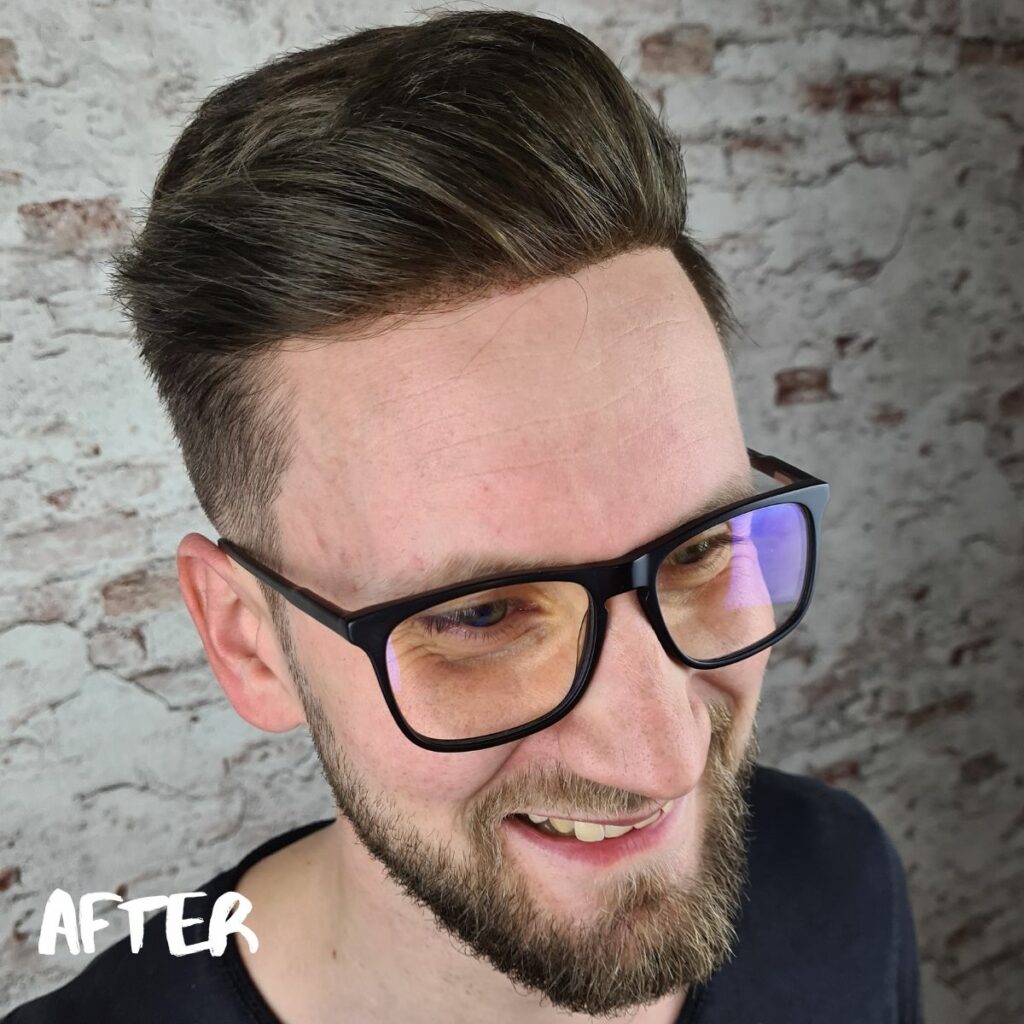
Men’s Frontal Hair Piece Before&After

How to Make the Hairline Look Natural
A natural result depends on more than the base material. The unit must be positioned correctly, the density must suit the client’s existing hair, and the front edge must be blended and styled appropriately.
Common causes of a visible edge include incorrect placement, unsuitable density, contrast between the unit and the client’s hair, adhesive lifting, and excessive shine.
How to Avoid Visible Hair System Edges
Shop Partial Hairpieces for Receding Hairline
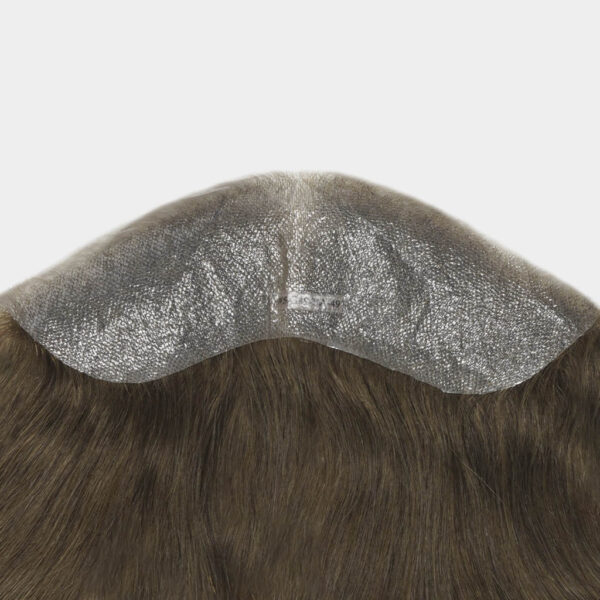
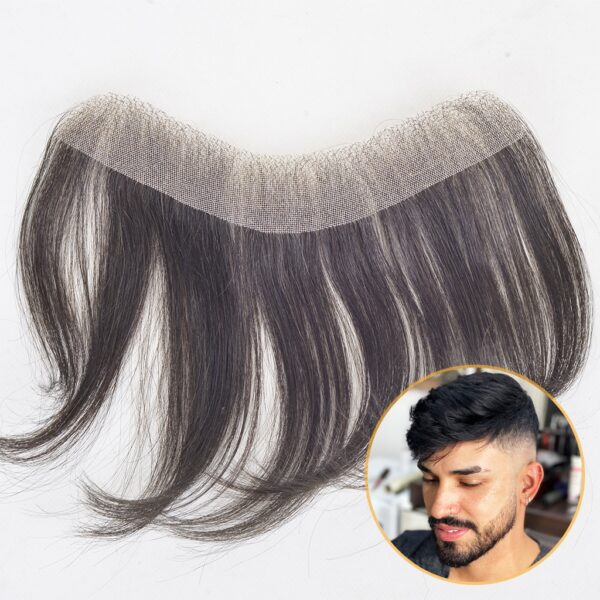
Maintenance and Expected Lifespan
A frontal hairpiece does not have one guaranteed lifespan. Wear time depends on the base construction, ventilation, hair quality, attachment method, washing routine, heat, friction, and general maintenance.
As one product-specific example, Newtimes Hair states that the HS15+ men’s lace-front hairpiece typically lasts 3–4 months when well maintained. That figure should not be applied automatically to every frontal model.
HS15+ product details
Hair System Maintenance Routine Essentials
Conclusion: Is a Frontal Hairpiece Right for Your Client?
A frontal hairpiece can be a practical option when hair loss is concentrated around the front hairline and the client wants targeted coverage rather than a full hair system. The most important decisions are coverage, base material, density, colour, attachment, and blending.
For salons, frontal units can also be a manageable entry point into hair replacement because common stock specifications can be kept available. At the same time, more complex cases are handled through custom ordering.
Review the client’s coverage area carefully, explain the trade-offs honestly, and choose the unit according to the client’s lifestyle and maintenance expectations.
Need help choosing a frontal hairpiece for a client? Browse Newtimes Hair’s frontal and partial hairpiece collection or submit a custom hair-system inquiry.
About the Author
Alf Hou has worked in the hair-replacement industry since 2018, developing practical knowledge of men’s hair systems, frontal hairpieces, wigs, toppers, and professional hair-replacement solutions. Through his work with Newtimes Hair, Alf helps salons, stylists, and clients understand product selection, installation, maintenance, and ordering. His articles turn technical product information into clear, practical guidance for more confident hair-replacement decisions.