




- Lace vs. Poly Skin vs. a Lace/PU Hybrid at a Glance
- Lace vs. Poly Hair Systems: What Changes at the Hairline and Comfort Level
- What changes for installation, rebonding, and replacement?
- Which base fits the client in front of you?
- How should a center compare samples before changing its core range?
- What should a hair replacement center stock?
- Get a base recommendation for your service program
- Lace vs. Poly Hair System FAQs
Lace vs. Poly Hair Systems: Which Base Should a Hair Replacement Center Choose?
- Lace vs. Poly Skin vs. a Lace/PU Hybrid at a Glance
- Lace vs. Poly Hair Systems: What Changes at the Hairline and Comfort Level
- What changes for installation, rebonding, and replacement?
- Which base fits the client in front of you?
- How should a center compare samples before changing its core range?
- What should a hair replacement center stock?
- Get a base recommendation for your service program
- Lace vs. Poly Hair System FAQs
For a hair replacement center or studio, the question is rarely just whether lace or poly looks better. The base also affects how a client feels between appointments, how well a technician handles removal and rebonding. The most important consideration is how reliably the studio can supply the same result again and again.
The short answer: A full lace hair system is usually the first option to assess when airflow and a soft, exposed hairline are priorities. A full poly skin system is useful when a scalp-like finish and a smooth surface for attachment and cleanup matter most. A lace-and-PU hybrid can put the two materials in different areas when the client needs both airflow and a more convenient bonding zone. None of these choices overrides the need to match density, color, front design, adhesive, and maintenance routine to the individual.
Newtimes Hair supplies lace, skin/poly, and hybrid men’s hair systems for professional buyers. The comparison below is designed to help studios decide what to test, what to keep in stock, and when to request a different construction.
Lace vs. Poly Skin vs. a Lace/PU Hybrid at a Glance
In hair systems, poly, PU, and skin usually refer to a polyurethane base. A full lace base is a mesh to which hair is knotted. A hybrid places lace and PU in separate zones; the exact layout varies by model.
| Decision factor | Full lace | Full poly skin | Lace/PU hybrid |
|---|---|---|---|
| Front appearance | Fine lace can create a soft, low-sheen hairline; knot size, bleaching, density, and placement still matter. | Thin skin can create a close-to-the-scalp look; edge thickness, shine, ventilation, and placement still matter. | Depends on whether the front is lace or skin and how that front is finished. |
| Airflow | Open mesh generally allows more airflow. | Solid PU allows less airflow through the base. | Depends on how much of the base is lace and where it sits. |
| Attachment and cleanup | Adhesive choice and removal need care around the mesh and knots. | The smooth PU surface generally makes adhesive residue easier to remove. | PU zones offer defined bonding and cleanup areas; lace zones still need careful handling. |
| Handling at appointments | Fine lace can be damaged by rough removal or cleaning. | Very thin skin can also tear; greater thickness usually adds handling strength at the cost of a more substantial edge. | Each zone needs the right removal and cleaning method. |
| Replacement planning | Depends on lace type, hair ventilation, shedding, and service habits. | Depends heavily on skin thickness, ventilation, and service habits. | Depends on the construction and on the weakest or most stressed area. |
| Newtimes Hair example | AERO (HS7), full French lace. | STRYKE (HS1V), 0.06 mm skin; VELLUM (HS25V), 0.03 mm skin. | HOLLYWOOD-S, lace top with a PU perimeter. |
| Best starting question | Does this client need more airflow or a soft, exposed front? | Will a smooth bonding surface and scalp effect improve this client’s service experience? | Does the client need benefits from both materials in different parts of the base? |
These are tendencies, not guaranteed performance ratings. A 0.03 mm skin unit and a thicker skin unit should not be treated as the same product; neither should Swiss lace and French lace. Construction and professional handling can change the outcome as much as the material name.
Swiss Lace vs. French Lace
When it comes to the differences in feel between French lace and Swiss lace, Swiss lace feels slightly softer and lighter due to the fact that the fiber material used to produce Swiss lace hair systems is finer and more delicate, while the fiber material used for French lace hair systems is sturdier and more resilient.
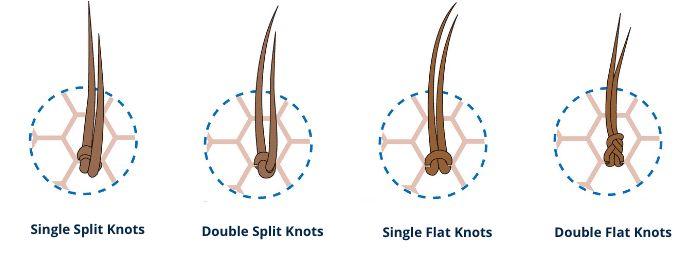
Compared with French lace hair systems, Swiss lace hair systems are more vulnerable to damage from tearing and pulling, since the threads are thin and soft. When not used properly, the hair system base can easily get broken and go to waste.
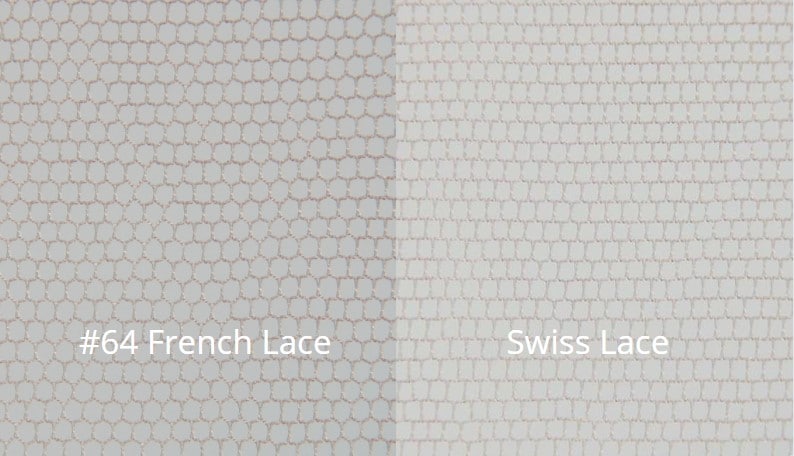
Poly Hair System
Poly skin hair systems basically refer to hairpieces with a base made from a very soft and silky polyurethane material that imitates the appearance of human skin.
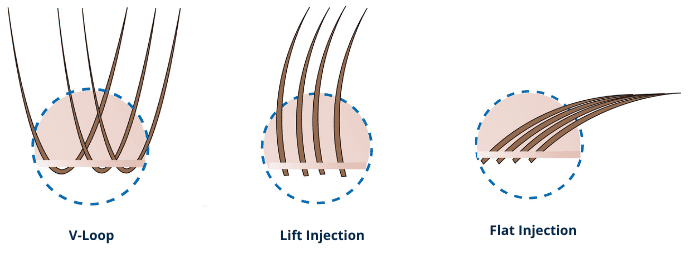
For poly skin hair systems, how undetectable and natural-looking the base appears is strongly associated with the thickness of the poly skin. It is usually the case that the thinner the base, the more natural it looks, and vice versa.
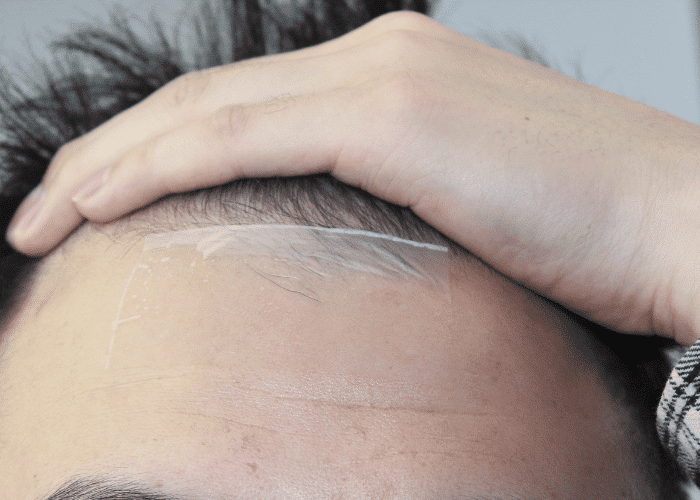
Nowadays, in the men’s hair system market, the thinnest poly skin base can go as thin as an unbelievable 0.03mm. This size has gained enormous popularity as a result of its exceptional realism, since the majority of hair system wearers find the naturalness of their hair systems to be the most important factor. Generally speaking, most poly skin hair systems come with a base thinner than 0.1mm, and anything thicker than that probably won’t appear natural-looking enough for most wearers to feel reassured in public.
Lace vs. Poly Hair Systems: What Changes at the Hairline and Comfort Level
The visible front and the wearer’s comfort come from the complete construction and service routine, so both deserve their own check during consultation.
Start with the front hairline, where a small construction difference can change the client’s confidence in the finished result.
Lace vs. poly hairlines: which looks more natural?
Lace can be particularly convincing at an exposed front because fine mesh has little visible shine. Yet the front can still look too dense or show dark knots if the hairline is built or positioned poorly. Skin can also look remarkably natural: a thin, translucent edge with good hair ventilation can create a close-to-scalp effect. A thick or poorly placed edge may be easier to see.
Ask the technician to inspect the actual front at normal conversation distance and under different light. Check the hair density immediately behind the hairline, the color match at the temples, the front contour, and how the edge behaves when the client moves. The best front is the one the team can reproduce, not just the one that looks good in a close-up product photo.
Then consider how the base performs between appointments, when heat, perspiration, and the attachment routine start to matter.
Breathability and Scalp Comfort
Sebaceous glands have opening ducts that connect to hair follicles. Without good airflow, the sebum produced by these glands will accumulate and prevent proper growth and aggravate hair loss. That’s why efficient airflow is key.
The open structure of lace usually makes it a stronger starting point for someone who runs hot, sweats often, or wears a system in a warm climate. A solid poly base is less open to airflow. A hybrid may help if the client wants a breathable center while the studio needs a PU area for attachment.
Comfort cannot be predicted from the base alone. Fit, scalp condition, adhesive or tape, cleaning frequency, and the client’s habits all affect the result. If a client reports irritation, reassess the entire attachment and scalp-care routine rather than attributing the problem to lace or poly by default.
What changes for installation, rebonding, and replacement?
The base affects the technician’s work as much as the first visual result, especially once the client begins a regular maintenance schedule.
A practical comparison should begin with what happens at the maintenance appointment, from removal through cleanup and rebonding.
The maintenance appointment is part of the product decision
PU gives a technician a smooth surface for applying and removing adhesive or tape. That can simplify cleanup during a regular rebond. Lace needs a gentler approach because residue can work into the mesh and aggressive handling can stress knots or the base. Suitable adhesive systems can be used with lace; it is too simplistic to say that lace only works with tape or that skin must use glue. Follow the attachment product’s instructions and assess compatibility with the exact base.
An ultra-thin skin system is not automatically the easiest unit to service. Its surface may be straightforward to clean, while the base itself calls for extra care during removal. A hybrid can move routine bonding to PU areas while retaining lace where the client values it. Your team’s technique and the client’s return-visit pattern should shape the choice.
The next distinction prevents one of the most common expectation gaps: a maintenance schedule is not the same as a replacement schedule.
Base lifespan and rebond interval are different measures
A rebond interval is the time between removal, scalp cleaning, and reattachment. Base lifespan is how long the unit remains suitable to wear. A system may need several maintenance visits before it needs replacement. Neither number can be promised from “lace” or “poly” alone.
For instance, VELLUM (HS25V) is a 0.03 mm V-looped skin option for a very thin front; its delicate construction calls for realistic replacement planning. STRYKE (HS1V) uses a 0.06 mm V-looped skin base and represents a different balance of appearance and handling. On the lace side, AERO (HS7) is a full French lace option. These examples show why a center should compare actual models and service records rather than assign one lifespan to every material.
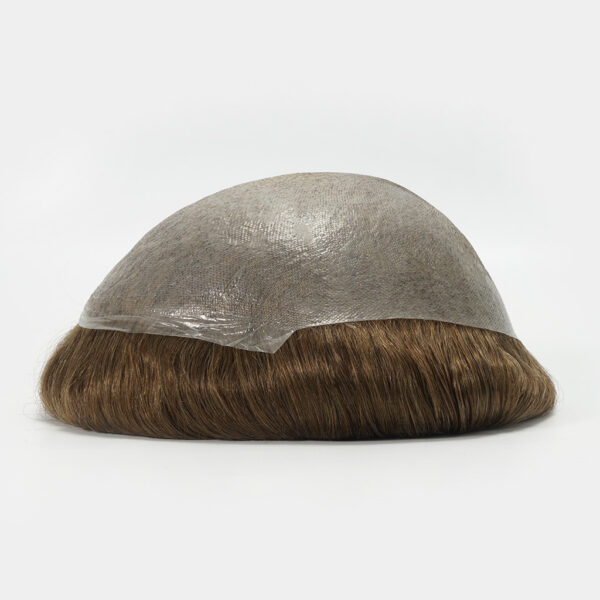
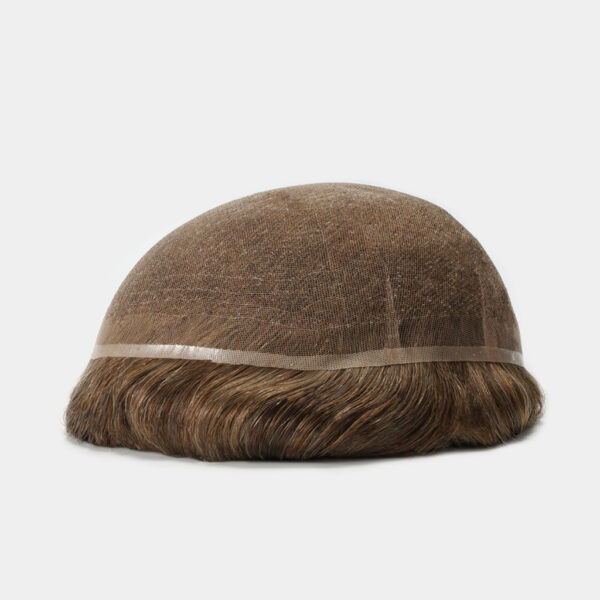
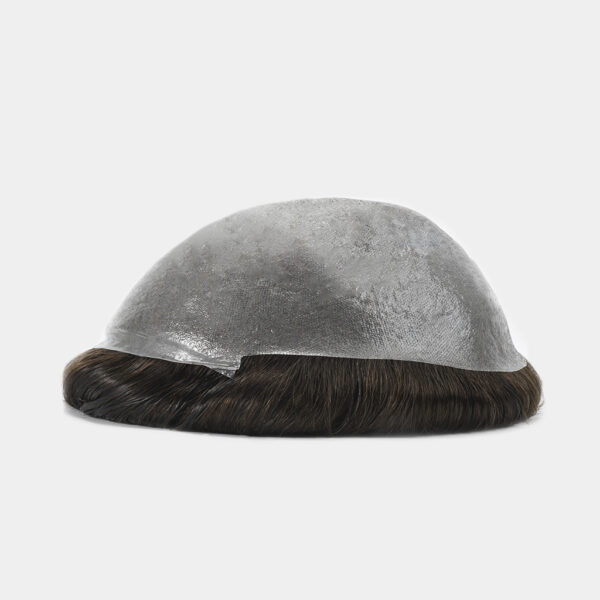
For buying decisions, track three costs separately: the unit, the technician time at each service, and the number of units a client actually uses over time. The lowest unit price is not necessarily the lowest cost for the service program, and a delicate base should not be sold with an unverified replacement promise.
Which base fits the client in front of you?
Use the client’s priority as the starting point. It gives the consultation a clear direction before the team compares precise specifications.
Some clients will accept more delicate handling in return for a lighter wearing experience and a softer exposed front.
When a client prioritizes airflow and an exposed front
Begin with full lace, then choose the lace construction and density that suit the hairstyle and handling routine. A full French lace model such as AERO (HS7) gives a studio a useful comparison point. If the client has an especially demanding exposed hairline, inspect the front finish on the selected color and unit rather than assuming every color has identical knot treatment. Explain the extra care the base may need at removal.
Others place greater value on a close-to-the-scalp appearance and a smooth surface for adhesive removal.
When a client wants a close scalp effect and straightforward cleanup
Begin with a full skin system and choose thickness for the actual service plan. STRYKE (HS1V) and VELLUM (HS25V) should not be presented as interchangeable simply because both are poly. The 0.03 mm option prioritizes an ultra-thin appearance; the 0.06 mm option gives the studio a different handling profile. Inspect the front in person, then set expectations about servicing and replacement before the first installation.
A third group needs the wearer’s preferences, and the technician’s maintenance needs to be solved within one construction.
When the wearer and technician need different things from the same base
A lace/PU design can give the wearer lace in the areas where airflow or front appearance matter and give the technician PU where bonding and cleanup are most useful. HOLLYWOOD-S is one Newtimes Hair example with a lace top and PU perimeter. For a deeper comparison of hybrid layouts, see the hybrid buyer guide.
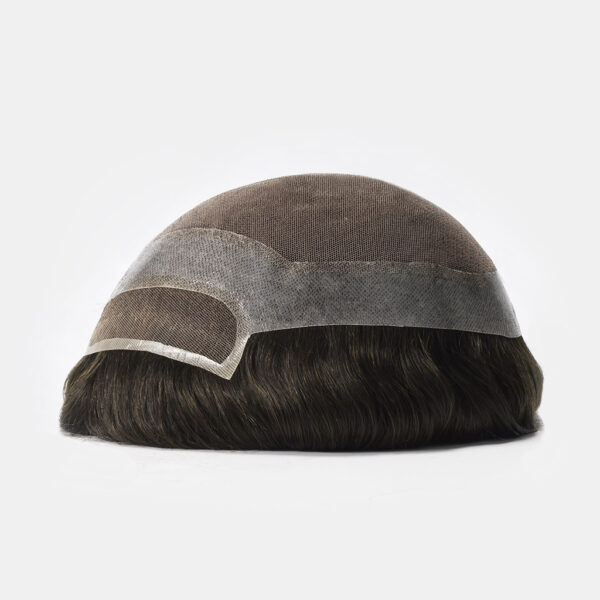
Material choice only works when the rest of the specification can also reproduce the client’s intended result.
When stock will not reproduce the client’s result
Neither base type solves a mismatch in size, color, gray percentage, density, front contour, or hair direction. A stock system may suit a common specification and a time-sensitive appointment; a custom hair system is the better route when those details cannot be matched from available inventory. Decide this before recommending a material as a universal fix.
How should a center compare samples before changing its core range?
Choose one representative lace model and one skin model for the client profiles your studio sees most. Compare as closely as possible on color, gray percentage, density, base size, front shape, and hair length. If you also test a hybrid, record where its PU and lace zones actually sit; “hybrid” alone is not a complete specification.
Use the same evaluation sheet for each sample. Record the appearance of the front after styling, wearer feedback on heat and feel, technician time for removal and cleanup, any edge or knot damage, and whether the next order can match the specification. Recheck after real maintenance appointments, with client consent, instead of declaring a winner at the initial fitting. A studio can then build a product range around observed client demand and its own service capacity.
For repeat orders, keep the chosen specification together: model or SKU, base dimensions, color and gray blend, density, front design, hair direction, attachment method, and any agreed custom changes. This reduces the chance that a replacement arrives under the same broad label but delivers a different result.
What should a hair replacement center stock?
Start with the specifications your existing clients repeatedly need, then decide which base designs cover distinct jobs. A center might hold a regular skin option for clients who prioritize a smooth bonding surface, a lace option for airflow and an exposed front, and a lace/PU option where both requirements occur often. The right quantities depend on actual bookings, color and size demand, and how quickly a matching replacement can be supplied.
Avoid stocking every thickness, lace type, and hybrid layout before you know the demand. Equally, do not put a client into a readily available base when it repeatedly causes discomfort or difficult service appointments. Review replacements and return visits by model, and keep unusual requirements in a planned custom-order path. Check the current return terms before cutting or wearing evaluation stock, since custom and stock orders have different conditions. For urgent U.S. bookings, check the exact stock specification and delivery route before promising an appointment date; local stock and factory production solve different timing problems.
Get a base recommendation for your service program
Newtimes Hair offers men’s hair systems across lace, poly skin, and hybrid designs, with stock and custom routes for different specifications. Tell the team which clients you serve most, which front designs and densities you need, how often clients return for maintenance, and when the next appointments are scheduled. We can then discuss suitable models and current availability for a professional order.
Request a base and stock recommendation